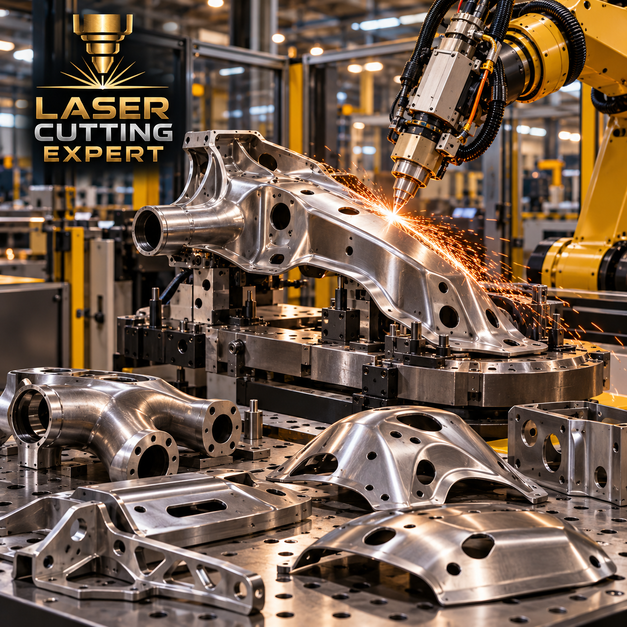
A flat sheet only asks the laser to work across one plane. Once a component is curved, folded, formed or three-dimensional, the cutting problem changes. Laser Cutting Expert provides 3d laser cutting and multi-axis cutting support from our London workshop for suitable formed components, tubes, fabricated parts, prototypes and specialist profiles. Our 3d laser cutting services are available for one-offs, development work, short batches and repeat production with no minimum quantity. Depending on the component, cutting can involve flat 2d laser cutting, multi-axis movement or specialist positioning around a three-dimensional part. Customers can supply CAD models and materials, or ask us for design and material sourcing support.
CALL OR EMAIL US FOR PRICES
“Order any time of the day or night and receive your order on the same day in London. You are welcome to visit our laser cutting shop for an instant laser cutting service. On-site collection or free delivery can be arranged. Email us at laser@makergroup.uk for a quick quote or call us on 02036339857 for an instant price”.
Same Day Laser Cutting & Delivery
We can arrange a same day courier delivery with customer live tracking. Or customers can collect from our Laser Cutting Expert shop.
OPEN 24 HOUR
We are open 7 days a week, and you can order at any time. There is no last ordering time and no deadline. We also offer an overnight laser cutting service.

100% Satisfaction
High Quality Laser Cutting & 100% Customer Satisfaction Guarantee. Top-Rated Laser Cutting Company on Google.

Free File Check
We offer a free file check and proof before sending your artwork for laser cutting.
When a Flat Cutting Path Is Enough
Not every complex-looking component needs multi-axis processing. If all required features exist on a flat sheet, 2d laser cutting is normally the simpler manufacturing route. The laser moves across the material to produce outside profiles, holes, slots, patterns and internal openings. Brackets, panels, signs, shims, washers, screens and enclosure blanks are typical examples. The component may become three-dimensional later through bending or welding, but its original laser operation remains two-dimensional. Recognising this distinction matters because unnecessary 3D processing adds complexity without improving the part. We review the actual geometry before deciding which cutting approach makes practical manufacturing sense.
2D Laser Cutting Services
Our 2d laser cutting services support flat components manufactured from suitable sheet and plate materials. Products can include machine guards, base plates, mounting brackets, equipment panels, furniture components, decorative screens, signs, logos, letters, fabrication blanks and industrial parts. CAD geometry controls the outside shape and internal features before components move into bending, welding, machining or finishing. Multiple compatible parts can also be nested onto the same sheet to improve material use. This route works particularly well when the final product is assembled from several flat profiles. Material type, thickness, required tolerance and downstream operations should all be considered before the production drawing is released.
2 Axis Laser Cutting
2 axis laser cutting generally describes controlled movement along two primary directions across a flat working plane. This is the foundation of many sheet-cutting applications where the laser follows X and Y coordinates to create the required geometry. It can produce curves, straight edges, holes, slots and intricate patterns without requiring the component itself to be three-dimensional during processing. Suitable products include signs, panels, brackets, labels, machine components, decorative artwork and fabrication blanks. The simplicity of the movement does not mean the designs need to be simple. Complex flat patterns can still be produced as long as feature size and geometry remain practical for the selected material.
2 Axis Laser Cutting Service
Our 2 axis laser cutting service is useful for customers who already have flat CAD profiles or need artwork developed for sheet-based manufacturing. One prototype can be produced before a larger quantity, which is useful for brackets, enclosures, furniture components and engineering parts that need physical fit checking. There is no minimum order. Different component types can sometimes share the same material sheet where thickness and specification match. Parts can be supplied as flat profiles or prepared for later fabrication. If a design will ultimately be bent into a three-dimensional form, bend allowances and reliefs should be resolved before cutting rather than attempting to correct the dimensions after forming.
Moving from 2D to 3D Cutting
The need for 3d laser cutting usually begins when the cutting path can no longer be reached correctly from a single flat orientation. A formed component might require a hole on an angled face, trimming around a curved surface or a cut that follows changing geometry. In these situations, the laser head, workpiece or both may need coordinated movement. The correct method depends on part shape, material, access and accuracy requirements. Multi-axis processing should therefore be chosen because the component genuinely needs it, not simply because it sounds more advanced. For some projects, redesigning a component as flat profiles followed by assembly may provide a simpler manufacturing route.
3D Laser Cutting Services for Formed Parts
Our 3d laser cutting services can be assessed for suitable components that already have physical shape before the cutting operation. These may include pressed panels, bent sheet parts, tubular components, fabricated sections or specialist formed products. Operations can include trimming excess material, adding openings or following a three-dimensional edge. Accurate part location becomes especially important because the machine needs to understand where the physical component sits relative to the programmed path. Variations in formed parts can also affect the result. A stable fixture and consistent incoming geometry may therefore be required for repeat production. We assess these factors before confirming a manufacturing approach.
5 Axis Laser Cutting
5 axis laser cutting adds greater freedom of movement around suitable three-dimensional geometry. Instead of working only across a flat X-Y plane, additional axes can allow the cutting head or component orientation to change during the operation. This can make it possible to approach angled faces, curved surfaces and complex features that cannot be reached correctly using conventional flat cutting. Applications can include formed sheet components, tubes, automotive development pieces, equipment parts and specialist fabrications. Five-axis capability is not automatically necessary for every 3D component. Access, tolerance, material and production quantity determine whether this process offers a genuine advantage over simpler cutting and fabrication methods.
Angled Cuts and Edge Geometry
Some assemblies require an edge that is not perpendicular to the material surface. Depending on the component and equipment, multi-axis processing can create suitable angled cuts or edge geometry for specialist applications. 5 axis laser cutting can be particularly relevant when the head needs to change orientation relative to the workpiece. This may help with joint preparation, intersecting components or complex trimming. However, achievable edge quality depends on material, thickness, angle and process setup. Where an edge forms part of a critical welded or machined joint, the fabricator should specify the required preparation clearly. Secondary machining may still be necessary for tightly controlled functional surfaces.
Trimming Formed Sheet Components
Pressing and forming can leave components requiring final trimming after their three-dimensional shape has been created. 3d laser cutting can be considered for suitable formed sheet parts where excess material, openings or edge profiles need to be removed after forming. This differs from cutting the original flat blank because the final geometry of the formed part determines where the trimming path must run. Fixtures may be required to hold the component consistently. Variation from the forming process should also be understood because every part needs to sit within a workable positional range. This approach can support prototype development as well as suitable repeat manufacturing once the component and fixture are established.
Cutting Holes After Forming
Sometimes a hole is better created after bending or forming rather than in the original flat sheet. A feature may need to align with another component in its final three-dimensional position, or forming may distort a pre-cut opening. 3d laser cutting services can be assessed for adding suitable holes, slots and access openings to already formed parts. The laser needs clear access to the required surface and enough working space around the component. Hole size and tolerance should also be realistic for the material and process. Precision bores may still require drilling or machining where their final function demands tighter control than laser profiling provides.
Bent Enclosures and Housings
Equipment housings can contain openings on several faces after the blank has been folded. In many cases it is still more efficient to create those openings during 2d laser cutting before bending. However, certain development or modification projects may require features to be added after the enclosure is already formed. Multi-axis processing can then be considered depending on access and geometry. Products include control housings, machine covers, equipment boxes and prototype enclosures. The manufacturing sequence should be chosen early because cutting everything after forming can introduce unnecessary complexity. Electrical safety, ingress protection and other enclosure requirements remain the responsibility of the finished-equipment manufacturer.
Tube and Pipe Components
Tubular parts are naturally three-dimensional, so cutting around their circumference requires a different approach from flat sheet. 3d laser cutting services can support suitable tube applications involving holes, slots, notches, saddle cuts and shaped ends. Products can include furniture frames, equipment structures, handrail components, sign frames and fabricated assemblies. Round, square and rectangular tube each create different access and positioning requirements. Wall thickness, profile dimensions and material grade should be known before production. Structural tube assemblies need approved engineering and welding procedures. The laser can prepare repeatable connection geometry, but the completed frame’s strength depends on the material, joint design and fabrication quality.
Square and Rectangular Hollow Sections
Square and rectangular tubes can contain features on several faces, making them useful candidates for coordinated cutting. 3d laser cutting can create suitable openings, slots and end profiles according to the digital model. Applications include table frames, machine structures, shelving systems, display frames, sign supports and architectural fabrications. Corner radii need consideration because box section is not perfectly square at the edges. A hole drawn too close to a corner may not behave like the same feature on the centre of a flat face. Components intended for welding can also include locating geometry where appropriate, helping the fabricator position related parts during assembly.
Round Tube Intersections
Joining round tubes at an angle often requires a shaped end rather than a simple straight cut. Multi-axis or dedicated tube processing can generate saddle-style and intersecting profiles that follow the receiving tube. This can reduce manual grinding during fabrication. 5 axis laser cutting or other suitable 3D processing may also be relevant for more complex geometries depending on the component. Applications include furniture, frames, rails, specialist structures and prototype assemblies. Accurate fit can help fabrication, but weld gaps and joint preparation still need to follow the welder’s requirements. Structural tube joints must be designed and validated by the responsible engineer.
Automotive Development Components
Vehicle development can involve formed sheet, tubular structures, brackets and prototype body or equipment components. 3d laser cutting services can support suitable trimming and profiling work where the geometry requires access around a three-dimensional part. Applications may include development panels, frame components, mounting parts and non-critical prototype pieces. Safety-critical vehicle parts require much more than accurate cutting. Material traceability, engineering validation, welding procedures, fatigue behaviour and regulatory requirements may all apply. Roll structures, suspension components and other critical parts should therefore only be manufactured from properly approved designs. We provide the cutting operation according to the specified manufacturing information rather than certifying the completed vehicle component.
Motorsport Fabrication
Motorsport development frequently involves changing geometry as vehicles are tested and modified. 3d laser cutting can be useful for suitable prototype brackets, tube structures, heat shields and formed components where rapid design changes are expected. A digital model can be revised and another development component manufactured without creating dedicated physical cutting tooling. Material choice may include aluminium, stainless steel, mild steel, titanium or specialist alloys depending on the application. High-load and safety-critical motorsport components need appropriate engineering and inspection. The manufacturing process should be chosen around the actual component rather than assuming laser cutting is suitable simply because the geometry can be represented digitally.
Aerospace Development and Specialist Parts
Complex geometry is common in aerospace research and development, but aerospace production also carries demanding requirements for material traceability, process approval and quality control. Suitable 5 axis laser cutting enquiries may involve development parts, formed components or specialist profiles where multi-directional access is required. Titanium, aluminium and stainless materials may be relevant depending on the project. Aerospace-grade material alone does not make a finished component approved for flight. Customers must define any required certification, inspection and process controls before production. Where our available process does not match those requirements, the component should be routed to a manufacturing provider with the necessary approved aerospace systems.
Medical Device Development
Small tubes and formed components are used in medical equipment and device development. 3d laser cutting services may be assessed for suitable research, prototype or equipment parts, but medical work requires careful distinction between ordinary geometry development and regulated medical-device manufacturing. Fine tubular components may need specialist micromachining systems beyond general industrial multi-axis cutting. Material traceability, cleanliness, validation and documentation may also be required. Producing a shape accurately does not make the part sterile, implantable or medically approved. Device manufacturers should provide their technical and regulatory requirements before production so the appropriate manufacturing route can be determined rather than assumed.
Furniture with Three-Dimensional Metalwork
Furniture designers increasingly combine tube, folded sheet and flat decorative components within one product. 3d laser cutting can support suitable formed or tubular pieces, while 2d laser cutting services can produce table plates, brackets, decorative screens and furniture inserts. This allows different cutting approaches to be selected according to each component rather than forcing the entire product through one method. Products may include table frames, shelving, chairs, display furniture and custom interior structures. Physical prototypes are particularly useful because furniture must not only match CAD dimensions but also stand correctly, assemble practically and withstand its expected loads. Final furniture safety remains the manufacturer’s responsibility.
Architectural Metalwork
Architectural fabrication can combine curved surfaces, tubes, formed panels and flat decorative profiles. 5 axis laser cutting may be suitable for certain three-dimensional details, while standard flat cutting can produce screens, façade panels, signs, brackets and decorative inserts. Stair components, rail structures and custom interior features may also involve mixed manufacturing methods. Public-facing or load-bearing architecture needs appropriate structural design and installation planning. A complex cut shape does not establish the strength of the complete assembly. Architects, engineers and fabricators should therefore coordinate material, joints, finishes and fixing methods before components enter production, especially where several separately manufactured pieces need to align on site.
Lighting and Lampshade Components
Lighting products can combine flat patterned panels with formed housings and tubular support structures. 2d laser cutting can create decorative patterns, brackets and flat shade components, while suitable 3D processes may be considered for openings or trimming on formed metal parts. Products can include lampshades, lantern components, wall-light housings, LED fixture parts and decorative lighting screens. The amount of material removed affects both appearance and mechanical stability. Electrical safety, heat management and fire performance depend on the complete lighting product and cannot be established by laser cutting alone. Manufacturers should validate materials and clearances according to the electrical components used within the finished fitting.
Signs with Formed Metal Components
Many signs begin as flat profiles, but fabricated signage can also use folded returns, curved faces, tubular frames and three-dimensional lettering. 2d laser cutting services can manufacture flat letters, logos, backing plates and mounting components, while multi-axis processes can be considered for suitable formed parts. This allows sign manufacturers to select the simplest method for each element. Stainless steel, aluminium, acrylic and other compatible materials can be combined depending on the design. Large exterior signs require structural assessment for wind loading and fixing strength. Electrical signage also needs appropriate electrical design and weather protection independent of the cutting process used to manufacture its visible components.
Machine Frames and Equipment Structures
Industrial machinery often combines sheet panels with tubular or formed structural elements. 3d laser cutting services can support suitable frame and formed-part geometry, while 2 axis laser cutting service work can supply guards, mounting plates, brackets and equipment panels. Using different cutting methods within one assembly can reduce unnecessary complexity. Tubular components may include holes and connection features positioned around several faces, while flat parts can use tabs and slots for assembly. Machine structures carrying moving equipment or significant loads require engineering validation. Guarding and access requirements also need risk assessment by the machinery manufacturer before the complete equipment is put into service.
Prototypes That Need Real 3D Fit Checking
Three-dimensional components are particularly difficult to validate using drawings alone. A cut-out may technically be in the correct CAD position but still be awkward to access during assembly. A tube joint may fit digitally but leave insufficient welding clearance. Because we have no minimum order, one prototype can be produced before repeat 3d laser cutting begins. Customers can test the component against real equipment, fixtures or mating parts and then revise the model where necessary. This development stage is useful for machinery, automotive projects, furniture, enclosures and specialist fabricated products. Correcting the digital model after one prototype is far less costly than modifying a complete production batch.
3D CAD Models and Production Data
Multi-axis manufacturing depends heavily on reliable digital information. A simple flat DXF may be sufficient for 2d laser cutting, but a formed component normally benefits from a complete three-dimensional CAD model. The model helps establish surfaces, angles, feature positions and how the cutting path moves around the part. Customers should also provide material, thickness and any critical tolerance information. If the component comes from an existing assembly, surrounding geometry can sometimes help explain its function. Our design support can assist with production preparation where suitable. Complex components should not enter manufacturing until the digital model accurately represents the physical part expected to arrive at the machine.
Fixtures for Repeat 3D Components
A flat sheet naturally provides a predictable reference plane. A formed component does not. Repeat 3d laser cutting services may therefore require a fixture that holds every workpiece in a known position and orientation. The fixture needs to support the component without blocking the cutting path. It may also need to account for variation created by previous forming operations. A good fixture can make repeat production more consistent, while poor location can cause otherwise correct toolpaths to appear in the wrong physical position. Fixture requirements depend on component geometry and quantity, so they should be considered early when a prototype is expected to develop into repeat manufacturing.
Forming Variation Matters
Two formed parts produced from the same nominal drawing may not be physically identical. Springback, pressing variation and welding distortion can change where surfaces sit in space. This matters during 5 axis laser cutting because the programmed path assumes the physical workpiece is located within an acceptable range. If incoming variation is too large, a fixed toolpath may not produce the same result on every component. Manufacturers should therefore control the forming process before expecting high repeatability from the subsequent trimming operation. In some cases, sensing, adaptive processing or another manufacturing approach may be required when part-to-part geometry cannot be held consistently enough.
Flat Blank First or Form First?
Choosing the production sequence can save a considerable amount of work. If all holes and profiles can be created accurately while a component is flat, 2 axis laser cutting is often the sensible first operation, followed by bending. If forming would distort important features or if final trimming depends on the physical three-dimensional shape, cutting afterwards may be more appropriate. There is no universal rule. Enclosures, pressed components, tube structures and automotive parts can each require a different sequence. We consider the complete manufacturing route so multi-axis processing is used where it solves a real production problem rather than adding complexity to geometry that could have remained flat.
Multi-Axis Cutting and Fibre Laser Processing
Suitable metal projects may combine multi-axis movement with fibre-laser technology depending on equipment and geometry. Our related Fibre Laser Cutting service is useful for compatible metal profiles where the material, thickness and required cut favour that process. Multi-axis movement addresses access and orientation, while the laser source addresses how energy is delivered into the material; they are not the same technical concept. Steel, stainless steel, aluminium and other compatible metals each behave differently. The correct production method should therefore consider both the laser technology and how the machine needs to move around the workpiece rather than treating “3D” as a complete process specification by itself.
Small Features on Curved Surfaces
A hole on a curved surface behaves differently from the same nominal hole on a flat plate. The cutting path must follow the actual geometry, and the resulting opening may appear different when viewed from different directions. 3d laser cutting can accommodate suitable curved-surface features when the CAD model and process allow it. Designers should define whether a dimension refers to the surface geometry, projected opening or mating component. Very small precision holes may still require drilling or machining. Where a feature needs to accept a bearing, precision pin or sealing component, secondary manufacturing may be more appropriate than relying solely on laser cutting.
3D Trimming for Fabricated Components
A welded or assembled component may occasionally need final trimming after fabrication. 3d laser cutting services can be assessed where access allows the laser to follow the required three-dimensional edge. However, welding can introduce distortion, so the real component may not exactly match the original CAD model. The amount of variation determines whether a fixed programmed path remains suitable. Components should also be stable enough to fixture safely. Where large fabrication tolerances exist, machining, robotic processing or manual finishing may provide a more practical route. We assess the actual workpiece rather than assuming every fabricated object can be accurately trimmed simply because a 3D model exists.
When 2D Is Better Than 3D
The most advanced process is not automatically the best process. 2d laser cutting services are often faster and simpler when a product can be designed from flat parts that are subsequently folded or assembled. A three-dimensional bracket, for example, may begin as one flat blank. A box can be developed from sheet and bent. Furniture frames can combine flat connection plates with tube. Designing around simpler processes can reduce fixtures and setup while still producing the required finished product. We only recommend multi-axis cutting when geometry, access or manufacturing sequence genuinely requires it. Good manufacturing is about choosing the appropriate process rather than using the most complicated equipment available.
When 5-Axis Processing Makes Sense
5 axis laser cutting becomes particularly useful when several surfaces need access, the cutting angle changes through the path or a formed component cannot be processed correctly from one orientation. It can reduce repeated manual repositioning and may allow complex trimming to be completed within one controlled setup. This can suit certain tubes, formed panels, prototype structures and specialist industrial components. However, fixture design and programming become more important as geometry becomes more complex. Production quantity also matters because a sophisticated setup may make sense for repeated parts but not for a simple one-off that could be produced more easily using another manufacturing route.
One-Off Multi-Axis Work
There is no minimum order for suitable 3d laser cutting services. One-off work can include prototypes, development parts, replacement components and specialist fabrication pieces. This is useful for engineering teams that need to test a new formed component before investing in production tooling or fixtures. The first piece can establish whether the programmed cut aligns correctly with the real manufactured geometry. If adjustments are required, the CAD model and cutting path can be revised. Complex one-off work can require more setup than repeat production because the component still needs appropriate positioning and programming even though only one piece is being manufactured.
Repeat 3D Production
Once a component, fixture and cutting program have been proven, repeat 3d laser cutting becomes more straightforward. Consistent incoming parts are essential because the process relies on the workpiece matching the geometry expected by the program. Material, forming method and component revision should therefore remain controlled. Repeat production can support formed equipment components, tube parts, automotive development pieces and specialist fabrications. If an upstream forming tool changes, the cutting setup may also need reviewing. Manufacturers should communicate design revisions before sending new batches because even a small geometric change can alter the relationship between the physical component and the established multi-axis cutting path.
Same Day 2D Laser Cutting in London
Flat work can often move into production more quickly than complex multi-axis jobs because it requires less specialised positioning. Suitable 2 axis laser cutting service projects can be considered for same-day production at our London workshop when material and production-ready artwork are available. This can include brackets, panels, signs, shims, washers, guards and fabrication blanks. We operate 24/7, including weekends and bank holidays, with no minimum order. Same-day courier delivery is available across London for appropriate completed jobs. Larger quantities, unusual materials or work requiring additional design preparation may require more time, so urgent customers should provide complete dimensions and material information when making an enquiry.
3D Laser Cutting Near Me
Customers searching for 3d laser cutting near me may have a component that cannot be explained adequately with a simple flat drawing. Send us the 3D CAD model, photographs where useful, material specification, dimensions and required quantity. Production is based in London, but our service is available throughout the UK. Suitable completed work can be delivered nationwide, including next-day options where production and package requirements allow. For formed components, we may need to understand how the part was manufactured before laser processing. The more accurate the incoming information, the easier it is to determine whether multi-axis laser cutting is technically appropriate for the project.
UK 3D and Multi-Axis Laser Cutting
Laser Cutting Expert works with manufacturers, engineers, designers, fabricators, furniture companies, sign makers, students and product developers across the UK. We can support 2d laser cutting, 2d laser cutting services, 2 axis laser cutting, 3d laser cutting, 3d laser cutting services and suitable 5 axis laser cutting requirements according to the geometry involved. Projects can begin with one prototype and move into repeat production after approval. Customers may provide compatible materials or discuss sourcing with us. By choosing the cutting method around the physical component rather than applying the same process to every design, we can build a more practical manufacturing route from CAD through to finished profile.
FAQs About 3D & Multi-Axis Laser Cutting
1. What is 3D laser cutting?
3d laser cutting is used for suitable components where the cutting path needs to follow or access three-dimensional geometry rather than remaining entirely on one flat plane.
2. How is 2D laser cutting different?
2d laser cutting works primarily across flat sheet or plate and is suitable for outside profiles, holes, slots and other flat geometry.
3. What is 5-axis laser cutting?
5 axis laser cutting uses additional controlled movement to approach suitable three-dimensional parts from changing positions and angles.
4. What products can use 3D laser cutting?
Suitable applications can include formed panels, tube components, equipment parts, prototype automotive components, furniture structures and specialist fabricated parts.
5. Do you offer 2-axis cutting?
Yes. Our 2 axis laser cutting service supports suitable flat profiles including brackets, panels, signs, guards, screens and fabrication components.
6. Can you cut components after they have been bent?
Potentially. Suitability depends on the formed geometry, material, access, required feature and ability to position the component consistently.
7. Do you accept one-off 3D projects?
Yes. There is no minimum order, so prototypes and individual development components are welcome.
8. Can I send a 3D CAD model?
Yes. A proper 3D CAD model is particularly useful for multi-axis work because it shows the complete geometry and feature positions.
9. Can you provide urgent 3D laser cutting?
Suitable urgent work can be considered, but multi-axis jobs may require additional programming and fixturing. Turnaround depends on component complexity, material and machine availability.
10. Do you work with customers outside London?
Yes. Our London production supports customers throughout the UK, with nationwide delivery available for suitable completed projects.