
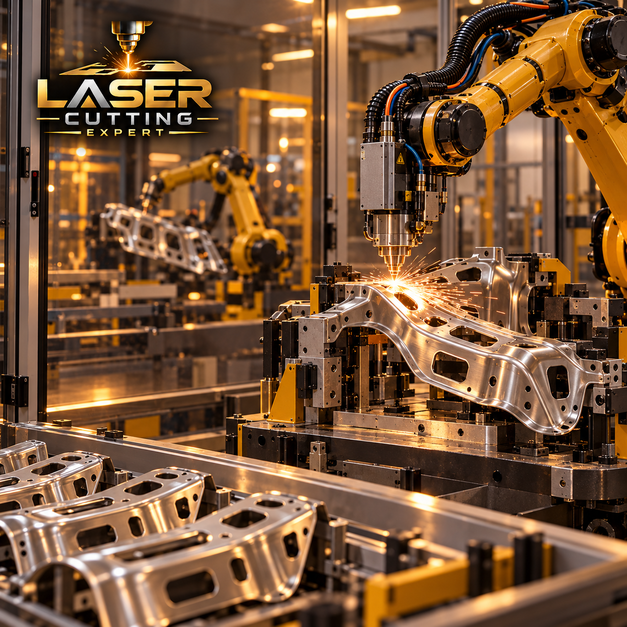
Automation becomes useful when a laser cutting job is not only about making one accurate part, but about producing components through a controlled and repeatable manufacturing process. Laser Cutting Expert provides automated laser cutting services from our London workshop for suitable sheet-metal parts, profiles, fabricated components and repeat manufacturing requirements. Depending on the project, laser cutting automation can help organise material processing, repeated cutting cycles and production of established components, while robotic laser cutting can be considered where the cutting path or component geometry needs a different type of controlled movement. We work 24/7 with no minimum order and support customers throughout London and across the UK.
CALL OR EMAIL US FOR PRICES
“Order any time of the day or night and receive your order on the same day in London. You are welcome to visit our laser cutting shop for an instant laser cutting service. On-site collection or free delivery can be arranged. Email us at laser@makergroup.uk for a quick quote or call us on 02036339857 for an instant price”.
Same Day Laser Cutting & Delivery
We can arrange a same day courier delivery with customer live tracking. Or customers can collect from our Laser Cutting Expert shop.

OPEN 24 HOUR
We are open 7 days a week, and you can order at any time. There is no last ordering time and no deadline. We also offer an overnight laser cutting service.

100% Satisfaction
High Quality Laser Cutting & 100% Customer Satisfaction Guarantee. Top-Rated Laser Cutting Company on Google.

Free File Check
We offer a free file check and proof before sending your artwork for laser cutting.
Automation Starts with a Stable Process
The best time to automate a process is normally after the component and manufacturing route are understood. If dimensions, materials and drawings change every few parts, automation may add complexity rather than remove it. Laser cutting automation works best when the job has a controlled input and a predictable output. That does not mean every order needs to contain thousands of identical pieces. A family of repeat components can also benefit from an organised digital workflow. The important point is that the production information is reliable. Material grade, thickness, CAD revision and required quantity should all be clear before an automated manufacturing cycle is built around them.
Automated Laser Cutting Services
Our automated laser cutting services can support suitable brackets, panels, guards, enclosure blanks, base plates, furniture components, signs, fabrication parts, washers, shims and other digitally defined products. Automation can help repeat established cutting operations without requiring an operator to recreate the manufacturing method for every individual component. The exact level of automation depends on the job and available production route. Some projects benefit mainly from automated machine cycles and sheet processing, while others require more specialised handling. We assess automation according to quantity, component size, material, geometry and production frequency rather than describing every CNC-controlled laser job as fully automated manufacturing.
Laser Cutting Automation for Repeat Components
Repeated components are an obvious application for laser cutting automation. Once a part has been approved, the same digital geometry can be returned to production for later batches. Products might include machine brackets, equipment panels, covers, mounting plates or standard components used across a product range. Repeat manufacturing still requires control. If material thickness or grade changes, the process may need reviewing even though the CAD remains the same. Drawing revisions also need clear management. Automation can repeat instructions efficiently, which makes correct instructions particularly important. An error in an approved production file can otherwise be repeated just as consistently as the correct geometry.
Robotic Laser Cutting
Robotic laser cutting uses controlled robotic movement to position a laser tool or interact with a component through a more flexible movement path than ordinary flat-sheet processing. It can be useful for suitable three-dimensional components, formed parts and specialist production where features exist on several surfaces. The exact application depends on robot reach, laser technology, component geometry and fixturing. Robotic processing should not be confused with ordinary flatbed cutting simply because both are computer controlled. For a flat bracket, a standard laser system may be far more practical. Robotics becomes valuable when its movement solves a real access, geometry or production problem.
When Robotic Cutting Makes Sense
A robot should earn its place in the manufacturing route. Robotic laser cutting can make sense when a component has three-dimensional surfaces, several cutting orientations or repeated trimming operations that are difficult to perform using a standard flatbed machine. Formed automotive-style panels, fabricated products and specialist moulded or shaped components can fall into this category depending on material and geometry. If the job is simply a flat sheet profile, adding a robot would normally create unnecessary complexity. We assess the component first and then decide which machine concept suits it. Advanced equipment is useful only when it provides a genuine manufacturing advantage.
Flat Sheet Automation
Many automated jobs remain two-dimensional. Sheet metal can be loaded, profiled and processed according to digital nesting and production instructions. Laser cutting automation can be useful for repeated mild steel, stainless steel and aluminium components where several parts are arranged across standard sheet sizes. Products can include brackets, machine panels, enclosure blanks, signs, base plates and fabrication profiles. Sheet utilisation still matters because automation does not make material waste irrelevant. Part orientation, grain direction, surface finish and later bending may restrict how profiles can be nested. A good automated workflow balances machine productivity with the requirements of the actual components being manufactured.
Automated Mild Steel Cutting
Mild steel is commonly used for repeat fabrication parts, machinery, brackets and general industrial components. Our automated laser cutting services can support suitable repeated mild-steel profiles where material and drawing information are controlled. Components may later move into bending, welding, machining or powder coating. If oxygen-assisted cutting is used for a particular steel job, the resulting oxide condition may need consideration before some coating processes. Material thickness also influences cutting speed and practical feature size. Structural components require engineering appropriate to their load and application. Automation helps manufacture the specified geometry; it does not validate whether that geometry is structurally suitable.
Automated Stainless Steel Cutting
Stainless steel components can include machine panels, kitchen parts, brackets, signs, guards and architectural products. Laser cutting automation can support repeat production where grade, thickness and surface requirements remain consistent. Brushed stainless may need controlled orientation so visible grain runs in the intended direction. Protective film can also affect handling and processing. If a component is intended for food, marine, chemical or other demanding environments, the correct stainless grade should be specified rather than assuming every stainless sheet provides the same corrosion resistance. Automated production improves repetition of approved geometry, but material specification remains fundamental to the finished component’s performance.
Automated Aluminium Cutting
Aluminium is used for lightweight panels, enclosures, signs, equipment parts and furniture components. Our automated laser cutting services can manufacture suitable repeated aluminium profiles where alloy, temper and thickness are known. If parts later move into bending, orientation and alloy behaviour may need consideration before nesting is finalised. Visible sheet also needs appropriate handling. Anodising or powder coating may follow after cutting and fabrication. Automated processing does not eliminate normal aluminium design rules. Very small features, narrow sections and tight bend requirements still need to be practical for the chosen material. Production efficiency should not come at the expense of component manufacturability.
Automated Sheet Nesting
Nesting determines how multiple parts are arranged across a sheet. Laser cutting automation can use digital production information to organise suitable profiles efficiently, but minimum waste is not the only objective. Brushed surface direction, wood grain, bend orientation and cosmetic requirements can limit how components may be rotated. Small parts also need appropriate spacing and handling. Several different part numbers can sometimes share the same sheet where material and thickness match. This can be useful for assemblies containing brackets, covers and plates. The nesting strategy should support the overall manufacturing requirement rather than simply achieving the highest possible percentage of material utilisation on a computer screen.
Part Families
Many manufactured products contain groups of similar components rather than thousands of one identical shape. Automated laser cutting services can support these part families when they use common materials and controlled CAD files. A machine manufacturer might require several bracket sizes, covers and panels within one equipment range. A furniture business may use related base plates and support components across several models. Digital production allows each geometry to remain individually identified while sharing an efficient manufacturing workflow. Part numbers and revision references become important because visual similarity can make components easy to confuse. Automation works best when digital organisation is as controlled as physical production.
Machine Panels
Machine builders often need repeated panels with openings for controls, ventilation and access. Laser cutting automation can support established panel designs where dimensions and material specifications have already been approved. Several panel variants can be produced for different machine models. If the panel later bends into an enclosure, flat development and bend information must remain coordinated with the cut geometry. Identification can also be incorporated through an appropriate marking process where required. Electrical and machine safety remain responsibilities of the equipment manufacturer. Automated laser cutting provides the physical panel accurately but does not establish whether openings, controls or guarding arrangements comply with the final machine’s safety requirements.
Machine Guards
Guards can include perforations, viewing openings, fixing holes and folded edges. Our automated laser cutting services can support repeat guard components for suitable equipment. Automation is useful when several identical machines need the same panels or when replacement guards are required over time. However, machine guarding is safety-critical. Opening dimensions, reach distances, strength and attachment method need proper risk assessment. A digitally repeated guard can still be unsafe if the original design is wrong. The machine manufacturer or responsible engineer should therefore approve the design before repeat production. Laser Cutting Expert manufactures according to that approved information rather than defining safety distances for unknown machinery.
Enclosure Blanks
Electrical and equipment enclosures often begin as flat blanks containing multiple holes, ventilation features and corner reliefs. Laser cutting automation can support repeat production of these established profiles before they move into folding and assembly. Several enclosure sizes can be managed as separate controlled part files. If equipment layouts change, the relevant revision should be updated rather than manually modifying individual production pieces. Electrical compliance, IP rating and EMC performance depend on the complete enclosure and installed equipment. Automated cutting controls geometry but does not certify these properties. A physical prototype should normally be checked before a new enclosure design enters regular production.
Brackets and Mounting Plates
Brackets and mounting plates are often small enough that many components can be nested onto one sheet. Automated laser cutting services can manufacture suitable repeated profiles with holes, slots and adjustment features already incorporated. Parts may then move into bending, welding or coating. A product family can contain several bracket variants that share the same material. Digital part identification helps keep these variants organised. Load-bearing brackets require appropriate engineering, and precision locating holes may need secondary machining. The laser can create the general component efficiently, but automation does not turn ordinary cut holes into bearing-quality bores or determine the safe load of the finished bracket.
Base Plates
Base plates can be used beneath machines, furniture, signs, frames and fabricated structures. Laser cutting automation can support repeated plates with custom outside shapes, fixing holes and connection features. Larger plates need suitable material handling, while small plates can often be arranged efficiently across a sheet. Where the plate becomes part of a structural assembly, material grade and thickness should follow the approved engineering design. Flatness and machining requirements also need to be communicated. If a base plate requires precision surfaces or bores, laser cutting may create the near-net blank before machining. Automated cutting should be viewed as one manufacturing stage rather than the answer to every final tolerance requirement.
Shims, Washers and Spacers
Small repeated profiles can benefit from an organised digital cutting process. Our automated laser cutting services can produce suitable custom shims, washers, rings and flat spacers in quantities ranging from development sets to repeat batches. Material thickness is particularly important for shims because the stock itself contributes to the final assembly dimension. If an exact stack height is required, sheet-thickness tolerance needs consideration. Very small internal diameters may require another manufacturing process depending on thickness and precision requirements. Automation can help repeat the outside geometry efficiently, while inspection requirements should be agreed separately where the components form part of a controlled engineering assembly.
Furniture Components
Furniture production can use repeated metal plates, brackets, frame parts and decorative components. Laser cutting automation can support suitable product ranges where the same components appear across multiple tables, shelves, cabinets or display systems. Digital files make it practical to manufacture several related component types without physical cutting dies. If parts are visible, surface direction and handling need consideration. Components that will be welded should be designed around assembly access. Furniture carrying people or significant loads requires proper structural testing. Automation helps create consistent parts, but consistency alone does not prove that a chair, bench or table is safe for its intended load. Our related CNC Laser Cutting service can also support suitable digitally controlled profile work where repeatable geometry is required.
Retail Display Components
Retail businesses may require repeated display brackets, product supports, sign holders and panels for several stores. Automated laser cutting services can help manufacture established component sets across repeat rollouts. The benefit is not simply speed using controlled digital files helps each location receive components based on the same approved geometry. Displays should still be tested with real products before large quantities are released because packaging sizes can differ from nominal design data. Freestanding public displays also need adequate stability. Where branding or printed graphics are required, these can be planned as later production stages rather than allowing decorative operations to interfere with the basic component manufacturing sequence.
Signage Components
Sign companies can use laser cutting automation for repeat sign trays, mounting plates, letters, fixing brackets and support components. This can be useful for organisations installing similar branding across several branches or properties. Each location may require different dimensions while still using the same general construction. Digital files allow those variants to remain controlled. Exterior signage needs appropriate material, coating and structural support for the installation environment. Large signs can experience significant wind loads. Automated cutting manufactures the specified pieces but does not determine whether the complete sign structure is safely engineered or installed. Those responsibilities remain with the sign designer and installer.
Architectural Panels
Decorative screens and architectural panels can contain hundreds of repeated cut-outs. Automated laser cutting services can produce suitable patterns in metal sheet for interior panels, privacy screens, façade components and landscape products. Pattern density influences both machine time and panel stiffness. Removing a large percentage of material can leave the sheet flexible, particularly before folds or frames are added. Outdoor architectural components need suitable support and corrosion protection. Where panels function as balustrades, barriers or other safety-related building elements, the complete system requires appropriate engineering and regulatory consideration. A decorative pattern should never be assumed structurally suitable solely because it can be laser cut accurately.
Repeated Garden Screens
Garden screens, privacy panels and decorative outdoor products can be produced in repeated sizes or pattern families. Laser cutting automation can help manufacture suitable mild steel, aluminium, stainless steel or Corten panels from approved artwork. Corten products require consideration for weathering and early runoff, while mild steel normally needs appropriate corrosion protection. Large panels may require folded returns, frames or supports to improve rigidity. Automated cutting can reproduce the decorative geometry consistently, but outdoor installation needs to account for wind and fixing conditions. Customers developing a new screen range can begin with one panel before moving into repeated sizes or batches.
Automated Cutting for Fabrication Kits
A fabrication kit can contain brackets, plates, gussets, covers and connection components that will later be welded together. Automated laser cutting services can produce these related parts from controlled files, helping the fabricator avoid repeated manual marking and cutting. Tabs, slots and locating features can be included where they assist assembly. Part identification is useful when several profiles look similar. The kit should still be designed around real welding access and material tolerances. Structural fabrications require appropriate engineering and qualified fabrication procedures. Automation can prepare components efficiently, but it does not replace the judgement and quality controls required during welding and final assembly.
Robotic Cutting of Formed Parts
Flatbed laser cutting is not suitable for every component. Robotic laser cutting can be considered where features need to be created on formed or three-dimensional parts. A robot can potentially approach different surfaces by changing tool orientation through its programmed movement. Applications may include suitable formed sheet components, fabricated products and specialist development parts. Accurate fixturing becomes important because the robot needs the physical component to sit where the digital programme expects it. If forming variation is excessive, cut positions may shift relative to the actual part. Repeat robotic work therefore depends on consistency in both the incoming component and the cutting setup.
Robotic Trimming
Some formed components need excess material removed after shaping. Robotic laser cutting can be considered for suitable trimming operations where a controlled path needs to follow three-dimensional geometry. This differs from cutting the original flat blank because the final surface already exists. Trimming can be relevant to certain fabricated, formed or moulded products depending on material. The robot path, laser angle and fixture all need to work together. If the edge needs a machining-quality finish or the material reacts poorly to thermal processing, another method may be preferable. We assess the complete requirement rather than assuming robotic trimming is automatically the best approach for every formed part.
Robotic Holes and Openings
A formed product may need holes or openings on several faces after it has taken shape. Robotic laser cutting can provide controlled access for suitable geometries where conventional flat processing cannot reach the final surfaces. This may be useful during prototype development when opening positions depend on the formed component. However, very precise bores may still need drilling, reaming or machining. Forming variation must also be considered. A hole positioned relative to a theoretical CAD surface may not align if the real component has significant springback or distortion. For this reason, stable upstream forming is an important part of repeat robotic processing.
Robotic Cutting and Fixtures
Fixturing is central to successful robotic laser cutting. The robot can repeat a programmed path, but that path is only useful if every workpiece arrives in the expected position. A fixture locates the component and holds it stable during processing. Prototype work may use a simpler fixture, while repeat production can justify a more developed setup. Fixtures must also avoid blocking the laser path or creating unwanted reflections and heat issues. If a component varies substantially from piece to piece, automation may not correct that variation automatically. The incoming manufacturing process needs sufficient consistency for the robotic operation to remain reliable.
Robot Reach and Access
A robotic arm has a defined working envelope. Robotic laser cutting projects therefore need to consider whether the tool can physically reach the required features at suitable angles without colliding with the component or fixture. A CAD model may show that a cut exists, but it does not automatically prove that a real cutting head can access it. Deep recesses, enclosed shapes and tightly spaced surfaces can restrict movement. Component orientation within the cell may need to change to improve access. This is one reason specialist robotic work requires process planning rather than simply importing a 3D model and pressing a start button.
Repeatability and Accuracy
Automation and accuracy are related but not identical concepts. Laser cutting automation can repeat a programmed operation consistently, but the final component still depends on material behaviour, machine capability and incoming stock. Robotic laser cutting additionally depends on robot positioning, fixture accuracy and component consistency. A repeatable process can repeatedly produce the wrong dimension if the original programme is incorrect. Critical dimensions should therefore be verified during setup and prototype approval. Where machining-level tolerance is required, laser cutting may produce a near-net feature before a secondary precision process. The required accuracy should follow component function rather than assumptions about what the word “automated” implies.
Sensors and Process Monitoring
Modern automated manufacturing can use machine monitoring and sensors to support consistent operation. The exact systems depend on the equipment and process. In laser cutting automation, monitoring can help identify machine conditions, material handling status or production interruptions. Specialist robotic cells may also use additional positioning or process information. Monitoring should not be confused with automatic product certification. A machine reporting that it completed its programmed cycle does not prove that a safety-critical component meets every engineering requirement. Where formal inspection or documented quality control is required, those requirements need to be defined separately from ordinary automated machine operation.
Automation for Short Runs
Automation is often associated with very large quantities, but digital laser cutting automation can also benefit shorter repeat batches. If a component has already been programmed and approved, producing another set of ten or twenty parts can be straightforward without creating physical tooling. This is useful for specialist machinery, replacement parts, furniture ranges and products with irregular demand. The economics are different from mass production, but automation can still reduce repeated setup work. There is no minimum order at Laser Cutting Expert, so customers do not need to manufacture an unnecessarily large stock simply because the component is intended to return to production later.
Automation for Larger Batches
Larger repeat quantities can make automated laser cutting services particularly useful because production planning, nesting and established machine programmes can be reused efficiently. Products may include equipment components, brackets, panels and commercial fabrication parts. Large quantity does not remove the need for material and drawing control. If a batch contains the wrong revision, automation can reproduce that mistake across many components quickly. The approved file, quantity and material should therefore be checked before production begins. For new products, manufacturing one prototype or small pre-production batch is usually sensible before a much larger quantity is released.
Automation for Replacement Parts
Manufacturers sometimes need replacement components months or years after the original machine or product was built. If a controlled CAD file exists, laser cutting automation can support repeat production without recreating physical cutting tools. This is useful for machine covers, brackets, panels and other flat components. The challenge is ensuring that the stored drawing actually matches the installed equipment version. Product designs can change over time. Part numbers and revision references should therefore be checked before replacement manufacturing. Where no reliable file exists, an existing component may need measuring and redrawing before it can become a controlled production part.
Prototype Before Automation
It is usually better to solve design problems before building a repeat process around them. Our automated laser cutting services can begin with a single prototype or small development quantity. The component can be checked for fit, assembly and function. If holes need moving or a profile needs changing, the CAD can be revised without disrupting a large production batch. Once approved, the stable file becomes a stronger basis for automation. This approach is useful for new brackets, panels, enclosures, furniture parts and fabrication kits. Automation should scale a proven design rather than make an untested design difficult to change.
Moving from Manual Development to Automated Production
New products often begin with hands-on development. A designer may test several profiles, manually assemble prototypes and adjust dimensions between versions. Once the geometry stops changing, laser cutting automation can take over more of the repetitive production work. This transition should happen at the right time. Automating too early can make every design revision more disruptive. Waiting too long can leave operators repeating unnecessary manual steps. A practical workflow moves gradually from experimental prototypes into controlled files, approved materials and predictable manufacturing. This keeps the flexibility of product development while preparing the component for efficient repeat production when demand increases.
CAD Data for Automated Production
Reliable digital information is the foundation of automated laser cutting services. Flat parts may use DXF or other suitable vector geometry, while three-dimensional robotic projects can require full CAD models and additional manufacturing information. Material, thickness and revision should be clearly identified. Construction lines and duplicate geometry should not be mixed with actual cut paths. For assemblies, individual components need clear part references. If the design changes, the updated revision should replace the previous production instruction in a controlled way. Automation depends on data, so poor file management can create production problems even when the physical machinery itself is working correctly.
Revision Control
A manufacturing business may have several versions of what appears to be the same bracket or panel. Laser cutting automation makes revision control especially important because approved files can return to production repeatedly. A simple change such as moving one hole can create a new component version even if the outside shape remains identical. Drawing numbers, revision letters or dates can help distinguish them. Customers should clearly identify which file supersedes the previous design. If an older revision is still used on another product, it should not simply be deleted or overwritten without record. Digital production works best when file control reflects the same discipline used for physical components.
Material Traceability
Some industries require more than knowing that a component is made from steel or aluminium. Grade, batch and certification may matter. Automated laser cutting services can work within specified material requirements where these have been agreed before production. Formal traceability, inspection reports or industry-specific quality documentation should never be assumed as part of an ordinary cutting order. Aerospace, medical, pressure, automotive safety and other regulated work may require approved systems beyond general production. Customers should state these requirements at the enquiry stage. Automation can help repeat the manufacturing operation, but documentation and certification are separate elements of a controlled quality system.
Automation and Bending
Laser-cut components often move into press-brake forming after profiling. Laser cutting automation can prepare repeated flat blanks for brackets, trays and enclosures, while bending creates the final three-dimensional form. The flat development needs to remain coordinated with the forming process. If bend radius, tooling or material changes, finished dimensions can also change. Automated cutting cannot compensate for an incorrect bend allowance in the original drawing. For repeat production, it is useful to approve the complete cut-and-folded component rather than checking only the flat blank. This ensures the digital cutting programme is connected to the actual result needed after fabrication.
Automation and Welding
Fabrication kits can use automated cutting to prepare parts before welding. Tabs, slots and locating features can reduce manual measuring during assembly. Automated laser cutting services can therefore support repeat welded products such as machine frames, furniture bases and equipment assemblies. Welding still introduces heat and distortion, so accurate cut components do not guarantee a perfectly dimensioned final fabrication. Fixtures and welding sequence may be required. Galvanised steel needs appropriate fume controls because welding zinc produces hazardous zinc oxide fumes. Structural welding must follow relevant procedures and engineering. Automation prepares the parts; skilled fabrication remains a separate production discipline.
Automation and Finishing
After cutting, components may need deburring, bending, welding, powder coating, painting, anodising or another finish. Laser cutting automation should therefore be planned as part of the wider production route. A part intended for coating may need edge preparation, while a brushed stainless component may require careful surface handling. Decorative products can also need engraving or printing. Automating the first stage does not mean every later operation should automatically be mechanised. Each process should be selected according to quantity, quality requirement and component design. The goal is a practical finished product rather than maximising the number of automated operations used during manufacture.
Material Handling
Material movement can consume significant production time, particularly with large or heavy sheets. Automated systems can help manage suitable sheet loading, unloading or part processing depending on equipment configuration. In laser cutting automation, material handling should match sheet size, weight and surface requirements. Decorative stainless or aluminium may need different handling from ordinary structural steel because scratches can affect the final product. Small components can also require organised separation after cutting. Automation should reduce unnecessary handling without creating damage or confusion between part numbers. For unusual materials or one-off work, manual handling may remain the more sensible option.
Automation Does Not Mean Zero People
An automated machine still depends on people to prepare drawings, select materials, inspect results, maintain equipment and respond when something changes. Automated laser cutting services reduce repetitive operations; they do not eliminate manufacturing judgement. Operators need to understand how material behaves and whether the result looks correct. Programmers need to prepare suitable cutting information. Engineers and designers remain responsible for component requirements. This human oversight becomes particularly important when a new material, thickness or geometry enters production. Automation is most useful when skilled people decide what should be automated and then allow the equipment to repeat that well-defined process consistently.
When Automation Is Not Worth It
A complicated automated setup is not automatically the best option for one simple component. If a customer needs a single straightforward bracket, ordinary laser cutting may complete it more efficiently. Robotic laser cutting may also be unnecessary when all geometry can be produced easily from flat sheet. The cost and time involved in fixturing, programming and proving a specialist automated process should be justified by the component or future production requirement. We therefore choose the simplest suitable manufacturing route. Automation should remove a genuine production problem, improve repeatability or support useful scale rather than being added simply because advanced equipment sounds more impressive.
No Minimum Order
Customers can use Laser Cutting Expert without committing to a large automated production run. Our automated laser cutting services can form part of a workflow that starts with one prototype and grows into repeat batches later. This is particularly useful for new products where demand has not yet been established. A component can be tested, revised and approved before a stable production programme is used repeatedly. Small replacement batches are also welcome. No minimum order gives manufacturers more control over stock because they can produce the quantity they currently need rather than ordering unnecessary parts purely to satisfy a supplier’s minimum manufacturing quantity.
24/7 Automated Laser Cutting in London
Our London production operates 24/7, including weekends and bank holidays. Suitable established laser cutting automation jobs can be useful for urgent production because approved files and known materials reduce some preparation stages. Same-day production and courier delivery can be considered for suitable London orders, depending on material availability, quantity and current capacity. New robotic laser cutting projects generally require more assessment because component geometry, fixtures and programming need to be established before production. Customers with urgent work should provide the latest CAD, material specification, quantity and deadline together so we can determine the most practical manufacturing route quickly.
Automated Laser Cutting Across the UK
Laser Cutting Expert provides automated laser cutting services from London for customers throughout the UK. Manufacturers, engineers, fabricators, furniture businesses, sign companies and product developers can send production files electronically and receive suitable completed components by nationwide delivery. Projects can range from short repeat batches to established production parts and specialist robotic laser cutting enquiries. We can work with customer-supplied designs or provide suitable design support where manufacturing files need preparation. Next-day UK delivery is available for appropriate completed jobs. Production speed depends on the actual component, quantity, material and required secondary operations rather than automation alone.
FAQs About Automated & Robotic Laser Cutting
1. What is laser cutting automation?
Laser cutting automation uses controlled digital and machine processes to reduce repetitive production work and support consistent manufacturing of suitable laser-cut components.
2. What is robotic laser cutting?
Robotic laser cutting uses a programmed robotic system to move a laser tool around suitable components, particularly where three-dimensional access or flexible cutting orientation is required.
3. What are automated laser cutting services used for?
Our automated laser cutting services can support suitable brackets, panels, guards, enclosures, fabrication components, furniture parts, signs, shims and other repeat products.
4. Is robotic laser cutting better than flatbed cutting?
Not automatically. Flatbed cutting is normally more practical for ordinary flat sheet. Robotics becomes useful when component geometry or access requires more flexible movement.
5. Can automation be used for small batches?
Yes. Digital automation can still be useful for short repeat batches, particularly when an approved component returns to production regularly.
6. Can I prototype a component before automated production?
Yes. There is no minimum order, and producing a prototype before establishing repeat production is often the better approach.
7. Can automated cutting include different parts on one sheet?
Yes, suitable components using the same material and thickness can often be nested together, subject to orientation and production requirements.
8. Do automated machines guarantee perfect accuracy?
No. Accuracy still depends on the machine, material, geometry, fixturing and process. Automation primarily helps repeat a controlled manufacturing operation consistently.
9. Do you offer same-day automated laser cutting?
Suitable established jobs can be considered for same-day London production. New robotic or specialist automation projects may require additional programming and setup time.
10. Do you provide automated laser cutting across the UK?
Yes. Production is based in London, and suitable completed components can be delivered throughout the UK.