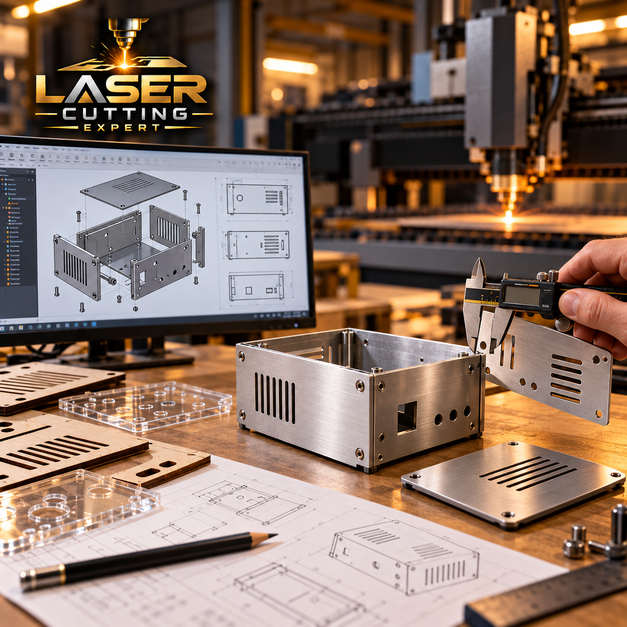
A CO₂ laser becomes particularly useful when a project moves beyond ordinary metal sheet and into materials such as acrylic, wood, plywood, MDF, paper, card, leather and plastics or textiles. Laser Cutting Expert provides co2 laser cutting from our London workshop for custom products, prototypes, signs, displays, models, packaging, gifts, components and decorative work. Our co2 laser cutting services are available for a single item, short batches and repeat production with no minimum quantity. We can work from customer artwork or help prepare suitable production files. Where a product needs surface detail as well as its physical shape, co2 laser cutting and engraving can combine both operations within one project.
CALL OR EMAIL US FOR PRICES
“Order any time of the day or night and receive your order on the same day in London. You are welcome to visit our laser cutting shop for an instant laser cutting service. On-site collection or free delivery can be arranged. Email us at laser@makergroup.uk for a quick quote or call us on 02036339857 for an instant price”.
Same Day Laser Cutting & Delivery
We can arrange a same day courier delivery with customer live tracking. Or customers can collect from our Laser Cutting Expert shop.
OPEN 24 HOUR
We are open 7 days a week, and you can order at any time. There is no last ordering time and no deadline. We also offer an overnight laser cutting service.
100% Satisfaction
High Quality Laser Cutting & 100% Customer Satisfaction Guarantee. Top-Rated Laser Cutting Company on Google.

Free File Check
We offer a free file check and proof before sending your artwork for laser cutting.
Why CO2 Laser Cutting Has Its Own Place
Different laser technologies interact with materials in different ways. Co2 laser cutting is widely associated with organic materials and many non-metal sheet products because its wavelength is readily absorbed by materials such as acrylic, timber and paper. That makes it useful for applications very different from heavy metal fabrication. A CO₂ laser can create an outside profile, internal openings, intricate patterns and small custom shapes directly from digital artwork. Material identification still matters. Two sheets that look similar may have completely different chemical compositions. We therefore select the process according to the actual material rather than assuming every board, plastic, fabric or synthetic product is safe for CO₂ processing.
CO2 Laser Cutting Services
Our co2 laser cutting services support businesses, designers, artists, students, model makers, event companies, sign makers and private customers. Products can include acrylic signs, plywood models, MDF letters, paper invitations, leather tags, fabric shapes, stencils, packaging prototypes, boxes, puzzles, keyrings, awards and decorative panels. Each material brings different production considerations, so the same settings are not simply reused across every job. Thickness, density, coatings, adhesives and surface finish all affect processing. Customers can supply suitable materials or discuss sourcing with us. Production is based in London, with same-day options for suitable urgent work and delivery available throughout the UK.
CO2 Laser Cutting and Engraving
Cutting and engraving solve two different parts of a design. Cutting creates the physical shape, while engraving adds information or artwork to the surface. Co2 laser cutting and engraving can therefore produce a complete product from one digital design. A wooden plaque might have its outer profile cut while a logo is engraved into the face. An acrylic sign can contain cut mounting holes and engraved lettering. A leather tag can be shaped and personalised. Our related 3D & Multi-Axis Laser Cutting service is useful for projects where these two operations need to work together. The appropriate engraving appearance depends on material, surface and the detail required.
Acrylic CO2 Laser Cutting
Acrylic is one of the best-known materials associated with co2 laser cutting. Suitable clear, coloured, frosted and mirrored acrylic sheets can be shaped into signs, letters, awards, display parts, table numbers, menu holders, keyrings, jewellery and decorative products. Acrylic can provide a clean-looking cut edge when the material and settings are appropriate. Cast and extruded acrylic can behave differently, particularly when engraving is involved. Thickness also affects small features and internal corners. Protective films should be identified before processing. Acrylic should never be confused with PVC-based transparent plastic, which must not be laser cut because heating PVC releases hazardous and corrosive chlorine-containing gases.
Clear Acrylic Products
Clear acrylic is useful where transparency is part of the design. Co2 laser cutting services can produce clear display panels, menu holders, directional signs, award components, table settings, protective panels and custom shapes. Engraving can create frosted-looking text or patterns that contrast with the transparent material. Printing can also be combined with suitable acrylic products where colour graphics are needed. Small holes should have enough surrounding material to resist cracking during installation. If screws are used, overtightening should be avoided. Acrylic is visually similar to glass in some applications, but its mechanical and thermal behaviour is different and should be considered when designing the finished product.
Coloured Acrylic Shapes
Coloured acrylic can turn a simple cut profile into a finished visual component without requiring paint. Co2 laser cutting can create coloured letters, logos, jewellery, signs, model parts, ornaments and display elements. Several colours can be layered to build up a more complex design. Material thickness and opacity influence the final appearance. Fine script lettering needs enough stroke width to remain strong after cutting. If components will be mounted individually, fixing methods should be considered before production so appropriate holes or backing shapes can be included. Outdoor acrylic products should use suitable material grades and installation methods according to their expected exposure and physical size.
Mirrored Acrylic
Mirrored acrylic is often used for wedding décor, signs, table numbers, decorative lettering and personalised products. Co2 laser cutting and engraving can create suitable custom profiles and surface details, depending on the construction of the mirror sheet. Mirrored acrylic should not automatically be treated like ordinary clear acrylic because the reflective backing forms part of the product. Customers should specify the material where possible. Fine edges and small internal areas need enough material to remain stable. The surface can scratch during handling, so protective film may be retained through appropriate stages of production. Finished pieces should also be installed without placing unnecessary stress around holes or narrow sections.
Wood CO2 Laser Cutting
Wood responds to laser heat in a very different way from acrylic. Co2 laser cutting can produce signs, ornaments, wall art, boxes, models, craft shapes, coasters, bookmarks and decorative products from suitable timber. Natural variation is part of working with wood. Grain direction, resin content, moisture and density can change cutting behaviour even within the same species. A darker edge is common and can become part of the design. Some woods produce more smoke or resin deposits than others. Treated, coated or unknown timber products need additional assessment because chemical treatments may affect both safety and the finished edge.
Plywood CO2 Laser Cutting
Plywood is widely used for models, boxes, signs, puzzles, furniture prototypes, ornaments and craft products. Our co2 laser cutting services can produce detailed plywood components from suitable sheet grades. Unlike solid timber, plywood contains multiple veneers and adhesive layers. Internal glue pockets or voids can cause local variation during cutting. Birch plywood is often selected for detailed work, but exact construction still varies between suppliers. Actual sheet thickness is particularly important for press-fit products. A nominal 3 mm board may not measure exactly 3 mm, so slots and tabs should be tested using the real production material before a large interlocking kit is manufactured.
MDF CO2 Laser Cutting
MDF offers a relatively uniform surface and is commonly used for signs, letters, architectural models, decorative panels, prototypes and craft products. Co2 laser cutting can create detailed profiles without following natural wood grain. The cut edge often becomes noticeably darker than the face, which can be left visible or prepared for painting. Different MDF grades contain different resin systems and densities, so specialist or treated boards should be identified before production. Very thick MDF can require a different manufacturing approach depending on the desired quality. Products intended for damp or outdoor conditions should also use a suitable board rather than assuming ordinary interior MDF will remain stable.
Laser-Cut Wooden Signs
Wooden signs can range from simple house names to layered business logos and decorative wall pieces. Co2 laser cutting and engraving allows the outside shape, lettering and surface artwork to be coordinated in one design. Plywood and suitable solid timber can each create a different appearance. Letters can be cut separately, engraved into a solid panel or combined as layered pieces. Outdoor wooden signs require appropriate material selection, sealing and maintenance because laser cutting itself does not make timber weatherproof. Mounting also needs consideration. Large signs should have enough material around fixing points, while delicate script designs may require a backing panel to support narrow letter connections.
Architectural Models
Architecture students and professional model makers can use co2 laser cutting services for walls, floors, roof pieces, façade elements, windows and site-model components. Card, plywood, MDF and acrylic can be combined to represent different materials within the model. Scale needs careful thought because full-size architectural details may become impossibly small when reduced to 1:100 or 1:200. Engraving can represent brickwork, panel lines or surface changes without cutting every feature completely through. Numbering parts can also simplify assembly. A small joint test is useful where tabs and slots are used because actual sheet thickness and laser kerf influence how tightly model components fit together.
Model Railway Products
Model railway projects often require repeated windows, building walls, platform components, fences and scenic details. Co2 laser cutting can manufacture suitable miniature components from plywood, MDF, card and acrylic. Fine engraved lines can represent brickwork, doors or panel details, while cutting defines the main shape. True scale sometimes needs adjustment because a perfectly scaled railing or frame may become too fragile to handle. Designers can slightly increase delicate features while keeping the model visually convincing. Interlocking buildings should be tested before complete kits are produced. Because there is no minimum order, hobbyists and model makers can manufacture individual replacement parts as well as complete sets.
Laser-Cut Boxes
Boxes are a natural application for sheet materials such as plywood, MDF and acrylic. Co2 laser cutting services can produce panels with tabs, slots, hinges, dividers and decorative openings. Products can include gift boxes, presentation boxes, storage boxes, packaging prototypes and display cases. Joint design depends on material thickness and required appearance. Finger joints can create visible construction, while hidden internal supports may suit a cleaner product. Engraved names or logos can be added before assembly. A prototype is useful when the box needs to fit a specific object because real product dimensions, padding and clearance can affect the internal space required.
Jigsaw Puzzles and Games
Plywood, wood and acrylic can be used for custom puzzles and game components. Co2 laser cutting allows irregular shapes to be produced directly from digital artwork. Jigsaw pieces need enough material around narrow connections to survive repeated use. Kerf also influences how loosely or tightly pieces fit. Products can include personalised puzzles, educational games, tic-tac-toe sets, construction kits and children’s activity pieces. Age suitability and product safety remain the responsibility of the manufacturer or seller, particularly for small components that may present choking hazards. Surface coatings and finishes used after cutting should also be selected according to how the finished product will be handled.
Paper Laser Cutting
Paper is thin enough to support very detailed patterns, making co2 laser cutting useful for invitations, greeting cards, artwork, decorative inserts, bookmarks and packaging prototypes. Fine details still need sufficient connections so the design can be removed from the sheet without tearing. Light-coloured paper may show slight heat marking around cut edges. Coated, laminated or synthetic papers need material identification before processing because their coatings can behave differently under laser heat. Printed sheets can also be contour cut where suitable registration is available. For large runs, another die-cutting or finishing method may sometimes be more economical, so production quantity should be considered alongside design complexity.
Card Laser Cutting
Card provides more rigidity than ordinary paper while still supporting intricate cutting. Co2 laser cutting services can produce wedding stationery, greeting cards, place cards, packaging samples, tags, presentation folders and decorative products. Folded pieces need a practical crease or scoring strategy because a through-cut is not the same as a fold line. The grain direction of some card stocks can also affect folding. Printed designs need suitable bleed where cutting follows the artwork. Metallic, laminated or heavily coated card should be identified before production. A sample is useful when the exact colour and edge appearance matter, particularly for premium stationery or event products.
Wedding Invitations
Intricate wedding stationery is a common use for co2 laser cutting because delicate floral, lace and geometric patterns can be created without physical cutting dies. Invitations, save-the-date cards, place cards, menu covers and favour tags can all use custom cut-outs. Names and dates may also be engraved onto suitable materials such as wood or acrylic. Very thin bridges should be avoided because invitations need to survive handling, envelopes and delivery. Paper and card colour can influence how visible the laser edge becomes. Couples or wedding suppliers can order a sample first before approving the complete stationery set, which is particularly useful for detailed or layered designs.
Greeting Cards
Greeting cards can use co2 laser cutting services for birthdays, anniversaries, Christmas, graduations and other occasions. Cut-out lettering, windows and decorative patterns can be combined with printing. A folded card needs enough uncut material around the spine to remain durable. If the design contains small loose areas, bridges may be needed to keep them connected. Different stocks react differently to laser heat, so the selected card should be tested where appearance is critical. Personalised names or messages can also be produced in short quantities. There is no minimum order, making the process suitable for prototypes, individual premium cards and limited-edition stationery.
Packaging Prototypes
Packaging designers can use co2 laser cutting to test carton shapes, inserts, windows and folding structures before investing in production tooling. Card and suitable board can be cut directly from CAD, allowing dimensions to change between prototypes. This is particularly useful when a package needs to fit a physical product closely. One version can be assembled, measured and adjusted before another is cut. Laser-produced prototypes do not necessarily represent the exact edge or crease characteristics of high-volume die-cut production, but they can validate overall geometry. Printed prototypes can also help evaluate branding, panel layout and how graphics wrap around folds before the packaging design is finalised.
Leather CO2 Laser Cutting
Suitable genuine leather can be shaped using co2 laser cutting for wallets, card holders, keyrings, luggage tags, patches, straps, jewellery and other accessories. The process can produce repeatable outlines without requiring a physical cutting die for every design. Natural leather varies in thickness, grain, scars and colour, so usable areas need to be selected carefully. Laser-cut edges may darken and can have a characteristic appearance. The result should be considered during product design rather than treated as a defect afterwards. Thick or heavily treated leather may require individual assessment, particularly where coatings or finishes affect how the material responds to heat.
CO2 Laser Cutting and Engraving Leather
Personalisation can be added while the leather component is being produced. Co2 laser cutting and engraving can create the outer shape and add names, logos, dates or patterns to suitable genuine leather. Products include luggage tags, keyrings, patches, bookmarks, wallet parts and personalised gifts. Engraving appearance varies with leather colour and surface treatment. Natural hide does not produce exactly identical marking across every piece. Synthetic leather requires particular caution. PVC and chlorine-containing faux leather must never be laser cut or engraved. If the composition is unknown, supplier specifications or an SDS should be provided before we consider laser processing.
Fabric CO2 Laser Cutting
Selected fabrics can be processed with co2 laser cutting services for apparel components, appliqué, patches, craft products, upholstery patterns and prototype textile pieces. Synthetic fibres can sometimes develop a sealed edge under heat, reducing fraying, while natural fibres behave differently. The exact fibre composition must be known because visually similar fabrics can contain different coatings or blends. PVC-coated textiles must not be laser cut. Technical fabrics, fire-retardant treatments and adhesive-backed materials require additional assessment. Pattern layout can also follow grain or directional requirements. For garment and upholstery applications, laser cutting creates the shape but does not establish the performance or certification of the finished textile product.
Felt Laser Cutting
Felt can be useful for craft products, decorations, inserts, display pieces, toys and design prototypes. Co2 laser cutting can create detailed shapes where the felt composition is suitable. Wool felt and synthetic felt behave differently, so material identification remains important. Synthetic products may contain blends or additives that affect processing. Cut quality also changes with thickness and density. Products can include flowers, letters, ornaments, coasters and layered decorative designs. Items intended for children require appropriate product-safety assessment by the manufacturer. Laser cutting provides the geometry, but it does not certify the material or finished product for a particular age group or use.
Foam Cutting
Some identified foam materials can be suitable for CO₂ processing and used for case inserts, presentation packaging, tool-control systems, protective pads and craft projects. Co2 laser cutting services can create cavities that follow the outline of products or equipment. Foam chemistry is critical. PVC and chlorine-containing foams must not be laser cut, and unknown foam should not be processed until its composition is confirmed. Density and thickness influence both cut appearance and cushioning performance. Electronics packaging may require anti-static or conductive foam rather than ordinary cushioning material. The customer should therefore select foam according to the protection requirement, not simply according to how easily it can be cut.
Stencils and Templates
Templates and stencils can be manufactured from suitable acrylic, card, plywood and identified polyester films. Co2 laser cutting allows custom text, symbols and patterns to be created without a physical die. Applications include painting stencils, workshop templates, craft guides and marking aids. Stencil lettering requires bridges to retain enclosed areas such as the centres of A, O and P. Very narrow bridges can tear during repeated use. Plastic films must be correctly identified. PVC and chlorine-containing vinyl are prohibited, even if they look similar to laser-compatible polyester film. Unknown flexible plastic should therefore never be accepted solely because the supplier describes it as “stencil material”.
Laser-Cut Keyrings
Acrylic, wood, plywood and suitable leather can be used for personalised keyrings. Co2 laser cutting and engraving can shape the product while adding names, logos or messages. Connection holes need enough surrounding material to withstand everyday handling. Acrylic designs should avoid extremely thin projections that can snap. Wooden keyrings can include engraved artwork, while leather versions can use engraved names or branding. Products can be made individually or in batches for businesses, events and gifts. Hardware is a separate consideration from the laser-cut body, so the size of rings, chains or fittings should be considered when designing the attachment hole.
Coasters
Coasters can be made from suitable wood, plywood, acrylic, leather and other compatible materials. Co2 laser cutting services allow round, square or custom outside shapes to be combined with engraved patterns, names and logos. Material choice should suit how the coaster will actually be used. Wood and leather can react to moisture, while acrylic behaves differently around heat. A decorative item intended only for display does not need the same performance as a coaster used daily under hot drinks. Surface treatments and coatings may also be required depending on the product. Businesses can order branded sets, while personalised designs can be produced individually without a minimum quantity.
Bookmarks
Bookmarks are simple products but can contain surprisingly detailed design work. Co2 laser cutting can create suitable wooden, acrylic, card and leather bookmarks with custom shapes, names and patterns. Thin materials should have enough width around decorative openings to avoid breaking during everyday use. Tassel or ribbon holes also need sufficient surrounding material. Co2 laser cutting and engraving can add quotes, names or logos without cutting those details completely through the bookmark. For printed card designs, cutting can follow the outer artwork where appropriate. Personalised bookmarks can be produced as individual gifts or repeated for schools, businesses, events and promotional use.
Lampshades and Lighting Components
Laser-cut patterns can create decorative lighting effects in suitable plywood, MDF, card and acrylic components. Co2 laser cutting services can manufacture flat shade panels, lantern pieces and decorative screens that are later assembled into the final lighting product. Pattern density affects both appearance and structural strength. Material near lamps or electrical components also needs appropriate heat and fire consideration. Laser cutting does not certify a finished lampshade or light fitting as safe. The product manufacturer remains responsible for electrical components, clearances, temperature and material suitability. Prototype assembly can help establish whether the cut pattern creates the intended light distribution before a full product range is produced.
Wall Art and Decorations
Maps, trees, flowers, silhouettes, quotes and layered artwork can be produced using co2 laser cutting from suitable wood, plywood, MDF and acrylic. Layered construction allows several colours or materials to create depth. Fine details should be adjusted according to the final size because artwork that works at 800 mm wide may become too fragile at 150 mm. Mounting should also be considered during design. Large wall pieces need enough support to remain flat and secure. Engraved details can represent small lines that would be impractical as complete cut-outs. This combination provides more design freedom while keeping the physical artwork stable enough for handling and installation.
Christmas Decorations
Stars, snowflakes, names, trees, baubles and personalised ornaments are well suited to co2 laser cutting services. Plywood, wood, acrylic, card and suitable felt can each create a different style. Hanging holes need enough material around them, particularly on thin wooden decorations. Engraving can add names, dates and messages without weakening the overall shape. Intricate snowflake designs should maintain practical connections between branches. Seasonal products can be produced in small personalised quantities or repeated batches. Businesses can also create branded ornaments for customers or staff. Production planning becomes particularly important during busy seasonal periods where large quantities and fixed delivery dates need to be coordinated.
Boxes with Engraved Branding
Presentation boxes can combine laser-cut construction with surface branding. Co2 laser cutting and engraving can create finger-jointed plywood boxes, acrylic cases and other suitable sheet-built products with names, logos or instructions. Internal dividers can be designed around the product being packaged. A prototype is useful before a larger quantity because joint fit depends on actual material thickness. Engraving should also be positioned with assembly in mind so text does not end up upside down or hidden after panels are joined. Businesses can use branded boxes for samples, gifts and presentation sets, while individual customers can order personalised boxes without needing a large manufacturing quantity.
Awards and Trophies
Acrylic and wood can be combined to create custom awards, plaques and trophy components. Co2 laser cutting services can shape bases, panels and decorative elements, while engraving adds names, dates, categories and logos. Clear acrylic can create a modern transparent appearance, while timber gives a warmer finish. Layered construction can combine several materials within the same award. Stability needs consideration if the award is designed to stand upright. Variable names can be produced from one general design, allowing each recipient’s piece to be personalised. Event organisers can order one prototype first to confirm size and appearance before all award categories move into production.
Retail Displays
Retail displays often require custom shapes, slots, shelves and branding. Co2 laser cutting can produce suitable acrylic, plywood and MDF components for countertop displays, product stands and point-of-sale units. Flat-pack designs can use tabs and slots so components assemble without complicated fabrication. A prototype should be tested with the real products because package dimensions can differ slightly from CAD information. Displays intended for public environments also need sufficient stability and suitable edge conditions. Printing and engraving can add branding where required. For repeat retail rollouts, the approved digital files can be reused to produce matching components for several locations.
Exhibition Products
Exhibitions often involve short deadlines and custom display requirements. Co2 laser cutting services can create logos, acrylic display components, product stands, directional signs, model pieces and decorative elements for suitable exhibition setups. Components can be designed for transport and quick assembly. Lightweight plywood or acrylic may be useful depending on the product. Temporary does not mean structurally unimportant; freestanding displays still need adequate bases and support. Where a display includes electrical lighting or large overhead elements, the organiser or installer must ensure the completed structure meets venue requirements. Laser cutting produces the individual components according to the approved design.
Educational Products
Schools, colleges and training organisations can use co2 laser cutting for learning aids, model kits, letter shapes, puzzles, diagrams and presentation components. Different materials can make concepts easier to demonstrate physically. Plywood may be suitable for robust models, while acrylic can provide transparent or coloured layers. Small pieces intended for young children require appropriate safety assessment because size, edges and material composition matter. Laser cutting does not automatically make a product suitable as a toy or educational item. Teachers and product suppliers should consider the intended age group and use. Custom classroom pieces can be produced in small quantities without a minimum order.
Craft Blanks
Crafters often need simple repeatable shapes that they can paint, decorate or personalise themselves. Our co2 laser cutting services can produce suitable plywood, MDF, acrylic, card and leather blanks in custom dimensions. Products include circles, hearts, stars, flowers, tags, letters, ornaments and sign bases. A customer can order one custom shape or larger quantities. Holes can be incorporated for hanging or assembly. Material thickness should be chosen according to how the blank will be used. Small detailed pieces may need thinner material, while larger sign bases may require more rigidity. Customers can supply their own artwork or request help preparing basic cut geometry.
Engraved Business Products
Businesses can use co2 laser cutting and engraving for desk signs, door signs, branded coasters, keyrings, plaques, display pieces and presentation gifts. Cutting creates the product shape while engraving adds company names, logos or individual employee details. Materials can include suitable acrylic, wood, plywood and leather. Variable information can be changed between pieces without requiring a physical printing plate. This is useful for staff names, room numbers or individual awards. Artwork should be supplied in suitable quality, particularly where logos contain fine detail. A physical sample can confirm engraving size and contrast before a larger branded order is manufactured.
Customer-Supplied Materials
Customers can provide their own suitable material for co2 laser cutting services, but we need to know exactly what it is. This is particularly important for plastics, synthetic leather, foam, fabrics and coated products. A sheet that looks like acrylic may actually be another polymer with very different laser behaviour. PVC and chlorine-containing materials must not be laser cut. Unknown materials may require a supplier specification or SDS before we can assess them. Customer-supplied timber and plywood should also be free from unknown treatments where possible. If material suitability cannot be confirmed, another known material is safer than testing an unidentified sheet through thermal processing.
Materials We Will Not Laser Cut
Safety comes before accepting every possible job. PVC, vinyl containing chlorine and PVC-based faux leather must not be processed through co2 laser cutting because hazardous and corrosive gases can be released. Unknown plastics should also not be cut until their composition is confirmed. Some composites, foams, coated fabrics and chemically treated materials may require additional assessment. The fact that a material can physically melt or burn under a laser does not make it suitable for laser processing. Where material chemistry is uncertain, we may request supplier information or recommend another cutting method. This protects both production equipment and the people working around the process.
Kerf and Interlocking Components
The laser removes a small amount of material along each cutting path. This kerf becomes particularly important for boxes, puzzles, model kits and other interlocking products. Co2 laser cutting services can produce tabs and slots accurately, but their fit depends on both kerf and actual material thickness. A plywood sheet labelled 3 mm may measure slightly above or below that figure. Rather than guessing, a small joint test can be produced first. The CAD can then be adjusted to create the required loose, sliding or press fit. This is often more reliable than using a generic kerf compensation copied from another material or machine.
Edge Darkening on Organic Materials
Wood, plywood, MDF, leather, paper and card can show some degree of heat marking because co2 laser cutting is a thermal process. The amount depends on material, thickness, settings and cutting speed. For some products, the darker edge provides an attractive contrast. For others, sanding, cleaning or another finishing stage may be preferred. Customers expecting a completely colourless mechanical-cut appearance should discuss this before production. Light-coloured paper and timber make heat marks more visible than dark materials. Samples are useful for premium products where the exact edge appearance matters. Natural material variation also means every piece may not look perfectly identical.
Designing Fine Details
Fine detail is one of the strengths of digital laser production, but physical material still imposes limits. During co2 laser cutting, a narrow wooden bridge can break, a thin acrylic letter can snap and a delicate paper pattern can tear. Designs should therefore be checked at their real finished dimensions. Small areas that appear substantial on a computer screen may become less than a millimetre wide in the physical product. Where detail is too fine to cut through, engraving can preserve the visual information without removing the surrounding material. This is one reason co2 laser cutting and engraving works well for intricate decorative and personalised products.
Prototypes Before Full Production
A physical sample can answer questions that artwork alone cannot. Our co2 laser cutting services have no minimum order, allowing customers to produce one box, sign, model part, invitation or display component before ordering more. The prototype can confirm size, fit, edge appearance and material choice. If changes are needed, the CAD can be revised before repeat production. This is especially useful for interlocking products and intricate artwork. A few minutes spent testing a joint or fine detail can prevent the same issue from being reproduced across an entire batch. Once approved, the digital file can support future orders with the same design.
Short Runs and Personalised Orders
Digital cutting makes small quantities practical because there is no need to manufacture a physical cutting die for each custom shape. Co2 laser cutting can therefore support short-run signs, wedding products, personalised gifts, prototype packaging and limited-edition artwork. Names or shapes can change between pieces where the production file is prepared appropriately. This works particularly well for events and personalised products where every item does not need to be identical. Setup requirements still depend on design complexity, so one highly detailed custom item can involve more preparation than many simple repeated shapes. We quote according to the actual production work rather than quantity alone.
Repeat CO2 Laser Production
Once a product is approved, co2 laser cutting services can support repeat orders using controlled digital artwork. This is useful for craft blanks, retail displays, packaging components, signs and product parts. Material consistency remains important. Changing plywood supplier, acrylic type or card stock can alter the result even when the same file is used. Natural wood will also show visual variation between batches. Customers should therefore identify whether exact material continuity matters. If a product changes dimensions or artwork, the new version should be treated as a controlled revision. This prevents an older design from accidentally returning to production during a later repeat order.
Same Day CO2 Laser Cutting London
Laser Cutting Expert operates 24/7 in London, including weekends and bank holidays. Suitable production-ready co2 laser cutting projects can be considered for same-day manufacture when material and artwork are available. Jobs may include acrylic signs, plywood shapes, MDF letters, card products, leather pieces and prototypes. Same-day courier delivery is available across London for appropriate completed work. Complex assemblies, large quantities, unusual materials or jobs requiring extensive design preparation may need additional time. If an urgent project also requires co2 laser cutting and engraving, send both the cutting and engraving artwork together so we can assess the complete production requirement from the beginning.
CO2 Laser Cutting Across the UK
Our co2 laser cutting services are available throughout the UK from our London production workshop. Businesses, designers, artists, crafters, students, event companies and individual customers can send artwork and specifications electronically. We can produce suitable acrylic, wood, plywood, MDF, paper, card, leather, fabric and identified compatible plastic products with no minimum order. Customers may supply their own suitable materials or ask about sourcing. Finished orders can be dispatched nationwide, including next-day options where the production schedule and parcel requirements allow. From one engraved keyring to repeat display components, the manufacturing approach is selected around the material, design and final use.
FAQs About CO2 Laser Cutting
1. What is CO2 laser cutting?
Co2 laser cutting uses a CO₂ gas laser source to cut suitable materials such as acrylic, wood, plywood, MDF, paper, card, leather and selected compatible plastics and textiles.
2. What is CO2 laser cutting and engraving?
Co2 laser cutting and engraving combines through-cut profiles with surface markings such as names, logos, text, patterns and decorative details.
3. Can CO2 lasers cut acrylic?
Yes. Suitable acrylic is one of the most common materials used with CO₂ laser processing.
4. Can you CO2 laser cut wood and plywood?
Yes. Suitable wood and plywood can be cut for signs, models, boxes, puzzles, decorations and many other products.
5. Can you cut paper and card?
Yes. Our co2 laser cutting services can produce suitable invitations, greeting cards, packaging prototypes, bookmarks and decorative stationery.
6. Can you laser cut leather?
Suitable genuine leather can be cut and engraved. Synthetic leather must be identified first, and PVC-containing faux leather must not be laser processed.
7. Can you cut any type of plastic?
No. Plastic must be identified before processing. PVC and chlorine-containing vinyl must never be laser cut, and some other polymers may also be unsuitable.
8. Is there a minimum order?
No. We can produce one prototype, one personalised product, a short run or repeat production.
9. Do you offer same-day CO2 laser cutting?
Suitable production-ready jobs can be considered for same-day London service and courier delivery, depending on material, artwork and capacity.
10. Do you provide CO2 laser cutting outside London?
Yes. Production is based in London, and suitable completed orders can be delivered throughout the UK.