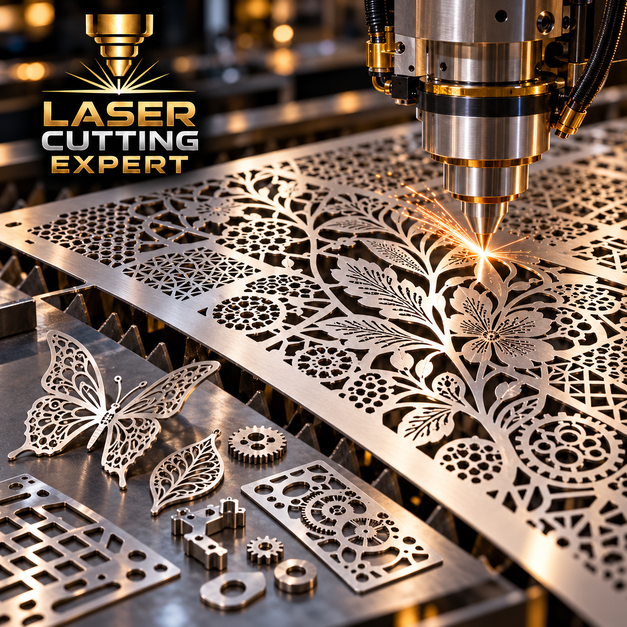
Small details change the way a laser-cut job needs to be approached. A 2 mm slot, delicate letter, narrow bridge or closely spaced pattern cannot simply be treated like a scaled-down version of a large panel. Laser Cutting Expert provides precision laser cutting services from our London workshop for detailed components, prototypes, intricate artwork and specialist profiles. Our work can include high precision laser cutting, fine detail laser cutting and assessment of suitable micro laser cutting requirements. We work with engineers, manufacturers, designers, artists, model makers, students, jewellers and product developers throughout the UK, with no minimum quantity and 24/7 production for suitable projects.
CALL OR EMAIL US FOR PRICES
“Order any time of the day or night and receive your order on the same day in London. You are welcome to visit our laser cutting shop for an instant laser cutting service. On-site collection or free delivery can be arranged. Email us at laser@makergroup.uk for a quick quote or call us on 02036339857 for an instant price”.
Same Day Laser Cutting & Delivery
We can arrange a same day courier delivery with customer live tracking. Or customers can collect from our Laser Cutting Expert shop.

OPEN 24 HOUR
We are open 7 days a week, and you can order at any time. There is no last ordering time and no deadline. We also offer an overnight laser cutting service.

100% Satisfaction
High Quality Laser Cutting & 100% Customer Satisfaction Guarantee. Top-Rated Laser Cutting Company on Google.

Free File Check
We offer a free file check and proof before sending your artwork for laser cutting.
Fine Detail Starts with the Actual Finished Size
A design can look perfectly clear when enlarged on a computer screen but behave very differently when manufactured at 30 mm wide. For fine detail laser cutting, we review artwork at its real physical dimensions. Thin bridges may become fragile, tiny holes may not cut reliably and decorative lettering can lose important parts if strokes are too narrow. Material thickness also changes what is practical. The same pattern that works in thin card may not translate directly into stainless steel. We therefore assess the relationship between overall size, smallest feature and material rather than deciding whether a design is suitable based only on how detailed the original digital artwork appears.
Precision Laser Cutting Services
Our precision laser cutting services cover engineering components and visual products where controlled geometry matters. Suitable work can include shims, washers, small brackets, model components, jewellery blanks, intricate signs, detailed logos, electronic-development parts, templates and decorative inserts. Precision does not mean applying the tightest possible tolerance to every dimension. A decorative outside edge and a functional locating hole may have completely different requirements. Customers should identify critical dimensions so we can assess the appropriate production method. Some features can be completed directly by laser, while others may be better produced as near-net geometry and finished by drilling, reaming, milling or another secondary operation.
High Precision Laser Cutting
High precision laser cutting is most useful when repeatable feature position and controlled geometry are important to the component’s function. The achievable result depends on material, thickness, feature shape, component size and cutting process. Heat input, kerf and material movement can all influence the finished profile. We therefore avoid quoting one universal tolerance as though it applies equally to every job. Engineering drawings should identify which dimensions actually matter. A mounting plate with generous bolt clearance does not need the same treatment as a small locating feature. Matching manufacturing control to the functional requirement helps avoid unnecessary cost while still giving critical areas the attention they need.
Fine Detail Laser Cutting for Intricate Shapes
Fine detail laser cutting can be used for patterns, lettering, silhouettes and complex internal geometry where ordinary straight cutting would not be practical. Products may include decorative screens, jewellery, model pieces, invitations, stencils, signs, ornaments and layered artwork. Intricate geometry needs enough material remaining between adjacent cuts to hold the product together. This is particularly important with script lettering, botanical patterns and lace-style designs. The narrowest bridge often determines whether the complete design is practical. If a feature is too delicate, we may recommend increasing its width, reducing nearby cut-outs or changing the material so the visual idea survives real manufacturing and handling.
Understanding Laser Kerf
Every laser cut removes a small amount of material along its path. This removed width is commonly described as kerf. In precision laser cutting services, kerf matters because a fraction of a millimetre can affect tabs, slots, inlays and mating parts. Kerf is not one fixed number for every job. It varies with material, thickness, process and machine setup. If a plywood tab needs to fit into a slot, or an acrylic inlay needs to sit inside another component, the design may require compensation. Producing a small test piece is often the best way to establish the practical fit before manufacturing a complete set of interlocking components.
Small Holes Need Realistic Geometry
A digital drawing allows almost any hole diameter to be entered, but the physical cutting process has limits. With high precision laser cutting, minimum practical hole size depends heavily on material and thickness. A tiny hole in thin sheet is a different manufacturing problem from the same diameter through thick plate. Where a hole needs to locate a bearing, dowel or precision fastener, laser cutting may be used to create an initial opening before machining establishes the final dimension. Customers should identify the function rather than simply specify an unnecessarily tight tolerance. This helps us decide whether direct laser cutting, pilot geometry or a secondary process offers the better manufacturing route.
Narrow Slots and Cut-Outs
Slots appear in brackets, enclosures, templates, model parts and interlocking products. For fine detail laser cutting, slot width needs to remain practical relative to the material thickness and process. Extremely narrow slots may not clear correctly or may produce an edge condition unsuitable for the intended fit. If another component needs to slide through the slot, actual stock thickness should also be considered rather than relying entirely on nominal material size. Plywood, MDF and other manufactured boards can vary slightly in thickness between sheets. Metals can also have production tolerances. Test fitting a small sample can prevent problems when many components later need to assemble together.
Thin Bridges Between Features
Intricate artwork often contains narrow strips of material between neighbouring cut-outs. These bridges are visually useful but can become weak if reduced too far. Fine detail laser cutting therefore involves thinking about what remains after cutting, not only what is removed. Decorative maps, trees, flowers, lace patterns, logos and screens can contain hundreds of these narrow connections. Material behaviour matters as well a bridge in steel behaves differently from one in acrylic, card or plywood. Products also need to survive handling, finishing and installation. Where necessary, we can suggest simplifying selected areas while preserving the overall appearance of the artwork.
Closely Spaced Cutting Lines
Putting several cutting paths extremely close together can create heat concentration and leave very little material between them. During high precision laser cutting, spacing needs to suit the material and thickness. Metals may respond differently from plastics, wood or paper, while very thin components can move after surrounding material is removed. Dense decorative patterns therefore need more than visual checking. We consider the sequence of features and whether the remaining material can stay stable throughout production. Where a pattern is too dense, increasing spacing slightly can improve manufacturability without noticeably changing the design. This is particularly useful for intricate screens, jewellery, stencils and miniature model components.
Micro Laser Cutting
Micro laser cutting refers to cutting at a much smaller feature scale than ordinary sheet profiling. It can be relevant to specialist components in electronics, medical technology, scientific equipment and precision engineering. However, true micro-scale work may require dedicated micromachining lasers, optics, motion systems, inspection equipment and controlled manufacturing conditions. We assess each enquiry rather than using “micro” as a general marketing term for any small component. Customers should provide material, thickness, feature dimensions, tolerances and application. Where the requirement falls beyond our suitable production capability, specialist micromachining or another precision process may be more appropriate than conventional industrial laser cutting.
Miniature Engineering Components
Small engineering parts can include shims, thin plates, clips, spacers, washers and miniature brackets. Our precision laser cutting services can be used for suitable components where digital profiling offers a practical manufacturing route. Parts can contain external contours, slots and general clearance holes within the same file. Very small functional features need individual assessment, particularly where they interact with precision shafts, bearings or seals. Thin components also require careful handling after cutting because they may bend or become difficult to separate. A small production quantity can be manufactured first so fit and function can be checked before the design moves into a larger repeat batch.
Precision Shims
Shims are often simple in appearance but important in assembly. A custom shim may correct spacing, alignment or stack height in machinery and equipment. High precision laser cutting can create suitable shim profiles in specified materials and thicknesses, including unusual outside shapes that are difficult to source as standard parts. Internal holes, slots and notches can be incorporated where appropriate. The supplied material thickness itself has a tolerance, which should be considered when the final stack dimension is critical. Extremely tight dimensional or surface requirements may call for additional manufacturing methods. Engineers should specify which dimensions affect the assembly so production can be planned around the actual functional requirement.
Custom Washers and Rings
Standard washers are available in thousands of sizes, but specialist equipment can still require something different. Precision laser cutting services can manufacture suitable custom rings and washers with non-standard outside diameters, internal openings, flats, tabs or mounting features. Materials can include suitable steel, stainless steel, aluminium and other compatible sheet. Very small precision bores may need secondary machining, particularly where they locate rather than simply provide fastener clearance. Different washer profiles can sometimes share one sheet for efficient short-run production. Customers can order a single development set, maintenance replacements or repeat quantities without being tied to a minimum manufacturing batch.
Fine Detail in Stainless Steel
Stainless steel can be used for small labels, decorative inserts, jewellery components, screens and precision engineering profiles. Fine detail laser cutting needs to account for sheet thickness and the amount of material left between neighbouring features. Thin stainless can support detailed patterns, but designs still need practical bridges and hole sizes. Visible brushed sheet may also require grain orientation to remain consistent between components. For engineering applications, stainless grade should be specified according to the environment. A fine-cut stainless component is not automatically suitable for food, medical or corrosive service. Those requirements depend on grade, finishing, fabrication and validation of the complete product.
Fine Detail in Aluminium
Aluminium is useful for lightweight precision components, model parts, equipment panels and decorative products. High precision laser cutting can create suitable detailed profiles, but alloy and thickness influence how the material behaves. Very thin aluminium parts may become flexible once surrounding material is removed, particularly when a design contains many openings. Protective film and visible surface requirements should be discussed before production. Components intended for bending need suitable distance between small features and fold lines. Where aluminium parts form part of structural, aerospace or safety-related assemblies, the responsible engineer must establish the required alloy, tolerances and inspection. Cutting accuracy alone does not certify the finished product.
Fine Detail in Brass and Copper
Brass and copper are often selected when the material itself contributes to the visual appearance or electrical function. Precision laser cutting services can be assessed for suitable small brass plaques, decorative components, jewellery blanks, copper contacts, electrical profiles and detailed artwork. Both metals require an appropriate laser process because of their reflective and thermal characteristics. Fine visual pieces may need later polishing or surface treatment. Electrical copper components should be designed around current, temperature and connection requirements rather than geometry alone. Very small contact surfaces or precision connection features may also need machining after the initial laser profile has been produced.
Fine Detail in Wood
Wood brings a completely different set of considerations to fine detail laser cutting. Grain direction, resin, moisture and natural variation influence the result. Small wooden letters, ornaments, maps, jewellery pieces and decorative patterns need enough material around delicate areas to resist breaking. Thin internal connections may be particularly vulnerable when they run across the grain. Laser cutting can also create a darker edge, which may be desirable or may require later finishing. Different timber species behave differently, so an intricate design developed for one wood should not automatically be assumed to work identically in another. Samples are useful where the finished appearance is particularly important.
Fine Detail in Plywood
Plywood is widely used for architectural models, puzzles, ornaments, signs, layered artwork and small construction kits. High precision laser cutting can create tabs, slots and detailed profiles, but plywood is made from multiple veneers bonded with adhesive. Internal voids and glue layers can affect cutting consistency. Actual sheet thickness also matters for interlocking components. A slot drawn to the nominal plywood thickness may be too loose or tight depending on the real board and kerf. For model kits and press-fit products, producing a small joint test before the complete sheet is sensible. This allows the fit to be adjusted using the actual production material.
Fine Detail in Acrylic
Acrylic is useful for small signs, jewellery, awards, table numbers, model components, keyrings and decorative products. Fine detail laser cutting can produce clear outlines and complex shapes, but narrow features need enough material to remain strong. Sharp internal corners can also concentrate stress in certain designs. Clear, coloured and mirrored acrylic create different visual effects, while cast and extruded sheet can behave differently during processing. Protective film may remain during some operations depending on the material and desired finish. Tiny lettering should be reviewed carefully because a stroke that looks substantial on-screen may become extremely fragile when converted into a physical acrylic shape.
Paper and Card Detail Cutting
Paper and card allow very fine decorative work because the material is thin, but fragility becomes the main limitation. Fine detail laser cutting can be used for invitations, greeting cards, place cards, bookmarks, gift tags, paper artwork and packaging prototypes. Lace-style patterns need enough connecting material to survive removal from the sheet and normal handling. Pale paper may show heat marking along the cut edge, while coated stocks can behave differently from uncoated card. Unknown coatings or laminates should be identified before processing. For printed products, cutting also needs to register correctly against the existing artwork so the physical profile remains aligned with the printed design.
Leather Fine Detail Cutting
Leather can be used for labels, patches, keyrings, jewellery, bookmarks, wallet components and decorative accessories. Precision laser cutting services can create small profiles and internal details where the leather type and thickness are suitable. Natural hides vary in grain and thickness, so the same fine feature may not look perfectly identical across every part of a hide. Cut edges can darken and should be considered part of the visual result. Synthetic leather requires material identification. PVC and chlorine-containing faux leather must not be laser cut, while unknown synthetic products require supplier specifications or safety information before they can be considered for processing.
Detailed Signs and Logos
Logos often contain small gaps, thin strokes and detailed lettering. Fine detail laser cutting can reproduce suitable branding in metal, acrylic, wood and other compatible materials, but the artwork may need adjustment for physical manufacture. A tiny enclosed area inside a letter can fall away unless a bridge is introduced or the design is changed. Script fonts may contain connections that become too thin at small sizes. Logos should therefore be reviewed at the actual intended dimensions rather than simply imported from a vector file. Where very fine information cannot be cut successfully, our related High Volume & Contract Laser Cutting service may provide a better way to retain small visual details.
Small Letters and Numbers
Individual letters and numbers can become challenging when their overall dimensions are reduced. With high precision laser cutting, stroke width and internal counters need to remain large enough for the selected material. Fonts designed for print are not automatically suitable for physical cutting because parts of a printed letter can exist without any structural connection. Stencil bridges or simplified typefaces may therefore be required. Applications include model signage, equipment labels, jewellery, cake toppers, table decorations and miniature displays. If the text becomes too small to manufacture as individual cut shapes, engraving or printing may provide a clearer and more durable result.
Detailed Maps and Street Patterns
Maps are a good test of fine detail laser cutting because they can contain hundreds of roads, waterways and boundaries within a relatively small area. A direct conversion from mapping software often creates more information than the physical material can support. Minor streets may need removal, narrow islands may need joining and line widths may need adjustment. Products can include city maps, location artwork, wedding maps and architectural presentations. Wood, plywood, acrylic and metal each require different levels of simplification. The aim is not to reproduce every digital line but to retain the recognisable structure of the location while creating a physical piece that remains stable.
Jewellery Blanks and Accessories
Small pendants, earrings, charms, tags and decorative connectors can benefit from precision laser cutting services because custom outlines can be created directly from digital artwork. Materials may include suitable acrylic, wood, leather, brass, silver and other compatible sheets depending on the project. Connection holes need enough surrounding material to withstand normal use. Precious metals also require careful nesting because offcuts have material value. Cutting is only one stage of jewellery manufacture; polishing, soldering, forming, stone setting and hallmarking may follow. Where UK hallmarking requirements apply, the seller or manufacturer remains responsible for ensuring the finished precious-metal product meets the relevant legal requirements.
Architectural Model Components
Architectural models often contain windows, doors, railings, façade patterns and structural outlines at very small scales. Fine detail laser cutting can produce these elements in card, plywood, MDF, acrylic and other suitable model-making materials. Scale is important because a real 100 mm architectural feature becomes only 1 mm at 1:100. Some details therefore need exaggeration or simplification to remain visible and strong. Engraved lines can also represent features that are too small to cut completely. Students, architects and professional model makers can order individual development pieces or complete sets. Part numbers can be added discreetly where they help organise assembly.
Model Railway Components
Model railway buildings, bridges, platforms, fences and scenic details can contain repeated miniature geometry. High precision laser cutting can support suitable walls, window frames, roof components, signs and decorative details. Plywood, MDF, card and acrylic can be combined to create different textures and structural layers. Press-fit joints should be tested with the actual material because sheet thickness and kerf affect fit. Extremely thin railings or frames may need to be strengthened compared with true scale so they survive assembly and handling. Fine engraved lines can represent brickwork, panels or surface detail where full through-cut geometry would make the component unnecessarily fragile.
Stencils with Fine Features
Stencils depend on carefully controlled positive and negative areas. Fine detail laser cutting can produce suitable Mylar-type polyester stencils, card stencils, acrylic templates and other compatible products. Enclosed areas inside letters and symbols need bridges so they remain connected to the main stencil. Bridge width must be strong enough for repeated use while remaining visually unobtrusive. Very small stencil openings can also clog or become ineffective depending on the paint or marking process. PVC and chlorine-containing vinyl must never be laser cut. Unknown stencil films should therefore be identified before processing rather than accepted based only on appearance or a generic “plastic” description.
Fine Decorative Screens
Large screens can still contain precision detail. Precision laser cutting services can produce geometric, botanical and custom patterns for suitable garden screens, furniture panels, radiator covers and interior partitions. The challenge is balancing fine visual detail with enough remaining material to keep the complete panel stable. Hundreds of small cut-outs can collectively remove a substantial amount of sheet. Border width and fixing positions therefore matter. Outdoor screens additionally need suitable materials and corrosion protection. If a panel performs as guarding, fencing or balustrading rather than decoration alone, the complete product requires appropriate structural and safety assessment by the responsible designer or engineer.
Detailed Wedding Products
Wedding products often use names, dates, floral artwork and intricate patterns. Fine detail laser cutting can create suitable place names, table numbers, invitations, cake toppers, favour tags and decorative signs from acrylic, wood, plywood, paper or card. Each material gives the design a different character and imposes different limits on small features. Script fonts need particular attention because narrow joins can break during handling. Variable names can be produced without physical dies, making individual guest pieces practical. A sample is useful before producing an entire wedding set, especially when the design contains delicate typography or when the customer needs to confirm the appearance of a particular material.
Detailed Product Prototypes
Product designers often need to test small features before committing to tooling or larger manufacturing runs. Our precision laser cutting services can produce suitable prototype panels, brackets, spacers, inserts and small components directly from digital drawings. A prototype can reveal whether tabs fit, holes align and delicate areas survive real handling. The design can then be adjusted before repeat production. This approach is useful for electronics housings, furniture, equipment, models and consumer products. There is no minimum order, so a customer does not need to manufacture an entire batch simply to evaluate one design revision. Material and thickness can also be tested before the final specification is chosen.
Precision Parts for Electronics Development
Electronics projects may require small mounting plates, insulating components, front panels, spacers and prototype housings. High precision laser cutting can support suitable development parts depending on material and feature requirements. Electrical applications require more than dimensional accuracy. Insulation rating, flammability, creepage distance, temperature and material certification may all matter in the finished device. Unknown plastics should not be processed without material identification, and PVC-containing sheets must not be laser cut. Very fine conductive or electronic features may require specialist microfabrication rather than ordinary laser profiling. The equipment designer remains responsible for validating electrical safety and compliance of the complete assembly.
Micro Laser Cutting for Medical Development
Micro laser cutting is associated with very small medical-device components, particularly fine tubing and miniature precision parts. Such work can require specialist ultrafast or micromachining systems, controlled environments, detailed inspection and regulated quality procedures. We therefore assess medical enquiries carefully rather than assuming general laser capability is sufficient. Research fixtures, development components and suitable non-critical parts may follow one route, while implantable or safety-critical devices require specialist manufacturers with appropriate quality systems. Cutting a component accurately does not make it medically approved, biocompatible or sterile. Device manufacturers should provide material, geometry, tolerance and regulatory requirements at the enquiry stage.
Micro Features for Scientific Components
Research equipment can contain small apertures, masks, spacers and specialist profiles. Suitable micro laser cutting enquiries should include the actual dimensions and tolerance requirements rather than simply describing the part as “very small”. Material thickness can be as important as overall size. A 100-micron feature through a thin foil presents a different manufacturing problem from the same feature through a much thicker sheet. Surface condition, heat effects and burr requirements may also matter in optical or scientific systems. Where dedicated microfabrication is required, a specialist process may be more appropriate. We assess the component against practical capability rather than overpromising based on terminology.
Tolerance Should Follow Function
One of the most common mistakes in high precision laser cutting is applying very tight tolerances to every dimension on a drawing without considering function. This can make a straightforward component unnecessarily difficult and expensive to manufacture. Critical locating features deserve appropriate control, while non-functional outside edges may allow more generous variation. Customers should distinguish between clearance holes, mating features, cosmetic profiles and surfaces that will receive secondary machining. A sensible tolerance strategy allows each manufacturing method to do the job it is best suited to perform. If a dimension genuinely needs machining-level control, planning that secondary process is better than pretending all laser-cut geometry behaves like a precision-ground component.
When Secondary Machining Is Better
Laser cutting is excellent for producing profiles efficiently, but it is not the final answer for every precision feature. A component may use precision laser cutting services for its overall geometry and then move to drilling, reaming, milling, grinding or another operation for critical surfaces. Bearing bores, dowel holes, sealing faces and threaded features are common examples. This combined approach can be more efficient than machining the entire component from solid stock. The laser removes most unwanted material quickly, leaving controlled allowance where needed. Secondary operations should be planned before the laser file is finalised so enough material remains for the machinist to establish the required final dimensions.
When Engraving Beats Cutting
Some information is simply too fine to work well as a through-cut feature. Small serial numbers, thin logo details, map lines and miniature text may be better engraved onto a solid surface. Fine detail laser cutting can then define the outside shape while engraving retains the smaller visual information. This combination works well for labels, plaques, signs, awards, model components and personalised products. The decision depends on material and final appearance. Cutting removes material completely, while engraving changes or removes only part of the surface. Choosing between them according to feature size can preserve far more detail than forcing every element of a design to become a physical cut-out.
Material Thickness Changes Fine Detail
The same artwork should not automatically be used across every material thickness. As sheet becomes thicker, very small holes, narrow slots and closely spaced features can become more difficult. Precision laser cutting services therefore assess geometry in relation to thickness. A detailed pattern that works comfortably in thin stainless sheet may need adjustment in a much thicker plate. Likewise, a small plywood ornament cut from 3 mm material may need different bridge widths if produced from substantially thicker board. When customers want the same design across several materials, each version should be reviewed independently rather than assuming that scaling or copying the original file will produce an equivalent physical result.
Heat and Fine Features
Laser cutting is a thermal process, so heat matters most when features become small and closely packed. During fine detail laser cutting, several neighbouring cuts can concentrate heat in a limited area. Different materials respond differently: thin metal can move, acrylic can develop local stress and wood may darken more heavily around dense detail. Cutting sequence, spacing and process settings can help manage these effects, but design remains important. If a decorative pattern contains excessive density, opening the spacing slightly can improve stability and appearance. Precision work is therefore a combination of machine control and sensible geometry rather than relying on machine accuracy alone.
Designing for Fine Detail
Good high precision laser cutting begins before the machine starts. Designers should avoid accidental duplicate paths, microscopic fragments and unnecessary nodes in vector artwork. Engineering files should use clear closed profiles and identify critical dimensions. Decorative artwork may need simplification to remove details that will not survive at physical scale. Fonts should be converted or supplied correctly, while interlocking components need consideration for kerf and actual material thickness. If the product is new, a small prototype can answer many questions faster than repeatedly adjusting a drawing based only on assumptions. Our design support can help prepare suitable production geometry from customer information.
Inspection of Precision Components
Precision requirements should be measurable. For precision laser cutting services, customers should identify dimensions or features that require particular attention rather than asking for a vague description such as “perfect accuracy”. Different inspection methods suit different features and tolerance levels. Standard fabricated components may require ordinary dimensional checks, while specialist precision parts may need more advanced inspection that should be agreed before production. Regulated aerospace, medical or other critical work may require formal quality systems and documentation beyond our standard service. If a project requires specific inspection reports, traceability or certification, those requirements should be discussed before manufacturing rather than requested after components have already been produced.
One Prototype Before a Detailed Batch
The more intricate a component becomes, the more useful a physical prototype can be. One piece allows customers to check fit, bridge strength, readability, edge appearance and overall scale before ordering a complete batch. Our fine detail laser cutting service has no minimum quantity, so testing one or several versions is practical. This works particularly well for jewellery, architectural models, stencils, signs, engineering parts and interlocking kits. If the prototype reveals a weak area or tight slot, the CAD can be adjusted before repeat manufacturing. A small development step can prevent a minor design problem from being reproduced across dozens or hundreds of detailed components.
Repeat Fine-Detail Production
Once the design has been tested, approved digital geometry can support repeat high precision laser cutting. This is useful for product components, model kits, jewellery ranges, signs, labels and engineering parts. Consistency still depends on maintaining the same material specification and drawing revision. Natural materials such as wood and leather will always show more visual variation than manufactured metal sheet. Plywood can also vary slightly in thickness, which matters for press-fit products. Customers should therefore distinguish between geometric repeatability and natural material appearance. If a material or thickness changes, the file may need reviewing before another batch is produced.
Same Day Precision Laser Cutting London
Urgent detailed work is possible when the design is genuinely production-ready. Laser Cutting Expert operates 24/7 in London, including weekends and bank holidays. Suitable precision laser cutting services can be considered for same-day production when the material, artwork, dimensions and quantity are confirmed. This may include small brackets, shims, model components, signs, decorative parts or prototype pieces. Same-day courier delivery is available across London for appropriate completed work. Projects requiring extensive CAD repair, unusual material assessment, dedicated fixtures or specialist micro laser cutting may need additional time. Precision should not be sacrificed simply to claim a faster turnaround than the component technically allows.
Precision Laser Cutting Across the UK
Customers throughout the UK can use our precision laser cutting services without being based near our London workshop. Engineers, model makers, designers, manufacturers, artists, students and product developers can send CAD files and specifications electronically for assessment. Suitable completed projects can be dispatched nationwide, including next-day delivery options where production and parcel requirements allow. Whether you need fine detail laser cutting for artwork, high precision laser cutting for engineered components or an assessment for micro laser cutting, send the actual material, thickness, dimensions, quantity and smallest features where possible. This gives us enough information to recommend a practical manufacturing route rather than guessing from the overall component size.
FAQs About Precision & Fine Detail Laser Cutting
1. What is precision laser cutting?
Precision laser cutting services focus on controlled geometry, feature positioning and suitable detailed profiles where dimensional requirements are more important than ordinary general cutting.
2. How small can you laser cut?
The practical minimum depends on material, thickness, geometry and required quality. Small holes, slots and bridges need to be assessed individually rather than using one universal minimum dimension.
3. What is micro laser cutting?
Micro laser cutting refers to laser processing at very small feature scales. True micro-scale work can require dedicated micromachining equipment and specialist inspection.
4. Can you cut very detailed artwork?
Yes, fine detail laser cutting can be used for suitable maps, patterns, signs, jewellery, models and decorative products, although extremely delicate artwork may need adjustment.
5. Can you cut precision holes?
Suitable holes can be laser cut, but bearing bores, dowel locations and other very tight functional features may require secondary drilling, reaming or machining.
6. Which materials can be used for fine-detail work?
Suitable metals, acrylic, wood, plywood, MDF, leather, paper and card can all support different forms of detailed cutting, subject to material and geometry assessment.
7. Can you manufacture just one precision component?
Yes. There is no minimum order. One prototype or test piece can be manufactured before a larger quantity.
8. Can you help modify artwork that is too detailed?
Yes. We can help prepare suitable production geometry and identify areas where bridges, spacing or feature sizes may need adjustment.
9. Do you offer same-day precision laser cutting?
Suitable production-ready work can be considered for same-day London manufacture and courier delivery, depending on complexity, material and capacity.
10. Do you offer precision laser cutting outside London?
Yes. We manufacture in London and provide UK-wide service and delivery for suitable completed projects.