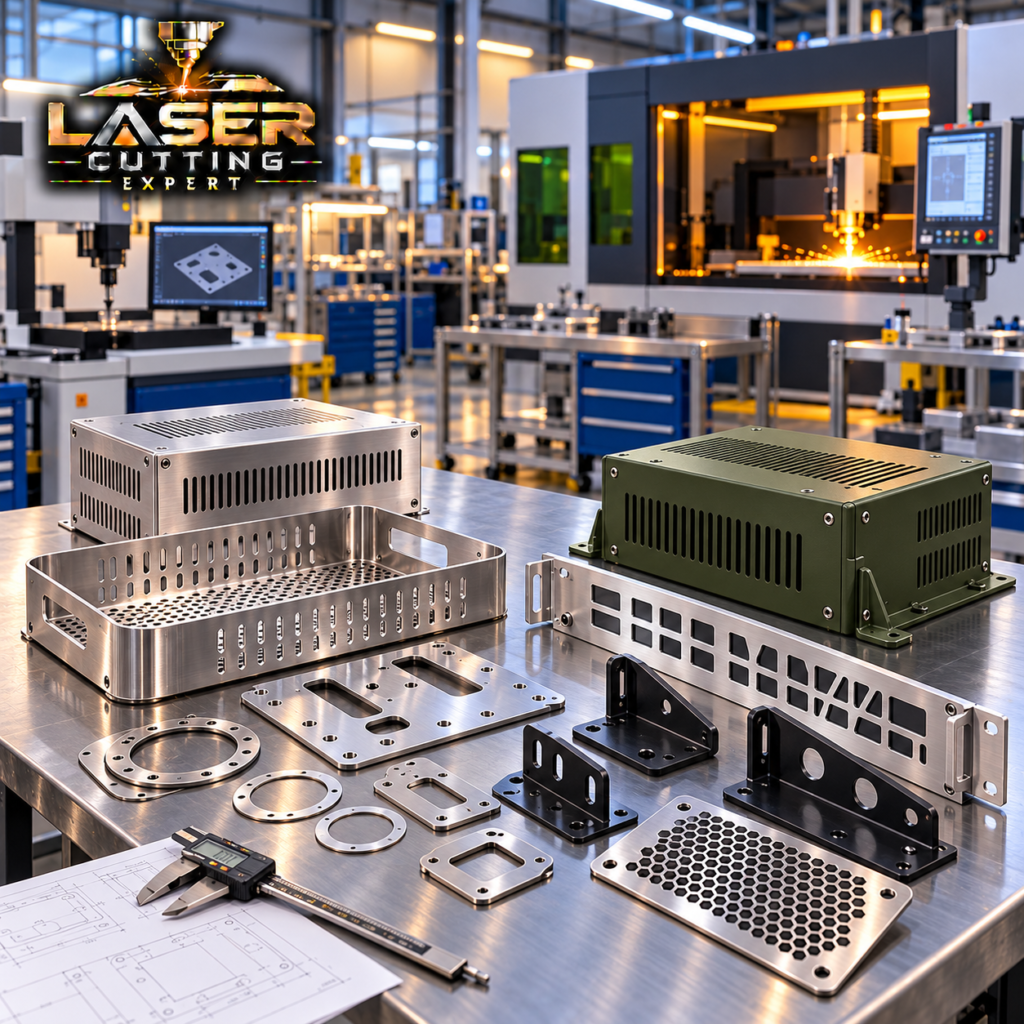
Healthcare and defence environments both depend on equipment that needs to remain usable under demanding conditions, but the reasons are different. Hospitals need practical, cleanable equipment that can withstand repeated daily use, while authorised defence and public sector engineering can involve rugged equipment, transport, storage, communications and maintenance systems. Laser Cutting Expert provides laser cutting solutions for healthcare sector projects alongside suitable non weapon defence manufacturing support from our London production facility. We work with equipment manufacturers, hospital contractors, healthcare suppliers, engineering companies, laboratories, authorised defence contractors and specialist fabricators throughout the UK, providing suitable panels, enclosures, brackets, guards, trays, fixtures and fabrication components with no minimum cutting quantity.
CALL OR EMAIL US FOR PRICES
“Order any time of the day or night and receive your order on the same day in London. You are welcome to visit our laser cutting shop for an instant laser cutting service. On-site collection or free delivery can be arranged. Email us at laser@makergroup.uk for a quick quote or call us on 02036339857 for an instant price”.
Same Day Laser Cutting & Delivery
We can arrange a same day courier delivery with customer live tracking. Or customers can collect from our Laser Cutting Expert shop.
OPEN 24 HOUR
We are open 7 days a week, and you can order at any time. There is no last ordering time and no deadline. We also offer an overnight laser cutting service.

100% Satisfaction
High Quality Laser Cutting & 100% Customer Satisfaction Guarantee. Top-Rated Laser Cutting Company on Google.

Free File Check
We offer a free file check and proof before sending your artwork for laser cutting.
Manufacturing Around the Working Environment
The best way to approach these sectors is to understand where the component will actually work. A stainless panel beside hospital washing equipment faces different conditions from an aluminium plate inside a communications enclosure. Material, thickness, access, cleaning, ventilation, weight and finishing can therefore matter more than the shape alone. Our laser cutting solutions for healthcare sector projects can be combined with our CNC Laser Cutting capability where repeatable profiles, slots, holes and fabrication geometry are required. Defence related work is limited to lawful, authorised non weapon equipment and support applications; we do not assist with manufacturing weapons, ammunition or components intended to enable weapon construction.
Healthcare Laser Cutting
Healthcare Equipment Support
Our laser cutting solutions for healthcare sector can support suitable equipment used around hospitals, clinics, care facilities, laboratories and healthcare service environments. Typical work can include equipment panels, brackets, guards, covers, mounting plates, trolley components and storage system parts. These are mechanical fabrication applications rather than medical treatment claims. Where a component becomes part of a regulated medical device, patient support system or other safety critical equipment, the responsible manufacturer must establish the required regulatory, clinical and quality controls.
Hospital Infrastructure
Hospitals contain far more fabricated equipment than the devices used directly for diagnosis or treatment. Service cupboards, utility equipment, storage systems, workstation components, equipment stands and plant areas can all require custom sheet parts. Laser cutting solutions for healthcare sector projects can provide suitable stainless steel, aluminium and coated metal components for these environments. Installation needs to consider cleaning access, sharp edges and interaction with staff and patients. Structural, electrical, fire or building services requirements remain part of the complete hospital installation.
Clinic Equipment
Smaller clinics can require custom cabinetry components, equipment brackets, wall panels and workstation details where standard products do not fit the available space. Laser cutting solutions for healthcare sector work can provide one off or small batch parts without requiring a large production run. Components should be designed around the real equipment dimensions and working space. Where items are positioned in patient accessible areas, exposed corners, projections and fixings should be considered carefully.
Care Home Equipment
Care environments can use fabricated equipment around storage, catering, mobility support and general facilities. Suitable laser cutting solutions for healthcare sector applications can include signs, equipment panels, brackets, protective covers and furniture related metal components. Residents may have limited mobility or vision, making safe edges and clear signage particularly important. Components forming handrails, mobility aids or other load bearing support systems require appropriate engineering and should not be treated as ordinary decorative fabrication.
Healthcare Trolleys
Hospital Trolley Components
Hospital trolleys are moved frequently, cleaned repeatedly and often carry equipment or supplies. Laser cutting solutions for healthcare sector projects can include suitable tray blanks, side panels, brackets, equipment mounts and drawer components. Stainless steel and aluminium may be considered depending on the design. The completed trolley needs adequate stability and safe load capacity. Wheels, handles and drawer systems should be selected for the actual use. Laser cut components form only part of the finished trolley.
Equipment Cart Panels
Diagnostic and technical equipment can be installed on mobile carts. Custom panels may be needed for screens, controls, connectors or cable access. Laser cutting solutions for healthcare sector manufacturing can create these profiles from suitable CAD information. Cable openings should be protected from abrasion. Heavy equipment also changes the centre of gravity, so the cart designer needs to consider tipping stability.
Emergency Equipment Trolley Parts
Emergency carts can contain drawers, trays and equipment mounts requiring reliable access. Suitable laser cutting solutions for healthcare sector work can provide mechanical components for equipment manufacturers. Emergency equipment itself can be safety critical, so the finished trolley needs appropriate validation and operating procedures. Custom fabrication should not interfere with rapid access or identification of supplies.
Healthcare Storage
Medical Storage Cabinets
Cabinets used around healthcare environments can require doors, shelves, ventilation panels and internal mounting parts. Laser cutting solutions for healthcare sector projects can provide suitable profiles before bending and assembly. Cabinet design should allow cleaning around handles, corners and joints. Cabinets intended for controlled medicines, sterile supplies or hazardous substances can have additional security and operational requirements beyond ordinary storage furniture.
Instrument Storage Components
Suitable trays, dividers and equipment holders can help organise reusable instruments or technical equipment. Laser cutting solutions for healthcare sector applications need to consider whether the component is simply used for storage or enters a cleaning, sterilisation or clinical process. Material suitable for a dry cupboard may not be suitable for autoclaving or chemical disinfection. The intended cleaning method should therefore be known before material selection.
Hospital Shelving Components
Storage rooms, utility spaces and equipment areas can use custom shelf brackets, supports and dividers. Laser cutting solutions for healthcare sector can provide these parts in one off or repeat quantities. Shelf load should be defined before selecting material thickness. Wall mounted shelving also depends on the supporting wall construction and fixings.
Healthcare Workstations
Clinical Workstation Components
Workstations can support computers, monitoring equipment, documentation and other daily healthcare tasks. Laser cutting solutions for healthcare sector can provide equipment brackets, monitor mounts, cable management plates and suitable metal panels. Workstation geometry should allow staff to work without unnecessary obstructions. Electrical equipment also needs suitable ventilation and cable routing. Ergonomics depend on the complete workstation rather than the laser cut parts alone.
Laboratory Workstation Parts
Healthcare laboratories can require equipment stands, instrument panels, sample holders and workstation components. Laser cutting solutions for healthcare sector can support suitable mechanical parts in stainless steel, aluminium, acrylic and other identified materials. Chemical exposure should be considered when selecting materials. Where biological containment is involved, the laboratory’s own safety and contamination control requirements take priority.
Reception & Administrative Areas
Hospitals and clinics also contain public reception desks, administrative offices and waiting areas. Laser cut signs, counter panels, protective screens and equipment brackets can form part of these spaces. Laser cutting solutions for healthcare sector can therefore support both technical and public facing areas. Accessibility, visibility and safe circulation should remain central to the installation.
Healthcare Enclosures
Equipment Enclosures
Custom equipment can require sheet metal housings containing electronics, controls or mechanical systems. Laser cutting solutions for healthcare sector can provide enclosure blanks, access panels, ventilation features and mounting plates. The final enclosure may need electrical safety, EMC or ingress protection depending on the equipment. Laser cutting accurately produces the geometry but does not establish those ratings.
Electrical Cabinet Components
Hospitals contain substantial electrical and building management infrastructure. Suitable panels, doors and mounting plates can be manufactured for authorised equipment builders. Laser cutting solutions for healthcare sector work involving electrical enclosures should consider ventilation, cable entry and service access. Electrical safety and certification remain with the responsible equipment manufacturer and installer.
Protective Covers
Covers can prevent accidental contact with equipment or protect sensitive components. Laser cutting solutions for healthcare sector can produce suitable metal or compatible plastic covers. Ventilation and cleaning access may still be necessary. Where a cover functions as machinery guarding, opening sizes and access should follow a proper risk assessment.
Cleanability in Healthcare
Designing Parts That Can Be Cleaned
Healthcare components are often wiped far more frequently than ordinary office or retail equipment. Laser cutting solutions for healthcare sector should therefore consider the finished fabrication, not only the flat profile. Unnecessary crevices, exposed sharp corners and inaccessible overlaps can make cleaning difficult. Stainless steel can be useful, but using stainless does not automatically make a design hygienic. Bends, welds, fixings and surface finish all influence how practical the component is to maintain.
Stainless Steel Healthcare Components
Suitable stainless steel is widely used in hospitals, laboratories and care environments. Laser cutting solutions for healthcare sector can create trays, panels, brackets, covers and equipment components from identified stainless grades. 304 and 316 family grades are common possibilities, but the correct selection depends on cleaning chemicals, corrosion exposure and intended use. Medical implant materials are a separate specialist category and should not be confused with general healthcare equipment stainless steel.
Edge Finishing
Patient and staff areas should not contain unnecessarily sharp fabricated edges. Laser cut parts can require deburring, folding or additional finishing according to their use. Laser cutting solutions for healthcare sector should specify the required edge condition before production where components will be regularly handled. A hidden internal bracket and a hand accessible tray edge do not need to be treated identically.
Infection Control Environments
Components Around Controlled Areas
Isolation areas, laboratories and specialist healthcare rooms can use custom panels, equipment mounts and protective components. Laser cutting solutions for healthcare sector can support suitable non clinical fabricated parts. Infection control depends on room design, airflow, cleaning, operational procedures and validated equipment. A laser cut stainless component should not be described as infection control compliant simply because its surface is easy to wipe.
Washdown Areas
Some healthcare utility areas require frequent washing or strong cleaning chemicals. Material and enclosure design should therefore account for moisture. Laser cutting solutions for healthcare sector can provide suitable stainless components, drainage features and access panels. Water ingress around electrical equipment remains a complete system consideration.
Healthcare Signage
Hospital Directional Signs
Large healthcare sites rely on clear wayfinding. Laser cut letters, room numbers, department names and sign panels can support suitable signage systems. Laser cutting solutions for healthcare sector can use acrylic, metal and other compatible materials. Accessibility requirements should guide contrast, positioning and readability. Decorative styling should not make essential directions harder for patients and visitors to understand.
Room Identification
Room numbers and department signs can be produced in durable materials for repeated cleaning. Braille, tactile and accessibility requirements should be handled according to the applicable signage specification rather than improvised during fabrication. Laser cutting can produce the physical sign components while specialist accessibility requirements should be confirmed by the project designer.
Equipment Labels
Hospitals and laboratories can use durable equipment identification plates. Suitable stainless, aluminium or acrylic labels can be cut and then engraved or printed. Identification systems should follow the facility’s asset management requirements where formal tracking is needed.
Healthcare Furniture
Metal Furniture Components
Hospital and laboratory furniture can contain brackets, panels, supports and trim components. Laser cutting solutions for healthcare sector can support suitable fabrication before bending, welding and finishing. Furniture used by patients needs appropriate load capacity and stability. Laser cut geometry does not certify the completed chair, table, bed or cabinet.
Bedside Furniture Components
Bedside cabinets and tables may require metal brackets, trays or panels. Suitable components can be produced according to approved furniture designs. Rounded or protected corners can be useful where patients move around confined spaces. Load bearing and mobility requirements remain part of the complete furniture design.
Healthcare Development & Prototyping
Healthcare Equipment Prototypes
Equipment developers may need one panel or bracket before committing to a full production run. Laser cutting solutions for healthcare sector can support suitable prototype housings, mounts and fixtures with no minimum cutting quantity. A prototype can be used to assess fit, access and assembly. It should not automatically enter clinical service if the final equipment requires regulatory approval.
Hospital Equipment Mock Ups
Large equipment installations can benefit from full size mock ups before final fabrication. Laser cut plates and panels can help test the position of controls, displays and service access. Changes can then be made in CAD before repeat components are produced.
Defence Manufacturing Support
Non Weapon Defence Engineering
Laser Cutting Expert can support lawful defence sector manufacturing where the work concerns non weapon equipment, infrastructure, communications, storage, transport, training, maintenance and support systems. We do not provide instructions or manufacturing assistance for weapons, ammunition, explosive devices or components intended to enable their construction. Suitable defence sector laser cutting can instead include equipment enclosures, protective panels, brackets, storage components, electronics housings, equipment racks, signs, fixtures and maintenance support parts.
Defence Support Equipment
Military and government organisations rely on extensive equipment that is unrelated to weapons. Communications units, workshops, transport systems, field infrastructure and maintenance facilities can all contain custom fabricated parts. Laser cutting can support suitable panels, mounting plates, covers and brackets for authorised suppliers. Equipment operating outdoors may require corrosion resistant materials and rugged construction.
Defence Equipment Enclosures
Electronics, communication and monitoring equipment can require robust enclosures. Laser cut metal can provide doors, access panels, internal mounting plates and ventilation features. Aluminium can reduce weight while stainless or coated steel can provide other practical advantages. Environmental sealing, EMC, electrical safety and impact resistance depend on the complete enclosure system and require appropriate testing where specified.
Rugged Equipment Cases
Transported equipment may use protective cases containing metal panels, equipment plates or custom internal structures. Laser cutting can support suitable brackets, dividers and mounting components. Case design should consider shock, vibration, lifting and handling. Protective performance depends on the complete case, foam, fixings and equipment mounting rather than the laser cut plate alone.
Defence Communications Equipment
Communications Enclosures
Authorised defence communications equipment can use custom metal housings and racks. Laser cutting can produce suitable front panels, connector openings, ventilation and equipment mounts. Communications performance, encryption and electronic design remain outside the role of laser profiling. Our work is limited to lawful mechanical fabrication around authorised equipment.
Radio Equipment Mounts
Radio and communications units can require mounting plates and brackets inside vehicles, buildings or field installations. Laser cutting can create suitable mechanical interfaces from approved drawings. Vibration, cooling and cable routing should be considered during installation.
Antenna Equipment Brackets
Suitable non weapon communications infrastructure can require antenna mounting plates and equipment brackets. Structural loads from wind and installation height need engineering consideration. Laser cutting can provide the specified component geometry but does not establish tower or antenna structural capacity.
Defence Electronics
Electronics Chassis
Defence related monitoring, computing and communications systems can use chassis plates, front panels and equipment covers. Laser cutting can provide suitable mechanical components around these systems. Ventilation, EMC, grounding and environmental protection need to be developed at system level.
Rack Mount Equipment Panels
Standard equipment racks can require custom faceplates, shelves and mounting panels. Laser cutting can create connector openings, ventilation and mounting features. Heavy equipment needs adequate rack support. The panel itself should not be relied upon to carry loads beyond its design.
Cable Management Components
Equipment installations can require cable brackets, routing plates and protective panels. Laser cut sheet can create repeated holes and slots according to approved designs. Cable edges should be protected against abrasion, particularly where equipment is exposed to vibration.
Defence Transport Support
Vehicle Equipment Mounts
Authorised non weapon vehicle equipment can require brackets for communications, navigation, computing, storage and other support systems. Laser cutting can provide suitable mounting plates and bracket blanks. Vehicle crash loads and vibration should be considered by the responsible vehicle engineer. Components used to mount weapons are outside our scope.
Vehicle Interior Panels
Support and logistics vehicles can use equipment panels, storage components and protective covers. Laser cutting can create suitable profiles before forming and assembly. Interior components should not obstruct driver visibility, occupant movement or emergency exits.
Transport Storage Systems
Equipment transported between sites can require racks, shelving and retention systems. Laser cut brackets and panels can form part of these assemblies. Load restraint needs to be engineered for the expected transport conditions. Accurate cutting alone does not establish safe cargo retention.
Defence Logistics
Storage Racks
Warehouses and equipment facilities can use custom rack components, dividers and identification panels. Laser cutting can support suitable non structural accessories and fabricated parts. Structural racking needs appropriate load design and certification.
Equipment Identification
Durable metal tags, labels and plaques can help identify authorised equipment, storage locations and maintenance assets. Laser cutting and engraving can produce suitable identification components. Marking content should follow the customer’s approved asset management system.
Transit Equipment Components
Transport boxes and cases can use metal corner components, brackets and equipment mounting plates. Material thickness should suit handling loads. Heavy equipment may require engineered lifting or tie down points, which should not be treated as ordinary decorative brackets.
Defence Field Infrastructure
Temporary Facility Components
Authorised field operations can involve temporary offices, workshops, communications shelters and support facilities. Laser cutting can provide suitable brackets, panels, equipment plates and signage for these systems. Structural shelter components require appropriate engineering for wind and environmental loads.
Equipment Shelter Panels
Communications and technical equipment shelters can contain ventilation grilles, access panels and equipment mounts. Laser cut sheet can support these mechanical requirements. Environmental sealing and thermal management should be considered as part of the complete shelter design.
Field Workshop Equipment
Maintenance facilities can use tool boards, machine guards, benches, equipment stands and storage systems. Laser cutting can provide suitable components without those parts being related to weapon manufacture. Ordinary workplace and machinery safety requirements still apply.
Defence Maintenance
Maintenance Fixtures
Authorised equipment maintenance can require positioning fixtures, templates and workshop aids. Laser cutting can create suitable plates and locating components for non weapon systems. Fixtures controlling safety critical dimensions may require formal inspection or calibration.
Equipment Repair Panels
Damaged covers, doors and non critical equipment panels can sometimes be replaced from approved drawings. Laser cutting allows one off replacements without requiring dedicated profile tooling. Material and coating should match the operating environment.
Legacy Support Equipment
Older support systems may remain operational long after original components become difficult to source. Suitable non weapon covers, brackets, panels and maintenance aids can sometimes be recreated from reliable drawings or verified measurements. Safety critical replacements require appropriate engineering review.
Defence Materials
Aluminium for Support Equipment
Aluminium can reduce weight in portable equipment, electronics enclosures and transport systems. Laser cutting can create panels, brackets and covers from suitable alloys. Alloy and temper influence strength and forming. Outdoor equipment may require anodising, coating or other protection.
Stainless Steel
Stainless steel can suit equipment exposed to moisture, frequent handling or corrosive environments. Laser cut stainless components can include panels, covers, brackets and identification plates. Exact grade should follow the application rather than relying on stainless steel as a generic specification.
Mild Steel
Mild steel can provide economical, strong components for racks, workshop equipment and support structures. Laser cutting can create profiles before bending, welding and coating. Outdoor mild steel equipment needs a suitable corrosion protection system.
Specialist Materials
Defence projects can specify specialist alloys or composite materials. Exact material identification is required before processing. Unknown plastics or composites should not be laser cut without specifications. PVC and chlorine containing materials must not be laser cut because they can produce hazardous and corrosive gases.
Durability & Service Conditions
Repeated Handling
Healthcare carts and defence support equipment may both be moved and handled frequently. Laser cut components should therefore be designed around real use rather than static appearance. Thin tabs and delicate decorative profiles can be unsuitable where equipment is regularly knocked or transported.
Vibration
Mobile healthcare equipment and defence transport systems can experience vibration. Brackets and panels should have adequate stiffness and secure fasteners. Laser cutting can provide accurate holes and slots, but vibration resistance depends on the complete assembly.
Outdoor Exposure
Defence support equipment can operate outside for extended periods. Stainless steel, aluminium and protected mild steel can be considered according to the environment. Water traps should be avoided where possible. Enclosures also need appropriate seals and drainage.
CAD & Production Control
Controlled Drawings
Healthcare equipment manufacturers and authorised defence contractors can supply controlled CAD and drawings for production. Material, thickness and revision should be identified clearly. A DXF profile alone may not communicate surface, tolerance or inspection requirements.
Revision Management
Equipment can remain in service while its components change over time. Keeping clear revision information reduces the risk of producing an old panel or bracket that looks almost identical to the current version. Repeat production should use approved manufacturing data.
Prototype Revisions
Physical prototypes can reveal problems with equipment access, assembly or cable routing. Laser cutting allows suitable geometry to be changed without creating new profile tooling. Once approved, the final revision can be retained for repeat production.
Fabrication After Laser Cutting
Bending
Panels, brackets and enclosures often require folding after laser profiling. Material thickness, bend radius and hole position relative to the bend should be considered during CAD preparation. Stainless steel, aluminium and mild steel behave differently during forming.
Welding
Frames, cabinets and equipment structures can combine several laser cut parts through welding. Weld access and distortion should be considered before profiles are finalised. Healthcare applications may also require smooth, cleanable joints, while outdoor defence support equipment may prioritise durability and coating.
Finishing
Powder coating, brushing, polishing, anodising and other finishes can be used depending on material and application. Visible healthcare equipment may prioritise easy cleaning, while rugged outdoor support equipment may require corrosion protection. Finish requirements should be known before fabrication where they affect handling or dimensions.
One Off Components
There is no minimum cutting quantity for suitable projects. Laser cutting solutions for healthcare sector work can therefore include one replacement panel, one equipment bracket or one prototype fixture. The same flexibility can support authorised non weapon defence projects where a single equipment cover, test panel or maintenance aid is required. One off manufacturing is particularly useful for development and maintenance, but safety critical status does not disappear simply because only one component is being produced.
Repeat Production
Once a component is approved, controlled CAD can support repeat quantities. Healthcare equipment manufacturers may need the same bracket or panel across several units, while authorised defence equipment suppliers may require repeated enclosure or support components. Material specification and drawing revision should remain consistent between batches. Where traceability or formal inspection is required, those requirements need to be agreed before production.
Same Day Healthcare Laser Cutting London
Suitable production ready laser cutting solutions for healthcare sector projects can be considered for same day manufacture from our London workshop. This can include suitable equipment panels, brackets, guards, trolley parts, workstation components and non clinical replacement items. We operate 24/7, including weekends and bank holidays. Same day availability depends on material, CAD, quantity, finishing and current capacity. Regulated medical device, patient critical or specially validated components require the appropriate manufacturing route regardless of urgency.
Urgent Non Weapon Defence Support Laser Cutting
Suitable authorised non weapon defence support components can be considered for urgent manufacture where the work falls within our permitted fabrication scope. This can include equipment enclosures, panels, racks, brackets, storage components, maintenance fixtures and support equipment parts. We do not manufacture or provide design assistance for weapons, ammunition or components intended to enable their construction. Engineering, quality and approval requirements for other safety critical defence equipment remain applicable even when the project is urgent.
UK Wide Healthcare & Defence Manufacturing Support
From our London workshop, Laser Cutting Expert supports healthcare equipment businesses and authorised non weapon defence sector engineering projects throughout the UK. Our related services CNC Laser Cutting, Fibre Laser Cutting, Tube & Pipe Laser Cutting, Laser Cutting & Bending, Laser Cutting & Finishing, CAD, Design & Prototyping. Customers can supply their own suitable materials or ask us to source identified stock. Next day UK delivery can be available for suitable completed projects. Manufacturing requirements are assessed according to actual use, material, geometry and safety significance rather than treating every healthcare or defence component in the same way.
Important Healthcare & Defence Manufacturing Boundaries
Our laser cutting solutions for healthcare sector do not automatically make a component sterile, biocompatible, clinically approved or suitable for a regulated medical device. Those properties depend on materials, manufacturing controls, validation and the complete equipment system. Defence sector support is restricted to lawful non weapon applications such as communications equipment, enclosures, logistics, infrastructure, storage, maintenance and support systems. We do not assist with weapons, ammunition, explosive devices or weapon enabling component manufacture. Customers remain responsible for relevant regulatory, structural, electrical, fire, machinery, healthcare and defence requirements applying to their finished equipment.
FAQs About Laser Cutting for Healthcare & Defence
1. What laser cutting solutions for healthcare sector projects do you provide?
Our laser cutting solutions for healthcare sector can support suitable equipment panels, trolley parts, brackets, guards, covers, storage components, workstations, enclosures, signs and development parts.
2. Can you make components for hospitals?
Yes. We can manufacture suitable non clinical hospital equipment components such as panels, brackets, trolley parts, covers and workstation components. Regulated medical device applications require additional controls.
3. Can you laser cut stainless steel for healthcare equipment?
Yes. Suitable stainless steel can be cut for healthcare equipment, laboratory furniture and hospital systems. The exact grade should follow the cleaning, corrosion and application requirements.
4. Can you make healthcare equipment prototypes?
Yes. With no minimum cutting quantity, suitable prototype panels, brackets, housings and fixtures can be produced for healthcare equipment development.
5. Do you provide defence sector laser cutting?
We can support lawful, authorised non weapon defence applications such as equipment enclosures, communications system housings, storage components, support equipment, maintenance fixtures and infrastructure parts.
6. Do you manufacture weapon components?
No. We do not provide manufacturing or design assistance for weapons, ammunition, explosive devices or components intended to enable weapon construction.
7. Can you produce rugged equipment enclosures?
Yes. Suitable aluminium, stainless or mild steel components can be laser cut for rugged non weapon equipment enclosures. Environmental, EMC and electrical performance must be validated at system level.
8. Do you have a minimum order?
No. Suitable healthcare and permitted defence support projects can be produced from one component through to repeat batches.
9. Can you provide same day healthcare laser cutting?
Suitable production ready laser cutting solutions for healthcare sector work can be considered for same day London service depending on material, drawings, quantity and capacity.
10. Do you supply customers throughout the UK?
Yes. Production is based in London, and suitable healthcare and authorised non weapon defence support laser cutting can be supplied to customers throughout the UK.