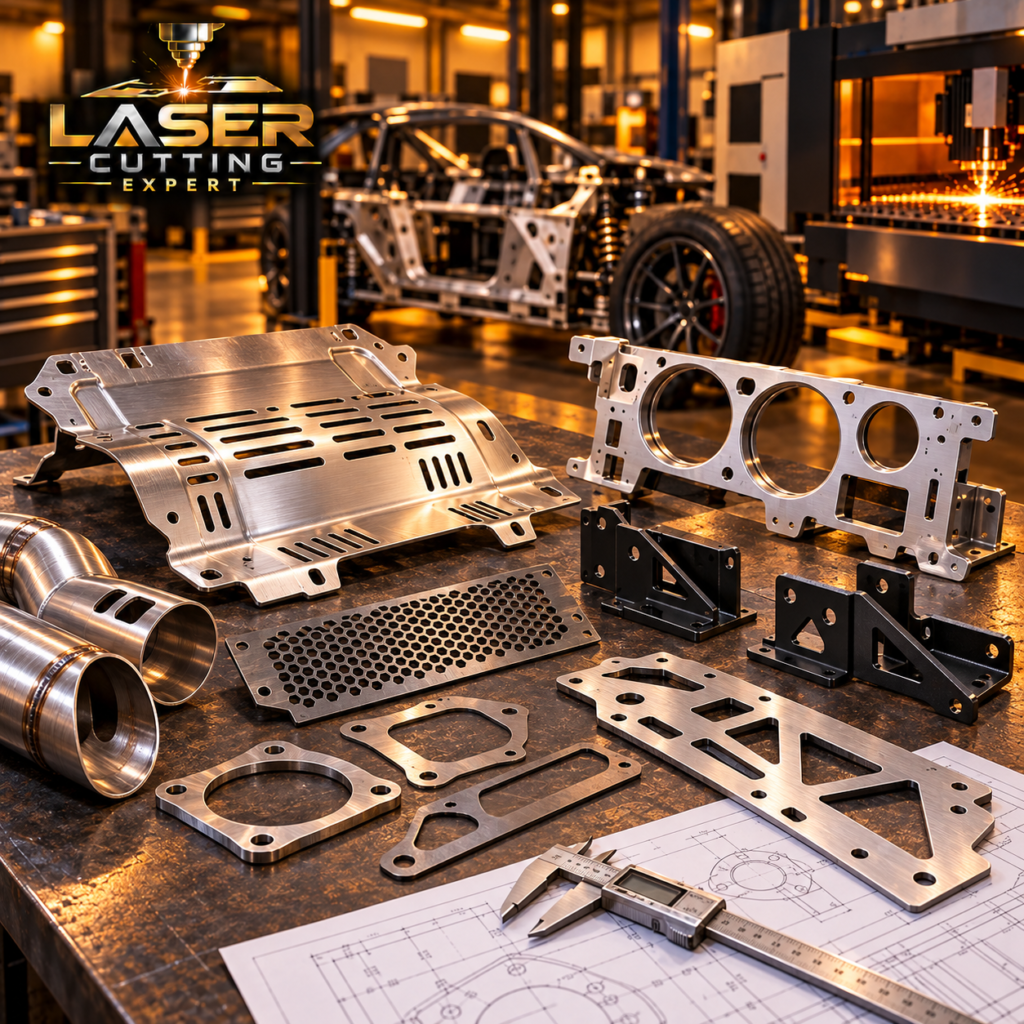
Vehicle manufacturing brings together sheet metal, tube, formed panels, machined components, electronics, structural assemblies and hundreds of smaller fabricated parts. Laser Cutting Expert provides automotive laser cutting services from our London production facility for automotive engineers, vehicle developers, specialist manufacturers, motorsport teams, restoration businesses, EV developers, fabricators and automotive research projects throughout the UK. Our capabilities can support prototype brackets, chassis plates, body development panels, heat shields, mounting components, exhaust fabrication parts, jigs, fixtures, guards and vehicle specific profiles.
CALL OR EMAIL US FOR PRICES
“Order any time of the day or night and receive your order on the same day in London. You are welcome to visit our laser cutting shop for an instant laser cutting service. On-site collection or free delivery can be arranged. Email us at laser@makergroup.uk for a quick quote or call us on 02036339857 for an instant price”.
Same Day Laser Cutting & Delivery
We can arrange a same day courier delivery with customer live tracking. Or customers can collect from our Laser Cutting Expert shop.

OPEN 24 HOUR
We are open 7 days a week, and you can order at any time. There is no last ordering time and no deadline. We also offer an overnight laser cutting service.

100% Satisfaction
High Quality Laser Cutting & 100% Customer Satisfaction Guarantee. Top-Rated Laser Cutting Company on Google.

Free File Check
We offer a free file check and proof before sending your artwork for laser cutting.
Laser Cutting Within Automotive Manufacturing
Modern vehicle development depends on components moving accurately between several manufacturing stages. Automotive laser cutting can sit between CAD design and operations such as bending, forming, welding, machining and assembly. Flat sheet can become a bracket or heat shield, while formed components may require trimming or openings after pressing. Tubular sections can become part of frames, supports or specialist vehicle structures. The correct cutting route depends on the component rather than the vehicle category. Automotive engineers need to consider material grade, thickness, forming behaviour, weldability, fatigue, corrosion protection and final vehicle function when specifying any laser cut component.
Automotive Laser Cutting Services
Our automotive laser cutting services can support vehicle development from early prototypes through suitable repeat manufacturing. Work can involve mild steel, stainless steel, aluminium and other specified automotive materials according to component requirements. Flat components may be processed through CNC or fibre laser systems, while suitable formed parts can require multi axis processing. Tube and hollow sections may follow another route entirely. Laser cutting is useful because complex geometry can be produced directly from controlled digital information without dedicated profile tooling for every revision. The vehicle manufacturer or responsible engineer remains responsible for validating each component for its intended automotive application.
Automotive Development Work
A vehicle rarely moves from its first CAD model directly into final production. Automotive laser cutting can support development vehicles where engineers need to test brackets, panels, mounts and fabrication components physically. A mounting position that appears correct digitally may interfere with wiring, suspension movement, bodywork or maintenance access when installed. Producing physical development components allows these interactions to be checked. Revised geometry can then return to manufacturing without creating completely new profile tooling. This makes laser cutting useful during engineering changes, but every revision should still be controlled so prototype geometry is not accidentally confused with an approved production component.
Laser Cutting Automotive Parts
Laser cutting automotive parts can cover a broad range of fabricated vehicle components rather than one particular type of product. Suitable examples include mounting brackets, reinforcement plates, equipment panels, heat shields, battery enclosure components, sensor mounts, seat mount development plates, dashboard support parts, exhaust fabrication pieces, chassis tabs and workshop jigs. Some parts remain flat while others are folded or welded into assemblies. Critical vehicle components can be exposed to fatigue, impact, vibration, heat and corrosion. Material and geometry therefore need to follow the automotive engineer’s specification rather than being selected simply because a sheet can be laser cut into the required shape.
Precision Laser Cutting Automotive
Precision laser cutting automotive work is useful where several features need to maintain controlled relationships within the same component. A bracket may contain mounting holes, slots and an outside profile that all influence fit. A heat shield may need accurate clearance around surrounding equipment. A sensor mount may depend on position and angle. Precision should still be specified according to actual function. Bearing bores, dowel holes and critical locating surfaces may require drilling, reaming or machining after laser profiling. Automotive manufacturing often combines processes because expecting one method to produce every type of feature can create unnecessary limitations.
Automotive 5 Axis Laser Cutting
Automotive 5 axis laser cutting becomes relevant where a component is already three dimensional and cannot be treated as an ordinary flat sheet. Formed panels, pressed components, tubular assemblies and complex fabricated parts may require trimming, openings or edge features on surfaces facing different directions. A multi axis system can move around the component to reach these areas where suitable. Fixturing is important because the physical part needs to sit consistently relative to the programmed geometry. Forming variation also affects final feature position. Five axis processing should therefore be used where the component geometry genuinely benefits from it rather than simply because it is a more advanced process.
Cutting Formed Automotive Components
Vehicle components are frequently pressed, folded or otherwise formed before all manufacturing features are complete. Automotive laser cutting services can assess suitable formed components where later trimming or hole creation is required. The challenge is different from flat sheet cutting because each component can contain small variations created by forming. Fixtures help locate the part, while the cutting programme follows the intended three dimensional geometry. Where possible, engineers should still consider whether a feature can be produced more simply before forming. Post form cutting makes most sense where the final position depends on the formed shape or where the laser needs access to several surfaces.
Automotive Sheet Metal
Sheet metal forms a large part of vehicle structures, body systems, enclosures and fabricated equipment. Automotive laser cutting can create flat blanks containing outside profiles, holes, slots and reliefs before forming or assembly. Material thickness may be relatively light for covers and shields or substantially heavier for mounting and structural components. The manufacturing route should consider how the sheet behaves during bending or pressing. Features positioned too close to a bend may distort. Thin material can also move under heat or handling. Good automotive sheet metal design therefore connects the cutting stage to the later forming and joining operations.
Vehicle Brackets
Cars, commercial vehicles and specialist machines contain large numbers of brackets supporting mechanical, electrical and interior systems. Laser cutting automotive parts can include brackets for sensors, reservoirs, pumps, wiring, control units, body panels and auxiliary equipment. Slots may provide adjustment, while tabs can help locate components during assembly. Brackets that experience significant load or vibration need appropriate material and fatigue consideration. Hole position alone does not determine whether the bracket will survive vehicle use. Bending, weld quality, material thickness and the stiffness of the surrounding structure all influence performance.
Mounting Plates
Mounting plates are common within automotive development because many systems need a controlled interface with the vehicle structure. Precision laser cutting automotive manufacturing can create plates for pumps, electronic modules, motors, test equipment and specialist accessories. Bolt patterns can be incorporated into the original profile. If the component requires accurate shaft alignment or close locating fits, selected features may need secondary machining. Weight can sometimes be reduced through cutouts, but removing material also changes stiffness. Automotive engineers should therefore evaluate light weighting according to the loads and vibration experienced by the mounted equipment.
Chassis Fabrication Components
Specialist vehicles, prototypes and motorsport projects can use laser cut plates, tabs and gussets within chassis fabrication. Automotive laser cutting services can manufacture approved component geometry for integration into welded structures. These pieces may locate tubes, reinforce joints or provide mounting positions for other vehicle systems. Chassis components are safety related and can experience complex dynamic loads. Material grade, weld procedure and structural design need appropriate engineering. Laser Cutting Expert produces the specified profiles but does not certify a chassis or vehicle structure simply because its individual components have been accurately cut.
Chassis Tabs
Small tabs can perform important jobs throughout fabricated vehicle structures. Automotive laser cutting can create tabs for brake lines, wiring, body panels, sensors and equipment mounting. These components are often simple enough to overlook during design, yet poor positioning can create difficult assembly or maintenance. Tabs welded to thin tubing also need suitable joint design to avoid unnecessary local stress. Standardising commonly used tab geometries can simplify vehicle builds, while custom tabs remain useful where packaging is tight. Their size, hole diameter and material thickness should reflect the equipment they support rather than being chosen only for convenience.
Chassis Gussets
Gussets can strengthen selected joints within fabricated automotive structures. Laser cutting automotive parts allows triangular, curved and custom gussets to be manufactured with locating or weight reduction features. More material does not automatically create a better joint. The gusset changes how loads move through the surrounding structure and can also affect weld access. Chassis engineers should determine its geometry and material according to the actual load case. Motorsport, off road and specialist vehicle structures may experience particularly high cyclic loads. Accurate cutting supports fabrication, while engineering and welding determine whether the finished joint performs correctly.
Automotive Tube Components
Vehicle structures can contain round, square and rectangular tube for frames, supports, exhaust systems and specialist assemblies. Our Tube & Pipe Laser Cutting capability can complement flat automotive laser cutting by producing suitable holes, notches, mitres and connection features in tube. Tube outside dimensions, wall thickness, seam position and material grade influence processing. Tubular structural components should be engineered for the vehicle application. Roll structures, chassis frames and safety related assemblies require appropriate design, material specification and fabrication. Cutting the tube accurately does not by itself establish whether the finished structure is safe.
Roll Cage Development Components
Motorsport and competition vehicles can use tubular roll structures with laser cut mounting plates, gussets and fabrication components. Automotive laser cutting services can manufacture suitable approved flat parts associated with these structures. Competition roll cages are safety critical and can be governed by motorsport regulations, material requirements and approved construction methods. Laser Cutting Expert should not be treated as certifying a roll cage simply by supplying its component profiles. The vehicle builder must follow the applicable rules, engineering and fabrication requirements. Where tube processing is used, tube specification and joint design are equally important.
Vehicle Body Development
Custom vehicles, prototypes and restoration projects can require body related components that differ from standard production parts. Automotive 5 axis laser cutting can be useful for suitable formed pieces requiring accurate trimming or openings, while flatbed laser cutting can produce development blanks before forming. Body geometry is often highly three dimensional, so the manufacturing sequence matters. Some features are easiest to cut before forming, while others need to be located after the panel has taken its final shape. Automotive body development therefore benefits from selecting the process according to the geometry rather than applying the same cutting route to every panel.
Body Panel Trimming
Pressed or formed body panels may contain excess material around their perimeter after forming. Automotive 5 axis laser cutting can assess suitable trimming operations where a controlled three dimensional edge is required. The panel needs reliable fixturing so the programmed trim line relates correctly to the actual formed component. Spring back and forming variation can create differences between parts. Production engineers should therefore understand how much variation arrives from the forming stage. The laser can follow a precise path, but it cannot remove variability that has not been controlled or accommodated elsewhere in the manufacturing process.
Openings in Formed Panels
Windows, service openings, ventilation features and equipment access may need to be created after a panel is formed. Automotive 5 axis laser cutting can provide access to suitable curved or angled surfaces. This can be useful when the opening’s position needs to reference the final three dimensional panel geometry. Fixture design remains central because movement of the component changes feature location. Engineers should also consider whether the opening weakens the panel or requires reinforcement. The process produces the geometry; vehicle stiffness, crash behaviour and structural performance remain matters for the automotive engineering team.
Automotive Heat Shields
Heat shields protect surrounding components from exhaust, engine, battery or other thermal sources. Laser cutting automotive parts can include flat and developed shield profiles made from suitable aluminium, stainless steel or other specified materials. Cutouts and mounting holes can be included before forming. The thermal performance of the finished shield depends on material, thickness, air gaps, reflective surfaces, mounting and actual heat source. Laser cutting alone does not establish thermal protection. Engineers should test the shield under realistic operating conditions, particularly where sensitive electronics, fuel systems or passenger areas are nearby.
Exhaust Fabrication Components
Automotive exhaust fabrication can require flanges, mounting tabs, brackets, heat shields and tube components. Automotive laser cutting services can support suitable profiles from stainless steel and other specified materials. Flanges that require accurate sealing surfaces may need machining after laser profiling. Exhaust systems experience significant heat cycles and vibration, so material and joint design matter. Tube notches and brackets should allow practical welding access. Emissions system components can also be subject to regulatory requirements. Laser Cutting Expert provides manufacturing capability, while the vehicle or exhaust system manufacturer remains responsible for compliance and functional performance.
Exhaust Flange Blanks
Flange blanks can be produced through precision laser cutting automotive processes before machining where required. Bolt patterns, outside profiles and central openings can be established from controlled CAD geometry. A laser cut edge may be suitable for general fabrication, while gasket faces or precision ports may require machining. Material thickness should resist distortion from heat and bolting. Exhaust flange geometry can vary considerably between engines and specialist systems, making digital profiling useful during development. Final sealing performance depends on surface finish, gasket design, fasteners and installation rather than the outside profile alone.
Battery Enclosure Components
Electric and hybrid vehicles introduce large battery assemblies requiring trays, covers, brackets and protection components. Automotive laser cutting can support suitable development and fabrication pieces for battery enclosures. These systems can involve structural loads, crash protection, thermal management, sealing, electrical isolation and fire safety. Laser cutting can produce the sheet and plate geometry, but it does not validate the completed battery enclosure. EV manufacturers and engineering teams need to establish material, joining, insulation, sealing and testing requirements. Development components should be treated as part of a controlled battery system engineering programme.
EV Battery Trays
Battery trays can combine aluminium or steel profiles with formed and welded structures. Automotive laser cutting services can manufacture suitable tray blanks, crossmember plates, brackets and mounting components according to engineering drawings. Weight is important in electric vehicles, but reducing material can affect stiffness and crash performance. The tray may also contribute to environmental sealing and battery protection. Joining methods, corrosion between dissimilar metals and thermal behaviour require consideration. Laser cut parts provide the physical geometry, while the battery and vehicle engineering teams determine whether the complete assembly meets structural and safety requirements.
EV Motor Mounts
Electric drive systems can require custom motor and reduction drive mounts, particularly in prototypes and vehicle conversions. Precision laser cutting automotive work can create suitable mounting plates and brackets before bending or machining. Drive alignment can be critical, so precision bores or locating surfaces may need secondary machining. The mount also experiences torque and vibration. Material thickness and surrounding vehicle structure therefore need appropriate engineering. A laser cut plate that fits the motor does not automatically provide sufficient stiffness under load. Physical testing and engineering analysis should form part of the development process.
EV Conversion Components
Vehicle electrification and conversion projects frequently need custom brackets, battery mounts, equipment plates and cable management components. Automotive laser cutting can help create these one off or low volume parts from digital designs. Conversion work changes vehicle mass distribution, electrical systems and sometimes structural arrangements. Components should therefore be developed within the wider engineering assessment of the converted vehicle. High voltage battery and electrical systems require specialist knowledge. Laser Cutting Expert can manufacture suitable specified profiles but does not certify the electrical or roadworthiness aspects of the conversion.
Electronics Mounting Panels
Modern vehicles contain control modules, power electronics, communications systems and data equipment. Laser cutting automotive parts can include mounting panels with controlled hole patterns, slots and ventilation. Aluminium is often useful where low weight matters, while steel may be selected for stiffness. Sensitive electronics need consideration for heat, vibration, moisture and electromagnetic compatibility. Mounting panels can support the hardware but do not establish those environmental or electrical requirements. Prototype panels are particularly useful during development because electronic packages often change before the vehicle design becomes final.
Sensor Brackets
ADAS development, motorsport data acquisition and autonomous vehicle research all rely on accurately positioned sensors. Precision laser cutting automotive can produce suitable brackets for cameras, radar development units, proximity sensors and test equipment. Sensor orientation may be as important as its position. A bracket that flexes or vibrates can reduce measurement quality even when its mounting holes are accurate. Some brackets may therefore need folds or reinforcement. Calibration and sensor system validation remain the responsibility of the vehicle engineering team. Laser cutting provides repeatable mounting geometry rather than calibration itself.
Camera Mounts
Vehicle cameras can support reversing systems, research, motorsport recording and machine vision development. Automotive laser cutting services can manufacture custom camera brackets and protective components. The field of view needs to remain unobstructed, and vibration should be controlled. Slots can provide adjustment during initial setup. Exterior cameras also need consideration for water, debris and impact. A laser cut bracket can establish a reliable physical mounting position, while camera calibration, image performance and any safety related vehicle functions require separate validation.
Radar and ADAS Development
Advanced driver assistance development can involve radar, cameras and other sensing equipment mounted around a test vehicle. Automotive laser cutting can produce development brackets, plates and equipment supports according to controlled geometry. Sensor materials and mounting structures can influence performance, so automotive engineers should specify appropriate arrangements. A bracket may need to hold the sensor at a precise angle while remaining sufficiently stiff under vibration. Safety related ADAS systems require extensive vehicle level validation. Manufacturing the bracket accurately is only one small part of establishing reliable system behaviour.
Motorsport Laser Cutting
Motorsport development often changes quickly between testing sessions, making digital manufacturing useful. Automotive laser cutting services can support brackets, heat shields, mounting plates, duct components, equipment panels, chassis tabs and fabrication pieces for suitable motorsport projects. Weight reduction can be important, but removing material should follow engineering rather than appearance. Race vehicles experience high vibration, temperature and dynamic loads. Competition regulations may also control certain materials and structures. Teams remain responsible for ensuring components comply with their relevant technical regulations and vehicle design requirements.
Motorsport Lightweight Components
Precision laser cutting automotive processes can create lightening holes and optimised outside profiles in suitable motorsport components. Weight reduction should preserve stiffness and fatigue life. Dense decorative cutouts are not the same as engineered lightweighting. Areas around bolts, welds and load paths often need sufficient material. Aluminium and high strength steels may be used depending on the application. Engineers should validate components under realistic loads before competition use. Laser cutting gives designers freedom to remove material precisely, but the decision about where material can safely disappear remains an engineering responsibility.
Track Car Fabrication
Track focused vehicles can require seat mounts, harness related fabrication parts, equipment brackets, cooling panels and chassis components. Laser cutting automotive parts can provide suitable profiles for these projects. Safety related seat, restraint and roll structure components require particular care and may be governed by motorsport regulations. They should not be treated as ordinary decorative fabrication. Laser Cutting Expert can manufacture components from approved drawings, while the vehicle builder remains responsible for their design, installation and compliance. Prototype fit checking is useful before final fabrication, particularly in tightly packaged vehicle interiors.
Rally Vehicle Components
Rally vehicles operate under vibration, impact, dirt and demanding environmental conditions. Automotive laser cutting can support suitable protective panels, brackets, equipment mounts, heat shields and fabrication components. Components may need greater robustness than equivalent road car parts because of the operating environment. Skid or protection components can also experience severe loads and should be properly engineered. Material thickness and mounting method need to suit the actual use. Laser cut accuracy helps assembly, but durability comes from the complete design, material and fabrication route.
Off Road Vehicle Components
Off road vehicles can use custom brackets, guards, equipment mounts and body protection components produced through automotive laser cutting services. Mud, water, impact and vibration influence both material and finish. Drainage can be important in folded guards or equipment trays. Structural recovery points, suspension brackets and similar highly loaded components require appropriate engineering and should not be designed merely from visual reference. Laser cutting can manufacture approved profiles efficiently, but load capacity and vehicle safety remain the responsibility of the engineering and fabrication team.
Commercial Vehicle Components
Vans, trucks and specialist commercial vehicles can require custom body, equipment and conversion components. Laser cutting automotive parts can include brackets, steps, access panels, equipment mounts, sign frames, guards and enclosure parts. Commercial vehicles may operate intensively and carry substantial loads, making durability important. Vehicle conversions can also affect weight distribution and legal requirements. Components should therefore be designed around their actual use rather than simply adapted from passenger car parts. Laser cutting supports custom geometry while vehicle builders manage the broader engineering and regulatory requirements.
Emergency and Specialist Vehicles
Emergency, utility and specialist vehicles often carry equipment that standard production vehicles were not originally designed to accommodate. Automotive laser cutting services can support mounting plates, equipment racks, control panels, brackets and enclosure components for suitable conversion projects. These installations need to consider vehicle payload, crash behaviour, accessibility and electrical systems. Equipment should remain securely attached during vehicle operation. Laser cut components can help create purpose designed mounting arrangements, but the conversion specialist remains responsible for validating the completed installation and meeting applicable vehicle requirements.
Vehicle Interior Components
Automotive interiors can contain metal brackets, equipment panels, decorative inserts and support structures. Automotive laser cutting can create suitable profiles for specialist vehicles, prototypes, restorations and limited production interiors. Components near occupants should avoid sharp exposed edges and insecure fittings. Seat and restraint structures are safety critical and require appropriate engineering. Decorative aluminium, stainless steel and other materials may be used for visible details, while hidden brackets can use practical engineering finishes. Interior manufacturing should consider vibration and repeated use as well as appearance.
Dashboard Development
Prototype dashboards and specialist vehicle interiors may require custom support panels, switch plates and equipment brackets. Laser cutting automotive parts can establish accurate openings for gauges, switches, screens and controls. Actual hardware dimensions should be confirmed before finalising the drawing. A display listed as a particular screen size can have a much larger physical housing behind the visible area. Development panels allow engineers to check ergonomics and component clearance before final trim is produced. Electrical safety and driver visibility remain part of the wider vehicle design.
Switch and Instrument Panels
Motorsport vehicles, specialist cars and commercial conversions can use custom switch panels produced through precision laser cutting automotive processes. Openings can be arranged around approved switches, buttons, displays and connectors. Aluminium and stainless steel are common possibilities depending on appearance and weight. Engraved labels may also be coordinated with the cutting process. Control placement should consider driver ergonomics and safe operation. Laser Cutting Expert manufactures the panel geometry, while the vehicle designer determines the appropriate control layout and electrical integration.
Seat Mount Development
Seat mounting components are safety critical because they form part of the occupant restraint environment. Automotive laser cutting services can manufacture suitable development plates and brackets only from properly specified designs. Material, welds, fasteners and vehicle attachment points all affect performance. Motorsport or road regulations may impose additional requirements. Laser cutting should not be presented as certifying a seat installation. Vehicle builders need to ensure that the complete mounting system is appropriately designed, fabricated and validated for its intended use.
Underbody Panels
Underbody panels can manage airflow or protect selected vehicle systems. Automotive laser cutting can create suitable flat or developed profiles with mounting holes and service openings. Aluminium may be considered where low weight is useful, while steel can provide greater resistance in certain protective applications. Panels close to exhaust or battery systems need thermal consideration. Underbody components also experience water, debris and impact. Mounting points should therefore be strong enough for the operating environment. Aerodynamic performance requires vehicle level testing rather than being established by the cut profile alone.
Splash Guards and Protection Panels
Custom vehicle builds may use protection panels around mechanical or electrical equipment. Laser cutting automotive parts can create suitable guards and shields with drainage, ventilation and mounting features. The panel should not trap water or dirt around the component it is intended to protect. Large openings can reduce protection, while completely sealed covers may restrict cooling. The correct balance depends on the equipment and operating environment. Laser cutting allows those features to be integrated into the profile, while vehicle engineers determine the protection requirement.
Cooling and Airflow Panels
Vehicle cooling systems can use duct plates, fan mounts and airflow control panels. Precision laser cutting automotive production can create controlled openings around radiators, intercoolers, battery cooling systems and test equipment. More open area does not automatically produce better cooling, airflow depends on pressure, ducting and the complete vehicle arrangement. Panels may also need stiffness around large openings. Automotive engineers should validate cooling performance through testing or analysis. Laser cutting manufactures the intended geometry but does not determine thermal performance.
Brake Cooling Components
Motorsport and performance vehicles may use custom brackets, duct plates and shield components around brake cooling systems. Automotive laser cutting services can manufacture suitable flat profiles for these assemblies. Components operate near high temperatures and rotating parts, so secure mounting and clearance are essential. Material should suit the thermal environment. Flexible ducting, airflow and wheel movement also need consideration. Brake systems are safety critical; any component installed nearby should be validated so it cannot interfere with braking, steering or suspension operation.
Vehicle Jigs
Automotive fabrication and restoration can use laser cut jigs to locate brackets, tubes and panels during assembly. Automotive laser cutting can produce fixture plates, templates and locating components from suitable material. Tabs and slots can create repeatable positions for fabricated structures. Jigs should be designed so welders can still access joints and remove the completed assembly afterwards. Heat from welding can distort fixtures over time, particularly if they are too light. Precision locating holes may require machining. A good jig supports repeatability without making the fabrication sequence unnecessarily complicated.
Welding Fixtures
Laser cutting automotive parts can include components for welding fixtures used during chassis, bracket or subassembly production. Flat plates can carry stops, locators and clamping positions. Fixture geometry should reference reliable datums on the component being manufactured. Weld distortion should be anticipated rather than expecting the fixture to eliminate it completely. For repeat vehicle production, fixture wear and inspection also become relevant. Laser cutting provides an efficient route for building and modifying fixture structures as the automotive design develops.
Inspection Fixtures
Automotive manufacturers can use simple laser cut gauges and fixture components to check position or profile during production. Precision laser cutting automotive work can support suitable checking templates and assembly aids. These should not be confused with calibrated metrology equipment where certified measurement is required. The required inspection method depends on component tolerance and quality system. Laser cut templates can be useful for rapid workshop checks, while precision measuring machines may be needed for controlled dimensions. Engineering teams should define which features require formal measurement.
Automotive Prototyping
Prototype manufacturing is one of the areas where automotive laser cutting services can be particularly useful. A development team can move from CAD to physical brackets, panels and fabrication components without investing in dedicated stamping tooling for every early revision. Components can be fitted to a mule, test rig or development vehicle and then changed according to what engineers learn. Prototype speed should not replace proper validation. A part that fits successfully still needs to demonstrate adequate strength, fatigue life, thermal behaviour or other performance requirements before it becomes an approved vehicle component.
Low Volume Vehicle Manufacturing
Specialist vehicle manufacturers may build tens or hundreds of vehicles rather than hundreds of thousands. Automotive laser cutting works well in this environment because complex digital profiles can be produced without dedicated cutting dies for every component. Sports cars, specialist commercial vehicles, kit based vehicles and niche machinery can therefore use laser cut brackets, panels and fabrication pieces throughout their assemblies. Repeatability and drawing control become increasingly important as volume rises. Low volume production still requires appropriate vehicle engineering, quality control and regulatory compliance.
Classic Car Restoration
Restoration workshops sometimes encounter brackets, plates and panels that are no longer available. Laser cutting automotive parts can help reproduce suitable flat components where reliable dimensions and material information are available. Original parts may be corroded, bent or previously modified, so copying their current shape without investigation can reproduce inaccuracies. Heritage appearance may also matter for visible pieces. Safety critical components should be properly engineered rather than reverse engineered solely from an old sample. Digital profiles can nevertheless provide a useful way to preserve suitable replacement geometry for future restoration work.
Vintage Vehicle Components
Vintage and historic vehicles can require small fabrication pieces that are difficult to source commercially. Automotive laser cutting services can support suitable brackets, mounting plates, decorative inserts and repair profiles. The restoration approach may aim for original appearance, modern reliability or a combination of both. Material and finish should therefore be agreed before manufacturing. Some original manufacturing methods may also contribute to historical authenticity. Laser cutting is a practical production option, but conservation focused restorations may choose another method where maintaining the original process is important.
Custom Car Fabrication
Custom vehicle builders can use automotive laser cutting for body supports, interior panels, equipment brackets, grille components, signs, badges and fabricated details. Digital geometry makes one off shapes practical, particularly when the vehicle differs substantially from factory specification. Customisation should still respect safety critical systems such as steering, brakes, seats and restraints. Components affecting those systems require appropriate engineering. Decorative items provide more design freedom, while structural modifications demand a much higher level of validation.
Grille Components
Custom grilles and ventilation panels can use laser cutting automotive parts to create geometric, mesh style or branded patterns. The design should provide enough open area for the cooling system while retaining physical strength. Fine patterns can trap debris or become difficult to clean. Exterior components also face stone impact, weather and vibration. Stainless steel, aluminium and coated steel may be considered according to the design. Cooling performance and pedestrian safety requirements, where applicable, remain vehicle level considerations rather than properties created simply by the laser cut pattern.
Vehicle Badges and Metal Emblems
Automotive projects can include laser cut badges, plaques and decorative identification components. Precision laser cutting automotive processing can create suitable metal shapes, lettering and small logos before finishing. Stainless steel, aluminium, brass and other compatible materials can produce different appearances. Fine lettering needs enough material to remain strong. Attachment also matters because exterior badges experience vibration, weather and washing. Decorative components should not be installed where they create sharp projections or interfere with vehicle safety systems.
Number Plate Components
Laser cutting can support suitable plate blanks, brackets or mounting components for specialist vehicle projects. Automotive laser cutting services do not by themselves make a UK number plate road legal. Road use plates must meet the applicable legal requirements concerning approved manufacture, materials, markings, characters and other specifications. Laser Cutting Expert can manufacture suitable non certified components or fabrication parts according to supplied designs, while the responsible number plate supplier or vehicle operator must ensure legal compliance where the product is intended for road use.
Automotive Stainless Steel
Stainless steel can be used in exhaust systems, heat shields, brackets, decorative components and specialist vehicle equipment. Automotive laser cutting can profile suitable stainless grades according to engineering requirements. Grade, thickness and surface finish matter. Components exposed to high temperature have different requirements from decorative trim. Welding can also influence corrosion resistance and distortion. Where visible brushed material is used, grain direction may need controlling. The automotive engineer should specify the material around the component’s real environment rather than treating all stainless steel as interchangeable.
Automotive Aluminium
Aluminium is common where vehicle mass needs to be controlled. Laser cutting automotive parts can include aluminium panels, brackets, shields, battery components and equipment plates. Alloy and temper influence strength, forming and welding. Thin aluminium can require folds or beads for stiffness. Dissimilar metal contact with steel may also need appropriate isolation to reduce galvanic corrosion. Critical structural aluminium components require engineering and suitable joining procedures. Laser cutting provides the geometry, while the material specification and complete assembly determine performance.
Automotive Mild Steel
Mild steel remains widely used in vehicle fabrication because it is readily formed and welded. Automotive laser cutting services can produce brackets, chassis tabs, panels, gussets and mounting plates from suitable specified steel. Corrosion protection should be considered, particularly for underbody and exterior applications. Thickness needs to reflect the actual load rather than simply matching whatever material is available. Welded structures can experience fatigue under repeated vehicle vibration, making joint design important. Accurate profiling helps the fabricator, but vehicle durability depends on the complete design.
High Strength Automotive Steel
Modern vehicles can use higher strength steel grades to manage weight and structural performance. Precision laser cutting automotive work can assess suitable specified grades according to project requirements. High strength steels may have particular bending, welding and heat input guidance. Substituting ordinary steel because the dimensions are the same can change component performance significantly. Structural and crash related applications require manufacturer level engineering and validation. Laser Cutting Expert can process specified materials where suitable but does not determine whether a particular grade satisfies a vehicle crash or homologation requirement.
Galvanised Automotive Sheet
Galvanised sheet can be used for selected vehicle panels and fabricated components where corrosion resistance is required. Automotive laser cutting locally exposes the steel at the cut edge and affects the zinc coating around thermal operations. Welding galvanised material can create hazardous zinc oxide fumes and requires appropriate extraction, preparation and working procedures. Coating repair may also be needed after fabrication. Automotive manufacturers should distinguish between pre galvanised material and post fabrication protective treatments. The corrosion strategy should cover the completed assembly rather than only the original sheet surface.
Titanium Automotive Components
Performance and motorsport projects may use titanium where high strength to weight ratio, temperature resistance or corrosion behaviour is valuable. Automotive laser cutting services can assess suitable titanium sheet according to grade, thickness and component requirements. Titanium is a high value material, making efficient nesting important. Welding requires appropriate shielding and contamination control. Safety critical components need suitable engineering and validation. Using titanium does not automatically make a component stronger or better than a properly designed steel or aluminium alternative; material choice should follow the actual application.
Automotive CAD
Digital design is central to automotive laser cutting because components can move directly from controlled engineering geometry into production preparation. DXF files may define flat profiles, while 3D models help communicate formed components and assemblies. File quality still matters. Duplicate geometry, wrong units or outdated revisions can produce incorrect parts. Material and thickness should be controlled separately where necessary. Automotive projects can generate many similar component versions, making clear naming and revision management particularly important during development.
Design for Automotive Manufacture
A component designed for laser cutting automotive parts should consider more than its outside profile. Hole size, bend position, welding access, material thickness and assembly sequence all influence manufacturability. A bracket may be redesigned so one folded component replaces several welded pieces. Tabs may help assembly, while unnecessary tiny cutouts can increase production time without improving function. Design for manufacture decisions should still preserve the engineering requirement. Simplifying a component is useful only when the vehicle system continues to perform as intended.
Material Nesting for Automotive Production
Automotive components can sometimes share sheet material where grade and thickness match. Automotive laser cutting services can use nesting to improve material utilisation across suitable parts. Orientation may be restricted by surface grain, rolling direction or later forming requirements. High value aluminium, stainless steel and titanium make material planning especially useful. Nesting should not override engineering requirements simply to reduce scrap. Component orientation and traceability can be more important than achieving the highest theoretical sheet utilisation.
Automotive Engineering Changes
Vehicle development generates frequent engineering changes. Automotive laser cutting allows revised digital geometry to enter manufacturing without replacing dedicated profile tooling, which is useful during prototypes and low volume production. This flexibility also creates a risk: several almost identical files can exist simultaneously. Drawing numbers, revision levels and approval status should therefore be controlled. Workshop changes made during vehicle build should return to the engineering documentation if they are intended to become permanent. Otherwise, later components may reproduce the old geometry rather than the successful modified version.
Automotive Quality Requirements
Quality control for precision laser cutting automotive components should reflect their function. A decorative trim piece and a suspension related structural component do not carry the same risk or inspection requirements. Critical dimensions, material traceability and inspection expectations should be established before production. Automotive safety components may require formal quality systems, validation and documentation beyond general laser cutting. Laser Cutting Expert can manufacture according to agreed production information, but customers should identify specialist regulatory or quality system requirements at the beginning of the project.
Safety Critical Automotive Components
Some laser cutting automotive parts can affect steering, braking, occupant restraint, crash protection or vehicle structure. These applications require appropriate engineering, approved materials, fabrication procedures and validation. Laser cutting a component accurately does not certify it for road or competition use. The vehicle manufacturer, engineer or responsible builder must determine whether the complete component and installation satisfy applicable requirements. Where specialist certification or controlled production systems are necessary, these requirements need to be established before manufacturing rather than assumed after the component has been produced.
Automotive Laser Cutting in London
Our London production facility supports automotive laser cutting services for vehicle developers, engineering companies, motorsport teams, fabricators, restoration businesses and specialist manufacturers. Suitable development components can sometimes be produced on urgent schedules where drawings, material and capacity allow. We operate 24/7, including weekends and bank holidays. Projects can range from one development bracket to related fabrication components for a specialist vehicle build. Urgent manufacturing works best when the material, thickness, drawing revision, quantity and required deadline are supplied together.
Automotive Laser Cutting Across the UK
Laser Cutting Expert supports automotive laser cutting projects throughout the UK from our London production base. Our related services Fibre Laser Cutting, CNC Laser Cutting, Tube & Pipe Laser Cutting, Laser Cutting & Bending, 3D & Multi Axis Laser Cutting, Precision & Fine Detail Laser Cutting and Laser Cutting & Finishing. These processes can support automotive engineering, motorsport, specialist vehicles, EV development, restoration and suitable low volume manufacturing. The manufacturing route is selected around component geometry, material and downstream operations rather than applying one laser process to every automotive part.
FAQs About Laser Cutting for Automotive
1. What is automotive laser cutting used for?
Automotive laser cutting can support brackets, panels, chassis fabrication components, heat shields, battery enclosure parts, sensor mounts, exhaust components, jigs and other suitable vehicle development parts.
2. What are automotive laser cutting services?
Our automotive laser cutting services cover suitable flat, tubular and specialist formed components using processes selected according to geometry, material and engineering requirements.
3. What is automotive 5 axis laser cutting?
Automotive 5 axis laser cutting is used for suitable three dimensional components where trimming, holes or other features need to be produced across formed or angled surfaces.
4. Do you provide precision laser cutting for automotive projects?
Yes. Precision laser cutting automotive work can support components where controlled profiles, hole positions, slots and related features are important. Critical machined features may still require secondary processes.
5. What materials can be used for laser cutting automotive parts?
Laser cutting automotive parts can involve suitable mild steel, stainless steel, aluminium, galvanised steel, titanium and other specified materials depending on component requirements.
6. Can you support automotive prototypes?
Yes. Laser cutting is useful for prototype brackets, panels, mounts and fabrication components because digital geometry can be revised between development stages.
7. Can you laser cut automotive tube components?
Suitable round, square and rectangular tube components can be assessed through our Tube & Pipe Laser Cutting capability.
8. Can laser cutting support EV development?
Yes. Suitable battery enclosure components, equipment plates, motor mounts, brackets and development pieces can be produced, although battery and high voltage safety remain the responsibility of the vehicle engineering team.
9. Can you manufacture safety critical automotive parts?
We can assess specified components, but safety critical automotive applications require appropriate engineering, materials, quality controls, testing and certification. Laser cutting alone does not certify a component for road, motorsport or safety critical use.
10. Do you provide automotive laser cutting across the UK?
Yes. Our production is based in London, and we support suitable automotive engineering, motorsport, EV, specialist vehicle and restoration projects throughout the UK.