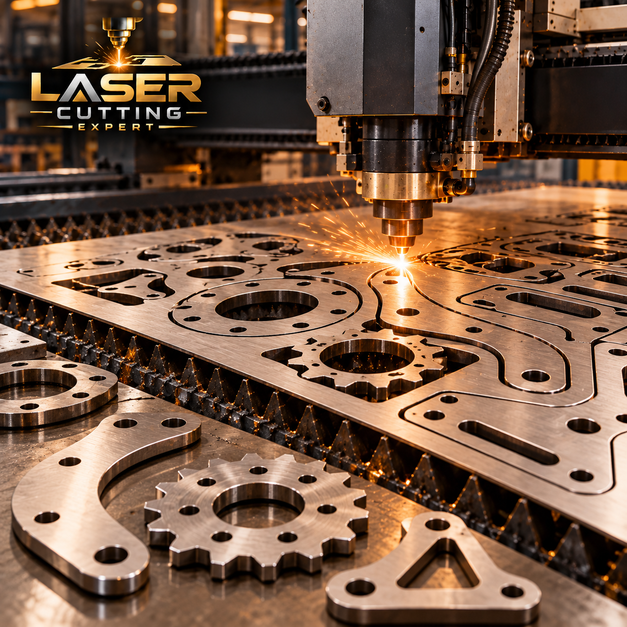
A profile is more than the outside edge of a piece of metal. It can include the complete component shape, internal holes, slots, notches, openings and locating features needed for the next stage of manufacturing. Laser Cutting Expert provides laser profile cutting from our London workshop for businesses, engineers, fabricators, designers and individual customers throughout the UK. We produce one-off profiles, replacement parts, prototypes, fabrication blanks and repeat components with no minimum order. Customers can send production-ready drawings or ask for design support. We operate 24/7, including weekends and bank holidays, with suitable same-day production in London and next-day delivery options across the UK.
CALL OR EMAIL US FOR PRICES
“Order any time of the day or night and receive your order on the same day in London. You are welcome to visit our laser cutting shop for an instant laser cutting service. On-site collection or free delivery can be arranged. Email us at laser@makergroup.uk for a quick quote or call us on 02036339857 for an instant price”.
Same Day Laser Cutting & Delivery
We can arrange a same day courier delivery with customer live tracking. Or customers can collect from our Laser Cutting Expert shop.
OPEN 24 HOUR
We are open 7 days a week, and you can order at any time. There is no last ordering time and no deadline. We also offer an overnight laser cutting service.

100% Satisfaction
High Quality Laser Cutting & 100% Customer Satisfaction Guarantee. Top-Rated Laser Cutting Company on Google.

Free File Check
We offer a free file check and proof before sending your artwork for laser cutting.
From an Outline to a Working Component
The starting point for laser profile cutting is normally the geometry the finished component needs rather than a standard rectangular blank. A profile might be a curved mounting plate, an irregular machine bracket, a decorative panel or a fabrication component containing several internal features. The laser follows digital geometry to separate that shape from suitable sheet or plate. This gives designers considerably more freedom than relying only on standard sawn rectangles. The profile can be prepared for direct use or become the first stage of a longer manufacturing route involving bending, welding, drilling, machining, coating or assembly.
Profile Cutting Is About Geometry
One useful way to understand laser profile cutting is to think about the complete two-dimensional geometry of a component. The outside contour determines its basic form, but internal details often determine how it actually works. Bolt holes position it. Slots provide adjustment. Notches create clearance. Tabs help with assembly. Cut-outs reduce weight or allow cables and equipment to pass through. These features can often be included in the same digital cutting operation. Instead of manually producing a basic blank and adding every feature afterwards, the component can leave the laser much closer to the geometry needed for fabrication or assembly.
Outside Profiles
The outer contour is the most obvious part of laser profile cutting. It can be rectangular, circular, curved, tapered, stepped or completely irregular depending on the design. This makes the process useful for custom components that would require significant manual work using conventional sawing or cutting methods. Outside geometry should still be designed practically. Extremely narrow projections can become fragile, while sharp internal transitions may not always suit the intended application. The profile should reflect how the physical component will be handled and used. Digital freedom does not remove the normal mechanical behaviour of the selected material.
Internal Profiles
Internal cut-outs can be just as important as the outside shape. Laser profile cutting can incorporate suitable openings for access, ventilation, weight reduction, cable routing, switches, displays and mechanical clearance. A machine panel might contain several different opening shapes while an architectural panel may use hundreds of decorative cut-outs. Internal geometry affects the strength and stiffness of the remaining material. Removing too much material can leave a component flexible or weak. Where profiles are structural or safety-related, the responsible engineer should determine appropriate openings and remaining section sizes rather than assuming that any cut-out that fits within the outline is acceptable.
Custom Holes
Holes can often be incorporated directly into laser profile cutting drawings, reducing the need for separate manual drilling of ordinary clearance features. Round holes, mounting patterns and larger access openings can be produced together with the outside profile where their dimensions suit the material and process. Very small holes relative to material thickness can be more demanding. If a hole needs to locate a precision pin, bearing or close-fitting shaft, drilling, reaming or machining may still be the better finishing operation. The laser can create a pilot or near-net feature first. Manufacturing method should follow the function of the hole rather than convenience alone.
Slots and Adjustment Features
Slots are widely used in mounting systems because they allow components to be adjusted during assembly. Laser profile cutting can produce straight, curved and suitably shaped slots according to the design. Applications include machinery, signs, furniture, equipment mounts and fabrication brackets. Slot width needs to be realistic for the material thickness and required fastener. If a slot is positioned close to an edge or bend, the remaining material should be strong enough for its intended load. Slots can make assembly easier, but excessive adjustment can also allow components to move if fixings are not properly secured. Final joint design remains the responsibility of the product designer.
Notches and Clearances
A well-designed notch can allow one component to fit around another without unnecessary secondary cutting. Laser profile cutting can create clearances for tubes, brackets, cables, frame members and other assembly features. Notches can also help components locate against each other before welding. Their shape should consider both fit and strength. A deep notch can significantly reduce the effective section of a plate or bracket. Sharp internal corners can also concentrate stress in some applications. Structural parts therefore need appropriate engineering. The fact that a notch simplifies fabrication does not mean it should be added without considering what happens to the component under load.
Tabs for Assembly
Tabs can help several laser-cut components locate during fabrication. Laser profile cutting allows tabs to be built into the outside geometry so parts can slot into matching openings before welding or fastening. This can reduce measuring and help maintain alignment during assembly. Tab clearance needs to consider material thickness, kerf and any later coating. A joint designed with zero theoretical clearance may be difficult to assemble physically. For welded components, access for the welding process also needs consideration. Self-locating design can make fabrication easier, but it should support the assembly process rather than create joints that become impossible to reach once the parts are fitted together.
Profiles for Bending
Many profiles are deliberately cut flat before becoming three-dimensional. Laser profile cutting can create the developed blank for brackets, trays, enclosures, channels and folded panels. Bend reliefs, corner details, holes and slots can all be positioned in relation to the future folds. The drawing needs to account for material thickness, bend radius and bend allowance. If those values are incorrect, an accurately cut flat profile can still produce the wrong finished dimensions after forming. New folded components are best checked through the complete manufacturing sequence. Where appropriate, one prototype can be cut and bent before repeat quantities are released for production.
Profiles for Welding
Welded products frequently begin as several individually cut profiles. Laser profile cutting can prepare gussets, base plates, brackets, side plates and connection pieces before fabrication begins. Tabs and slots may be incorporated to help alignment. Edge geometry should leave practical access for welding. If a joint requires a specific weld preparation, this should be identified rather than assuming the standard laser-cut edge is automatically suitable. Welding introduces heat and distortion, so finished assembly dimensions depend on fabrication technique as well as component accuracy. Structural welds require appropriate engineering, qualified procedures and inspection according to the application.
Profiles for Machining
Laser cutting and machining can work together rather than competing for the same job. Laser profile cutting can remove most unwanted material and create a near-net blank before milling, drilling, turning or grinding establishes critical surfaces. This can be useful for machine plates, bearing mounts, tooling parts and other engineering components. The profile should retain enough material where the machinist needs to establish an accurate finished edge or datum. Critical holes may also be left undersize. By using laser cutting for the broad geometry and machining only where necessary, a component can follow a more practical production route than machining every external contour from solid stock.
Profiles for Powder Coating
Brackets, panels, signs and fabricated products often receive powder coating after cutting and fabrication. Laser profile cutting can create the required geometry before bending and welding are completed. The edge and surface then need appropriate preparation for the selected coating system. If oxygen-assisted cutting has been used on suitable carbon steel, oxide condition may need attention before coating. Nitrogen-assisted cutting can provide a different edge condition where appropriate. Powder coating should normally follow major fabrication operations so the decorative finish is not damaged by welding or forming. Outdoor products also need a coating system suitable for their actual service environment.
Profiles for Engraving and Identification
Components sometimes need more than their physical outline. Part numbers, assembly references, names or decorative details can be added through a suitable marking or engraving process. Laser profile cutting can therefore be coordinated with identification where required. This is useful for fabrication kits containing several similar plates or for equipment components that need permanent references. Identification should be positioned where it remains readable after bending, welding or assembly. Safety markings and regulatory information must be specified by the responsible manufacturer. Adding text to a component does not establish that the wording itself meets the legal or technical requirements of the finished product.
Mild Steel Profiles
Mild steel is widely used for fabrication because it can be cut, bent, welded and finished in many ways. Laser profile cutting can produce mild-steel brackets, plates, gussets, guards, machine components, signs and structural fabrication blanks. Material grade and thickness should match the intended use. Thin steel can be suitable for covers and panels, while thicker plate may be required for load-bearing components. Mild steel normally needs appropriate corrosion protection when used outdoors or in damp environments. Structural parts should be designed by a competent person. Cutting accurately to a drawing does not establish whether the selected steel thickness is sufficient for the applied load.
Stainless Steel Profiles
Stainless steel profiles are used where appearance, corrosion resistance or hygiene is important. Laser profile cutting can produce custom stainless panels, brackets, plaques, equipment parts and architectural components. Grade selection matters because 304, 316 and specialist stainless steels have different properties and service environments. Brushed sheet may require consistent grain orientation when profiles are nested. Visible surfaces also need careful handling. Nitrogen-assisted cutting can be considered where a low-oxidation edge is important. Food, marine, chemical and other demanding applications require the correct complete material and fabrication specification rather than choosing stainless steel solely because it looks clean and does not readily rust.
Aluminium Profiles
Aluminium can provide lightweight profiles for enclosures, equipment, signs, furniture and display systems. Laser profile cutting can produce suitable aluminium shapes with mounting holes, slots and custom outside geometry. Alloy and temper are important, particularly when components will later be bent or welded. Large thin profiles may require folds or supporting structures because aluminium sheet can remain flexible despite being cut accurately. Decorative aluminium may later be anodised or powder coated. Structural applications require appropriate engineering. A lightweight component is useful only when the selected material and geometry still provide the strength and stiffness required for the finished product.
Galvanised Steel Profiles
Galvanised steel is commonly used for practical equipment, ventilation, brackets and outdoor components. Laser profile cutting can produce suitable profiles from pre-galvanised sheet, but the zinc coating needs consideration. Cutting locally exposes the steel at the edge, and later welding can damage additional coating. Heating zinc during welding creates hazardous zinc oxide fumes, requiring proper extraction and working procedures. Post-fabrication coating repair may also be needed. Pre-galvanised sheet and a finished fabrication that is hot-dip galvanised afterwards are not equivalent production routes. The required corrosion protection should therefore be considered when deciding how the profile and finished assembly will be manufactured.
Corten Profiles
Corten and other weathering steels can be profiled into garden screens, signs, landscape edging, planters and outdoor artwork. Laser profile cutting allows both functional and decorative geometry to be created from the sheet. The weathered surface develops over time rather than leaving the workshop with its final appearance. Early runoff can stain surrounding paving or walls, so drainage and installation location need consideration. Large decorative profiles may also need supporting frames. Corten is still an engineering material, and structural products require suitable design. Its distinctive weathered appearance should not be treated as proof that every outdoor design will perform correctly without further consideration.
Brass Profiles
Brass is commonly selected for signs, plaques, furniture details, awards, decorative panels and restoration work. Laser profile cutting can create suitable brass components where alloy, thickness and cutting process are appropriate. The material’s warm appearance can make cut edges and surface condition important parts of the finished product. Brass can naturally change colour over time unless protected or maintained. Some projects intentionally use that ageing process, while others require polishing or a protective finish. Small precision features may need secondary machining depending on their function. Decorative appearance should therefore be planned alongside the actual manufacturing and finishing route.
Copper Profiles
Copper profiles can be used for electrical parts, decorative panels, artwork, signs and specialist engineering components. Laser profile cutting can produce suitable copper geometry where the material and equipment are appropriate. Copper conducts heat efficiently and is reflective, so it behaves differently from ordinary mild steel during laser processing. Electrical components may include plates, contact shapes and busbar-style profiles. Their current-carrying capacity, temperature rise and electrical safety cannot be determined by laser cutting alone. Critical contact surfaces may also need additional finishing. Decorative copper changes colour naturally through oxidation, so customers should decide whether they want a bright, aged or protected final appearance.
Titanium Profiles
Titanium can be used for lightweight engineering components, motorsport development, marine parts, scientific equipment and specialist products. Laser profile cutting can be considered for suitable titanium sheet according to grade, thickness and required edge condition. Grade 2 and Grade 5, for example, are not interchangeable. Material value also makes sensible nesting important. Aerospace, medical and safety-critical applications can require traceability, approved manufacturing procedures and formal quality systems beyond general profile cutting. Producing the geometry does not certify the finished part for those uses. Customers should identify controlled requirements at the enquiry stage rather than after manufacturing has begun.
Custom Brackets
Brackets are one of the most common applications for laser profile cutting because their geometry can vary enormously. A bracket may be flat, folded, slotted, curved or designed around a specific machine. Mounting holes and adjustment slots can be incorporated before forming. Where the bracket carries a significant load, material thickness and geometry need proper engineering. Bend position also matters because holes too close to the fold can distort. A prototype bracket can be fitted to the real equipment before a larger batch is produced. This is particularly useful when replacing an existing bracket for which no reliable production drawing is available.
Mounting Plates
Mounting plates provide a flat interface for motors, controls, equipment, furniture or fabricated structures. Laser profile cutting can create custom outside shapes together with bolt patterns and access openings. If the plate must locate equipment precisely, selected holes may require drilling, reaming or machining after laser cutting. Thick plates can also be cut as near-net blanks before machining. Load-bearing applications need suitable engineering. The mounting method, fasteners and supporting structure all influence performance. An accurately cut plate does not compensate for undersized bolts, weak surrounding material or an unsuitable structural design elsewhere in the assembly.
Base Plates
Machine bases, sign supports and fabricated structures often use custom base plates. Laser profile cutting can produce circular, rectangular or irregular plates with fixing holes and connection features. Plate thickness should be based on the actual load and support arrangement. If the base will be welded to a column or frame, weld access and distortion should be considered. Floor fixings also need appropriate engineering. Precision levelling or bearing surfaces may require machining after cutting. Laser profiling is particularly useful for removing unnecessary stock and creating the broad geometry before these later operations, allowing the component to enter fabrication much closer to its final shape.
Gussets
Gussets strengthen frames and fabricated joints by distributing load through additional material. Laser profile cutting can produce triangular, curved or custom gussets with notches and locating features. Their size, thickness and position should follow the engineering design of the complete structure. Adding a gusset does not automatically make a joint strong enough, and removing material for decorative reasons can change its behaviour. For repeat fabrication, locating tabs can help position gussets before welding. Welding sequence and access remain important. The laser provides consistent component geometry, while the fabricator and responsible engineer determine how the gusset functions within the finished assembly.
Machine Panels
Machine panels can be profiled with switch openings, cable access, ventilation, fixing holes and custom edges. Laser profile cutting allows these features to be produced from one digital drawing before the panel moves into forming or assembly. Different machine models can use related panel designs with controlled variations. If a panel forms part of machine guarding, opening sizes and distances from hazards require appropriate risk assessment. Electrical panels also need the complete enclosure to meet relevant requirements. Laser Cutting Expert manufactures the specified profile but does not certify the safety of the machine or electrical system that eventually uses it.
Machine Guards
Machine guards often contain a mixture of outside geometry, fixing points and ventilation or visibility openings. Laser profile cutting can create these features in a single flat component before bending or assembly. The design must still protect people from hazardous machinery. Opening size, distance from moving parts, material strength and fixing method need appropriate safety assessment. Decorative perforations should not compromise the guarding function. Where a guard is folded, its developed profile should be tested before repeat production. The responsible machinery manufacturer remains responsible for ensuring the complete guarding system is appropriate for the risks presented by the equipment.
Equipment Covers
Equipment covers can be simple flat plates or developed profiles that later fold into three-dimensional housings. Laser profile cutting can create fan openings, cable entries, handles and mounting features before forming. Material can be selected according to weight, corrosion resistance and appearance. Thin sheet may need folded edges for stiffness. Removable covers should also have practical fixing arrangements so maintenance staff can access equipment safely. If the cover is part of an electrical enclosure or machine guard, additional safety requirements apply. Profile cutting manufactures the geometry; it does not establish the safety performance of the completed equipment.
Electrical Panels
Electrical equipment can use laser-profiled mounting plates, face panels and enclosure blanks. Laser profile cutting can create openings for meters, switches, connectors, ventilation and cable entry. Dimensions should ideally be checked against real components rather than relying only on generic online drawings. Electrical safety, creepage, clearance, IP rating and EMC performance depend on the complete assembly. The cutting process alone cannot establish these properties. Where a new panel contains many different devices, producing one prototype before a full batch is useful. Actual switches and connectors can then be installed to confirm that openings and fixing positions work as intended. our Tube & Pipe Laser Cutting service can be used alongside the model production process.
Ventilation Profiles
Ventilation features can range from a few large openings to dense patterns of slots. Laser profile cutting allows these to be integrated into panels without separate punching tools. The amount of open area should reflect airflow requirements, while the remaining sheet must provide sufficient stiffness. A panel containing thousands of small cut-outs can take considerably longer to manufacture than one using a smaller number of larger openings. If ventilation forms part of machine guarding, openings must also be assessed for safe access. Design should therefore balance airflow, strength, cutting time and safety rather than selecting a pattern purely because it looks attractive in CAD.
Enclosure Profiles
Sheet-metal enclosures usually begin as flat developed profiles. Laser profile cutting can prepare the perimeter, corner reliefs, holes and equipment openings before the blank moves to folding. Bend information should be coordinated with the profile because the flat dimensions determine the final enclosure size. If a hole is too close to a bend, it may distort during forming. Different enclosure versions can be produced from related CAD files without creating physical cutting dies. Electrical or environmental ratings apply to the completed enclosure system rather than the flat profile. Seals, joints, hardware and assembly methods all contribute to final performance.
Signs and Logos
Custom signs frequently rely on profiles that would be difficult to reproduce neatly by hand. Laser profile cutting can create individual letters, logos, plaques and shaped sign panels from suitable metal, acrylic, plywood and other compatible materials. Fine lettering needs enough material to remain physically strong. Script fonts may require small modifications where letters contain fragile connections. Outdoor signs need appropriate material and fixing systems. Large panels can experience significant wind loading, while heavy metal letters need secure installation. The laser provides the required visual geometry, but the sign maker or installer remains responsible for the complete installation.
Architectural Profiles
Architectural work can require custom screens, façade elements, decorative panels, trims and interior details. Laser profile cutting allows designers to use repeated patterns or completely bespoke geometry. The design still needs to work as a physical component. Large cut-outs can reduce stiffness, narrow bridges can become fragile and external panels can be exposed to wind. Where the profile becomes part of a balustrade, barrier or other safety-related building element, appropriate engineering and regulatory assessment are required. Laser Cutting Expert can manufacture approved components but does not determine whether a decorative pattern satisfies structural or building safety requirements.
Garden Screens
Garden screens and privacy panels can be cut with geometric, botanical or personalised designs. Laser profile cutting works well for suitable mild steel, stainless steel, aluminium and Corten products. A border around the design can help maintain stiffness and provide fixing locations. Outdoor exposure should influence material and finish. Mild steel generally needs suitable corrosion protection, while Corten develops a weathered surface and may produce early runoff. Large freestanding screens need proper posts or frames to resist wind. The cutting pattern should therefore be considered alongside the complete installation rather than treating the panel as an isolated decorative sheet.
Gates and Railings
Custom gate and railing projects can include profile-cut plates, decorative inserts, brackets and connection components. Laser profile cutting allows repeating motifs and custom geometry to be incorporated into suitable metal parts. Safety and structural requirements are particularly important. Gates can be heavy moving structures, while railings may perform a fall-protection function. The responsible fabricator or engineer must determine appropriate material, section sizes, welds, hinges and fixing methods. Laser Cutting Expert produces the specified components but does not certify the complete gate or barrier. Decorative cutting should never remove material required for structural performance without proper assessment.
Furniture Profiles
Furniture makers can use laser profile cutting for table bases, brackets, shelf supports, decorative panels and connection plates. Metal profiles can be combined with timber, glass, stone and upholstery. The visible appearance may influence material choice and surface orientation. Components intended to be welded need practical joint access. Furniture that supports people requires appropriate strength and stability testing. A beautifully profiled steel chair component can still form part of an unsafe chair if joints or overall geometry are poorly designed. Laser cutting provides repeatable parts while the furniture designer remains responsible for the performance of the complete product.
Interior Design Components
Interior projects can use custom metal or acrylic profiles for wall features, room dividers, shelving, decorative trims and branded installations. Laser profile cutting gives designers freedom to create shapes around a particular space rather than relying only on standard components. Measurements should be taken carefully because walls, floors and ceilings in real buildings may not be perfectly square. Large panels also need practical transport and installation planning. If a component cannot fit through the building entrance, accurate cutting will not solve the installation problem. Breaking a large design into controlled sections can sometimes provide a more practical solution.
Display Components
Retail and exhibition displays can contain brackets, product supports, sign holders and decorative profiles. Laser profile cutting can produce these components from digital files so several matching displays can be assembled consistently. Slots and tabs may simplify installation or allow flat-pack construction. Public-facing displays need stable bases, safe edges and secure components. Actual products should be tested in the display because packaging dimensions can differ from the values used during initial design. A prototype can therefore be useful before producing components for multiple locations. Laser cutting supports the manufacturing stage while physical testing confirms whether the display works in real use.
Shims
Custom shims are often simple in appearance but important in an assembly. Laser profile cutting can create suitable flat shims with custom outside shapes and holes. Material thickness is especially important because the shim’s purpose may be to establish a specific spacing. Nominal sheet thickness has manufacturing tolerance, so critical stack heights should consider the actual stock specification. Very thin precision shims may require specialist processes depending on material and tolerance. Laser cutting can be practical for many general engineering shims, but customers should identify where thickness or edge requirements are critical rather than assuming every shim has the same manufacturing requirement.
Washers and Rings
Standard washers are easy to buy, but machinery and fabrication sometimes require unusual outside diameters, internal holes or non-round shapes. Laser profile cutting can produce suitable custom washers, rings and flat spacers without dedicated tooling. The ratio between hole size and material thickness needs to be practical. Precision bearing surfaces or close-tolerance internal diameters may require secondary machining. Washers used in structural bolted connections can also have specific material and dimensional requirements that should not be replaced casually with an unverified custom design. Profile cutting is most useful when the component specification is clearly understood.
Custom Flanges
Flat flanges can contain bolt circles, central openings and irregular outside shapes. Laser profile cutting can produce suitable flange blanks for fabrication, equipment and prototype applications. If a flange forms part of a pressure-containing system, cutting the geometry does not certify it for pressure service. Material grade, thickness, bolt design, sealing surface and applicable standards all need proper engineering. Precision sealing faces may require machining after cutting. For non-pressure fabrication, laser profiling can provide an efficient way to produce custom connection plates without machining the complete shape from solid stock.
Fabrication Kits
A fabrication kit brings several different profiles together into one assembly. Laser profile cutting can produce side plates, brackets, gussets, tabs, bases and covers according to related digital drawings. Components can include locating features to simplify assembly. Identification marks may help distinguish similar parts. The kit should be designed around the actual fabrication sequence so weld access remains possible. If several components use the same material and thickness, they can often be nested efficiently together. Structural assemblies still require appropriate engineering and qualified fabrication. Accurate profiles make assembly easier but do not replace the workmanship needed to create a sound finished structure.
Replacement Profiles
Older machinery and equipment sometimes need a flat component that is no longer commercially available. Laser profile cutting can help reproduce suitable replacement covers, brackets, plates and panels where reliable dimensions are available. An existing component can sometimes provide useful measurements, but copying its shape does not reveal its original material grade, heat treatment or engineering requirements. Safety-critical replacement parts should therefore be properly specified rather than reproduced solely from appearance. For ordinary non-critical components, one prototype can be cut and fitted first. Once confirmed, the digital profile can be retained for future production if another replacement is required.
Reverse-Engineered Flat Profiles
Simple flat components can sometimes be recreated from an existing sample, drawing or set of measurements. Laser profile cutting then provides a way to manufacture the redrawn geometry. The reverse-engineering stage should identify overall dimensions, hole positions, material and thickness as accurately as possible. Worn parts can be misleading because their current dimensions may no longer match the original design. Broken edges can also make the intended geometry uncertain. We can help prepare suitable cutting information, but customers remain responsible for confirming whether the recreated component is appropriate for its machine or assembly, particularly where failure could create a safety risk.
Prototype Profiles
A new component does not need to go directly into full production. Laser profile cutting can produce one prototype so the physical geometry can be checked against the real assembly. This is useful for brackets, machine panels, enclosures, furniture parts and product-development components. A prototype may reveal that a slot needs moving or an outside edge interferes with another part. The CAD can then be revised before additional material is used. If the component will be bent, welded or machined, it is better to test those stages as well rather than approving only the flat profile and assuming every later operation will work automatically.
Short-Run Profile Cutting
Some businesses need twenty components rather than two thousand. Laser profile cutting works well for short runs because digital geometry removes the need for dedicated profile tooling. This can suit specialist machinery, limited furniture ranges, custom signage and replacement-part programmes. Different compatible components can often share the same material sheet where thickness and production requirements match. A short batch is also useful after prototype approval because it gives the manufacturer an opportunity to test real assembly before increasing quantity. With no minimum order, production can follow actual demand rather than forcing customers to hold unnecessary stock.
Repeat Profile Production
Once a profile is approved, the digital geometry can support later production. Repeat laser profile cutting is useful for manufacturers who periodically need the same bracket, panel or fabrication component. Drawing numbers and revision references help ensure the correct version returns to production. Material grade, thickness and surface finish should also remain controlled. A change that appears minor on screen can affect assembly, so revised files should be clearly identified. Repeatability is most useful when the underlying manufacturing information is reliable. The laser can follow the same geometry consistently, but it cannot determine whether an old file should have been replaced by a newer revision.
One-Off Profile Cutting
There is no minimum quantity for laser profile cutting at Laser Cutting Expert. Customers can order one unusual bracket, one sign panel, one replacement plate or one experimental component. One-off work is particularly useful where standard parts do not match an existing installation. A clear drawing with dimensions, material and thickness helps us assess the job quickly. If no production file exists, design support can be discussed. A single part can also become the first prototype of a future product. If the geometry works, the same controlled file can later be used for short batches or regular repeat production.
Customer-Supplied Drawings
Customers with production-ready CAD can send files directly for laser profile cutting assessment. DXF is commonly useful for two-dimensional profiles, although the suitability of any file depends on its contents rather than the extension alone. Duplicate lines, open contours, wrong units and unnecessary construction geometry can create production problems. Material, thickness and quantity should be supplied separately if they are not clearly controlled within the drawing system. If the component will be bent or machined afterwards, this should also be stated. Knowing the next manufacturing stage helps us understand which dimensions and features are most important.
Working from a Sketch
Not every customer begins with CAD. A straightforward profile may start from a dimensioned hand sketch showing outside dimensions, hole positions and required material. We can discuss preparing suitable digital geometry before laser profile cutting. The sketch needs enough information to remove ambiguity. A photograph alone rarely provides reliable scale unless known dimensions are included. Complicated profiles may require more detailed CAD work. The production drawing should be approved before cutting begins because once material has been processed, an unclear dimension becomes a physical mistake. Design preparation is therefore part of manufacturing, not merely an administrative step before the real work starts.
DXF Profile Cutting
DXF files are widely used for laser profile cutting because they can contain the two-dimensional geometry needed for flat components. A usable DXF should contain correctly scaled, clean profile information. Duplicate lines can cause unwanted repeated cutting, while open contours can prevent a shape from being interpreted correctly. Text may also need converting to suitable geometry depending on the application. Customers should identify which lines are cuts and which are only reference information. A file should not be considered production-ready simply because it opens successfully in CAD software. Manufacturing geometry needs to represent the actual component that should come off the machine.
Profile Cutting from 3D CAD
Three-dimensional CAD can also be useful when the final product is an assembly or folded component. The required flat profile can be developed from the model before laser profile cutting. This helps coordinate hole positions, bends and mating components. A 3D model still needs correct material thickness and bend assumptions if it is used to generate sheet-metal developments. If those settings do not match the actual fabrication process, the flat profile may be wrong. For complex assemblies, using the 3D design alongside controlled 2D production files can help show both the intended final shape and the exact geometry required at the laser-cutting stage.
Profile Nesting
Several profiles can often be arranged across the same sheet to improve material use. Laser profile cutting nesting needs to consider more than simply filling every empty space. Brushed grain direction, bend orientation, cosmetic surfaces and component handling may restrict rotation. Small profiles can sometimes fit around larger parts, reducing waste. Expensive materials make efficient nesting particularly valuable. However, overly aggressive nesting can create production problems if parts are positioned too close together or become difficult to handle. The best layout balances material efficiency with stable cutting and the quality requirements of the finished components.
Using Offcuts Efficiently
Not every profile needs a new full sheet. Small laser profile cutting jobs may fit suitable known remnants where material grade, thickness and condition are appropriate. This can be useful for prototypes, brackets and one-off plates. A remnant should still be treated as a specified material rather than unidentified scrap. Structural or controlled engineering work may require documented material information. Cosmetic products need enough undamaged surface area to contain the component. Using remnants sensibly can reduce waste, but material suitability always takes priority. A piece of sheet is not useful merely because the profile fits inside its outside dimensions.
Profile Cutting and Material Grain
Some sheet materials have a visible or functional direction. Brushed stainless has an obvious surface grain, while certain metals can have rolling direction relevant to later forming. Plywood and decorative materials also have visible grain. Laser profile cutting layouts should account for this where orientation matters. Rotating a part 90 degrees might save sheet but create inconsistent appearance or affect a later bend. Customers should identify cosmetic direction or fabrication requirements before production. This allows nesting decisions to support the finished product rather than optimising material use in a way that creates problems at assembly or installation.
Profile Cutting and Material Thickness
A digital profile can look identical regardless of thickness, but the physical component does not behave the same way. Laser profile cutting therefore needs the actual material thickness before production is confirmed. Thickness affects weight, stiffness, practical hole size, bending and cutting parameters. A bracket designed in 2 mm steel cannot simply be changed to 10 mm without considering how that affects slots, fasteners and assembly. Likewise, reducing thickness can make a large panel too flexible. Where thickness is a structural decision, it should be specified by the responsible engineer. Manufacturing advice cannot replace calculations for safety-critical applications.
Profile Cutting and Kerf
The laser removes a narrow path of material known as kerf. During laser profile cutting, the machine process accounts for this so the component can be produced around the intended geometry. Kerf becomes particularly important where two parts need to fit together, such as tabs and slots or decorative inlays. Material and thickness influence the cutting behaviour. A joint should therefore be tested when fit is critical rather than assuming the same nominal dimensions will work across every material. For ordinary outside profiles, kerf compensation is largely a production matter, but designers should understand it when creating closely mating components.
Profile Cutting and Tolerances
Not every dimension on a component needs the same tolerance. Laser profile cutting can produce accurate general geometry, but machining may still be more suitable for bearing fits, dowel holes or critical sealing surfaces. Specifying unnecessarily tight tolerance across an entire component can make manufacturing more complicated without improving function. It is better to identify the dimensions that actually control assembly or performance. General edges can then follow an appropriate laser-cutting tolerance while critical features receive secondary machining where necessary. A practical drawing separates functional precision from dimensions that simply define the broad shape.
Profile Cutting and Edge Requirements
A hidden bracket and a decorative stainless plaque do not need the same edge specification. Laser profile cutting should therefore consider where the component will be used and whether its cut edge remains visible. Assist gas, material, thickness and cutting parameters can influence edge condition. Some parts may be suitable as-cut, while others benefit from deburring, polishing or preparation for coating. Customers should identify cosmetic requirements before production rather than expecting every engineering blank to receive decorative finishing automatically. Matching edge requirements to the actual application avoids unnecessary processing while still giving visible components the attention they need.
Profile Cutting for Fabricators
Fabricators can use laser profile cutting to reduce time spent manually marking, drilling and cutting individual plates. Components can arrive with outside shapes, holes, slots and assembly features already included. This allows workshop effort to focus on bending, welding and final assembly. Fabricators can supply their own drawings or work with us where cutting files need preparation. One-off repair jobs and regular production are both welcome. If profiles are intended for a welded structure, the fabrication sequence should be considered before cutting. Accurate components make good fabrication easier, but they do not remove the need for competent welding and assembly.
Profile Cutting for Manufacturers
Manufacturers can use laser profile cutting for machine components, panels, covers, brackets and product parts without maintaining dedicated cutting tooling for every shape. Digital files allow different product variants to be managed separately. A manufacturer may begin with one prototype, move into a short production batch and then return for repeat quantities as demand develops. Material and revision control become increasingly important as a component enters regular production. Where products are safety-critical or regulated, appropriate inspection, traceability and quality requirements should be defined separately. General laser cutting does not automatically provide industry-specific certification.
Profile Cutting for Designers
Designers often value laser profile cutting because geometry does not need to follow simple rectangular manufacturing conventions. Curves, patterns, irregular outlines and repeated motifs can all become physical components where material and structural requirements permit. Decorative freedom still needs practical limits. Narrow bridges can break, dense patterns can weaken panels and large sheets can become flexible. A prototype is useful when appearance is central to the project. Designers can then see how material, edge condition and scale affect the visual result before committing to a full installation or product range.
Profile Cutting for Engineers
Engineers can use laser profile cutting for brackets, machine plates, jigs, fixtures, guards and development components. Digital production makes it practical to revise geometry between prototypes without changing physical tooling. Functional dimensions should be clearly identified, particularly where another process will follow. Material grade and thickness should also be specified rather than relying on generic terms such as “steel plate”. For safety-critical parts, the responsible engineer remains accountable for design and validation. Laser Cutting Expert manufactures according to approved production information and can discuss manufacturability, but cutting capability should never be mistaken for engineering approval of the component’s function.
Profile Cutting for Sign Makers
Sign businesses can use laser profile cutting for letters, logos, plaques, backing panels and fixing components. Materials can include suitable metal, acrylic, plywood and other compatible sheet depending on the product. Fine artwork may need simplifying so small details remain physically strong. Mounting holes and locating features can be included directly in the design. Exterior signage needs suitable material, finish and installation. Large panels or letters can be exposed to wind and therefore require proper structural support. We manufacture the profiles while the sign maker or installer remains responsible for the complete installation and site-specific fixing requirements.
Profile Cutting for Furniture Makers
Furniture workshops can order custom brackets, plates, decorative inserts and support components through laser profile cutting. This is useful when standard hardware does not match the dimensions or appearance of a particular product. Parts can be designed around timber, glass, upholstery and other materials used in the furniture. If components are visible, surface direction and finish should be considered. If they carry load, strength and joint design become more important. Seating, tables and shelving should be tested according to their intended use. Laser-cut accuracy supports repeatable manufacturing, but the complete furniture product still requires appropriate design and construction.
Same Day Laser Profile Cutting London
Suitable production-ready laser profile cutting jobs can be considered for same-day completion from our London workshop. We operate 24/7, including weekends and bank holidays. Turnaround depends on material availability, thickness, profile complexity, quantity and any additional operations required. A straightforward bracket supplied as a clean DXF can usually be assessed faster than a component that still needs to be measured and drawn. Suitable completed orders can be delivered by same-day courier across London. For urgent work, send the drawing, material, thickness, quantity and deadline together so we can review the actual production requirement as quickly as possible.
Laser Profile Cutting Across the UK
Laser Cutting Expert provides laser profile cutting from London for customers throughout the UK. Manufacturers, engineers, fabricators, designers, sign companies and individual customers can send drawings electronically and receive finished profiles by nationwide delivery. Suitable next-day delivery is available for completed jobs where production and transport timing allow. There is no minimum order, so the service can be used for one prototype, several replacement components or regular production batches. Customers can provide their own material or discuss sourcing with us. Design support is also available where an idea, sketch or existing component needs to be converted into suitable cutting geometry.
FAQs About Laser Profile Cutting
1. What is laser profile cutting?
Laser profile cutting uses digitally controlled laser equipment to produce custom outside shapes and suitable internal features from sheet or plate material.
2. What products can be made with laser profile cutting?
Typical products include brackets, machine panels, base plates, guards, signs, screens, enclosure blanks, furniture components, shims, washers and fabrication parts.
3. Can you cut one custom profile?
Yes. We have no minimum order, so you can order one prototype, replacement component or custom profile.
4. Can holes and slots be included in the profile?
Yes. Suitable holes, slots, openings, notches and other features can often be included during the same cutting process.
5. Can laser-cut profiles be bent afterwards?
Yes. Many components are cut as flat developments before moving into press-brake bending or another forming process.
6. Can laser profiles be welded?
Yes. Suitable profiles can be produced for later welding and fabrication. Welding requirements should be considered when the component is designed.
7. Can you work from a DXF file?
Yes. Clean, correctly scaled DXF geometry is commonly used for laser profile cutting. We can also discuss design support if your file is not production-ready.
8. Can you reproduce an existing profile?
Suitable flat components can sometimes be measured and redrawn. Safety-critical replacement parts require proper material and engineering specifications rather than copying appearance alone.
9. Do you offer same-day laser profile cutting?
Suitable production-ready projects can be considered for same-day cutting and delivery in London, depending on material, quantity, complexity and capacity.
10. Do you provide laser profile cutting throughout the UK?
Yes. Production is based in London, with suitable completed profiles delivered to customers throughout the UK.