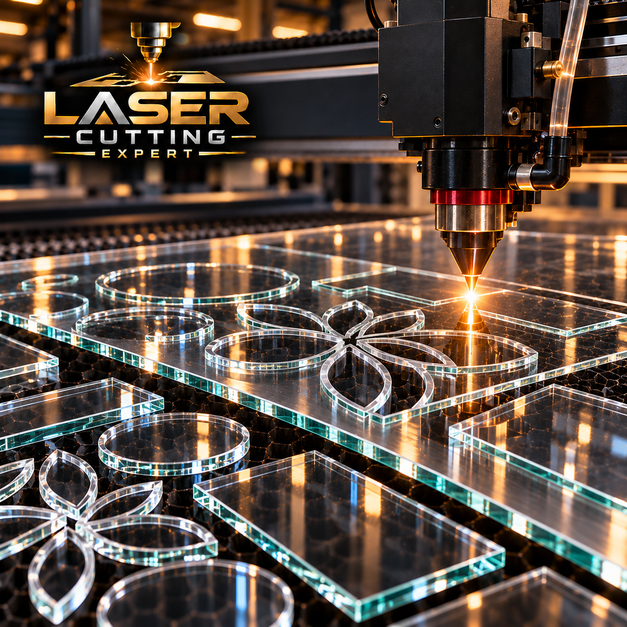
Glass does not respond to laser processing like acrylic, timber or sheet metal. It is brittle, sensitive to localised heat and available in many compositions, so the first step is understanding exactly what glass is being supplied and what result the project needs. At Laser Cutting Expert, we assess laser cut glass projects from our London workshop for designers, artists, model makers, businesses and product developers. Suitable work can range from decorative and prototype pieces to specialist glass components. There is no minimum quantity. Where conventional glass cutting, waterjet processing or another method would provide a safer or better result, we recommend the appropriate production route rather than forcing a laser process.
CALL OR EMAIL US FOR PRICES
“Order any time of the day or night and receive your order on the same day in London. You are welcome to visit our laser cutting shop for an instant laser cutting service. On-site collection or free delivery can be arranged. Email us at laser@makergroup.uk for a quick quote or call us on 02036339857 for an instant price”.
Same Day Laser Cutting & Delivery
We can arrange a same day courier delivery with customer live tracking. Or customers can collect from our Laser Cutting Expert shop.
OPEN 24 HOUR
We are open 7 days a week, and you can order at any time. There is no last ordering time and no deadline. We also offer an overnight laser cutting service.
100% Satisfaction
High Quality Laser Cutting & 100% Customer Satisfaction Guarantee. Top-Rated Laser Cutting Company on Google.

Free File Check
We offer a free file check and proof before sending your artwork for laser cutting.
Glass Is a Family of Materials, Not One Sheet Type
The word glass covers many materials with different manufacturing histories and physical properties. Standard soda-lime glass, borosilicate, coated glass, mirrored glass, laminated products and specialist technical glass cannot automatically be processed in the same way. Thickness is only one part of the specification. Thermal expansion, surface treatments, internal stresses and previous heat treatment can all influence what happens during processing. Before accepting a laser cut glass project, we need to understand the glass type and required geometry. Supplier information is particularly useful for specialist sheet. Unknown customer-supplied glass should not be treated as ordinary material simply because it appears similar to a familiar product.
Why Thermal Stress Matters
A laser introduces concentrated energy into a small area. With glass, the temperature difference between the heated region and surrounding material can create stress. If that stress exceeds what the glass can tolerate, cracking or uncontrolled breakage can occur. This is fundamentally different from melting through many plastics or metals. Suitable laser-based glass processes therefore need to control how energy interacts with the material. The required technique depends on composition, thickness and desired edge. When customers ask us to laser cut glass, we first consider whether the requested geometry is compatible with the material and whether laser processing actually offers an advantage over established mechanical or abrasive glass-cutting methods.
Decorative Glass Shapes and Design Pieces
Decorative projects may require circles, geometric profiles, artistic forms or other custom shapes for interiors, displays and creative installations. The best production method depends on the glass and the complexity of the design. Some profiles may be suitable for specialist laser-based processing, while others are more sensibly produced using conventional glass cutting or waterjet technology. Decorative pieces also need attention to finished edges because a raw cut profile may require additional processing before it can be safely handled or installed. When evaluating laser cut glass, we consider not only whether the outline can be produced but also what needs to happen afterwards to create the intended finished object.
Glass for Signs and Branded Displays
Glass can form part of reception signs, office branding, hotel displays, retail interiors and exhibition installations. Custom shapes may be combined with printed graphics, vinyl, metal lettering, acrylic components or stand-off fixings. Holes and fixing positions need careful planning because glass behaves poorly when features are placed without enough surrounding material. A designer searching for laser glass cutting near me may initially assume laser processing is necessary because the artwork contains a custom profile. In practice, the correct cutting technology should be selected after considering glass type, shape, fixing method and edge requirements. We can review the drawing and determine an appropriate manufacturing approach for suitable projects.
Mirrors and Reflective Glass Products
Mirror projects require additional consideration because the product consists of more than the visible glass surface. Reflective coatings, backing layers and protective paints may be present on the rear face. These materials affect how the complete sheet responds to processing. Custom mirror shapes can be used for decorative wall pieces, signs, displays, furniture details and artistic installations, but the correct cutting process depends on the mirror construction and required edge. We do not assume a mirror can be processed simply because ordinary glass of similar thickness can. Material information should be supplied before a laser cut glass or mirror project is approved, especially where coatings or backing materials are unknown.
Glass Components for Lighting Projects
Lighting designers may use glass for decorative panels, diffusers, shades, feature pieces and other visual components. These applications can involve heat during normal use, so material choice cannot be based solely on whether the required outline can be manufactured. The lighting designer or manufacturer needs to specify glass appropriate for the operating temperature, mounting system and electrical product design. Our role is to assess suitable cutting requirements from the supplied drawing. Where a custom profile is needed, the edge, mounting holes and minimum material around openings should be considered together. Finished lighting products should always be tested and approved by the responsible manufacturer before use.
Interior and Furniture Glass Details
Tables, shelving, cabinets, partitions and furniture features frequently incorporate glass. In these applications, edge condition can be just as important as the outside shape because users may come into contact with the component. A digitally accurate profile does not automatically create a finished furniture part. Grinding, polishing, drilling, toughening or other processes may still be required depending on the design. Customers asking us to laser cut glass for furniture should therefore provide the complete component requirements rather than only an outline. For load-bearing shelves, tables, doors or safety-related glazing, thickness and glass specification must be determined by the responsible furniture designer, engineer or glazing specialist.
Glass for Models and Creative Prototypes
Model makers and product designers sometimes use thin glass or glass-like materials to represent windows, screens, covers or transparent architectural features. The correct material depends on the scale and purpose of the model. In many cases, acrylic or another transparent sheet may be easier and safer to manufacture than real glass while still providing the required visual effect. If genuine glass is necessary, its type and thickness should be confirmed before production. A laser cut glass enquiry can therefore become a material-selection discussion rather than simply a cutting job. For prototypes, we can also assess whether an alternative transparent material would achieve the design objective more practically.
Small Glass Parts Need Sensible Geometry
Tiny features can be challenging in brittle materials. Narrow bridges, sharp internal corners and holes positioned close to an edge can create vulnerable areas even when the overall part is small. The drawing should therefore be designed around glass behaviour rather than copied directly from a metal or acrylic component. Where appropriate, corners may need different treatment and minimum distances may need to be maintained around openings. Customers searching for laser glass cutting near me can send their CAD drawing for assessment before purchasing material. Reviewing geometry early can prevent a design from depending on details that are impractical or unnecessarily fragile once manufactured in real glass.
Holes and Openings in Glass
Holes may be required for handles, stand-off fixings, brackets, lighting hardware or assembly points. Their diameter and position relative to the edge matter because glass cannot redistribute local stress in the same way as ductile metal. The correct process for creating openings depends on glass type, thickness and subsequent treatment. If glass will later be toughened, manufacturing stages need to be planned in the correct order because fully toughened glass generally cannot simply be cut or drilled afterwards like untreated sheet. A laser cut glass component should therefore be considered as part of the complete fabrication sequence rather than as an isolated cutting operation.
Toughened Glass Requires Early Planning
Toughened glass contains intentionally developed internal stresses that give it particular strength and breakage characteristics. Those same stresses mean it cannot normally be treated like untreated annealed sheet after toughening. Required profiles, holes and other machining are generally established before the toughening process. For this reason, customers should tell us whether their project ultimately requires toughened glass before production begins. Searching for laser glass cutting near me after a finished toughened panel has already been manufactured may severely limit the available options. The glazing manufacturer or responsible designer should establish the correct fabrication and toughening sequence according to the intended installation and relevant requirements.
Laminated Glass and Multi-Layer Construction
Laminated glass normally combines multiple glass layers with an interlayer. This changes the manufacturing problem because the process must deal with both brittle glass and the material between the layers. Interlayers can behave very differently under heat, so laminated products require specific assessment. The same applies to specialist glass containing films, coatings or other functional layers. We need the complete construction before deciding whether a laser-based process is appropriate. For a laser cut glass project involving laminated material, the desired edge condition is particularly important because cutting both glass and interlayer cleanly can require a different manufacturing approach from processing a single untreated sheet.
Coated and Printed Glass
Architectural, decorative and display glass can carry ceramic coatings, printed graphics, films or specialist surface treatments. These may influence the cutting process or become damaged near the processed edge. If the visible surface is already finished, handling and orientation also become important. Customers should tell us which face is the presentation side and provide information about any coating present. Where possible, cutting before applying certain decorative treatments may offer greater control, but the correct sequence depends on the complete manufacturing method. Our 3D & Multi-Axis Laser Cutting can be considered alongside other suitable processes when a specialist glass project requires accurately controlled digital geometry.
Edge Condition Is Part of the Specification
For many glass products, “cut to shape” is only the beginning. The edge might need grinding, arrissing, polishing or another finishing operation depending on how the component will be used. A concealed prototype panel has different requirements from a shelf or decorative piece with an exposed edge. When reviewing a laser cut glass enquiry, we therefore ask what the final product is rather than focusing only on the CAD outline. Handling requirements, visual appearance and installation method can determine whether additional finishing is needed. Safety-related edge specifications should be established by the responsible glass manufacturer, installer or designer according to the final application.
When Another Cutting Process Makes More Sense
Laser technology is useful, but it is not automatically the correct answer to every custom profile. Straight glass panels may be efficiently produced using conventional scoring and breaking. Complex thick profiles may be better suited to waterjet cutting or specialist glass machining. Drilling and edge grinding may also form part of the production sequence. Someone searching for laser glass cutting near me usually needs a finished custom glass component rather than a particular machine. We approach the job from that perspective. If another manufacturing method offers a cleaner, safer or more reliable result for the specified glass, choosing that process is better than using a laser simply because the enquiry began with that term.
Technical Considerations for Custom Glass Cutting
Glass processing depends on composition, thickness, thermal expansion, internal stress, surface condition and geometry. For laser cut glass, heat management is especially important because uneven thermal expansion can initiate cracks. Small holes, narrow sections and sharp transitions may concentrate stress, while coatings or laminated layers introduce additional variables. Toughened glass requires a different production sequence from untreated glass, and some specialist products may not be suitable for post-manufacture cutting at all. We therefore assess material information alongside the CAD drawing. For structural glazing, balustrades, doors, load-bearing components or other safety-critical products, final specification and compliance must be determined by the responsible engineer, glazing specialist or manufacturer.
Prototype Before Ordering Multiple Glass Components
Where a custom design is new, producing or testing one component before committing to a full quantity can reduce risk. This is particularly useful for display pieces, decorative panels, model components and products that need to fit inside another assembly. A prototype can confirm overall dimensions, mounting positions and visual proportions. In some cases, an acrylic prototype can be produced first to check geometry before the final glass manufacturing method is selected. Once dimensions and material are confirmed, repeat production can follow the approved specification. Our no-minimum-order approach makes this development process practical for designers who need to test an idea rather than immediately purchasing a large batch.
Urgent Glass Cutting Enquiries in London
Our London workshop operates 24/7, including weekends and bank holidays, but glass projects require realistic assessment before turnaround is confirmed. Same-day production may be possible for suitable materials and processes when the specification and artwork are ready. Specialist glass, additional edge finishing, toughening or other external fabrication stages can extend the schedule. Customers can provide material details and CAD drawings digitally so we can review the job before production. There is no minimum quantity. Suitable completed projects can be delivered by same-day courier in London or dispatched throughout the UK, with delivery timing dependent on the complete manufacturing and finishing requirements of the particular glass component.
Laser Glass Cutting Near Me
If you are searching for laser glass cutting near me, send Laser Cutting Expert your drawing together with the glass type, thickness, dimensions, quantity and intended use. Our production team in London works with customers throughout the UK, including designers, artists, architects, model makers, sign businesses and product developers. We assess whether laser processing is appropriate rather than assuming every glass product should be processed in the same way. Where another method is more suitable, that should form part of the production decision. Design support is also available if your concept still needs to be converted into a usable CAD drawing before manufacturing can begin.
FAQs About Laser Glass Cutting
1. Can all types of glass be laser cut?
No. Glass composition, thickness, heat treatment, coatings and construction all affect whether laser processing is appropriate.
2. Can you laser cut toughened glass?
Toughened glass generally needs its cutting, drilling and shaping completed before toughening. Finished toughened glass should not be treated like ordinary untreated sheet.
3. Can you cut custom glass shapes?
We can assess custom shapes and recommend an appropriate production method based on the glass type, geometry and required edge.
4. Can you work with mirrored glass?
Suitable mirror projects can be assessed, but the reflective coating, backing and overall construction need to be identified first.
5. Can I supply my own glass?
Yes, but we need to know the material type and relevant specification. Unknown coated, laminated or specialist glass may require additional information before production.
6. Do you make glass prototypes?
Yes, suitable one-off components can be assessed. In some development projects, acrylic may also be used first to check geometry before producing the final glass component.
7. Do you offer UK-wide service?
Yes. Production is based in London, and suitable completed projects can be delivered locally or dispatched throughout the UK.