
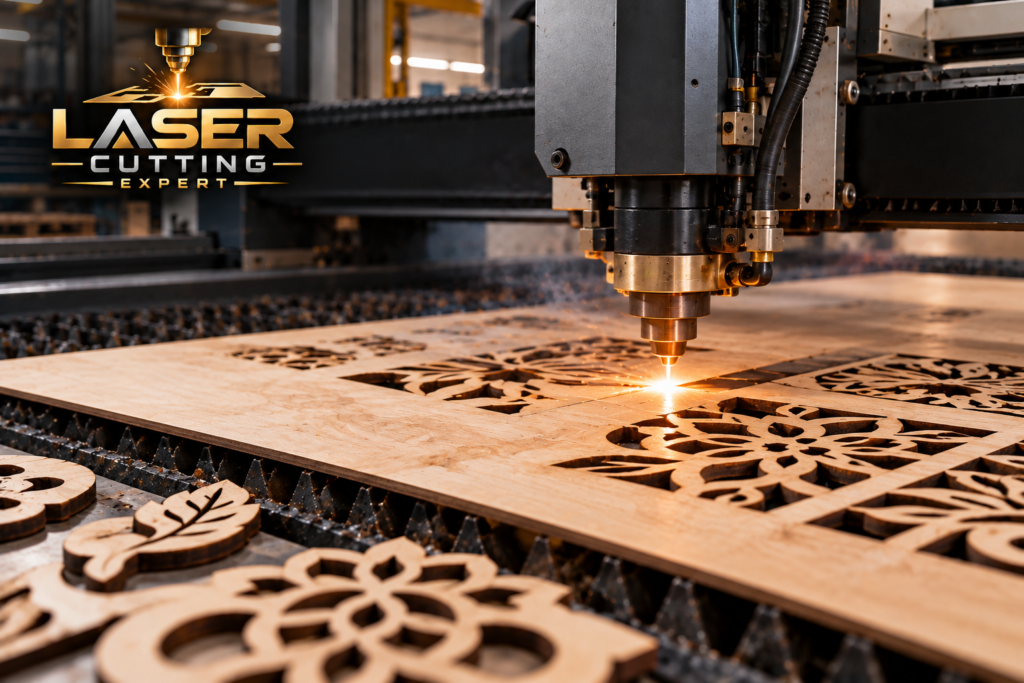
Wood is one of the most adaptable materials we process, but getting a clean result depends heavily on what type of wood actually goes onto the laser bed. At Laser Cutting Expert, we laser cut wood for makers, furniture businesses, artists, model builders, sign companies, event suppliers, students and private customers from our London workshop. Our work ranges from tiny craft pieces to larger laser cut wood panels, decorative screens, signs, puzzles, models and furniture components. Customers can supply suitable timber or sheet material, or we can source it. There is no minimum quantity, and suitable urgent London jobs can be completed the same day.
CALL OR EMAIL US FOR PRICES
“Order any time of the day or night and receive your order on the same day in London. You are welcome to visit our laser cutting shop for an instant laser cutting service. On-site collection or free delivery can be arranged. Email us at laser@makergroup.uk for a quick quote or call us on 02036339857 for an instant price”.
Same Day Laser Cutting & Delivery
We can arrange a same day courier delivery with customer live tracking. Or customers can collect from our Laser Cutting Expert shop.

OPEN 24 HOUR
We are open 7 days a week, and you can order at any time. There is no last ordering time and no deadline. We also offer an overnight laser cutting service.

100% Satisfaction
High Quality Laser Cutting & 100% Customer Satisfaction Guarantee. Top-Rated Laser Cutting Company on Google.

Free File Check
We offer a free file check and proof before sending your artwork for laser cutting.
Understanding Wood Before We Start Cutting
Successful laser cutting wood starts with understanding the sheet rather than simply selecting a thickness. Plywood, MDF, solid timber, veneer and balsa all respond differently to laser energy. Grain direction, glue layers, density, moisture and surface coatings can change the edge appearance and cutting consistency. Our approach to laser cutting for wood therefore begins by checking what the material is and what the finished component needs to do. A decorative sign has different requirements from an interlocking furniture component. Suitable projects include wooden letters, coasters, bookmarks, gift boxes, model parts, table decorations, wall art, craft shapes, invitations, lampshade components and architectural models.
Plywood, MDF and Wood Sheet Cutting
Sheet materials are practical when repeatable thickness and flat components are required. Laser cutting wood sheets can be used for plywood panels, MDF shapes, model components, box parts, signs, furniture templates, displays and layered artwork. Plywood needs particular attention because its internal glue layers and veneers can affect cutting consistency, while MDF is more uniform but produces its own characteristic cut edge. Sheet thickness also influences slot dimensions and interlocking joints. We can arrange multiple components on one sheet to reduce unnecessary waste. This is particularly useful for kits, repeated craft pieces, model buildings, organisers, boxes and other products manufactured as sets of related wooden components.
Balsa Wood for Models and Lightweight Parts
Laser cutting balsa wood requires a different approach from cutting dense hardwood or structural plywood. Balsa is lightweight and easy to process, making it useful for architectural models, aircraft models, prototypes, educational projects, miniature structures and lightweight craft assemblies. Its low density also means delicate sections can be fragile, so very thin bridges and narrow projections should be designed carefully. Grain direction can influence the strength of long narrow parts. For model kits, we can place related pieces together on sheets and add identification details where appropriate. This gives model makers organised component sets that can be removed, assembled and tested without manually cutting every individual shape.
Custom Wood Shapes for Crafts and Personalisation
Laser cut wood shapes can be produced in almost any sensible profile, from simple circles and tags to detailed silhouettes, lettering and layered decorative pieces. We regularly work with laser cut wood for crafts where makers need repeatable blanks for painting, engraving, printing, resin work, wedding decoration or personalised gifts. Typical products include wooden keyrings, Christmas decorations, table numbers, place names, coasters, bookmarks, plaques, ornaments, gift tags, flowers, wreaths and small signs. With custom laser cutting wood, dimensions and outlines can be adapted to the customer’s design rather than being limited to standard craft-shop shapes. One-off prototypes and small mixed batches are also welcome.
Wood Panels for Interiors and Decorative Projects
Large-format patterns can turn an ordinary wooden sheet into a decorative or functional feature. We produce laser cut wood panels for wall features, furniture inserts, screens, display structures, retail interiors, exhibition builds and decorative installations. Custom laser cut wood panels can include geometric patterns, botanical designs, logos, lettering or artwork prepared specifically for the available panel dimensions. Pattern density needs careful thought because removing too much material can reduce rigidity, particularly around edges and fixing points. For larger installations, panel thickness, supporting frames and mounting arrangements should be considered before production. Our related Tube & Pipe Laser Cutting service can add names, logos or surface details alongside the cut pattern.
Woodworking Components Made with Laser Cutting
Laser cut woodworking can support traditional workshop processes rather than replacing them. Laser cutting is useful for producing templates, decorative inserts, repeatable profiles, joinery components, furniture prototypes, cabinet details and parts that would otherwise take considerable time to mark and cut individually. Products can include plywood furniture pieces, desk organisers, phone stands, laptop stands, picture frames, card holders, lampshade components, boxes, shelving details and furniture decoration. For slot-together designs, actual sheet thickness is important because nominal plywood thickness may differ from the material measured in the workshop. Testing a joint before producing a full batch can prevent loose or overly tight assemblies later.
Timber Cutting and Solid Wood Considerations
Requests to laser cut timber need to be considered differently from standard plywood or MDF sheet. Natural timber varies in density, grain, resin content, moisture and flatness, even between boards of the same species. These differences can affect cutting speed and edge colour. Solid wood may also move naturally as humidity changes, which matters when components require close-fitting joints. Suitable work can include signs, plaques, lettering, decorative pieces, coasters, ornaments and furniture details. We assess the actual timber thickness and design before production. Very thick solid timber may require another cutting method, so we confirm suitability rather than assuming every wooden board is appropriate for laser processing.
Wooden Jigsaw Puzzles, Games and Kits
Laser cut wooden jigsaw puzzles need more planning than simply dividing an image into random pieces. Kerf changes the gap between neighbouring pieces, while material thickness affects how the finished puzzle feels in the hand. Very small pieces can become fragile, especially where the design creates narrow necks or sharp internal details. We can produce standard puzzle layouts, custom-shaped pieces, children’s educational puzzles, personalised puzzles and decorative puzzle products. The same production approach can be used for tic-tac-toe games, model kits, advent calendars, dolls houses, toy components and assembly kits. Engraved numbering or markings can also help organise more complicated construction sets.
Wood Art, Maps and Decorative Cutting
Laser cut wood art works particularly well when the design uses the natural surface and cut edge as part of its appearance. We can produce wall maps, silhouettes, flowers, trees, layered artwork, names, quotations, geometric patterns and decorative panels. Layered pieces allow different depths and shapes to be assembled into more dimensional artwork without needing a thick solid block. Fine details must remain physically connected, so islands inside letters or tiny sections of maps may need bridges or design adjustment. Products can include world maps, botanical wall pieces, family-name signs, wedding decorations, Christmas ornaments, home décor and personalised gifts, produced as one-offs or repeat collections.
CO2 Laser Wood Cutting and How the Process Works
CO2 laser wood cutting uses focused laser energy to follow a programmed path through suitable wood or wood-based sheet. The process is non-contact, so there is no physical cutting tool pushing against the component. This makes it useful for detailed profiles, small internal features and closely repeated shapes. However, wood is an organic material and heat affects its edge, meaning some darkening is normal and varies with species, thickness and cutting settings. Airflow and extraction are also important parts of the process. The aim is not simply maximum power; suitable speed, power and focus are chosen around the particular material and required result.
Laser Wood Cutting Tools and CAD-Controlled Production
The phrase laser wood cutting tools can refer to the equipment used to turn digital designs into physical wooden components. In professional production, the laser machine is only one part of that workflow. CAD preparation, focusing, extraction, material testing, nesting and quality checks all influence the finished result. Unlike a saw or router bit, the laser does not physically contact the wood, allowing detailed internal shapes to be produced without conventional tooling entering the profile. This is useful for intricate model pieces, lettering, craft blanks and decorative patterns. Correct artwork is still essential because the machine will follow the supplied geometry very closely.
Expert Technical Overview – Wood Laser Cutting
Good laser cutting for wood depends on material type, thickness, density, moisture, glue content and grain direction. Plywood can contain internal glue layers or voids, while natural timber can vary across the same board. Kerf must be considered for joints, tabs and slots, particularly in laser cut woodworking and model kits. Very narrow bridges can become fragile, while excessive heat may darken the cut edge. CO2 laser wood cutting settings therefore need to match the actual material rather than relying only on nominal thickness. For assemblies, puzzles or furniture components, testing a sample from the intended sheet can confirm fit before full production.
Designing Wood Parts Around Grain and Strength
Wood has direction, and that matters when a cut component is narrow or carries load. A long thin piece running unfavourably across the grain may break more easily than the same geometry arranged differently. With custom laser cutting wood, we can consider orientation when nesting parts, particularly for model components, furniture details, wooden keyrings and delicate decorative shapes. Plywood reduces some grain-direction problems because of its layered construction, although small features can still be fragile. Products such as wooden letters, ornaments, bookmarks, puzzle pieces and intricate wall art should have enough material around holes and narrow connections to survive handling after they leave the cutting bed.
From One Prototype to a Complete Wooden Product Set
Wood laser cutting works particularly well when a project contains many related components. A single design file can include side panels for a box, pieces for a model, sections of a lampshade or multiple personalised craft blanks. We can first produce one prototype to check fit and appearance, then repeat the approved geometry for larger quantities. This is useful for wooden gift ranges, model kits, Christmas decorations, wedding place settings, craft products, desk organisers and retail merchandise. Because there is no minimum order, customers do not need to commit to a large batch before knowing whether the material, dimensions and assembly method work as expected.
Same Day Wood Laser Cutting in London
Urgent wooden components are often needed for exhibitions, university projects, events, model making, retail displays and last-minute personalised products. Our London workshop operates 24/7, including weekends and bank holidays, allowing suitable jobs to move into production quickly when the material and artwork are ready. Same-day cutting and London delivery can be arranged for appropriate projects, subject to sheet availability, dimensions, complexity and quantity. Customers can bring suitable wood or ask us to source it. We can produce a single replacement component, one prototype or a larger set of panels, signs, shapes, models, decorations and other wooden products without imposing a minimum cutting quantity.
Wood Laser Cutting Near Me
If you are searching for wood laser cutting near me or a wood laser cutting service near me, Laser Cutting Expert handles production from our London workshop while serving customers throughout the UK. Files can be sent digitally, so you do not need to visit us simply to order a custom wooden component. Tell us the wood type, thickness, dimensions and quantity and send your CAD file or artwork where available. We can also help prepare suitable cutting files. London customers can use same-day production and courier delivery for suitable urgent orders, while completed work can be sent throughout the UK with next-day delivery where the schedule allows.
FAQs About Wood Laser Cutting
1. What types of wood can you laser cut?
We can work with suitable plywood, MDF, balsa, veneers and selected natural timber. The exact suitability depends on thickness, construction, coatings, adhesives and the required design.
2. Can you make custom wooden shapes?
Yes. We produce laser cut wood shapes from customer artwork or designs prepared by our team. These can include craft blanks, tags, ornaments, signs, flowers, letters and decorative components.
3. Do you laser cut wooden panels?
Yes. We make custom laser cut wood panels for interiors, furniture, decorative screens, exhibitions, wall features and other suitable projects.
4. Can you make wooden puzzles?
Yes. We produce laser cut wooden jigsaw puzzles, educational puzzles, personalised designs and components for other wooden games and kits.
5. Can I supply my own wood?
Yes, provided the material is suitable and its composition is known. We can also source wood or sheet materials for you.
6. Will laser cutting leave a dark edge on wood?
Some edge darkening is normal because laser cutting is a thermal process. The amount varies with wood type, thickness, glue content and cutting settings.
7. Is there a minimum order?
No. We can produce one prototype, one personalised item, a small batch or repeat quantities. Suitable urgent orders can also be considered for same-day production in London.