
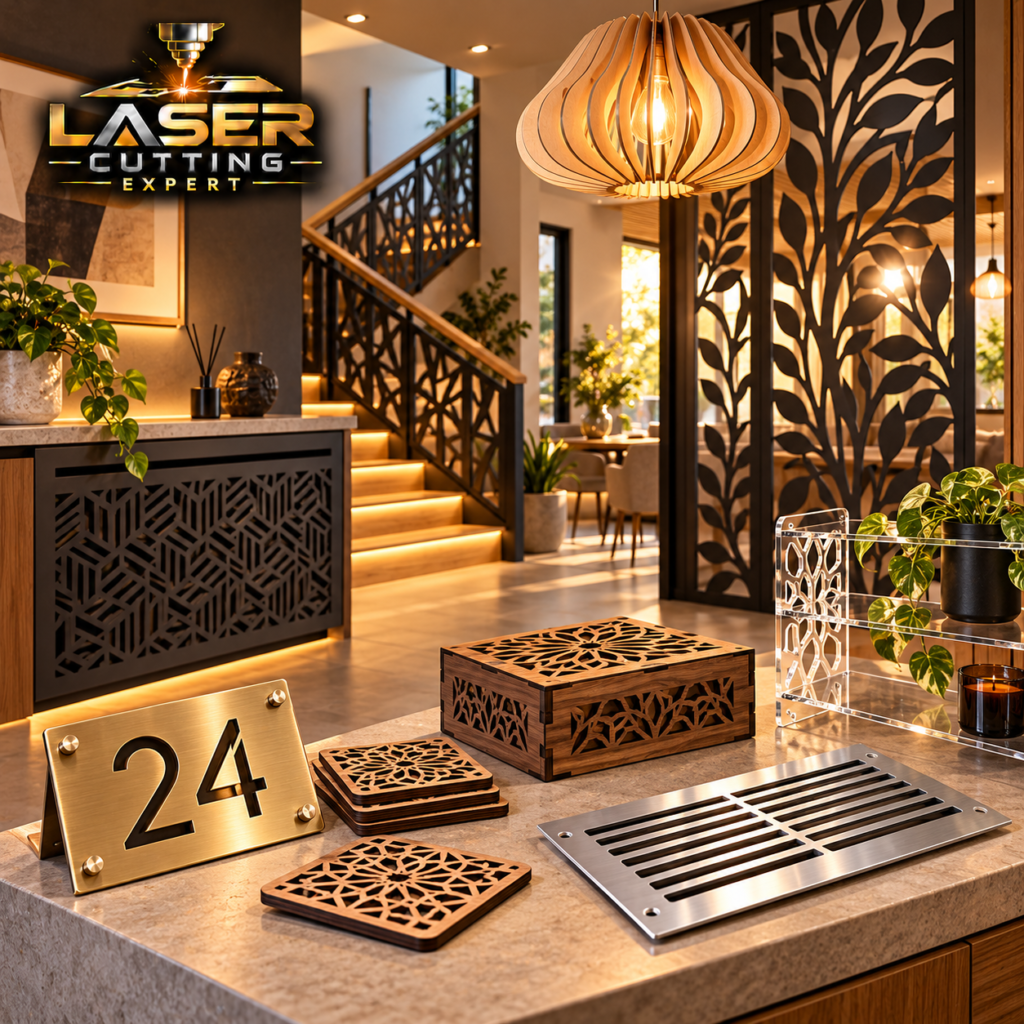
The built environment contains far more manufactured components than the parts people immediately notice. Heating systems use brackets, covers and ventilation panels; household appliances contain sheet metal housings and internal supports; roofs rely on flashings, plates and fabricated details; carpets and mattresses involve flexible materials that need completely different cutting methods. Laser Cutting Expert supports manufacturers, fabricators, designers, contractors and product developers working across these areas from our London production facility.
CALL OR EMAIL US FOR PRICES
“Order any time of the day or night and receive your order on the same day in London. You are welcome to visit our laser cutting shop for an instant laser cutting service. On-site collection or free delivery can be arranged. Email us at laser@makergroup.uk for a quick quote or call us on 02036339857 for an instant price”.
Same Day Laser Cutting & Delivery
We can arrange a same day courier delivery with customer live tracking. Or customers can collect from our Laser Cutting Expert shop.

OPEN 24 HOUR
We are open 7 days a week, and you can order at any time. There is no last ordering time and no deadline. We also offer an overnight laser cutting service.

100% Satisfaction
High Quality Laser Cutting & 100% Customer Satisfaction Guarantee. Top-Rated Laser Cutting Company on Google.

Free File Check
We offer a free file check and proof before sending your artwork for laser cutting.
Different Materials Need Different Laser Processes
Household and building products can involve steel, stainless steel, aluminium, metals, textiles, felt, foam and specialist membrane materials. They cannot all be processed in the same way. A steel appliance panel may suit fibre laser cutting, while a compatible textile may be better suited to CO2 laser processing. Membrane materials need identification before any laser method is considered. PVC and other chlorine containing materials must not be laser cut because hazardous and corrosive gases can be produced. Our approach is therefore based on the actual material specification, component function and manufacturing stage rather than assuming every household or construction material belongs on the same laser.
Manufacturing Components for Everyday Environments
Many components produced through laser cutting eventually disappear inside products or buildings. A bracket can sit behind a radiator, an internal plate can support an appliance motor, and a roof fixing component can become completely hidden after installation. Other parts remain highly visible, including heater covers, appliance fascias, decorative grilles and architectural roof details. Laser Cutting Expert works with both categories. Production can include one off development pieces, replacement components, prototypes and suitable repeat manufacturing. Our related services CNC Laser Cutting, Fibre Laser Cutting, CO2 Laser Cutting, Laser Cutting & Bending, Fabric Laser Cutting and Laser Cutting & Finishing where components require additional preparation.
Laser Cutting for Heating Products
Heating Equipment Manufacturing
Laser cutting for heating products can support manufacturers and fabricators producing radiator components, heater housings, boiler related panels, ventilation grilles, heat shields, mounting brackets and equipment covers. Heating products experience temperature changes during normal use, making material selection and ventilation important. A decorative cover should not prevent the equipment from releasing heat correctly. Internal brackets also need sufficient stiffness to support components throughout repeated heating and cooling cycles. Laser cutting can create controlled sheet metal geometry, while the heating product manufacturer remains responsible for thermal design, electrical or gas safety, certification and the overall performance of the finished appliance or heating system.
Radiator Covers
Radiator covers combine appearance with airflow. Laser cutting for heating products can create front panels containing geometric patterns, slots or decorative openings while also producing side pieces and mounting features. The percentage and position of open area can affect how easily warm air circulates through the cover. Very dense patterns may look attractive but unnecessarily restrict convection. Material must also tolerate the expected temperature. Metal covers may require folding for stiffness and safer edges. The heating designer or manufacturer should determine appropriate clearances and airflow, while laser cutting provides the approved panel geometry and decorative pattern.
Radiator Grilles
Grilles are useful where airflow needs to pass through a protective or decorative surface. Laser cutting for heating products can produce custom grille patterns in suitable sheet metal. Slots, circles, geometric openings or project specific designs can be incorporated. Removing large amounts of material changes panel stiffness, so the surrounding border and support arrangement need consideration. A grille installed directly around heating equipment should not create unsafe surface conditions or interfere with maintenance. Where the component belongs to a certified heating appliance, design changes should be controlled by the responsible manufacturer rather than made only for appearance.
Heater Housings
Portable, wallmounted and fixed heating equipment can use metal housings to protect internal components. Laser cutting for heating products can produce housing blanks containing ventilation, control openings, mounting holes and service access features. The blank may then move into bending, joining and finishing. Ventilation requirements depend on the heat source and internal equipment, so opening patterns should come from an approved design. Electrical heaters also require suitable electrical safety, insulation and temperature protection. Laser Cutting Expert manufactures the housing geometry but does not establish the safety or certification of the completed heating appliance.
Boiler and Heating Equipment Panels
Heating equipment can require front panels, access covers, internal mounting plates and brackets. Laser cutting for heating products provides a way to manufacture these parts directly from controlled CAD drawings. Sheet steel, stainless steel or aluminium may be used according to the equipment design. Service panels should allow technicians to reach components safely without unnecessary dismantling. Ventilation or combustion related openings can be performance critical and should not be altered without manufacturer approval. Gas appliances in particular are regulated systems. Laser cutting can support their manufacturing supply chain, but appliance design, combustion safety and certification remain specialist responsibilities.
Heating System Brackets
Pipework, pumps, controls, radiators and heating equipment often need custom mounting brackets. Laser cutting for heating products can create flat bracket developments with holes, slots and bend reliefs before forming. Adjustment slots may help during installation where building surfaces are not perfectly uniform. Bracket strength should reflect the equipment weight and expected loads. Components exposed to condensation or damp environments may also need appropriate corrosion protection. Laser cutting makes custom geometry practical, but the installer or system designer remains responsible for choosing appropriate fixings for the actual wall, floor or supporting structure.
Heat Shields
Heat shields can protect nearby materials or equipment from elevated temperatures. Laser cutting for heating products can produce suitable aluminium, stainless steel and other specified metal profiles before forming. Shield effectiveness depends on material, spacing, reflective surface, airflow and the actual heat source. A sheet of metal positioned near a heater does not automatically provide adequate thermal protection. The responsible product designer should establish the thermal requirement and validate the completed arrangement. Mounting points also need to accommodate thermal expansion where temperatures vary substantially during operation.
Heating Ventilation Panels
Ventilation openings are common in heating cabinets, plant equipment and household heating products. Laser cutting for heating products can create slots, perforationstyle patterns and larger openings according to the approved airflow requirement. Open area should be calculated around the equipment rather than selected only for visual appearance. Removing material also affects panel stiffness. Folded edges or supporting frames may therefore be required. Where the panel is part of a firerated enclosure or regulated heating appliance, the complete product requirements need to be maintained. Laser cutting creates openings but does not establish fire or thermal performance.
Laser Cutting for Household Appliances
Household Appliance Manufacturing
Laser cutting for household appliances can support manufacturers developing cookers, extractors, washing equipment, refrigeration products, small appliances and other domestic equipment. Appliance manufacture commonly combines sheetmetal housings, internal brackets, control panels, guards, ventilation plates and decorative components. Laser cutting is particularly useful during product development, specialist production and lowervolume manufacturing because geometry can be changed digitally. Material choice depends on the appliance environment. Stainless steel may suit visible or wet areas, while coated steel can be used for housings. Finished appliances still require appropriate electrical, mechanical, thermal and productsafety testing.
Appliance Housing Panels
The outer body of an appliance often begins as flat sheet before bending and assembly. Laser cutting for household appliances can create housing blanks with openings for doors, controls, ventilation and fixings. The blank needs to be designed around the intended bend sequence. Features positioned too close to folds can distort during forming. Visible surfaces may also require protective film and controlled handling. The finished housing has to work with doors, seals, internal frames and electrical systems. Accurate laser profiling supports assembly, while the complete appliance design determines fit, safety and longterm durability.
Appliance Internal Brackets
Inside domestic equipment are numerous brackets supporting motors, pumps, heaters, electronics, fans and controls. Laser cutting for household appliances can produce these components with mounting holes, slots and locating features. Brackets may later be folded or welded. Their requirements vary considerably. A small electronic module bracket carries little load, while a motor mount can experience vibration and repeated mechanical stress. Material thickness should therefore follow function. Lasercut geometry provides consistent positioning, but the appliance engineer remains responsible for strength, vibration behaviour and integration with surrounding systems.
Cooker and Oven Components
Cooking appliances can contain metal liners, brackets, heat shields, control panels and ventilation components. Laser cutting for household appliances can support suitable parts manufactured from stainless steel and other specified heat resistant materials. Components near heating elements or flames need appropriate temperature capability. Openings around burners, controls or ventilation systems can affect appliance performance and must follow approved designs. Food contact and cleanability requirements may also apply to particular surfaces. Laser Cutting Expert can manufacture specified components, while the appliance manufacturer remains responsible for gas, electrical, thermal and food related compliance.
Extractor Hood Components
Kitchen extraction systems commonly use stainless steel or coated metal housings, filters, brackets and duct connections. Laser cutting for household appliances can produce housing panels, control openings and internal support components. Airflow is central to extractor performance, meaning ventilation geometry and duct connections should be based on the manufacturer’s design. Grease accumulation and cleaning also need consideration. Decorative patterns that are difficult to clean may be unsuitable close to cooking areas. Laser cutting can create a clean, controlled profile, while extraction efficiency, electrical safety and fire considerations belong to the complete product design.
Washing Machine Components
Washing equipment operates in a wet, vibrating environment. Laser cutting for household appliances can support suitable mounting plates, cabinet panels, brackets and development components. Corrosion protection matters where parts may encounter moisture or detergent. Motor, pump and drumrelated components can experience repeated vibration and dynamic loads. These parts require proper engineering rather than simple geometric reproduction. Development brackets and cabinet components can be laser cut efficiently, while rotating, pressurecontaining and safetycritical systems require the appliance manufacturer’s specialist design and testing.
Dishwasher Components
Dishwashers combine water, heat, detergents and electrical systems within one appliance. Laser cutting for household appliances can produce suitable stainless or coatedmetal panels, mounting brackets and internal equipment supports. Material and finish should tolerate the intended environment. Components affecting water sealing require careful integration with gaskets and formed surfaces. A lasercut profile alone does not establish leak resistance. Electrical components also need protection from moisture. The appliance manufacturer determines these requirements while laser cutting supplies the specified sheetmetal geometry.
Refrigeration Equipment Components
Refrigerators, freezers and specialist cooling equipment can use lasercut panels, compressor brackets, equipment plates and ventilation components. Laser cutting for household appliances can support prototype and suitable manufacturing requirements. Refrigeration performance depends on insulation, sealing, airflow and refrigerant systems rather than sheetmetal accuracy alone. Components around compressors can experience vibration. Ventilation openings must allow adequate cooling of mechanical systems. Where food storage is involved, internal surfaces may also need suitable hygienic materials and finishes. These considerations should be defined before production.
Appliance Control Panels
Domestic equipment often requires precisely positioned openings for displays, buttons, knobs and switches. Laser cutting for household appliances can create controlpanel blanks from suitable sheet material. Actual component dimensions should be used when developing openings. Screen sizes and switch descriptions do not always represent the full mounting geometry behind the panel. Prototypes can therefore be useful before larger production. Laser cutting establishes the physical interface, while electronics, user safety, labelling and accessibility remain part of the appliance design.
Appliance Ventilation Grilles
Motors, compressors, electronics and heating elements can all require airflow. Laser cutting for household appliances allows ventilation patterns to be incorporated into housings without separate grille components in some designs. Slot width, open area and panel strength need to work together. Very fine openings may restrict airflow or collect dust. Large openings can expose internal equipment. Designers should therefore establish the ventilation requirement before selecting a pattern. Where protection against electrical access is required, opening dimensions can also become a safety consideration.
Appliance Prototypes
Productdevelopment teams can use laser cutting for household appliances to turn new housing and bracket designs into physical prototypes. This helps engineers check assembly, service access, control placement and component clearance before committing to production tooling. Sheetmetal prototypes can also reveal bend and joint problems that are less obvious in CAD. A successful fit test does not replace electrical, thermal, mechanical or regulatory testing. Laser cutting shortens the development cycle, while appliance validation remains a separate engineering process.
Laser Cutting for Roofs
Roof Fabrication Components
Laser cutting for roofs can support the manufacture of metal flashings, fixing plates, brackets, decorative roof details, ventilation components and specialist fabricated profiles. Roofing work is exposed directly to weather, making corrosion resistance, drainage and secure fixing particularly important. Components can be manufactured from suitable aluminium, stainless steel, galvanised steel, Corten or other specified metals. The laser provides the required flat geometry before folding or fabrication. Roof performance, however, depends on the complete system, including membranes, joints, fixings and weathering details. Laser cutting does not establish waterproofing by itself.
Roof Flashing Components
Flashings direct water away from joints, penetrations and vulnerable areas of a roof. Laser cutting for roofs can create unusual flashing blanks before folding where standard straight profiles are insufficient. Complex corners, penetrations and architectural details may require project specific geometry. The final waterproofing performance depends on overlap, fold arrangement, sealants, substrate and installation. Material also needs to be compatible with adjacent roofing products. A precisely cut flashing can still leak if the wider detail is incorrect. Roofing specialists should therefore define the complete weathering arrangement.
Roof Brackets
Roofmounted equipment, signage and architectural features can require custom support plates or brackets. Laser cutting for roofs can manufacture suitable bracket blanks with holes, slots and folded geometry. Roof brackets may experience wind uplift, snow loads or equipment loads depending on their purpose. Fixing into the roof structure also requires appropriate engineering. Penetrations through waterproofing layers must be detailed correctly. Laser Cutting Expert can manufacture the specified metal component, while the structural and roofing specialists determine connection capacity and waterproofing requirements.
Roof Ventilation Components
Ventilation can be important in roof spaces, plant areas and certain cladding systems. Laser cutting for roofs can produce metal ventilation panels, grilles and custom openings. The required free area should be established according to the ventilation design. Small decorative slots may not provide enough airflow simply because they appear open. External grilles also need to resist weather entry where appropriate. Insect mesh, louvres or backing systems may be required separately. Laser cutting provides the visible opening geometry but does not establish the complete ventilation or weather resistance performance.
Roof Access Components
Roof access hatches, service areas and maintenance zones can require metal plates, covers, guards and identification components. Laser cutting for roofs can produce suitable profiles according to project drawings. Components around roof access need safe detailing because maintenance staff may interact with them regularly. Sharp edges, insecure covers and trip hazards should be avoided. Structural walking surfaces require appropriate load design. Where the component forms part of fall protection or guarding, specialist engineering and certification may apply. General laser cutting should not be treated as certification of a safety system.
Decorative Roof Features
Architectural roofs sometimes include decorative fascias, parapet panels, screens or feature metalwork. Laser cutting for roofs can create patterns, lettering and custom shapes that relate to the wider building design. External exposure makes finish and fixing particularly important. Thin decorative sheets can experience wind induced vibration and may require frames or folded edges. Water should also be able to drain freely. If a feature is mounted at height, secure structural support is essential because component failure could endanger people below.
Roofing Templates
Contractors and fabricators can use laser cut templates to locate unusual penetrations, fixing patterns or repeated roof components. Laser cutting for roofs can provide suitable templates in metal, plywood, acrylic or another compatible material depending on the application. Templates can reduce repeated manual measuring but should be based on reliable dimensions. Existing roofs often contain irregularities, making site verification important. A template reproduces the geometry supplied to it; it cannot determine whether the underlying site measurement was correct.
Laser Cutting for Carpet
Carpet Cutting and Development
Laser cutting for carpet is fundamentally different from cutting sheet metal. Carpet construction can involve natural or synthetic fibres, backing layers, adhesives and coatings, all of which need identification before laser processing is considered. Some compatible textile constructions can respond well to laser cutting, while others may produce excessive smoke, melting or unsafe fumes. PVC and chlorine containing backing materials must not be laser cut. Laser Cutting Expert therefore assesses the complete carpet construction rather than only the visible pile. Suitable work can include prototypes, shaped pieces, inserts, display elements and specialist flooring development components.
Custom Carpet Shapes
Suitable laser cutting for carpet can create curves, geometric shapes and project specific profiles that would be difficult to reproduce consistently by hand. Applications can include interior design samples, exhibition flooring, branded display pieces and decorative inserts. The pile direction should be considered because rotating components during nesting can change their appearance. Backing construction can also affect dimensional stability. A small material test may be sensible before a larger project. Where laser processing is unsuitable, another mechanical cutting method should be selected rather than forcing the material through an inappropriate process.
Carpet Tiles and Inserts
Interior projects can use contrasting carpet shapes or inserts to create zoning, patterns and decorative flooring. Laser cutting for carpet may be assessed for suitable compatible carpet constructions. Inserts need allowance for actual material thickness, pile and backing behaviour. A mathematically exact CAD fit may still need practical adjustment because soft materials compress and move differently from rigid sheet. Installation method also influences the final appearance. Laser cutting can create repeatable geometry, while flooring specialists determine substrate preparation, adhesives, joint behaviour and suitability for the intended traffic level.
Carpet Logos
Suitable carpet constructions can be cut into logo or lettering shapes for displays, exhibitions and selected interior applications. Laser cutting for carpet can reproduce controlled geometry, but very small lettering may not remain visually clear once the pile is considered. Brand artwork may therefore need simplification. Different carpet colours or textures can be combined as inserts where appropriate. Fire performance of flooring products remains important in commercial environments. Cutting an existing certified carpet into a new configuration does not automatically establish the performance of the completed flooring installation.
Carpet for Exhibitions
Exhibition stands often use custom floor shapes to define display areas or incorporate branding. Laser cutting for carpet can be considered for compatible materials where unusual profiles or inserts are required. Exhibition products are frequently installed and removed quickly, making dimensional planning important. Edges should not create trip hazards. Material fire requirements can also apply at exhibition venues. The stand contractor remains responsible for ensuring that flooring materials and installation comply with venue rules. Laser cutting provides geometry rather than venue certification.
Carpet Prototypes and Samples
Flooring manufacturers and designers can use laser cutting for carpet to create suitable sample shapes during product and pattern development. Small pieces can help evaluate colour combinations, insert geometry and installation concepts before larger flooring areas are prepared. Because carpet is flexible and textured, physical sampling can reveal visual effects that CAD cannot fully show. Material composition still needs confirmation before laser processing. Unknown backing layers, coatings and adhesives should not be assumed safe.
Laser Cutting for Mattresses
Mattress Manufacturing Components
Laser cutting for mattresses can apply to suitable textile, felt, foam and cover components rather than complete finished mattresses as one undifferentiated material. Modern mattresses can contain several layers with different chemical compositions. Each layer needs separate identification before laser processing is considered. Suitable compatible materials may be cut for development pieces, fabric panels, felt layers, comfort layer components or manufacturing templates. PVC, chlorine containing materials and unknown foams must not be laser cut. Fire retardant treatments, adhesives and coatings should also be identified because they can change how a material behaves during thermal processing.
Mattress Fabric Panels
Suitable cover fabrics may be assessed for laser cutting for mattresses where controlled panel shapes are needed before sewing or assembly. Laser processing can sometimes reduce fraying on compatible synthetic fibres because the edge is thermally affected. Natural fibres can behave differently and may show edge darkening. Multilayer fabrics, laminated textiles and treated covers need material information before processing. Pattern dimensions should include allowances required by the sewing or quilting process. The mattress manufacturer remains responsible for the performance, durability and fire requirements of the completed cover system.
Felt Mattress Components
Felt can appear within mattress and upholstery construction as separation, support or comfort layers. Laser cutting for mattresses may be suitable for certain identified felt materials. Fibre composition matters because wool, polyester and blended felts behave differently. Backings, adhesives and treatments also need confirmation. Laser cutting can create controlled profiles and openings, but the material’s compression means dimensional behaviour differs from rigid sheet. Mattress engineers should evaluate how the component performs under repeated loading rather than judging suitability only from its cut appearance.
Foam Mattress Components
Foam requires particularly careful assessment before laser cutting for mattresses. EVA and certain other known compatible foams may be processable for particular applications, while other foam chemistries can melt badly, burn or release hazardous decomposition products. PVCcontaining foam must not be laser cut. Unknown mattress foam should therefore be identified through manufacturer specifications or an SDS before any thermal process is selected. Mechanical cutting may be a better choice for many thick mattress foams. Laser suitability should never be assumed simply because a material feels similar to another foam that has previously been processed.
Mattress Ventilation Features
Some mattress components contain channels, holes or profiles intended to support airflow or assembly. Laser cutting for mattresses can assess suitable thin compatible layers where detailed geometry is required. The effectiveness of ventilation depends on the complete mattress construction, not merely the presence of cut openings in one layer. Removing material can also change support characteristics. Product developers should therefore evaluate comfort, durability and airflow through physical testing. Laser Cutting Expert manufactures suitable component geometry but does not determine the performance of the finished mattress.
Mattress Prototypes
Product developers can use suitable laser cutting for mattresses to create development layers, textile panels and templates for new mattress concepts. Prototype cutting can help compare shapes before committing to larger scale tooling or specialist cutting systems. Material identification remains essential at this stage. Prototype status does not make an unknown foam or treated textile safe for laser processing. Where another process is more appropriate, such as knife, die or CNC oscillating cutting, it should be used instead. The objective is to select the correct manufacturing method for the material rather than forcing every prototype through a laser.
Laser Cutting Solutions for Air Domes
Understanding Air Dome Materials
Laser cutting solutions for air domes require careful material assessment because an air dome is usually a tensioned membrane structure rather than a conventional rigid building. Membranes can be manufactured from coated polyester, technical fabrics and other engineered constructions. Some commonly used architectural membranes can contain PVC coatings, and PVC must not be laser cut because thermal decomposition can produce hazardous hydrogen chloride and corrosive gases. We therefore need the exact membrane specification before discussing laser processing. Where the material is unsuitable, knife, CNC or another mechanical cutting system should be used instead.
Air Dome Fabric Panels
Where the specified membrane material is confirmed as laser compatible, laser cutting solutions for air domes may be assessed for development pieces, sample panels, reinforcement shapes or suitable auxiliary textile components. Main structural membrane panels require specialist pattern engineering because the finished three dimensional form depends on tension, seam design and material behaviour. Cutting geometry alone does not establish the final dome shape. Large structural membrane production may also be better suited to specialist automated textile cutting equipment. Laser Cutting Expert should therefore be viewed as an assessed component processing resource rather than automatically as the manufacturing method for every airdome membrane.
Air Dome Reinforcement Components
Membrane structures can use reinforcement patches around doors, connections and highstress areas. Suitable laser cutting solutions for air domes can be considered where the reinforcement material is positively identified and compatible with laser processing. Fibre direction, coating and joining method matter because the reinforcement needs to work with the surrounding membrane. If patches will be welded or bonded, their material needs to be compatible with that process. Structural membrane specialists should determine reinforcement geometry and load requirements. Laser cutting, where appropriate, simply manufactures the approved shape.
Air Dome Metal Components
Air supported structures can also contain rigid metal components such as brackets, plates, equipment mounts, doorframe parts and service system supports. Laser cutting solutions for air domes can therefore include conventional metal fabrication components even where the main membrane itself is not suitable for laser processing. Steel, stainless steel and aluminium profiles can be produced according to approved drawings. Structural anchors, cable connections and loadbearing plates require engineering because the dome transfers significant membrane forces into its supporting systems. Laser cutting manufactures the geometry but does not establish structural capacity.
Air Dome Ventilation Equipment Components
Air domes rely on controlled air pressure, making fans, ducts and ventilation equipment central to their operation. Laser cutting solutions for air domes can support suitable equipment panels, mounting plates, guards and duct related sheet metal components. Airflow requirements should be determined by the dome system engineer. Ventilation grilles and guards should not unnecessarily restrict the equipment. Emergency systems can also be important for air supported structures. Laser cut components can form part of these assemblies, while system performance and safety remain the responsibility of the specialist dome designer and equipment manufacturer.
Air Dome Door and Entrance Components
Entrances to pressurised structures need to manage access without compromising the operating air pressure system. Laser cutting solutions for air domes can support suitable metal brackets, doorframe components, equipment plates and protective panels. The complete door or airlock arrangement requires specialist design. Structural connections, seals and emergency access cannot be determined by the laser cut component alone. Where fabric reinforcement is involved, material compatibility needs to be established separately. Rigid metal and flexible membrane parts should therefore be treated as different manufacturing categories within the same dome project.
Air Dome Development Models
Designers can use scaled models and sample pieces when developing airsupported structures. Laser cutting solutions for air domes can support compatible card, acrylic, plywood and textile model components where appropriate. Models can help explain entrances, internal layouts and support systems. They should not be used as proof of structural membrane behaviour. Fullsize membrane structures depend on pressure, fabric tension, seam strength, wind, snow and anchoring. Those requirements need specialist engineering analysis. Model making is therefore primarily a design and communication tool.
Material Identification for Air Domes
Material identification is the first technical question for laser cutting solutions for air domes. Descriptions such as architectural fabric, roof membrane or coated polyester are not enough on their own. The coating chemistry needs to be known. PVC coated polyester, for example, must not be laser cut even though the underlying textile may be polyester. Supplier technical information or an SDS should be provided for unfamiliar materials. This approach protects equipment and operators while preventing unsuitable thermal processing from damaging valuable membrane material.
Supporting the Wider Built Environment
Interior Fit Out Components
Household and built environment projects can also require custom signs, decorative panels, room dividers, radiator grilles, shelving details and furniture components. These can complement laser cutting for heating products and laser cutting for household appliances where interior systems need custom metalwork. Materials and finishes should reflect how people will interact with the finished component. Public facing edges need safe preparation, while wall mounted products require suitable fixings. Decorative design does not remove the need for practical installation and maintenance.
Building Services Components
Heating, ventilation and other building services rely on numerous brackets, panels and equipment supports. Laser cutting for heating products can therefore overlap with wider building services fabrication. Mounting plates, access covers, equipment panels and ventilation grilles can be produced from suitable sheet metal. Components carrying significant equipment loads need appropriate structural design. Service access should also be considered so maintenance staff can reach valves, controls and filters. Laser cut components should support the operation of building services rather than creating obstacles during future maintenance.
Domestic Ventilation Components
Household ventilation systems can use metal grilles, fan mounting plates, covers and duct interfaces. Laser cutting for household appliances can support suitable components where domestic extractors, fans and integrated systems need custom sheet metal geometry. Airflow should guide opening design. Small decorative patterns can create more resistance than expected. Noise can also be influenced by grille geometry and vibration. Laser Cutting Expert manufactures the approved profile, while ventilation system designers determine airflow and acoustic performance.
Utility Room Equipment Components
Utility spaces often contain boilers, washing machines, dryers, ventilation equipment and control systems in close proximity. Components produced through laser cutting for heating products or laser cutting for household appliances can include equipment panels, brackets, protective covers and ventilation grilles. These areas can experience moisture and heat, making material selection important. Access should remain available for servicing. Covers should not obstruct ventilation or isolation controls. Custom fabrication can make equipment installations neater, but it should never compromise maintenance or safety requirements.
Building Roof Plant Screens
Roof mounted mechanical equipment may need visual screening. Components associated with laser cutting for roofs can include decorative metal panels, equipment screens, support plates and fixing brackets. Rooftop locations are highly exposed to wind, so structural support requires proper engineering. Screens must also maintain ventilation around plant equipment and preserve maintenance access. A dense decorative pattern may reduce airflow. Drainage and corrosion protection need consideration because roof level metalwork experiences direct weather exposure.
Roof Signage Components
Commercial buildings can use roof level or high level signs requiring custom letters, backing panels and support plates. Laser cutting for roofs can manufacture suitable sign components, but wind loading becomes important at height. Large signs require engineered frames and secure connections to the building structure. Waterproofing should not be compromised by poorly detailed penetrations. The sign fabricator and structural engineer should therefore coordinate support and fixing requirements before manufacturing.
Flooring Design Components
Beyond ordinary carpet profiles, laser cutting for carpet can support compatible textile flooring development where designers require custom borders, inserts or unusual room shapes. The complete flooring material must be identified first. Flexible materials behave differently during handling and installation, so actual fit may depend on pile direction, compression and substrate. Commercial flooring can also have fire, slip and accessibility requirements. Laser cutting produces the intended shape but does not establish those finished floor properties.
Interior Textile Components
The experience gained from laser cutting for mattresses and laser cutting for carpet can extend to suitable identified textiles used in interiors, acoustic products and soft furnishings. Polyester felt, selected fabrics and other compatible materials may be assessed. Coatings, laminations and fire retardant treatments need confirmation before processing. Unknown technical textiles should not be assumed safe. PVC backed or chlorine containing products are excluded from laser cutting. Where thermal cutting is unsuitable, mechanical processes should be used.
Acoustic Felt Panels
Suitable polyester or other confirmed compatible felt can be laser cut into interior acoustic panel shapes. This is related to laser cutting for carpet because both involve flexible fibre based materials, but acoustic performance introduces different requirements. Cut geometry may provide a decorative pattern, while sound absorption depends on material thickness, density, mounting and air gap. Laser cutting does not establish an acoustic rating. Where panels are installed in public buildings, fire performance requirements may also apply to the complete product.
Foam Interior Components
Foam appears in furniture, packaging, acoustic systems and mattresses. Our experience with laser cutting for mattresses means foam enquiries begin with material identification. EVA and certain known compatible foams can be assessed, while PVC containing foam is excluded. Polyurethane and other formulations may require another cutting process depending on chemistry, thickness and required edge quality. Unknown foam should never be processed solely on appearance. Supplier information is the correct starting point.
Sheet Metal for Household Manufacturing
Mild steel, stainless steel and aluminium are common across laser cutting for household appliances and heating product manufacture. The same sheet can behave very differently once formed, welded or coated. Material grade and thickness should therefore be defined according to component function. Visible stainless steel may need grain control. Aluminium can reduce weight but requires appropriate alloy selection. Mild steel generally needs corrosion protection. Laser cutting creates the profile, while the downstream manufacturing route determines the final product quality.
Stainless Steel Household Components
Stainless steel is common in kitchens, appliances, heating equipment and wet environments. Laser cutting for household appliances can produce suitable stainless panels, brackets, grilles and covers. Surface finish is particularly important on visible products. Protective film may be retained during parts of manufacturing where appropriate. Welding, grinding and polishing can change the appearance around joints. Grade selection should reflect the operating environment rather than appearance alone. Food contact or hygiene applications may also have additional manufacturing requirements.
Aluminium Household Components
Aluminium can be used for appliance housings, heater panels, ventilation components and interior products. Laser cutting for heating products and household manufacturing can benefit from its relatively low weight and corrosion resistance. Alloy and temper affect forming behaviour. Thin aluminium panels may need folded edges to improve stiffness. Anodising and powder coating provide different finishes. Where aluminium contacts dissimilar metals in damp conditions, appropriate isolation may be necessary to reduce galvanic corrosion.
Galvanised Steel Components
Galvanised steel can be useful for suitable housings, duct components, roof details and utility products. Laser cutting for roofs may involve pregalvanised sheet where corrosion protection is required. Cutting exposes the steel locally at the edge, meaning the cut surface is not identical to the original zinc coated face. Welding galvanised steel creates hazardous zinc oxide fumes and requires proper extraction and working procedures. Coating repair may be required after fabrication. Pregalvanised sheet and post fabrication hot dip galvanising should not be treated as equivalent finishing routes.
Corten Built Environment Components
Corten can be used for outdoor screens, roof level architectural details, signs and landscape features. It may therefore appear alongside laser cutting for roofs and wider built environment fabrication. The material develops a weathered surface rather than remaining visually unchanged. Early runoff can stain nearby masonry, render and paving. Water traps should be avoided. Where Corten components carry loads or are mounted at height, appropriate structural engineering is required. Its appearance does not remove the need for proper fabrication and fixing.
Prototyping Household Products
New appliances, heaters, flooring systems and interior products often benefit from physical prototypes. Laser cutting for household appliances can provide sheet metal housings and brackets, while compatible flexible materials can be assessed for textile or foam prototypes. Prototyping allows designers to check fit, assembly, appearance and service access. It does not establish regulatory compliance. Heating and electrical products still need appropriate testing, while flooring and textile products may require fire or durability assessment. A prototype is a development tool rather than an automatically approved production product.
Development Samples for Flexible Materials
For laser cutting for carpet, laser cutting for mattresses and laser cutting solutions for air domes, a small material sample can be particularly useful. Flexible materials vary widely in fibre, backing, coating and thickness. A test can reveal edge melting, darkening, shrinkage or excessive smoke. Material identification still comes first; testing is not a way to justify cutting unknown PVC or another prohibited material. Once compatibility is established, sampling can help determine whether the laser gives an acceptable result for the intended application.
CAD and Pattern Preparation
Rigid and flexible components require different drawing considerations. Laser cutting for household appliances generally works from dimensional CAD profiles, while laser cutting for carpet or mattress textiles may begin with pattern geometry. Airdome membranes can involve specialised pattern development that accounts for three dimensional tensioned form. Laser Cutting Expert can work from suitable production files or assist with straightforward drawing preparation, but specialist structural membrane patterning should come from the responsible dome engineer or manufacturer. Correct scale, units and component identification remain important across every material category.
No Minimum Quantity
Development work in the household and built environment industries does not always begin with a production run. We have no minimum cutting quantity, allowing suitable projects to start with one heater grille, appliance bracket, roofing template, carpet sample, mattress development component or assessed airdome piece. This is useful for prototypes, replacement components, design testing and specialist fabrication. If the component later moves into repeat manufacturing, the approved geometry can form the basis of further production. Material compatibility and safety requirements remain the same regardless of quantity.
Same Day Laser Cutting in London
Suitable production ready work can be considered for same day processing from our London workshop, depending on material availability, geometry, quantity and production capacity. This may include heating brackets, appliance panels, roof plates and compatible textile development pieces. Unknown flexible materials require identification before urgent processing can be considered. We operate 24/7, including weekends and bank holidays. Supplying the drawing, material specification, thickness, quantity and deadline together helps us assess the correct manufacturing route without unnecessary delays.
Household & Built Environment Laser Cutting Across the UK
Laser Cutting Expert supports manufacturers, fabricators, designers and contractors across the UK with laser cutting for heating products, laser cutting for household appliances, laser cutting for roofs, laser cutting for carpet, laser cutting for mattresses and suitable laser cutting solutions for air domes. Production is based in London, with UK wide delivery available for suitable completed components. Because these applications span rigid metal, textiles, foam and technical membranes, process selection is always material specific. Fibre laser, CO2 laser, sheet cutting, fabric processing, bending and finishing capabilities can be combined where appropriate.
FAQs About Laser Cutting for Household & Built Environment
1. Do you provide laser cutting for heating products?
Yes. Laser cutting for heating products can support suitable radiator covers, heater housings, ventilation grilles, heat shields, brackets and equipment panels.
2. What can laser cutting for household appliances produce?
Laser cutting for household appliances can produce suitable housings, control panels, internal brackets, ventilation components, guards and prototype sheet metal parts.
3. Can you provide laser cutting for roofs?
Yes. Laser cutting for roofs can support suitable flashing blanks, brackets, ventilation panels, decorative details, fixing plates and other fabricated roofing components.
4. Can carpet be laser cut?
Some carpet constructions may be suitable for laser cutting for carpet, but the fibres, backing, adhesives and coatings must be identified first. PVC backed or chlorine containing carpet must not be laser cut.
5. Do you provide laser cutting for mattresses?
Suitable laser cutting for mattresses can include identified textile, felt, thin compatible foam and development components. Complete material composition must be confirmed before processing.
6. Can you laser cut mattress foam?
It depends on the exact foam chemistry and thickness. PVC containing or unidentified foam is not accepted for laser cutting, and many thick mattress foams may be better processed mechanically.
7. What are laser cutting solutions for air domes?
Laser cutting solutions for air domes can include suitable metal brackets, equipment components and assessed compatible textile pieces. Main structural membranes require exact material identification and specialist engineering.
8. Can PVCcoated airdome fabric be laser cut?
No. PVC and other chlorine containing materials must not be laser cut because hazardous and corrosive gases can be released during thermal decomposition.
9. Can you work from our own CAD files and patterns?
Yes. We can work from suitable production ready files and can assist with straightforward CAD preparation. Specialist membrane engineering and regulated product design should be provided by the responsible manufacturer or engineer.
10. Do you provide these services across the UK?
Yes. Our production is based in London, and suitable household, heating, appliance, roofing, flooring, mattress and built environment components can be supplied throughout the UK.