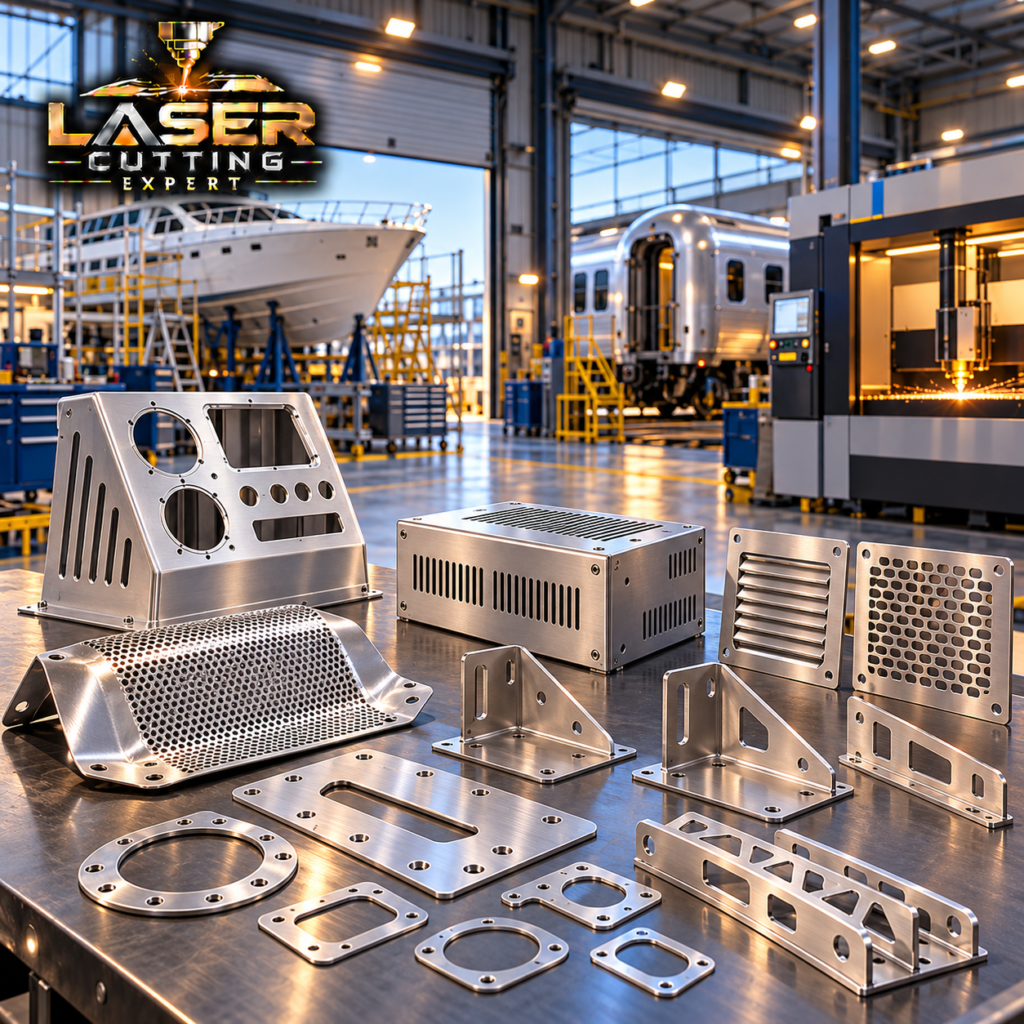
Marine vessels and rail systems spend years working in environments that are difficult on fabricated components. Salt water, rain, vibration, repeated passenger use, temperature changes and continuous maintenance all influence material and component design. Laser Cutting Expert provides marine laser cutting and laser cutting for rail projects from our London production facility for boat builders, marine engineers, yacht refit companies, rail engineering businesses, rolling stock suppliers, maintenance contractors, fabricators and transport sector designers throughout the UK. Suitable work includes panels, brackets, equipment covers, interior components, fabrication profiles, signs, shims, mounting plates and replacement parts, with no minimum cutting quantity and urgent production available for suitable non safety critical projects.
CALL OR EMAIL US FOR PRICES
“Order any time of the day or night and receive your order on the same day in London. You are welcome to visit our laser cutting shop for an instant laser cutting service. On-site collection or free delivery can be arranged. Email us at laser@makergroup.uk for a quick quote or call us on 02036339857 for an instant price”.
Same Day Laser Cutting & Delivery
We can arrange a same day courier delivery with customer live tracking. Or customers can collect from our Laser Cutting Expert shop.
OPEN 24 HOUR
We are open 7 days a week, and you can order at any time. There is no last ordering time and no deadline. We also offer an overnight laser cutting service.
100% Satisfaction
High Quality Laser Cutting & 100% Customer Satisfaction Guarantee. Top-Rated Laser Cutting Company on Google.

Free File Check
We offer a free file check and proof before sending your artwork for laser cutting.
Two Industries Built Around Long Service Lives
Boats, ships, trains and railway infrastructure are rarely treated as short lived products. Components may need maintenance or replacement years after the original installation. That makes practical fabrication, material selection and repeatable CAD particularly useful. Marine laser cutting may involve corrosion resistant deck or equipment components, while laser cutting for rail can support rolling stock interiors, equipment housings and infrastructure fabrication. In both sectors, a laser cut profile is often only the beginning. Parts may later be folded, welded, machined, coated or assembled.
Marine Laser Cutting
Working Around the Marine Environment
The defining issue in marine laser cutting is often not the cut itself but what happens to the component once it reaches the vessel. Salt spray, humidity, standing water and cleaning chemicals can quickly expose poor material choices. Stainless steel, aluminium and other corrosion resistant materials are commonly considered, but exact grades matter. Components installed inside a dry cabin have different requirements from fittings exposed on deck. Material, finish, drainage, fixings and contact with dissimilar metals should therefore be considered together rather than selecting a sheet simply because it is described as suitable for marine work.
Boat Building
Boat builders can use marine laser cutting for suitable brackets, equipment panels, access covers, interior details, mounting plates and fabrication blanks. Digital profiles are useful when port and starboard components need mirrored geometry or when several related parts form an assembly. Laser cutting can also prepare metal parts for later bending and welding. Hull structure, load bearing fittings and other safety critical marine components require appropriate naval architecture, structural engineering, material specifications and fabrication procedures. Accurate cutting alone does not establish whether a component is suitable for a particular vessel.
Yacht Building
Yachts combine engineering with a high level of attention to visible finish. Marine laser cutting can support stainless steel trim components, equipment plates, signs, decorative panels, interior details and suitable fabrication parts. Brushed stainless grain, polished surfaces and protective films may need to be controlled carefully where parts remain visible. Hidden engineering components can have very different priorities. Components exposed to seawater need appropriate grades and fabrication practices, while interior decorative pieces may be selected primarily around appearance and weight.
Yacht Refits
Refit work differs from new construction because the vessel already exists and original drawings may not always match what is found on board. Marine laser cutting can produce suitable replacement panels, brackets, trim pieces, access covers and equipment mounts from verified dimensions or newly prepared CAD. Measurements should be taken from the actual installation where modifications may have occurred over time. A worn or corroded original should not automatically be copied exactly because damage can change its shape. Replacement safety critical components require appropriate engineering review.
Boat Refurbishment
Older boats frequently need individual fabricated parts rather than complete production runs. Our no minimum approach makes marine laser cutting useful for suitable one off refurbishment pieces such as equipment covers, control panels, access plates, trim details and brackets. Existing holes and mounting points can be incorporated into replacement CAD. Material upgrades should still be assessed carefully. Changing from one metal to another can introduce galvanic corrosion or alter structural behaviour even when the new material appears more corrosion resistant.
Marine Materials
Marine Stainless Steel
Stainless steel is widely associated with marine environments, but not every stainless grade behaves equally. Marine laser cutting can process suitable stainless sheet for signs, equipment panels, brackets, decorative parts and fabrication components. 316 family grades are often considered where greater corrosion resistance is required, particularly around salt exposure. Surface finish and fabrication also matter. Contamination from unsuitable tooling or poor post weld treatment can reduce corrosion performance. The required grade should therefore be specified rather than simply requesting generic stainless steel.
Marine Aluminium
Aluminium can reduce weight across marine structures, equipment and interiors. Marine laser cutting can produce suitable panels, brackets, equipment plates and fabrication blanks from identified alloys. Marine aluminium grade and temper influence corrosion resistance, strength and forming behaviour. Welding can also change local material properties. Where aluminium forms part of a hull or structural assembly, the vessel designer and fabricator should specify the correct material and joining procedure.
Brass and Copper in Marine Applications
Brass and copper can appear in decorative marine interiors, electrical systems and traditional vessel details. Marine laser cutting can assess suitable sheet components such as plaques, labels, decorative inserts and electrical profiles. Different copper alloys behave differently in seawater. Brass should not automatically be assumed suitable for every marine fitting because dezincification can affect some grades. The application should determine the alloy rather than appearance alone.
Mild Steel for Marine Fabrication
Mild steel remains useful in many commercial marine and shore based applications when properly protected. Marine laser cutting can create suitable brackets, structural fabrication profiles, equipment plates and support components. Coating systems are important because bare mild steel corrodes quickly around moisture and salt. Cut edges, holes and weld areas need suitable protection as part of the final fabrication process.
Marine Equipment Components
Marine Equipment Panels
Vessels can contain electrical, navigation, mechanical and control equipment requiring custom panels. Marine laser cutting can create openings for switches, displays, connectors, meters and fasteners. Panel design should consider water exposure and sealing requirements. If the panel contributes to an IP rated or watertight enclosure, the complete assembled system needs testing or validation. Accurate cut outs alone do not establish an enclosure rating.
Control Panels
Control consoles on boats and marine equipment can require custom faceplates and mounting panels. Marine laser cutting can produce suitable aluminium or stainless components from verified equipment dimensions. Navigation screens and switches often have specific mounting cut outs that should be based on manufacturer information. Behind panel cable space and service access need to be considered before the layout is finalised.
Engine Room Components
Engine rooms contain heat, vibration, fluids and tightly packed equipment. Suitable marine laser cutting applications can include equipment brackets, guards, covers, identification plates and mounting components. Ventilation and access for maintenance are important. Parts around engines, fuel systems and hot exhaust components can be safety critical and require suitable marine engineering. Materials and finishes should be selected for the actual temperature and chemical exposure.
Ventilation Grilles
Laser cut sheet can create ventilation openings in equipment covers, cabin panels and machinery enclosures. Marine laser cutting allows opening patterns to follow the available space. Removing too much material can reduce panel stiffness. Where ventilation is required for machinery, the open area should be based on airflow requirements rather than decorative appearance. Fire and smoke requirements may also apply in commercial or passenger vessels.
Marine Machine Guards
Pumps, motors and mechanical systems may require guards to prevent accidental contact with moving equipment. Marine laser cutting can produce suitable perforated or patterned guard panels. Opening size and distance from the hazard should follow the actual risk assessment. Corrosion resistance and removable access for maintenance should also be considered. Laser cutting manufactures the guard component but does not establish machinery safety on its own.
Marine Deck & Exterior Applications
Deck Equipment Plates
Suitable marine laser cutting can produce mounting plates and backing plates for equipment installed on deck. Hole patterns can be prepared around approved equipment drawings. Loads, sealing and deck construction need engineering consideration. Water ingress around poorly sealed fasteners can cause substantial damage even when the metal plate itself remains corrosion resistant.
Marine Signage
Vessels, marinas and marine facilities can use stainless, aluminium, brass or acrylic signage. Marine laser cutting can create vessel names, cabin identifiers, equipment labels, warning plates and directional signs. Exterior signage needs materials and fixings suitable for weather and salt exposure. Safety and statutory signage should follow the relevant marine requirements rather than being altered solely for decorative reasons.
Boat Names and Lettering
Custom vessel names and identification lettering can be produced from suitable acrylic or metal. Marine laser cutting allows letters and logos to follow supplied artwork. Fixing arrangements should account for hull or superstructure material. Drilling into composite or structural areas should only be carried out where approved. Adhesive mounting also needs a system suitable for marine exposure.
Decorative Marine Panels
Yacht interiors and exterior entertainment spaces can use laser cut decorative screens and panels. Marine laser cutting can produce geometric patterns, logos, maps and bespoke motifs in suitable metals or other compatible materials. Pattern density affects stiffness. Panels exposed outdoors also need suitable support against wind and vessel movement.
Marine Interiors
Yacht Interior Components
Cabins, saloons and accommodation spaces can combine wood, metal, acrylic and upholstered surfaces. Marine laser cutting can provide decorative metal inserts, ventilation panels, signs, furniture details and suitable mounting components. Marine interior materials may have fire performance requirements depending on vessel type and classification. A material being suitable for laser cutting does not automatically make it compliant for a passenger vessel interior.
Marine Furniture Components
Built in seating, cabinets, tables and storage can use laser cut brackets, trims and decorative panels. Marine laser cutting can help produce repeated components where furniture needs to fit curved or restricted spaces. Components should be designed to tolerate vessel movement. Furniture and storage must also be secured appropriately so they do not become hazards in rough conditions.
Cabin Ventilation Panels
Cabin furniture and equipment enclosures can use patterned ventilation grilles. Marine laser cutting can create custom opening arrangements that match surrounding interiors. The required airflow should be established before reducing or decorating the open area. Removable grilles can make filters or equipment easier to access.
Marine Maps and Decorative Artwork
Laser cut maps, coastlines, coordinates and nautical designs can be used in yacht interiors, marinas and marine businesses. Suitable plywood, acrylic, stainless steel, brass and other materials can be considered. These decorative applications allow greater design freedom than structural marine components, although secure installation remains important aboard a moving vessel.
Marine Electrical Systems
Electrical Mounting Plates
Marine electrical equipment can require backing plates, switch panels and equipment supports. Marine laser cutting can create custom holes and profiles for suitable systems. Electrical isolation, grounding and corrosion between dissimilar metals need consideration. Cable openings should be protected from sharp edges. Electrical safety and marine certification remain the responsibility of the system designer and installer.
Battery Equipment Components
Battery systems can require trays, guards, brackets and enclosure components. Marine laser cutting can support suitable mechanical parts around conventional or electric vessel battery systems. Batteries introduce electrical, thermal and potentially fire risks. Lithium battery installations in particular need proper system engineering, ventilation, protection and applicable marine approval.
Electric Boat Development
Electric and hybrid vessels can require battery enclosures, inverter mounts, motor control panels and cooling system brackets. Marine laser cutting can support suitable development components and fabrication blanks. High voltage systems require competent electrical design. Laser cut enclosure parts alone do not establish electrical, fire or water ingress safety.
Marine Prototypes
Prototype Boat Components
New vessel projects can use marine laser cutting for prototype brackets, panels and interior details before committing to a final design. Physical prototypes can reveal installation problems that are difficult to see in CAD, particularly in confined spaces. Prototype components should not automatically become permanent structural vessel parts unless the appropriate engineering review has taken place.
Marine Equipment Development
Manufacturers developing pumps, navigation equipment, deck hardware or marine electronics can use laser cut panels, covers and mounting parts during development. Our no minimum quantity allows suitable one off pieces. Once the design is finalised, controlled CAD can support repeat batches.
Laser Cutting for Rail
The Rail Operating Environment
Laser cutting for rail needs to account for a very different environment from ordinary indoor fabrication. Rolling stock experiences vibration, repeated passenger use, temperature changes and long maintenance cycles. Infrastructure components can be exposed to rain, dirt and continuous outdoor service. Rail projects can also carry specific fire, structural, electrical and safety requirements. Laser Cutting Expert can support suitable development, maintenance, interior, equipment and fabrication components while safety critical rolling stock or infrastructure parts require the appropriate rail engineering, approvals and quality systems.
Rolling Stock Manufacturing
Laser cutting for rail can support suitable panels, brackets, equipment covers, mounting plates, shims and fabrication blanks used by rolling stock manufacturers and suppliers. Digital profiling is useful where several related parts need repeatable geometry. Components may move from laser cutting into bending, welding, coating and assembly. Structural vehicle components, bogie parts, braking systems and other safety critical hardware require controlled manufacturing and appropriate certification beyond ordinary laser profiling.
Rail Vehicle Refurbishment
Trains can remain in service for decades, making refurbishment an important part of the rail industry. Laser cutting for rail can help reproduce suitable interior panels, equipment covers, brackets, access plates and non critical components where approved information is available. Older vehicles may have been modified several times, so physical verification can be important. Replacement parts should not be reverse engineered in a way that bypasses the responsible rail engineering approval process.
Rail Fleet Upgrades
Fleet upgrades can introduce new displays, passenger information equipment, CCTV, charging systems and other technology into existing trains. Laser cutting for rail can support suitable mounting plates, equipment panels, brackets and enclosure components. Installation space can be limited, so prototypes may be useful before a fleet wide rollout. Electrical loading, EMC, fire performance and crashworthiness remain system level responsibilities.
Rail Interiors
Passenger Interior Panels
Train interiors contain wall panels, equipment covers, ceiling details and service access components. Laser cutting for rail can produce suitable metal profiles and fabrication blanks. Passenger facing components need safe edges and secure fixings. Interior materials may also need to meet specific rail fire and smoke standards. Material laser compatibility should therefore be considered separately from rail compliance.
Seat Components
Rail seating systems can contain metal brackets, mounting plates and trim components. Laser cutting for rail can support suitable development and approved fabrication parts. Seat structures may be subject to load, crashworthiness and fire requirements. The seat manufacturer remains responsible for validation of the complete system.
Luggage Area Components
Luggage racks and storage areas can use metal panels, brackets and decorative details. Laser cutting for rail can provide suitable components according to controlled drawings. Load capacity and secure mounting are essential because stored luggage can move under braking or impact. Structural luggage supports need appropriate rail engineering.
Train Table Components
Passenger tables can contain metal support plates, brackets and trim details. Laser cutting for rail can manufacture suitable profiles before forming and assembly. Tables should be designed around passenger loads, accessibility and safe edge geometry. Structural performance belongs to the complete table assembly rather than the individual cut part.
Interior Ventilation Panels
Heating and ventilation systems can require grilles and perforated style panels. Laser cutting for rail can create custom openings while matching surrounding interior geometry. Airflow requirements should determine the open area. Passenger accessible openings also need safe sizing and edge finishing.
Rail Doors & Access Areas
Door Equipment Panels
Rail doors contain sensors, mechanisms and electrical equipment. Laser cutting for rail can support suitable covers, mounting plates and access panels. Door systems are safety critical, so functional components and guards need to follow the responsible door manufacturer’s approved design. Laser Cutting Expert can manufacture specified non critical profiles but does not certify complete train door operation.
Access Covers
Maintenance access panels allow engineers to reach equipment behind interior or exterior surfaces. Laser cutting for rail can manufacture suitable covers with fixing holes, ventilation or access features. Panels should remain removable after surrounding interior finishes are installed. Captive fixings may be useful where loose hardware could be lost during maintenance.
Step and Threshold Components
Train entrance areas can involve threshold plates and supporting components. These areas are subject to high foot traffic and accessibility requirements. Laser cutting for rail can support suitable non critical fabrication components, while structural steps, anti slip surfaces and passenger access interfaces require appropriate engineering and regulatory compliance.
Rail Equipment Enclosures
Electrical Enclosures
Rolling stock contains substantial electrical and electronic equipment. Laser cutting for rail can produce suitable enclosure blanks, doors, mounting plates and gland panels. Enclosure design needs to consider ventilation, electrical isolation, EMC and ingress protection. Modifying a rated enclosure can affect its original performance, so alterations should be approved by the responsible equipment manufacturer.
Control Equipment Panels
Drivers’ cab equipment, maintenance systems and onboard control units can require custom panels. Laser cutting for rail can produce suitable openings for displays, switches and connectors. Ergonomics and visibility matter in operational areas. Safety critical train control interfaces require the appropriate specialist engineering and approval.
Equipment Mounting Plates
Laser cut mounting plates can provide a controlled base for electronics, sensors and auxiliary systems. Laser cutting for rail can incorporate holes, slots and cable routing features. Equipment weight and vibration should be considered when selecting material thickness and fixings.
Rail Exterior Components
Exterior Equipment Panels
Train exteriors and underframe equipment can use access panels and covers. Laser cutting for rail can manufacture suitable profiles where the application and engineering specification permit. Exterior components experience water, debris, vibration and aerodynamic forces. Material, coatings and fixings need to match this environment.
Rail Signage
Stations, depots and rail facilities can use laser cut metal or acrylic signs for identification, directions and equipment labelling. Laser cutting for rail can support suitable letters, numbers, plaques and sign components. Official passenger safety and accessibility signs should follow the applicable standards rather than being redesigned purely for visual effect.
Train Identification Plates
Fleet numbers, equipment identifiers and maintenance labels can be produced in suitable metal or other compatible materials. Laser cutting for rail can create shaped plates before engraving or printing. Identification requirements should follow the operator’s asset management system.
Rail Infrastructure
Station Components
Rail stations contain signage, equipment enclosures, screens, barriers and architectural metalwork. Laser cutting for rail can provide suitable panels, brackets and decorative profiles for station projects. Components forming barriers, handrails or structural systems require appropriate engineering. Public facing installations also need to consider accessibility, vandal resistance and safe edge conditions.
Platform Equipment
Platforms can contain equipment cabinets, signs, CCTV supports and information system hardware. Laser cutting for rail can support suitable fabrication components around these systems. Anything installed close to the operational railway needs appropriate clearance and installation control. Railway infrastructure safety remains the responsibility of competent rail organisations.
Depot Equipment
Maintenance depots use tool boards, equipment guards, machine panels, workstations and storage systems. Laser cutting for rail can manufacture suitable workshop components without those parts necessarily becoming part of a train. This distinction can simplify some projects, although ordinary machinery and workplace safety requirements still apply.
Trackside Equipment Enclosures
Signalling, telecommunications and electrical equipment can require protective enclosures. Laser cutting for rail can provide suitable enclosure panels and mounting plates where specified. Weather protection, EMC, electrical safety and railway clearance requirements apply to the complete installed equipment.
Rail Maintenance
Replacement Panels
Damaged interior or equipment panels may need replacement during fleet maintenance. Laser cutting for rail can reproduce suitable parts from controlled drawings. Where no drawing exists, dimensions can sometimes be developed from a verified sample for non critical applications. Material and finish should match the approved rail specification where required.
Replacement Brackets
Suitable non critical brackets can be reproduced for refurbishment and maintenance programmes. Laser cutting for rail allows repeat geometry once the correct CAD has been established. Structural or safety related brackets require approved engineering information and should not be copied casually from worn components.
Maintenance Templates
Rail workshops can use custom templates for drilling, alignment, identification and assembly tasks. Laser cutting for rail can manufacture suitable workshop aids in one off quantities. Templates controlling safety critical dimensions may need formal calibration or inspection according to the operator’s quality procedures.
Vibration & Fatigue
Designing for Vibration
Both marine vessels and trains operate under persistent vibration. Marine laser cutting and laser cutting for rail can create accurate components, but geometry alone does not determine vibration life. Narrow bridges, sharp internal corners and unsupported sheet can become fatigue or noise problems. The responsible engineer should consider stiffness, fixings and expected vibration when developing the component.
Fastener Areas
Repeated vibration can place stress around mounting holes and fasteners. Hole position, edge distance and surrounding material need to suit the load. Laser cut slots can provide adjustment, but excessive slot length can reduce support. Structural fastener arrangements should follow the relevant engineering specification.
Rattles and Panel Movement
Interior panels in boats and trains can create noise if they are not supported correctly. Accurate marine laser cutting or laser cutting for rail helps with fit, but isolation pads, fasteners and support spacing can be equally important. A perfectly cut panel can still rattle if the complete installation is poorly designed.
Corrosion & Environmental Exposure
Saltwater Exposure
Marine components need particular attention to saltwater. Marine laser cutting projects should identify whether parts are continuously exposed, occasionally splashed or installed inside a dry space. The correct stainless or aluminium grade can vary accordingly. Fresh water rinsing, surface treatment and maintenance may still be necessary even with corrosion resistant materials.
Galvanic Corrosion
Using different metals together in a wet marine environment can create galvanic corrosion. Aluminium connected directly to stainless steel, for example, may need appropriate isolation depending on the system. Marine laser cutting can provide accurately shaped parts, but material combinations and isolation methods need to be considered during vessel design.
Rail Weather Exposure
Exterior rail components face rain, temperature changes, road type debris and industrial contamination. Laser cutting for rail can produce mild steel, stainless or aluminium components according to specification. Coating systems need to protect cut edges and fabricated joints where applicable.
Fire Performance
Marine Interior Fire Requirements
Commercial and passenger vessels can have specific requirements for flame spread, smoke and material performance. A material being compatible with marine laser cutting does not establish marine fire compliance. Vessel designers and fit out companies should specify appropriately approved interior materials.
Rail Interior Fire Requirements
Rail vehicle interiors can be subject to demanding fire and smoke standards. Laser cutting for rail may shape an approved material, but processing and final assembly still need to remain within the responsible manufacturer’s compliance route. Unknown plastics, foams and composite panels should not be laser processed without material identification.
CAD for Marine & Rail Projects
Vessel CAD
New build marine laser cutting can work from controlled digital drawings, while refit projects may require new measurements. Curved vessel interiors can make apparently simple flat components difficult to fit. Templates or trial parts can help before expensive finished material is produced.
Rail CAD
Controlled CAD is particularly useful for laser cutting for rail because fleets can contain many similar vehicles and revisions. Part numbers and drawing revisions should be maintained so replacement components correspond with the correct vehicle configuration.
Reverse Engineering
Suitable non critical marine and rail parts can sometimes be recreated from existing components. Measurements should establish the intended geometry rather than simply reproducing wear, bending or corrosion. Safety critical reverse engineering requires appropriate engineering approval.
Prototyping
Marine Prototype Parts
Marine laser cutting can support one off equipment plates, brackets, control panels and interior details during vessel development. Physical parts can be tested aboard the vessel before repeat production. This is particularly useful where available installation space differs from ideal CAD geometry.
Rail Prototype Parts
Laser cutting for rail can support mock ups and development components during refurbishment or fleet upgrades. Prototype equipment brackets, panels and enclosures can be checked in a vehicle before a larger quantity is produced. Final production should use the approved revision after testing.
Small Batch & Repeat Production
Small Marine Batches
Boat builders and refit companies may require only a few components for each vessel. There is no minimum quantity for suitable marine laser cutting, allowing individual boats or small production runs to be supported without unnecessary volume.
Rail Fleet Batches
A fleet refurbishment may require the same component across many vehicles. Laser cutting for rail can support repeat batches from controlled CAD. Components can also be separated by vehicle type or revision where several configurations exist within one fleet.
Same Day Marine Laser Cutting London
Suitable production ready marine laser cutting can be considered for same day manufacture from our London workshop. This can include non critical equipment panels, brackets, signs, decorative parts, control panels and replacement fabrication pieces where material and drawings are ready. We operate 24/7, including weekends and bank holidays, and have no minimum cutting quantity. Same day London delivery may be possible for suitable completed work. Structural vessel parts, pressure components and other safety critical marine work still require the appropriate engineering and manufacturing controls regardless of deadline.
Same Day Laser Cutting for Rail London
Suitable workshop, development and non critical laser cutting for rail can also be considered for urgent London production. Maintenance teams may require replacement panels, covers, brackets or workshop templates when a vehicle or facility is waiting for a component. Urgency does not remove rail safety requirements. Structural, braking, door safety, signalling and other safety critical components require the correct approved production route.
Marine & Rail Laser Cutting Across the UK
Laser Cutting Expert supports marine engineering, boat building, yacht refits, rolling stock projects, rail maintenance and transport equipment manufacturers throughout the UK. Our related services Tube & Pipe Laser Cutting, CNC Laser Cutting, Fibre Laser Cutting, Laser Cutting & Finishing, CAD, Design & Prototyping. Next day UK delivery may be available for suitable completed work. Customers can provide their own production ready drawings or discuss CAD preparation with us, and suitable customer supplied materials can also be considered after material identification.
Important Marine & Rail Safety Boundary
Laser cutting creates geometry; it does not establish vessel seaworthiness, structural capacity, railworthiness or transport system certification. Marine laser cutting involving hull structures, lifting points, fuel systems, pressure systems or other safety critical equipment requires appropriate marine engineering and applicable classification or regulatory controls. Laser cutting for rail involving structural vehicle components, bogies, braking, doors, couplers, signalling or other safety critical systems similarly requires approved engineering, materials, manufacturing and inspection. The intended application should therefore be declared before production so general fabrication is not mistaken for certified transport manufacturing.
FAQs About Laser Cutting for Marine & Rail
1. What can marine laser cutting be used for?
Marine laser cutting can support suitable boat and yacht panels, equipment brackets, control panels, signs, access covers, interior components, decorative panels, shims and fabrication parts.
2. Which metals can you laser cut for marine projects?
Depending on the application, suitable materials can include stainless steel, aluminium, mild steel, brass and copper. Exact grade should be selected according to corrosion, strength and fabrication requirements.
3. Can you make yacht refit components?
Yes. Marine laser cutting can support suitable replacement panels, brackets, trim pieces, signs and equipment components for yacht refurbishment and refit work.
4. What can laser cutting for rail be used for?
Laser cutting for rail can support suitable rolling stock panels, equipment covers, brackets, mounting plates, interior components, station equipment, workshop tooling and refurbishment parts.
5. Can you produce replacement parts for older trains?
Suitable non critical components can be produced from controlled drawings or properly developed CAD. Safety critical replacement parts require approved rail engineering information and the appropriate manufacturing route.
6. Can you laser cut stainless steel for marine use?
Yes. Suitable stainless sheet can be processed, but the correct grade should be specified. Marine exposure does not make every stainless grade equally suitable.
7. Do you support boat builders and rail manufacturers?
Yes. We work with suitable marine engineering, boat building, refit, rolling stock, transport equipment and fabrication projects throughout the UK.
8. Can you manufacture one replacement component?
Yes. We have no minimum cutting quantity, so suitable one off marine or rail components can be considered.
9. Can you provide urgent marine and rail laser cutting?
Yes. Suitable non critical production ready work can be considered for same day London service depending on material, artwork, quantity and current capacity.
10. Can you supply marine and rail components across the UK?
Yes. Our production is based in London, with suitable marine laser cutting and laser cutting for rail work available for customers throughout the UK.