
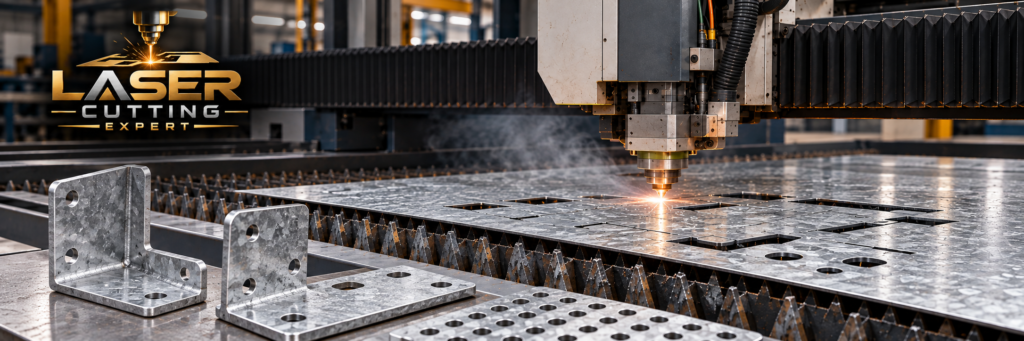
Galvanised steel begins with ordinary steel but gains an important additional feature: a protective zinc coating. That coating is the reason the material is chosen for many outdoor, construction and fabrication jobs, but it also changes how the sheet needs to be handled during cutting and later fabrication. Laser Cutting Expert provides galvanised steel laser cutting from our London workshop for brackets, panels, covers, trays, duct components, signs and custom profiles. Our galvanised steel laser cutting service is available for one-off parts, prototypes and repeat quantities, with no minimum order. Customers can provide suitable identified sheet or ask us about sourcing material for their project.
CALL OR EMAIL US FOR PRICES
“Order any time of the day or night and receive your order on the same day in London. You are welcome to visit our laser cutting shop for an instant laser cutting service. On-site collection or free delivery can be arranged. Email us at laser@makergroup.uk for a quick quote or call us on 02036339857 for an instant price”.
Same Day Laser Cutting & Delivery
We can arrange a same day courier delivery with customer live tracking. Or customers can collect from our Laser Cutting Expert shop.

OPEN 24 HOUR
We are open 7 days a week, and you can order at any time. There is no last ordering time and no deadline. We also offer an overnight laser cutting service.
100% Satisfaction
High Quality Laser Cutting & 100% Customer Satisfaction Guarantee. Top-Rated Laser Cutting Company on Google.

Free File Check
We offer a free file check and proof before sending your artwork for laser cutting.
The Zinc Layer Changes the Job
Galvanised steel should not simply be treated as bare mild steel with a different colour. The zinc coating is part of the material system and responds to heat differently from the underlying steel. During galvanised steel laser cutting, the cutting zone passes through both coating and substrate, so fumes, edge condition and local coating loss require appropriate control. The exposed cut edge does not automatically retain the same zinc protection as the original sheet face. Whether that matters depends on where the component will be used and what happens after cutting. Customers should therefore tell us if corrosion protection at cut edges is particularly important to the finished product.
Pre-Galvanised Sheet for Fabrication
Pre-galvanised sheet is useful when a fabricator wants components to begin with a protected surface rather than applying a complete coating after fabrication. Our galvanised steel laser cutting service can produce flat profiles with holes, slots and openings ready for suitable downstream work. However, cutting, bending and welding can disturb the coating locally. This means pre-galvanised material is not automatically equivalent to fabricating a bare-steel assembly and galvanising the complete finished product afterwards. The correct approach depends on component size, environment and expected service life. Designers and fabricators should choose the coating route as part of the overall product specification rather than after the profiles have already been produced.
Brackets for Everyday Fabrication
Brackets are one of the most practical uses for galvanised sheet. Mounting plates, angle-bracket blanks, equipment supports and fixing components can all begin as flat laser-cut profiles. With galvanised steel laser cutting, holes and slots can be positioned from CAD rather than drilled individually after profiling. Parts intended for bending should include suitable bend allowances and feature clearances. If the bracket will carry structural or safety-related loads, material thickness and geometry need to be specified by the responsible engineer. Galvanising helps with corrosion protection, but it does not determine load capacity. The completed bracket still depends on its steel grade, shape, fasteners and installation.
Ventilation Panels and Airflow Openings
Ventilation covers often need dozens or hundreds of repeated slots, holes or patterned openings. Our galvanised steel laser cutting service can create these directly within the panel profile, reducing the need for separate drilling or punching on short custom runs. Applications can include plant rooms, cabinets, workshop equipment and suitable building-service components. The open area should be designed according to the airflow required rather than appearance alone. Removing too much steel can also reduce stiffness. Where a panel protects moving machinery or electrical equipment, the responsible equipment designer must specify safe opening dimensions, clearances and guarding requirements. Cutting accuracy alone does not establish the safety of the completed enclosure.
Ductwork and HVAC Components
Galvanised sheet is widely used around ventilation and HVAC fabrication. Custom flanges, transition pieces, access panels, mounting plates and equipment interfaces may all require non-standard geometry. Galvanised steel laser cutting can support suitable short-run and bespoke components where digital profiling is more practical than manually producing every opening. Ductwork pieces that will later be folded need properly developed flat patterns rather than only finished three-dimensional dimensions. The fabricator should also consider how seams, fasteners and sealing will be handled. For fire-rated, smoke-control or regulated building-service systems, the complete component and installation must meet the relevant requirements determined by the responsible designer or contractor.
Electrical Enclosure Blanks
Electrical cabinets and equipment housings often start as flat sheets before being folded into boxes or panels. Our galvanised steel laser cutting service can produce enclosure blanks containing cable entries, switch openings, ventilation slots, fixing holes and access features. The drawing should account for subsequent bends so important openings do not become distorted during forming. Coating condition also needs consideration if the enclosure will later be welded. Electrical safety, earthing, ingress protection and enclosure ratings depend on the finished assembly rather than the laser-cut blank alone. Manufacturers should specify these requirements before production so the metalwork can be designed as part of the complete electrical product.
Cable Trays and Support Components
Cable-management systems can require custom support plates, brackets, covers and transition components where standard products do not fit the installation. Galvanised steel laser cutting allows these profiles to be produced from CAD with mounting slots and connection holes included. Components can then move into bending or assembly where required. The zinc coating can provide useful corrosion protection for suitable environments, but the designer should determine whether the coating specification is sufficient for the installation location. Electrical contractors should also establish bonding, earthing and load requirements for the completed system. Our role is to manufacture the specified sheet profiles rather than certify the complete cable-support installation.
Machine Guards and Protective Covers
Workshop and industrial equipment often needs covers that keep operators away from moving components while still allowing maintenance access and ventilation. A galvanised steel laser cutting service can manufacture guard panels, cover plates and perforated sections from approved drawings. Slots, fixing holes and access openings can be incorporated into the profile. However, machinery guarding is safety-critical. Opening sizes, distances from hazards, fixing methods and panel strength need to be determined according to the machine and applicable safety requirements. Laser cutting creates the specified geometry but does not certify a guard as safe. The machine manufacturer or responsible engineer must validate the complete guarding system before equipment enters service.
Equipment Trays and Base Plates
Industrial and building-services equipment often sits on custom trays, plates or support panels. Through galvanised steel laser cutting, these can be manufactured with fixing holes, cable openings, drainage features and other required geometry already included. A flat profile can subsequently be bent to form raised edges where the design requires them. The intended load should determine sheet thickness and reinforcement. If a tray is expected to contain liquids, additional consideration is needed around joints, corners, sealing and corrosion. Galvanised sheet can provide useful protection, but damaged or welded areas may require further treatment. The fabricator should establish the final corrosion-protection strategy after all manufacturing stages are considered.
Construction Fixing Plates
Building projects frequently need plates that connect, locate or support other components. Suitable galvanised steel laser cutting service work can include fixing plates, spacer plates, base plates and custom mounting profiles. Slots can provide installation adjustment, while repeated hole patterns can be produced directly from the approved drawing. Structural plates should not be designed by choosing a convenient thickness from available stock. Loads, fasteners, edge distances and steel grade all need engineering consideration. Where a component forms part of a structural connection, the responsible structural engineer should specify the material and geometry. Galvanising provides corrosion protection but does not replace the engineering calculations required for the connection itself.
Outdoor Equipment Panels
Galvanised sheet is commonly chosen for external equipment because the zinc coating provides additional corrosion protection compared with uncoated mild steel. Galvanised steel laser cutting can create covers, access panels, mounting plates and equipment faces for suitable outdoor installations. Cut edges and areas affected by subsequent welding deserve additional attention because the original coating may no longer provide continuous coverage there. Depending on exposure and expected service life, the fabricator may specify zinc-rich repair products, additional coating or another corrosion-protection method. Coastal and highly aggressive environments can require a different material or coating system entirely. The project designer should select the protection strategy according to actual environmental conditions.
Agricultural and Utility Components
Agricultural equipment, storage systems and utility installations frequently operate in damp or exposed environments. Custom brackets, covers, guards and plates can therefore be made from galvanised steel where the material specification is appropriate. Our galvanised steel laser cutting service can produce small replacement parts as well as batches of fabrication blanks. Dirt, fertilisers, chemicals and prolonged moisture can create conditions more aggressive than ordinary outdoor exposure, so galvanised steel should not automatically be assumed suitable for every agricultural environment. The equipment manufacturer should determine material and coating requirements. Where components are safety-related or load-bearing, engineering validation remains necessary before the part is placed into service.
Signs and Functional Information Panels
Galvanised steel can be used for practical signs, information panels and backing plates where corrosion resistance is more important than having a polished decorative surface. Galvanised steel laser cutting can create custom outside profiles, mounting holes, lettering cut-outs and logo shapes. The naturally spangled or matt zinc surface can be left visible where appropriate or prepared for a compatible finishing system. If paint, powder coating or another finish will follow, the coating supplier’s preparation requirements should be observed because galvanised surfaces behave differently from bare steel. Outdoor signs also need appropriate mounting hardware and should be designed to withstand the wind and environmental conditions at their installation location.
Workshop Storage and Organisation
Tool panels, shelf components, dividers and workshop storage parts can use galvanised sheet because it is practical and reasonably resistant to everyday moisture. Our galvanised steel laser cutting service can create peg-style panels, tool holders, mounting strips and custom organiser components from supplied CAD drawings. Hole patterns can be repeated accurately, while names or simple identification shapes can be incorporated where appropriate. Components intended to hold significant weight need suitable sheet thickness, folds and supports. Wall-mounted systems also depend on correct fixings and the strength of the wall itself. A laser-cut panel should therefore be treated as one part of the complete storage system rather than the sole load-bearing design decision.
Prototype Enclosures Before Batch Production
Sheet-metal enclosures often need physical testing before a full production run. Connector positions may change, doors may require more clearance or a mounting hole may interfere with internal equipment. Because our galvanised steel laser cutting service has no minimum quantity, customers can begin with one enclosure blank or panel set. The prototype can then be bent, assembled and fitted around the real equipment. Any necessary changes are made to the CAD development before further sheets are processed. This approach is particularly useful for electrical products, control equipment and specialist machinery because it catches practical assembly problems before they are repeated across an entire production batch.
Cutting Before Bending
A flat sheet is usually much easier to profile accurately than a completed folded component. Galvanised steel laser cutting can therefore create the outside shape, mounting holes, slots and access openings before the part moves to the press brake. The drawing needs to account for material thickness, bend radius and bend allowance. Holes positioned directly beside a fold can distort, while slots crossing bend regions may behave differently after forming. Our related High Volume & Contract Laser Cutting service can support suitable fabrication projects where both operations need to be coordinated. Designing the flat development properly reduces the need for drilling and trimming once the component has already become three-dimensional.
Welding Needs Extra Attention
Welding galvanised steel requires additional controls because heating the zinc coating can generate hazardous zinc oxide fumes. Appropriate ventilation, extraction, preparation and welding procedures are essential. A galvanised steel laser cutting service may produce the fabrication blanks, but customers should not move directly into welding without considering the coating. In some fabrication workflows, zinc may need to be removed locally from the weld area using an appropriate controlled method before welding, followed by suitable corrosion-protection repair afterwards. Welding procedures should be established by a competent fabricator. For structural work, the weld design, steel specification and quality requirements need to follow the responsible engineer’s approved fabrication information.
What Happens at the Cut Edge?
The broad faces of galvanised sheet have a zinc coating, but the laser passes through that protective layer at the profile edge. As a result, galvanised steel laser cutting creates an exposed edge whose corrosion behaviour can differ from the original coated face. Zinc can provide some sacrificial protection around small exposed areas, but customers should not assume every cut edge has the same protection as an intact galvanised surface. Outdoor service life depends on coating thickness, environment, geometry and subsequent finishing. Where long-term corrosion resistance is particularly important, edge treatment or a post-fabrication coating system may need to be specified by the designer or fabricator.
Hot-Dip Galvanised and Pre-Galvanised Are Not Identical
A completed steel fabrication can be hot-dip galvanised after cutting and welding, while pre-galvanised sheet receives its coating before components are manufactured. These approaches produce different coating coverage and fabrication considerations. Our galvanised steel laser cutting service generally needs the customer to identify which material is being supplied and what will happen after cutting. A product that will ultimately be hot-dip galvanised may sometimes be more logically manufactured from suitable bare steel first, depending on its design and specification. Venting, drainage and fabrication details also matter for later galvanising. The responsible fabricator or galvanising specialist should determine the correct production sequence for the finished product.
Powder Coating Over Galvanised Steel
Some products combine galvanising with an additional painted or powder-coated finish. This can provide colour while using zinc as part of the corrosion-protection system. After galvanised steel laser cutting and fabrication, surface preparation becomes important because powder coating should not simply be applied to an unsuitable or contaminated zinc surface. The coating company should specify cleaning, pretreatment and compatibility requirements. Weld areas and cut edges may also need attention before finishing. Customers planning a duplex coating system should tell us early because the complete manufacturing sequence can influence how components are designed and handled. Final coating performance depends on correct preparation as much as the original steel profile.
Galvanised Sheet Thickness and Small Features
As sheet thickness changes, the practical size of holes, slots and narrow bridges changes too. During galvanised steel laser cutting, features should be designed around real manufacturing conditions rather than simply drawn as small as possible. A tiny hole in relatively thick sheet may not give the same result as a larger clearance opening. Components heading into fabrication should also leave enough material around holes and edges for bending or fastening. If a feature needs a particularly close tolerance, drilling, reaming or machining after profiling may be more appropriate. Customers should identify critical dimensions clearly so the production method can be chosen according to the actual function of the part.
Nesting for Repeat Production
For repeat brackets, panels and fabrication blanks, sheet layout can have a meaningful effect on material usage. Our galvanised steel laser cutting service can nest compatible components together to use stock efficiently while maintaining appropriate spacing for reliable processing. Different part numbers can sometimes share the same sheet, which is useful for complete enclosure sets or fabrication kits. Orientation may matter where later bending or surface appearance is important. Once a production layout has been tested and approved, the digital files can support repeat batches without manually recreating each profile. This is useful for manufacturers who need consistent parts but do not necessarily require very large production quantities at one time.
Material Identification and Coating Condition
Not every zinc-coated sheet is identical. Coating method, zinc thickness, steel grade and surface condition can vary between products. Before galvanised steel laser cutting, customers supplying their own material should provide the available specification rather than assuming all galvanised sheet can be substituted freely. Sheets with unusual coatings, additional films or unknown treatments may need further assessment. The final application also influences material choice. An indoor equipment panel and an exposed external construction component can have very different corrosion requirements. Knowing where the component will be used helps the customer and fabricator determine whether the selected galvanised material is appropriate before production begins.
A Practical Production Check
Our review of a galvanised steel laser cutting service project considers steel grade, sheet thickness, zinc coating, geometry, tolerances and what manufacturing stages follow. We look at whether the part will remain flat, be folded, welded, painted or installed outdoors. This sequence matters because each later operation can affect the protective coating. Critical load-bearing or structural components require specifications from the responsible engineer. Machinery guards and electrical enclosures need product-level safety assessment by their manufacturers. Laser cutting gives the customer an accurately profiled component, but corrosion life, structural performance and regulatory compliance depend on the complete design, fabrication and finishing system.
Same Day Galvanised Steel Cutting London
Replacement panels, brackets and construction components are sometimes needed immediately to keep another job moving. Our London workshop operates 24/7, including weekends and bank holidays, allowing suitable galvanised steel laser cutting projects to be considered for same-day production. Material availability, drawing readiness, quantity and additional fabrication determine the actual turnaround. There is no minimum order, so urgent production can consist of one bracket or replacement panel. Our galvanised steel laser cutting service can also support short batches for installation teams working to tight schedules. Same-day courier delivery is available across London for suitable completed work, with nationwide delivery options available for customers elsewhere in the UK.
Galvanised Steel Laser Cutting Across the UK
Laser Cutting Expert works with fabricators, construction companies, HVAC businesses, equipment manufacturers, electrical contractors, engineers and private customers across the UK. For galvanised steel laser cutting, send us your CAD drawing together with material grade where known, sheet thickness, dimensions and quantity. Tell us if the component will later be bent, welded or coated because those operations can influence the production approach. Our galvanised steel laser cutting service covers prototypes, replacement parts, fabrication kits and repeat production. Customers can provide suitable identified sheet or discuss sourcing with us. Production is based in London, with local urgent courier and nationwide delivery options available.
FAQs About Galvanised Steel Laser Cutting
1. What can you make from galvanised steel?
Suitable products include brackets, equipment panels, ductwork components, enclosure blanks, guards, trays, fixing plates, signs and ventilation panels.
2. Does laser cutting damage the galvanised coating?
Galvanised steel laser cutting affects the coating locally along the cut path. The newly exposed edge does not have exactly the same zinc coverage as the original sheet face.
3. Can galvanised steel be welded after cutting?
Yes, but welding galvanised steel requires appropriate preparation, ventilation and fume control because heating zinc can create hazardous fumes.
4. Can you cut one galvanised steel component?
Yes. Our galvanised steel laser cutting service has no minimum quantity, so prototypes and individual replacement components are welcome.
5. Can galvanised steel be powder coated?
Yes, suitable galvanised steel can be powder coated, but correct surface preparation and a compatible coating system are important.
6. Can I provide my own galvanised sheet?
Yes. Customer-supplied material can be considered. Providing the steel and coating specification helps us assess the job correctly.
7. Do you provide urgent galvanised steel cutting?
Yes. Suitable production-ready projects can be considered for same-day London manufacturing and delivery, depending on material availability and any additional fabrication required.