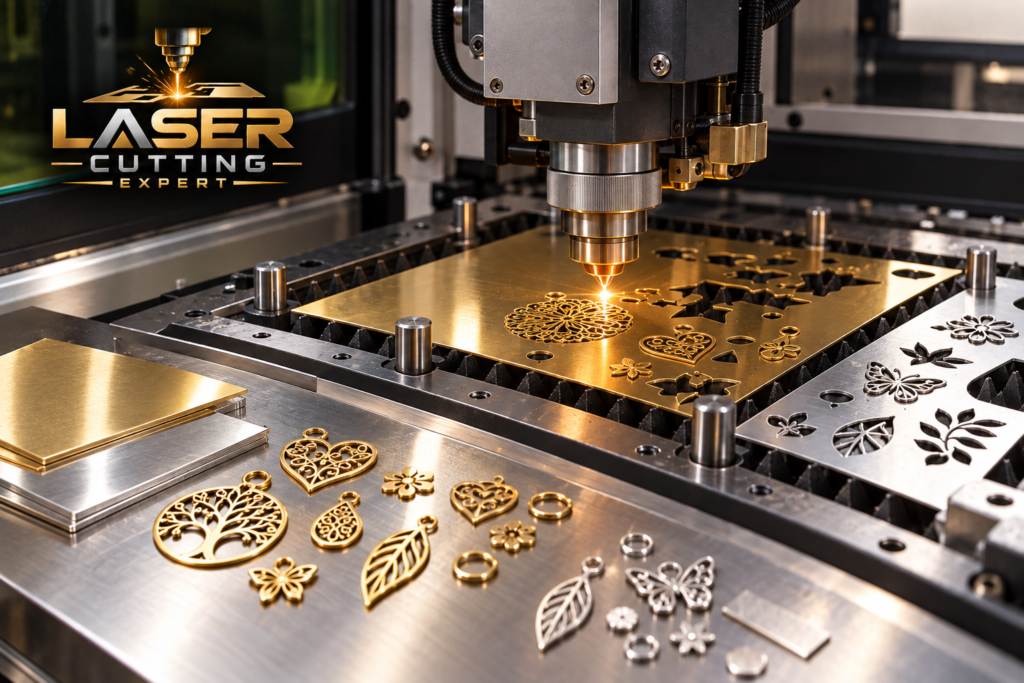
With precious metal, the cutting path is only part of the job. Material identification, careful layout and avoiding unnecessary waste can matter just as much as producing the shape itself. Laser Cutting Expert handles suitable enquiries for laser cutting silver and laser cutting gold from our London workshop for jewellers, designers, artists, makers, students and businesses. Projects can include jewellery blanks, pendants, charms, lettering, decorative components, prototypes and small custom profiles. There is no minimum quantity, so customers can discuss a single piece rather than ordering a large batch. Customer-supplied material is welcome where its composition, thickness and construction are clearly identified before processing begins.
CALL OR EMAIL US FOR PRICES
“Order any time of the day or night and receive your order on the same day in London. You are welcome to visit our laser cutting shop for an instant laser cutting service. On-site collection or free delivery can be arranged. Email us at laser@makergroup.uk for a quick quote or call us on 02036339857 for an instant price”.
Same Day Laser Cutting & Delivery
We can arrange a same day courier delivery with customer live tracking. Or customers can collect from our Laser Cutting Expert shop.
OPEN 24 HOUR
We are open 7 days a week, and you can order at any time. There is no last ordering time and no deadline. We also offer an overnight laser cutting service.
100% Satisfaction
High Quality Laser Cutting & 100% Customer Satisfaction Guarantee. Top-Rated Laser Cutting Company on Google.

Free File Check
We offer a free file check and proof before sending your artwork for laser cutting.
Precious Metal Changes the Way We Plan a Sheet
When inexpensive sheet is being processed, leaving a little additional space between components may not matter greatly. With gold or silver, every usable area can have meaningful value. Careful nesting therefore becomes particularly important. During laser cutting gold, we consider component orientation, spacing, holding requirements and the remaining usable sheet rather than simply filling the material with parts. Similar planning applies when laser cutting silver, especially where a customer supplies a small sheet with limited spare material. Efficient nesting should never compromise cut reliability, but thoughtful layout can reduce avoidable waste and leave larger offcuts that may still be useful for later jewellery or craft projects.
Confirm the Metal Before We Start
“Gold” can describe solid gold, gold-filled material, plated metal or simply a gold-coloured surface. Silver can similarly refer to sterling silver, fine silver, silver-plated material and other alloys or finishes. Before laser cutting gold or laser cutting silver, we need to know what the sheet actually contains. Alloy, thickness and construction can affect how the material behaves under the laser and what the customer expects from the finished edge. Hallmarking or supplier information may help identify precious metal, but customers should provide the material specification wherever possible. We should not determine an unknown metal’s composition purely from its colour or visual appearance.
Gold Jewellery Blanks
Jewellery makers can begin with simple flat components and develop them further through forming, polishing, engraving, stone setting or assembly. Suitable laser cutting gold projects can include pendant blanks, small geometric forms, discs, tags, connectors and decorative profiles. The required gold alloy and sheet thickness should be selected according to the finished piece rather than simply what happens to be available. Fine jewellery components may also require additional hand-finishing after cutting to achieve the intended edge and surface quality. Laser cutting can establish the basic geometry accurately, while the jeweller controls subsequent forming, soldering, polishing and other processes that determine the appearance of the completed item.
Silver Jewellery Components
Silver is widely used for earrings, pendants, bracelets, charms and other jewellery because it can support both simple shapes and detailed decorative work. With laser cutting silver, digital artwork can be translated into matching pairs, repeated components or individual custom pieces. Designs containing very narrow connections should be reviewed carefully because the finished jewellery still needs enough material to survive handling and wear. Holes for jump rings or other connections can be incorporated where dimensions are appropriate. The laser-cut edge may require deburring, polishing or another finishing operation depending on the intended appearance. Jewellery makers can order prototypes before producing additional components from more precious material.
Custom Pendants from Digital Artwork
A pendant can start as a name, symbol, line drawing, geometric shape or completely original illustration. Laser cutting gold and laser cutting silver allow suitable flat artwork to become a physical metal profile without creating a dedicated cutting die. The drawing still needs to work as a single connected object. Enclosed areas, unsupported centres and extremely thin strokes may require bridges or design adjustments. Pendant size also changes how much detail is practical. A pattern that works at 60 mm wide may become too delicate when reduced to 20 mm. We can help prepare suitable cutting artwork while keeping the main character of the customer’s original design.
Initials, Names and Script Jewellery
Personalised name jewellery requires more than choosing an attractive font. Individual letters need to connect properly, and the complete word needs enough strength for everyday handling. During laser cutting gold, script lettering may need thicker connections between certain characters. The same applies when laser cutting silver for names, initials or monograms. Connection points for chains should also be designed into appropriate locations rather than added without considering balance. Customers can supply finished vector artwork or ask for design support. Once a design has been tested successfully, different names can be prepared using the same general style for personalised gifts, collections or small jewellery production runs.
Charms and Small Decorative Shapes
Stars, hearts, flowers, animals, symbols, numbers and custom icons can be produced as small precious-metal components for jewellery and decorative products. Laser cutting silver can be useful where several related shapes need consistent dimensions, while laser cutting gold can support higher-value pieces where efficient use of sheet is particularly important. Very small details need to remain proportionate to the material thickness and overall component size. If the charm will be engraved afterwards, enough clear surface should remain for the required text or artwork. Small parts also need careful handling after production because their value may be significant even though their physical dimensions are tiny.
Earrings and Matching Pairs
Earring designs often depend on symmetry. Even intentionally mismatched designs usually need controlled dimensions and connection positions so the finished pair hangs correctly. Through laser cutting silver, we can manufacture suitable mirrored or matching components from digital artwork. Laser cutting gold can be used for appropriate precious-metal earring blanks where the alloy and thickness are specified. Lightweight designs can incorporate open patterns to reduce material while creating visual detail, but narrow bridges need enough strength for normal handling. The jewellery maker should determine suitable thickness and construction for the final product. Laser cutting provides the flat profiles before polishing, forming, soldering or attaching findings. our Laser Cutting & Engraving service can be combined with the cutting process.
Bracelet and Necklace Components
Not every necklace or bracelet is built only from chain. Flat centre pieces, links, connectors, name plates and decorative elements can be integrated into the design. Laser cutting gold can create suitable custom profiles that are later assembled by a jeweller, while laser cutting silver can be used for prototypes, collections and personalised components. Hole positions need to work with the selected jump rings, chain or other findings. Where components will be curved after cutting, the maker should also consider how forming changes the apparent length and hole orientation. We produce the flat geometry, leaving final assembly, soldering, polishing and fit decisions with the responsible jewellery maker.
Jewellery Prototypes Before Precious Production
A new design does not always need to begin in the most expensive material. Designers can sometimes check scale, proportions and connection points using a less costly suitable prototype material before committing to laser cutting gold. This is particularly useful for larger pendants, complex lettering and collections containing several related components. A silver prototype may also help a designer understand how a precious-metal piece looks and hangs, although the properties of different alloys should not be treated as identical. Once geometry is confirmed, the production drawing can be updated. Prototyping reduces the chance of discovering a basic design problem only after valuable gold sheet has already been processed.
Silver Tags and Identification Pieces
Small silver tags can be used for jewellery, gifts, keepsakes and specialist decorative products. Laser cutting silver can define circles, ovals, rectangles and completely custom outlines before names, dates or messages are added using a suitable marking process. Fixing holes can be included directly within the cutting file. If the tag will hang from a chain or attachment, the distance between the hole and outside edge should leave enough material for practical use. Silver surfaces can mark during handling, so customers seeking a highly polished final piece should expect appropriate finishing after cutting. Cutting and final jewellery finishing are separate stages with different requirements.
Gold Decorative Inserts
Gold components do not need to be complete jewellery pieces. Thin custom shapes can become inserts, badges, decorative plates or details within premium objects. Suitable laser cutting gold projects might be incorporated into jewellery boxes, presentation pieces, artistic work or bespoke gifts. Where the gold component will fit into another material, dimensions need to coordinate with the receiving recess. Adhesive, mechanical retention or jewellery-setting methods should be chosen by the maker according to the finished product. Because small offcuts retain material value, the customer may also want unused sections returned. Material handling arrangements can be agreed before production when customer-owned precious metal is being processed.
Silver for Decorative Art Pieces
Silver sheet can be incorporated into small artworks, layered compositions and presentation pieces where the natural metal surface is part of the design. Laser cutting silver allows artists to work from vector drawings containing silhouettes, abstract patterns, symbols or custom outlines. Silver can then be combined with timber, stone, acrylic or other materials to create contrast. Fine sections should be designed around handling as well as appearance. Larger open patterns remove material and can make thin sheet more flexible. If a piece will be displayed without a backing, the designer should ensure that the remaining structure can support itself. Final polishing and surface treatment can be completed separately.
Wedding and Personalised Keepsake Pieces
Precious-metal components can be used for anniversary gifts, wedding keepsakes and personalised objects intended to last beyond the event itself. Initials, dates, coordinates and symbolic shapes can be incorporated into designs prepared for laser cutting silver or laser cutting gold. Cutting normally establishes the outside geometry, while fine wording may be better added using engraving or another suitable marking method. Because there is no minimum order, customers can discuss a single personalised piece rather than manufacturing a full commercial batch. The metal specification should be confirmed before production, particularly if a supplied item is described only as gold-coloured, silver-coloured, plated or filled.
Small Logos and Brand Components
Luxury products sometimes use real metal logos or decorative badges rather than printed branding. Suitable laser cutting gold or laser cutting silver components can be created from production-ready vector logos where the geometry is practical at the required size. Very fine registered marks, tiny text and isolated elements may need modification or a different manufacturing process. These components can later be incorporated into jewellery, presentation products or specialist decorative objects. Designers should consider how the logo will be attached before cutting because holes, tabs or other connection features may need to be included. Final branding use remains subject to the customer’s ownership or permission to reproduce the supplied artwork.
Understanding Kerf on Small Components
On a large decorative panel, a small amount of cut width may have little visual impact. On a tiny jewellery component, the same amount can influence a narrow bridge or small opening noticeably. When laser cutting silver or laser cutting gold, geometry therefore needs to be considered at the actual finished scale. Slots and mating components should not be designed solely from nominal dimensions without allowing for the manufacturing process. Test pieces can be useful when several parts need to fit together. Extremely small precision holes may also require another manufacturing or finishing process if their dimensional requirement goes beyond what is sensible for profile laser cutting.
Surface Condition Before and After Cutting
Gold and silver are often selected for appearance, so surface condition deserves more attention than it might on a hidden industrial bracket. Sheet can arrive polished, brushed, mill-finished or protected in different ways. During laser cutting gold and laser cutting silver, appropriate handling helps reduce unnecessary marking, but final jewellery-quality polishing is normally a separate finishing operation. Heat effects around the cut may also require cleaning depending on alloy and process. Customers should explain which face will remain visible and what level of finish is expected. This helps distinguish a production blank that will undergo further work from a component expected to be close to its final appearance.
Hallmarking and Precious-Metal Compliance
Laser cutting a piece from precious metal does not itself determine whether the finished item needs hallmarking or whether supplied material meets a particular fineness standard. Businesses producing precious-metal articles for sale should understand the applicable UK hallmarking requirements for their products. When laser cutting gold or laser cutting silver, we manufacture according to the material and design supplied or agreed for the job. Responsibility for required hallmarking, product descriptions and legal sale requirements remains with the business placing the completed article on the market. Where material identity is important, recognised supplier documentation should be retained rather than relying on appearance alone.
Solid, Filled and Plated Materials Are Different
A gold-plated sheet should not be described or processed as though its entire thickness were solid gold. The same distinction applies to silver plating and other layered products. Before laser cutting gold or laser cutting silver, customers should tell us whether the material is solid alloy, filled, clad, plated or otherwise constructed from several layers. Cutting through a plated material exposes the base metal at the edge, which can significantly change the finished appearance. Different layers may also respond differently to heat. If the construction is unknown, supplier specifications should be obtained before processing. Accurate material identification prevents unrealistic expectations about the final cut component.
Careful Nesting and Material Recovery
Precious-metal production creates a different attitude towards remnants. A small silver or gold offcut may still have useful material value. When planning laser cutting silver, we can consider whether the customer wants a compact nesting arrangement that leaves larger reusable remnants. For laser cutting gold, material conservation can be particularly important because even relatively small areas may represent meaningful cost. Cut-outs and surrounding skeleton material should not automatically be treated as disposable workshop scrap when the customer owns the precious sheet. Return and handling requirements can be agreed as part of the job so both finished components and remaining material are accounted for appropriately.
CAD Preparation for Fine Precious-Metal Work
Clean vector geometry is especially important when components are small. Duplicate lines, open paths and unnecessary points can create problems that are easy to miss on screen. Our Laser Cutting & Engraving capability can support suitable projects where profile cutting and separate decorative marking need to be considered together. Before laser cutting gold or laser cutting silver, artwork can be checked for disconnected islands, overly narrow bridges and impractical internal features. Customers may supply DXF, vector or other suitable production artwork, or ask us for design support. The goal is to solve geometry issues digitally before valuable material reaches the cutting stage.
One Piece Is a Valid Order
Precious-metal projects are often personal or experimental rather than high-volume manufacturing jobs. A jewellery designer may need one prototype pendant, an artist may need a single silver element, or a customer may want one personalised keepsake. We have no minimum quantity for suitable work, so laser cutting silver or laser cutting gold does not require ordering dozens of identical pieces. Starting with one component can also help establish proportions, edge expectations and assembly details before more material is used. Once the design is approved, the same digital file can be adapted for additional sizes, names or production quantities without creating physical tooling.
Practical Review Before Precious Metal Cutting
Before accepting a project, we consider metal type, alloy, thickness, geometry, surface condition and intended finished use. Laser cutting gold and laser cutting silver require more than simply loading a precious sheet into a machine. Reflectivity, thermal behaviour, small feature sizes and material value all influence the manufacturing approach. Some highly precise jewellery features may be better produced or finished using alternative specialist processes. Cutting also does not replace polishing, soldering, forming, stone setting or hallmarking. Our role is to manufacture suitable flat profiles accurately while helping customers avoid obvious design and material problems before expensive precious metal is committed to production.
Same Day Gold & Silver Laser Cutting London
Urgent jewellery prototypes and personalised pieces can sometimes be produced quickly when the correct material and production-ready artwork are already available. Our London workshop operates 24/7, including weekends and bank holidays. Suitable laser cutting silver and laser cutting gold projects can be considered for same-day production after material and process compatibility have been confirmed. Because precious metals require careful handling and identification, speed never replaces the necessary material checks. There is no minimum order. Same-day London courier delivery can be arranged for suitable completed work, while next-day UK delivery options are available depending on the project, production schedule and any additional finishing requirements.
Gold & Silver Laser Cutting Across the UK
Laser Cutting Expert works with jewellers, artists, product designers, students, makers and businesses throughout the UK. For laser cutting gold or laser cutting silver, send us your artwork together with the alloy or material description, thickness, dimensions and quantity. If you are supplying the precious metal yourself, tell us whether it is solid, plated, filled or another construction and provide supplier information where available. We can assist with suitable CAD preparation and prototype development before repeat production. Work is produced from our London workshop, with urgent local delivery available for appropriate projects and nationwide delivery options for completed orders.
FAQs About Gold & Silver Laser Cutting
1. Can you laser cut real gold?
Suitable laser cutting gold projects can be assessed once the gold alloy, thickness, geometry and required finish are known.
2. Can you cut sterling silver?
Suitable sterling silver sheet can be considered for laser cutting silver. Please provide the material specification and thickness.
3. Can you make jewellery components?
Yes. Suitable projects can include pendants, charms, earrings, tags, name pieces, connectors and other flat jewellery components.
4. Can I provide my own gold or silver?
Yes. Customer-supplied precious metal can be considered where its composition, thickness and construction are clearly identified.
5. Will you return my precious-metal offcuts?
Material-return requirements should be agreed before production. For customer-owned precious sheet, usable remnants and cut-out material can be treated accordingly.
6. Can you cut gold-plated material?
Potentially, but plated material must be identified correctly. Cutting exposes the underlying material at the edge, so it will not look the same as solid gold.
7. Do I need to order a large quantity?
No. There is no minimum order, so suitable gold or silver work can begin with one prototype or personalised component.