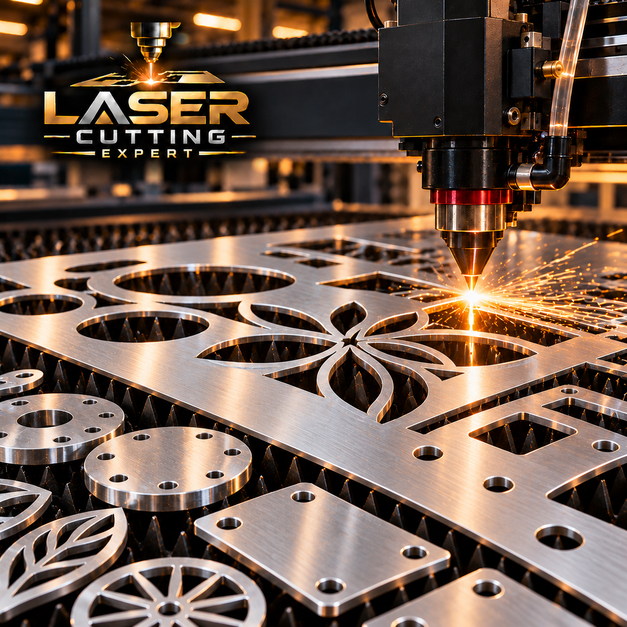
Aluminium is often selected when a component needs useful strength without the weight of an equivalent steel part. At Laser Cutting Expert, we laser cut aluminium for engineering, signage, interiors, product development, exhibitions, furniture and general fabrication from our London workshop. Our aluminium laser cutting work includes one-off prototypes, replacement parts, short production batches and repeat components, with no minimum quantity. Suitable products include equipment panels, brackets, mounting plates, enclosures, signs, ventilation panels, furniture parts, display components, decorative screens and unfinished fabrication blanks. Customers can provide known aluminium material themselves or ask us to source the required sheet, plate or suitable section for production.
CALL OR EMAIL US FOR PRICES
“Order any time of the day or night and receive your order on the same day in London. You are welcome to visit our laser cutting shop for an instant laser cutting service. On-site collection or free delivery can be arranged. Email us at laser@makergroup.uk for a quick quote or call us on 02036339857 for an instant price”.
Same Day Laser Cutting & Delivery
We can arrange a same day courier delivery with customer live tracking. Or customers can collect from our Laser Cutting Expert shop.
OPEN 24 HOUR
We are open 7 days a week, and you can order at any time. There is no last ordering time and no deadline. We also offer an overnight laser cutting service.
100% Satisfaction
High Quality Laser Cutting & 100% Customer Satisfaction Guarantee. Top-Rated Laser Cutting Company on Google.

Free File Check
We offer a free file check and proof before sending your artwork for laser cutting.
Aluminium Grade Matters Before the Drawing Reaches the Machine
Not every aluminium sheet is identical. Alloy and temper affect strength, formability, surface condition and what can happen to the component after cutting. Our aluminium laser cutting service therefore starts with the material specification alongside the drawing. A decorative sign does not necessarily require the same grade as an engineering bracket that will later be bent, while an enclosure panel may have completely different requirements again. If you already know the alloy and temper, include them with your enquiry. Where material is being sourced specifically for the project, we can discuss suitable options around the intended product, thickness, appearance and any further fabrication required after profiling.
Aluminium Sheet for Panels, Plates and Flat Components
We laser cut aluminium sheet for components ranging from simple mounting plates to detailed panels containing multiple holes, slots and ventilation patterns. Flat sheet is particularly useful for equipment faces, machine covers, electrical enclosure parts, signs, retail displays, furniture panels, light-duty brackets and product development components. Several different parts can often be nested on the same sheet where the alloy and thickness match, helping make better use of the available material. CAD-controlled production also makes it straightforward to repeat an approved profile later. Parts can remain flat after cutting or continue into bending, fastening, welding, engraving or other fabrication depending on the finished product requirements.
3mm Aluminium for Everyday Fabrication Work
Laser cutting 3mm aluminium is commonly requested for panels, signs, covers, brackets, decorative components, mounting plates and product prototypes. Three-millimetre sheet provides more rigidity than very thin aluminium while remaining relatively lightweight, making it practical for many general fabrication jobs. Thickness alone, however, does not determine whether a design will work. Large unsupported areas can still flex, while narrow projections or small holes may need adjustment depending on their function. If a 3mm component will later be folded, we also consider bend positions and nearby cut-outs before production. A prototype can be useful where several cut and folded parts need to assemble to controlled dimensions.
Fibre Laser Cutting Aluminium
Fiber laser cutting aluminium is an effective production method for suitable aluminium sheet because modern fibre-laser systems can process detailed CAD profiles without physical tooling contacting the material. Aluminium is reflective and conducts heat efficiently, so machine setup needs to match the alloy, thickness and required profile rather than copying settings intended for steel. The process can create outside shapes, fixing holes, slots, ventilation patterns and other internal geometry in a single programmed operation. This makes it useful for brackets, enclosure parts, panels, signs, blanks and engineering components. Cut quality still depends on material condition, feature geometry, gas selection and the production requirements of the individual project.
Anodised Aluminium Laser Cutting
Anodised aluminium laser cutting needs additional consideration because the surface has already received a controlled oxide finish before it reaches the cutting stage. Anodised sheet is available in different colours and finishes and is commonly used for labels, signs, equipment panels, decorative pieces and visible product components. Cutting exposes the underlying aluminium at the edge, so the edge will not necessarily match the anodised face. Protective handling is also important because marks or scratches can be noticeable on finished surfaces. Where appearance is critical, the customer should specify which face is visible and whether cutting before anodising would be more appropriate for the intended finished component.
Aluminium for Equipment Panels and Enclosures
Aluminium is widely used for control panels, electronics housings, covers and enclosures because it combines relatively low weight with useful rigidity and corrosion resistance. Our aluminium laser cutting can produce display openings, ventilation slots, cable entries, switch holes, mounting points and complete panel profiles directly from CAD. Related products include equipment labels, machine covers, front panels, instrument plates, electronics enclosures and protective housings. If a panel will subsequently be bent into a box or enclosure, hole positions should be coordinated with the bend lines. Our related Our related High Volume & Contract Laser Cutting service can support suitable projects where smaller custom profiles need to be produced consistently from digitally supplied geometry.
Aluminium Brackets, Mounting Plates and Engineering Parts
Many functional laser cut aluminium components are relatively simple in appearance but depend on correct dimensions to work properly. Brackets, mounting plates, spacers, supports and machine components may contain locating holes, slots or mating edges that need to align with other parts. For this work, it helps to identify genuinely critical dimensions on the drawing rather than applying an unnecessarily tight tolerance to every feature. Material grade and thickness should also reflect the expected load and environment. Aluminium reduces component weight, but it should not automatically replace steel in a structural design. Load-bearing or safety-critical parts should be specified and validated by the responsible engineer or product manufacturer.
Aluminium Signs, Logos and Display Components
The clean appearance and low weight of aluminium make it useful for signs, lettering, logos and branded display components. We can laser cut aluminium sheet into individual letters, property signs, plaques, logos, exhibition details, retail display pieces and decorative panels. Profiles can include mounting holes or fixing points where required, while surface finishing can be planned around the intended appearance. Aluminium signs may be left with an appropriate natural finish or continue into painting, powder coating, anodising or other finishing processes. For logos containing thin lettering or narrow connections, we check whether the geometry is strong enough at the selected thickness before producing the final components.
Decorative Panels and Interior Aluminium
Aluminium can also be used where the cut pattern is a major part of the finished appearance. Decorative wall panels, furniture inserts, lighting panels, ventilation screens and exhibition features can all be produced from suitable sheet. Pattern design should balance open space against the material left behind because extensive cutting reduces panel stiffness. Narrow bridges and large unsupported sections may distort or flex more easily, particularly on larger sheets. When decorative panels are mounted vertically or incorporated into furniture, fixing positions and supporting frames should be considered from the beginning. This allows the cut design to work with the installation rather than leaving mounting decisions until after production.
Aluminium Furniture and Lightweight Fabricated Products
Furniture designers and product developers use aluminium where they need components that are lighter than comparable steel parts. Suitable products can include table components, shelving details, furniture brackets, desk accessories, display stands, interior panels and prototype structures. Custom aluminium laser cutting using our broader custom cutting capability allows profiles to be developed directly from CAD and changed between prototypes without producing dedicated dies. Components can also be designed for later bending or fastening. Where furniture parts carry significant loads, the designer should specify material grade, thickness and structural requirements appropriately. We manufacture the profile to the supplied specification, while finished-product strength and load suitability remain the responsibility of the product designer.
Aluminium Tube Laser Cutting
Aluminium tube laser cutting is a different production task from cutting flat sheet because the laser must work around a three-dimensional section rather than across a flat bed. Round, square or rectangular aluminium tube may require holes, slots, end profiles or connection features for frames, furniture, displays and fabricated structures. Tube dimensions, wall thickness, alloy and overall length all influence the suitable process. Customers should send the tube specification and CAD information so we can assess the work correctly. For projects combining sheet and tube components, both can be planned around the same assembly, helping designers coordinate locating features before welding, fastening or final construction begins.
Cut First or Bend First?
For most sheet-fabrication projects, cutting the flat profile before bending gives the designer control over holes, slots and overall blank dimensions. However, the flat drawing must account for what happens when aluminium is formed. Bend radius, material thickness and alloy influence the final geometry, while holes positioned too close to a fold may distort. This is particularly important for brackets, trays, enclosures and machine covers. If we know from the start that a laser cut aluminium component will be bent, the cutting file can be reviewed as part of a fabricated product rather than as an isolated flat shape. This helps avoid preventable problems during later assembly.
Surface Protection and Visible-Face Components
Aluminium is frequently chosen for products where the surface remains visible, so handling is an important part of production. Brushed, anodised or otherwise finished sheets can show scratches, fingerprints and handling marks more readily than unfinished fabrication material. Protective film may be retained where appropriate, but the film itself must be suitable for the intended processing method. Customers ordering visible panels, signs, logos or interior components should tell us which side is the presentation face. For anodised aluminium laser cutting, this is particularly useful because the finished surface already exists before profiling. Careful orientation also matters where brushing or another directional surface pattern needs to remain consistent across several components.
Expert Technical Overview – Aluminium Laser Cutting
Reliable aluminium laser cutting requires control of alloy, temper, thickness, reflectivity, thermal conductivity and feature geometry. With fiber laser cutting aluminium, settings and assist gas must suit the actual material rather than being based on steel parameters. When we laser cut aluminium sheet, small holes, narrow slots and thin sections should be considered in relation to sheet thickness. Laser cutting 3mm aluminium is useful for many panels and brackets, but unsupported areas can still flex. Anodised material requires additional surface care. Parts intended for bending should also be reviewed around bend radius and nearby features before cutting begins, especially where final assembly dimensions are important.
Prototypes Before Repeat Aluminium Production
Aluminium is widely used in product development because a CAD drawing can be turned into a physical component without investing in dedicated profile tooling. A designer may begin with one bracket, panel or enclosure blank, assemble it with the rest of the product and then adjust the file before ordering additional pieces. Once the geometry is approved, the same digital file can support repeat production. This workflow is useful for start-ups, engineers, furniture designers, exhibition builders and manufacturers developing new equipment. Our aluminium laser cutting service has no minimum order, so the first prototype does not need to be accompanied by a large production commitment.
Laser Cut Aluminium Online
Customers can order laser cut aluminium online by sending the CAD file or drawing directly to our London production team. Include the aluminium grade where known, sheet thickness, quantity and any critical dimensions or finishing requirements. If the component will later be bent, welded or assembled, tell us at the enquiry stage so those operations can be considered when reviewing the profile. Customers may provide their own known aluminium or ask us to source suitable material. Once everything is confirmed, parts can move into production without an in-person visit. Finished components can be collected in London, delivered locally or dispatched across the UK depending on the required turnaround.
Aluminium Laser Cutting Near Me
If you are searching for aluminium laser cutting near me, Laser Cutting Expert operates from a London production workshop and handles enquiries from anywhere in the UK. We are open 24/7, including weekends and bank holidays, and suitable urgent jobs can be considered for same-day cutting and London courier delivery. There is no minimum quantity, whether you need one replacement bracket, a prototype enclosure panel, a custom sign or a batch of production components. Next-day UK delivery is available for suitable completed orders. Send us the drawing, aluminium specification, thickness and quantity, or speak to our team if CAD preparation or material sourcing is also required.
FAQs About Aluminium Laser Cutting
1. What aluminium thicknesses can you laser cut?
Capability depends on the aluminium alloy, thickness, component dimensions and profile geometry. Send us the drawing and material specification so we can confirm the appropriate process.
2. Can you laser cut 3mm aluminium?
Yes, laser cutting 3mm aluminium is suitable for many brackets, panels, signs, covers and fabricated components, subject to the specific design and alloy.
3. Can you cut anodised aluminium?
We can assess anodised aluminium laser cutting projects. The cut edge exposes the underlying aluminium, so this should be considered where appearance is important.
4. Can you laser cut aluminium tube?
Yes, aluminium tube laser cutting can be assessed from the tube size, wall thickness, alloy and required features. Tube processing is different from flat-sheet cutting.
5. Can you make aluminium panels and enclosures?
Yes. We produce panels, enclosure blanks, covers, ventilation panels and other aluminium components, with bending available for suitable projects.
6. Can I supply my own aluminium?
Yes. You can provide suitable aluminium, although we recommend supplying the alloy, temper and thickness information wherever possible. We can also source material.
7. Do you accept one-off aluminium parts?
Yes. Our aluminium laser cutting service has no minimum order. We handle prototypes, replacement parts, small batches and repeat production.