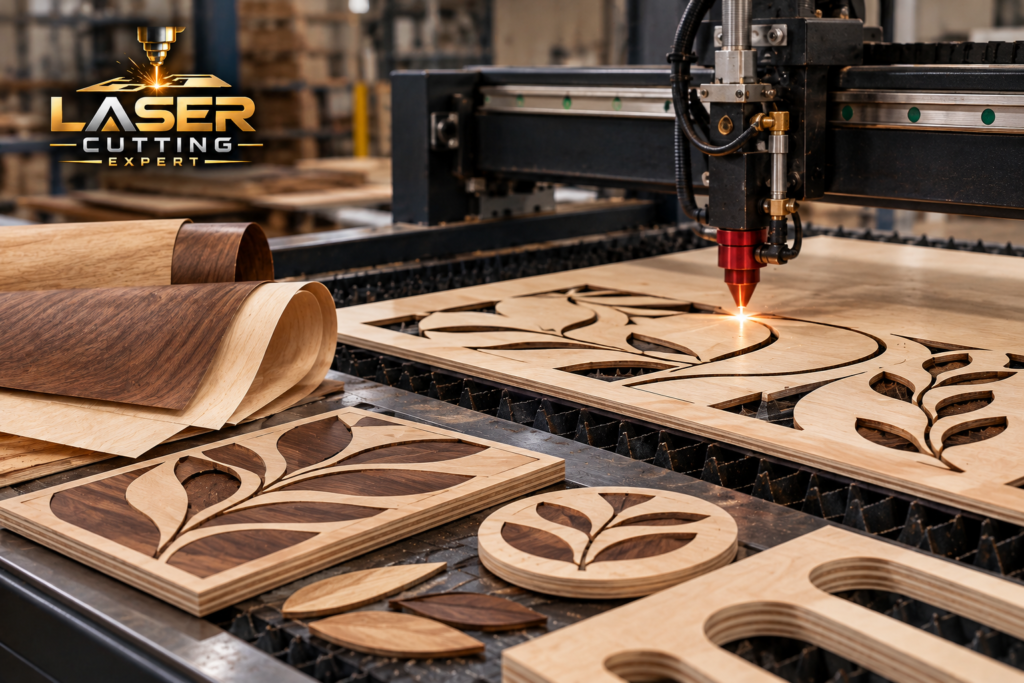
Plywood and veneer can sit next to each other in the workshop while behaving like very different materials. Plywood gets much of its stability from layers bonded together, while veneer is thin enough for surface decoration, inlays and detailed pattern work. Laser Cutting Expert works with both materials from our London workshop. We laser cut ply for models, furniture components, signs, boxes and structural craft pieces, while laser cutting veneer is useful for decorative faces, marquetry, lettering and layered artwork. We also assess bamboo laser cutting for suitable engineered bamboo sheets. There is no minimum order, and customers can provide material or ask us about sourcing.
CALL OR EMAIL US FOR PRICES
“Order any time of the day or night and receive your order on the same day in London. You are welcome to visit our laser cutting shop for an instant laser cutting service. On-site collection or free delivery can be arranged. Email us at laser@makergroup.uk for a quick quote or call us on 02036339857 for an instant price”.
Same Day Laser Cutting & Delivery
We can arrange a same day courier delivery with customer live tracking. Or customers can collect from our Laser Cutting Expert shop.
OPEN 24 HOUR
We are open 7 days a week, and you can order at any time. There is no last ordering time and no deadline. We also offer an overnight laser cutting service.

100% Satisfaction
High Quality Laser Cutting & 100% Customer Satisfaction Guarantee. Top-Rated Laser Cutting Company on Google.

Free File Check
We offer a free file check and proof before sending your artwork for laser cutting.
Layers Matter More Than the Outside Face
Plywood may look like one wooden board from above, but the laser passes through alternating veneers and adhesive layers. Those internal layers affect how consistently the material cuts. Two sheets with similar dimensions can behave differently if their veneer quality, glue system, density or internal voids are different. When we laser cut ply, knowing the actual board specification helps us choose a sensible production approach. Furniture-grade birch plywood, lightweight model-making board and construction-oriented plywood should not automatically be treated as equivalent. Where edge appearance matters, a sample can be useful because internal layers become visible after cutting and contribute directly to the finished look of the component.
Thin Veneer Is About the Visible Surface
Veneer is generally selected because of what people will see rather than because it needs to carry a structural load. Oak, walnut, maple and other decorative veneers can provide natural colour and grain while using only a thin layer of timber. Laser cutting veneer makes it possible to create letters, patterns, inlays and detailed decorative pieces from digital artwork. Because the material is thin, delicate areas need enough width to survive handling and assembly. Natural grain direction also affects appearance. If several components will sit beside one another on a finished panel, the designer may want to control their orientation rather than nesting every piece solely for maximum material efficiency.
Marquetry from Digital Artwork
Marquetry traditionally relies on carefully shaped pieces of contrasting veneer assembled into a larger decorative image. Digital cutting introduces another way to prepare suitable shapes while still leaving the final composition and craftsmanship to the maker. Through laser cutting veneer, we can produce geometric forms, lettering, botanical designs and other detailed elements from vector artwork. Different veneer species can then be combined to create contrast through natural grain and colour. Kerf needs consideration when pieces are expected to fit closely together. A test section is sensible before a large decorative panel is produced, particularly where several materials of different thicknesses or densities need to align within the same composition.
Inlays for Furniture and Joinery
Furniture makers can use veneer inlays to introduce borders, logos, initials, geometric patterns and decorative details into tables, cabinets, boxes and wall panels. Laser cutting veneer allows these components to follow custom digital artwork rather than being restricted to standard strip widths or simple shapes. The receiving recess or surrounding material needs to be designed around the actual veneer thickness and intended adhesive system. Grain direction can become part of the pattern, especially when adjacent pieces are rotated deliberately for contrast. Laser cutting prepares the decorative component, while final pressing, bonding, sanding and finishing remain part of the furniture maker’s process and determine much of the finished surface quality.
Plywood Furniture Components
Plywood is useful for furniture because the sheet can provide both structure and a visible layered edge. Shelves, stools, storage units, display furniture, desk organisers and small tables can all include digitally produced parts. When we laser cut ply, slots and tabs can be incorporated so related pieces locate during assembly. Actual material thickness needs to be measured rather than assumed from the nominal board description because even a small variation can change the fit of an interlocking joint. Load-bearing furniture should be designed around appropriate board grade, thickness, joint construction and expected load. Cutting creates the geometry, but the complete furniture design determines strength and long-term performance.
Decorative Veneer Faces for Products
A thin decorative face can completely change the appearance of an otherwise simple product. Veneer can be applied to boxes, signs, notebooks, presentation packaging, desk accessories and display pieces to introduce real wood grain without making the entire product from solid timber. Our laser cutting veneer work can produce shaped face layers, borders, logos and overlays that are later bonded to a stable substrate. The substrate might be plywood, MDF or another suitable material chosen by the product designer. Adhesive selection, pressing and finishing need to suit the veneer species. If the veneer arrives pre-backed or pre-glued, its complete construction should be identified before laser processing.
Architectural Models in Plywood
Architectural models often contain repeated floors, walls, roof elements, screens and structural representations that benefit from consistent digital profiles. We laser cut ply for suitable model-making components where the material provides more rigidity than card while remaining relatively easy to assemble. Slots can locate walls and floors, while windows and façade patterns can be included in the same file. Thin plywood is particularly useful for larger model components that need to remain flat. Scale matters when designing openings because a detail that exists on the real building may become too narrow at model size. Model designers should therefore simplify geometry where necessary rather than reproducing every feature literally.
Veneer for Architectural Presentation Models
Where a model needs to communicate material appearance as well as geometry, veneer can add a natural timber face without using thick solid wood. Laser cutting veneer can create façade panels, floor patterns, roof details and landscape elements that are later applied to a supporting model structure. Different species can represent different materials or zones within the design. Because veneer is thin, it should normally be supported appropriately rather than treated as a freestanding structural model component. Fine pieces also need careful handling after cutting. Architects and model makers can send complete vector layouts or individual component drawings, and we can produce one model set or repeated presentation pieces as required.
Plywood Boxes and Storage Products
Plywood works well for boxes because flat panels can be designed to assemble into three-dimensional forms. Gift boxes, presentation cases, storage boxes, organisers and display containers can use tabs, slots or other joining methods. Our laser cut ply service can manufacture the side panels, lids, dividers and bases from one coordinated CAD design. Actual sheet thickness is particularly important where joints rely on friction. If the slot is designed only around nominal thickness, the fit may be too loose or too tight. Prototyping one box before repeat production allows the maker to check assembly, lid movement and hardware positions using the real material.
Veneer Lettering and Logos
Thin wooden lettering can be applied to signs, packaging, invitations, presentation boxes and branded interior products. Through laser cutting veneer, names and logos can be produced without adding the weight of thicker timber. Letter design needs practical stroke widths because very thin sections can break during handling or bonding. Script fonts may also need adjustment where long narrow connections occur. Grain direction can influence how lettering appears, particularly with strongly figured species. Veneer logos can be mounted onto contrasting plywood, acrylic or painted surfaces. For repeat branding work, approved artwork can be retained digitally so matching components can be produced later without recreating a physical template.
Plywood Signs and Layered Lettering
Plywood signage can use the natural layered edge as part of the design rather than hiding it. We laser cut ply into letters, numbers, logos, directional signs and decorative plaques for suitable indoor applications. Several plywood layers can also be stacked to create depth, while veneer can provide a contrasting face. Fixing holes and mounting locations can be included within the artwork. If the sign will be used outdoors, the board specification, sealing and installation method need careful consideration because ordinary interior plywood should not be assumed suitable for prolonged weather exposure. The customer should select an appropriate exterior-grade material and finishing system where environmental durability is required.
Layered Wall Art
Plywood and veneer work particularly well together when artwork is constructed from several levels. A thicker plywood base can provide stability while thin veneer pieces create changes in colour, grain and detail. We can laser cut ply for backgrounds and structural layers while laser cutting veneer for decorative foreground elements. Maps, trees, landscapes, names, skylines and abstract artwork can all be developed using this approach. Registration points or alignment guides can help when several layers need to sit precisely together. Designers should consider the total assembled thickness and mounting method before production, especially for larger wall pieces where weight and flatness become more important.
Plywood Puzzles and Educational Products
Jigsaw puzzles, shape sorters, learning boards, model kits and construction toys can all be designed from plywood. Our laser cut ply production can create repeated pieces directly from CAD artwork, making it practical to develop a prototype before ordering additional sets. Kerf matters for puzzles because an excessively loose or tight relationship changes how the pieces interact. Small children’s products also require much broader safety considerations than cutting accuracy alone. Material specification, coatings, edge finishing, component size and applicable product-safety requirements must be handled by the responsible manufacturer. Laser cutting provides the profiles but does not automatically certify a finished toy or educational product as safe.
Wedding and Event Decorations
Plywood and veneer can bring natural wood texture into wedding and event products without requiring heavy solid timber. Place names, table numbers, cake decorations, signs, menu details, invitations and favour tags can all use suitable wood-based sheet. We laser cut ply for pieces that need more body, while laser cutting veneer can create lighter decorative overlays and fine details. Personalisation is straightforward because names and numbers can change within the digital artwork from one item to another. There is no minimum quantity, so a small private event can order exactly what it needs rather than purchasing a large standard batch of identical pieces.
Plywood Craft Shapes and Blanks
Crafters often need unfinished shapes that will later be painted, decorated, engraved or assembled into another product. Hearts, stars, flowers, animals, letters, tags, ornaments and custom silhouettes can all be produced when we laser cut ply from suitable sheet. Mixed designs can be arranged together rather than ordering only one shape at a time. Thickness should be selected around the finished use: a small hanging decoration may need much less material than a freestanding display component. If customers provide their own plywood, the board type should be identified because unknown adhesives, coatings and treatments can affect laser suitability and the quality of the cut edge. For projects requiring shaped parts as well as signage, see our Laser Cutting & Bending service.
Christmas Decorations and Seasonal Pieces
Plywood works well for reusable Christmas decorations because it can support fine patterns while remaining relatively lightweight. Snowflakes, stars, personalised names, hanging ornaments, miniature houses and layered decorations are common examples. Our laser cut ply service allows each item to carry different names or dates without requiring new physical tooling. Veneer can also be used as a contrasting face on premium decorations. Small hanging holes and narrow decorative bridges need enough surrounding material to remain durable. For products intended for retail sale, the maker should consider finishing, packaging and any applicable consumer-product requirements after the laser-cut components leave our workshop.
Bamboo Is an Engineered Material Too
Many sheets described as bamboo are manufactured by bonding strips, fibres or veneers into a stable panel. This means bamboo laser cutting should be approached according to the actual product construction rather than assuming it behaves exactly like solid bamboo. Density, adhesive system, thickness and surface finish can all influence the cutting result. Suitable bamboo sheet can be used for signs, coasters, desk accessories, boxes, decorative panels and gift products. The material often has a distinctive linear appearance that designers may want to keep in a particular direction. Customer-supplied bamboo panels should therefore be identified by product type, especially when coatings or specialist adhesives are present.
Bamboo Signs and Desk Products
Bamboo sheet can give signs and office accessories a lighter natural appearance than many darker timbers. Suitable bamboo laser cutting projects can include desk signs, name plates, coasters, organisers, phone stands, bookmarks and small display products. Grain or strip direction should be considered before nesting because rotating a visible component can noticeably change its appearance. Interlocking bamboo products also need to be designed around measured sheet thickness rather than catalogue dimensions alone. Engraving can be considered for suitable surfaces where names or logos are required. A small sample is useful when appearance matters because different engineered bamboo boards can respond differently to heat at the cut edge.
Plywood Lamps and Lighting Components
Plywood can be turned into slotted lampshades, lantern structures and decorative lighting panels using repeated components. We laser cut ply into ribs, rings and patterned panels that can later be assembled around an appropriate lighting system. Heat management and electrical safety belong to the complete lighting design, not the laser-cut wooden structure alone. Designers should specify suitable clearance from lamps, drivers and other heat-producing components. LED systems may reduce heat compared with traditional lamps, but the finished product still needs proper electrical and fire-safety consideration. For commercial lighting products, testing and compliance remain the responsibility of the manufacturer placing the completed item on the market.
Flexible Plywood and Curved Designs
Some plywood products are manufactured specifically to bend more easily in one direction. These can be useful for curved displays, models, furniture experiments and interior features. When we laser cut ply from flexible board, orientation matters because the bending direction is part of the material’s construction. A component rotated simply to improve nesting may no longer curve in the intended direction. Slots or patterned cuts can also be used in certain sheet designs to introduce flexibility, but removing material changes strength and behaviour. A prototype is strongly recommended where the final shape depends on controlled bending, particularly when the part must meet another component accurately after forming.
Veneer Overlays for Packaging
Premium packaging can use real wood veneer as a decorative outer layer on presentation boxes, folders and product cases. Laser cutting veneer allows logos, windows and custom outlines to be incorporated before the veneer is bonded to the underlying structure. Because the material is thin, it can create a wood appearance without the weight of a solid timber panel. Designers should consider how the veneer meets corners and edges, especially where several pieces form one visible face. Pre-backed veneer should be identified before processing because backing materials and adhesives vary. Small production runs are practical, making this approach suitable for prototypes, launches and limited-edition presentation packaging.
Combining Plywood, Veneer and Other Materials
A product does not need to use only one sheet material. Plywood can provide the structure, veneer can provide the decorative face, and acrylic or metal can add contrasting details. Our production can laser cut ply alongside suitable components from other compatible materials so designers can build layered signs, displays, awards, artwork and interior products. The different materials need to be designed around their actual thicknesses rather than assuming all nominal dimensions are exact. Where several layers align, registration holes or assembly features can be added to the CAD file. Adhesives and mechanical fixings should be selected by the maker according to the materials being joined.
Scorching, Smoke and Edge Colour
Laser cutting wood-based materials creates heat, and some change in edge colour should be expected. When we laser cut ply, the exposed layers may become brown or dark depending on board construction, thickness and adhesive. During laser cutting veneer, the effect can be more noticeable because the material is thin and the decorative face is often the main reason it was selected. Masking, extraction and process settings can help manage the result, but a laser-cut edge should not automatically be expected to resemble a router-cut or knife-cut edge. Sample testing is useful when pale veneer or a particularly clean presentation surface is essential to the finished product.
Material Identification Before Production
Wood-based sheets can contain more than wood. Adhesives, surface coatings, backing layers and treatments may all influence whether a material is suitable for laser processing. We therefore ask customers supplying unfamiliar plywood, veneer or bamboo products to provide as much material information as possible. During bamboo laser cutting, for example, the bonding system inside an engineered sheet can matter just as much as the visible bamboo face. The same applies to pre-glued veneer and specialist plywood. Materials with unknown coatings or treatments may require further confirmation before acceptance. Identifying the complete construction helps protect equipment, operators and the quality of the customer’s finished components.
Practical Cutting and Design Considerations
Good results depend on designing for the actual material rather than only the screen drawing. When we laser cut ply, internal voids, glue layers and measured thickness can influence edges and joint fit. With laser cutting veneer, grain direction, fragility and heat marking deserve greater attention. Bamboo laser cutting requires an understanding of how the engineered board has been constructed and bonded. Small holes and narrow bridges should remain proportionate to material thickness. For interlocking products, test cuts can establish suitable slot dimensions before an entire batch is produced. Where products carry loads or perform safety-related functions, final suitability must be validated by the responsible designer or manufacturer.
Start with One Assembly
A digital design can look perfect while still needing adjustment once real plywood or veneer is introduced. A box joint may be slightly tight, a veneer inlay may need additional clearance or a bamboo stand may lean differently than expected. Because we have no minimum order, customers can start with one laser cut ply assembly or a small set of veneer components before moving into repeat production. Testing the physical piece allows slot width, alignment and proportions to be corrected using the actual material. Once approved, the revised digital files can be used for subsequent batches, personalised variations or additional sizes without rebuilding a physical cutting die.
Same Day Plywood and Veneer Cutting London
Models, exhibitions, events and product prototypes can sometimes require wood components at very short notice. Laser Cutting Expert operates 24/7 from London, including weekends and bank holidays. Suitable laser cut ply, laser cutting veneer and bamboo laser cutting projects can therefore be considered for same-day production when the material and artwork are ready. There is no minimum quantity, so urgent work can be one model component, one sign or a small set of prototype pieces. Same-day courier delivery can be arranged across London for suitable completed jobs. Next-day UK delivery options are also available where production timing, material and any additional finishing allow.
Plywood & Veneer Laser Cutting Across the UK
We work with furniture makers, architects, model makers, crafters, artists, students, product designers and businesses throughout the UK. Customers can send production-ready vector files or ask us for design support where drawings still need preparation. Our workshop can laser cut ply for structural and craft components, handle laser cutting veneer for decorative work and assess bamboo laser cutting for suitable engineered sheet. You can provide your own identified material or discuss sourcing with us. Orders can range from one prototype to repeat production, with London same-day delivery available for suitable urgent jobs and nationwide delivery options for completed work.
FAQs About Plywood & Veneer Laser Cutting
1. What can you make from plywood?
We can laser cut ply for models, boxes, signs, furniture components, puzzles, decorations, organisers, displays and many other suitable products.
2. Can you laser cut thin wood veneer?
Yes. Laser cutting veneer can be used for suitable marquetry, inlays, lettering, overlays and decorative components.
3. Can you cut bamboo sheet?
Yes, suitable bamboo laser cutting projects can be assessed once we know the construction, thickness and any coatings or adhesives in the board.
4. Can you make plywood parts that slot together?
Yes. We can create tabs and slots, but they should be designed around the measured thickness of the actual plywood rather than nominal thickness alone.
5. Can I supply my own plywood or veneer?
Yes. Customer-supplied materials are welcome where their composition, coatings and treatments are suitable for laser processing.
6. Can you make veneer inlays and marquetry pieces?
Yes. Suitable veneer can be cut into detailed shapes from vector artwork for later assembly by the customer or furniture maker.
7. Is there a minimum order?
No. We can produce one prototype, one personalised component, a mixed set of pieces or an ongoing production batch.