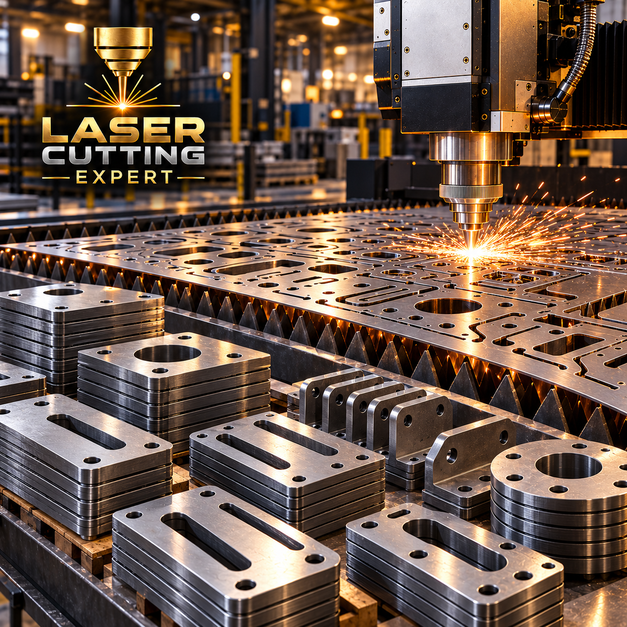
Production demand does not always match the machines, staff or available hours inside your own workshop. A new contract can arrive unexpectedly, an existing machine can already be fully booked, or a project may require laser capability that you do not keep in-house. Laser Cutting Expert provides subcontract laser cutting from our London production facility for fabricators, engineering companies, manufacturers, contractors and product businesses throughout the UK. Our industrial laser cutting service covers prototypes, individual components, short batches, repeat schedules and larger production requirements. We operate 24/7, including weekends and bank holidays, with no minimum quantity and urgent same-day production available for suitable London jobs.
CALL OR EMAIL US FOR PRICES
“Order any time of the day or night and receive your order on the same day in London. You are welcome to visit our laser cutting shop for an instant laser cutting service. On-site collection or free delivery can be arranged. Email us at laser@makergroup.uk for a quick quote or call us on 02036339857 for an instant price”.
Same Day Laser Cutting & Delivery
We can arrange a same day courier delivery with customer live tracking. Or customers can collect from our Laser Cutting Expert shop.

OPEN 24 HOUR
We are open 7 days a week, and you can order at any time. There is no last ordering time and no deadline. We also offer an overnight laser cutting service.

100% Satisfaction
High Quality Laser Cutting & 100% Customer Satisfaction Guarantee. Top-Rated Laser Cutting Company on Google.

Free File Check
We offer a free file check and proof before sending your artwork for laser cutting.
Extra Cutting Capacity Without Buying Another Machine
Subcontracting gives a manufacturer access to additional production capacity without adding another laser system to its own factory. Our subcontract laser cutting service can support businesses during busy periods, contract peaks, machine downtime or projects requiring a different cutting capability. You can send approved production files, material specifications and quantities, and we manufacture the required profiles as an extension of your existing workflow. Parts can return to your factory for bending, welding, machining, coating or assembly. This arrangement can be used occasionally for overflow work or developed into a regular supply relationship where the same component families are ordered repeatedly according to changing production demand.
Laser Cutting Manufacturing Support
Good laser cutting manufacturing is not simply about making profiles quickly. The cut components normally belong to a much larger manufacturing sequence. A flat bracket may move into bending, a machine panel into an enclosure assembly, or a plate into machining and welding. We therefore want to understand what happens after the laser stage. Bend lines, machining allowances, tabs, slots and presentation faces can all influence how a part should be produced. Our team can work from approved CAD and production drawings or help prepare suitable cutting files where required. This makes the service practical for companies that need usable manufacturing components rather than isolated decorative laser-cut shapes.
Industrial Laser Cutting for Real Production Work
Our industrial laser cutting service covers suitable metal components used in machinery, fabrication, equipment, construction, interiors, displays and product manufacturing. Common requirements include mounting plates, machine panels, brackets, guards, enclosure blanks, base plates, covers, shims, washers, screens, structural profiles and fabrication blanks. Material can include suitable mild steel, stainless steel, aluminium, galvanised steel and other compatible metals according to the project. Each material behaves differently, so grade and thickness should be identified when they influence the finished component. Customers can provide their own suitable stock or discuss material sourcing as part of the manufacturing requirement.
Small Batch Laser Cutting
Not every manufacturer needs thousands of identical parts. Small batch laser cutting is useful for specialist products, maintenance parts, new machinery, low-volume equipment and businesses whose demand changes from month to month. A batch might contain five brackets, twenty equipment plates or several different components needed for one assembly. Different compatible part numbers can sometimes be nested together to use material more efficiently. This gives smaller manufacturers access to production-quality cutting without forcing them to purchase excessive quantities. Once a component has been approved, the same controlled digital drawing can be used for later batches, helping maintain consistency when additional parts are needed several weeks or months afterwards.
Prototype Before Releasing Production
A new component should not automatically move from CAD into hundreds of pieces. One physical prototype can reveal a hole in the wrong position, insufficient bend clearance or a tab that does not fit its mating slot. We can combine small batch laser cutting with one-off development work so manufacturers can verify geometry before committing to production. The prototype can move through the actual bending, welding and assembly process to expose practical issues that may not be obvious on screen. Once the drawing is corrected and approved, it becomes the basis for subsequent laser cutting manufacturing. This approach is particularly useful for new enclosures, machinery, furniture, frames and fabricated products.
Bulk Laser Cutting
When quantities increase, sheet utilisation and production planning become increasingly important. Our bulk laser cutting service can support suitable repeated components and mixed-part production for businesses requiring larger quantities. Efficient nesting helps use material sensibly, while organised files reduce unnecessary setup between component families. Products can include brackets, washers, mounting plates, enclosure parts, machine panels, equipment covers, furniture components, signs and fabrication blanks. Bulk production should still be based on approved drawings rather than assuming a prototype design is automatically ready for scale. Material specification, revision number and required quantity should be controlled carefully so an outdated drawing is not reproduced across a large manufacturing batch.
Large Scale Production Laser Cutting
Large scale production laser cutting requires more than increasing the number entered into a machine program. Material supply, nesting, component identification, production sequencing and downstream operations all need consideration. We can support suitable manufacturing programmes where parts are required in larger batches or scheduled releases. Instead of delivering an unnecessarily large quantity at once, customers may choose practical production batches aligned with their own assembly requirements. This can help manage storage and work-in-progress. Repeat components should use clearly controlled drawings and revision information. Where a design changes, the new revision needs to be confirmed before additional manufacturing begins so obsolete geometry is not carried into future production.
Rapid Production Laser Cutting
A delayed component can hold up welding, assembly, installation or an entire customer order. Rapid production laser cutting is intended for suitable manufacturing work where turnaround genuinely matters. Our London facility operates 24/7, allowing urgent drawings to be reviewed and scheduled outside conventional working hours where capacity and material allow. Suitable replacement brackets, machine panels, base plates, enclosure parts and fabrication blanks may be produced on the same day. Speed still depends on having correct production information. A clearly identified material, thickness, quantity and approved CAD file can move much faster than a job where dimensions or specifications remain uncertain. Urgent production should never mean guessing critical engineering information.
Laser Cutting Industrial Components
Our work in laser cutting industrial components covers parts that become elements of larger equipment and fabricated assemblies. Examples include machine guards, mounting brackets, access panels, base plates, equipment faces, covers, support plates, flanges, spacers, washers, shims and enclosure blanks. Some components leave the laser as finished profiles, while others continue into bending, welding, machining or coating. Functional holes and slots should be dimensioned according to their real purpose. A clearance hole and a precision bearing feature do not need the same manufacturing route. Where close-tolerance machining is required, the laser can sometimes produce a near-net blank that is subsequently finished by drilling, reaming or CNC machining.
Brackets and Mounting Plates
Brackets are used almost everywhere in manufacturing, but their geometry can vary considerably between products. Our subcontract laser cutting service can produce flat bracket blanks with holes, slots, reliefs and locating features already included. These may become equipment brackets, shelf supports, machinery mounts, sign brackets, furniture components or structural connection pieces. Parts intended for press-brake forming need appropriate bend allowances and enough clearance between holes and folds. Structural or safety-critical brackets must be designed according to their actual load and installation conditions. We manufacture the approved geometry and material specification; determining the safe working load remains the responsibility of the engineer or product manufacturer.
Machine Guards and Safety Panels
Machine builders often require custom guards, covers and access panels around moving equipment. Industrial laser cutting can produce these from suitable sheet with fixing holes, ventilation openings and access features included. Guards can be flat panels or blanks intended for later folding and assembly. Perforated or patterned openings must be designed around the required safety distance from the hazard, not simply visual appearance. A laser-cut guard is not automatically compliant because it fits the machine. The machinery manufacturer remains responsible for risk assessment, material thickness, fixing systems and relevant safety requirements. Our manufacturing role is to produce the specified components consistently according to the approved production drawings.
Enclosures and Equipment Panels
Electrical, electronic and industrial equipment often needs custom metal housings. Through laser cutting manufacturing, we can supply enclosure blanks, control-panel faces, covers, back plates and internal mounting panels ready for downstream fabrication. Cut-outs for switches, displays, connectors, fans and cable entries can be incorporated directly from CAD. If the blank will later be folded, bend position and allowance need to be included in the flat development. Our service can support one prototype enclosure as well as repeat production. Electrical safety, IP rating, EMC performance and other enclosure requirements depend on the completed product and must be validated by the manufacturer rather than inferred from the accuracy of the laser-cut sheet.
Shims, Washers and Spacers
Manufacturers sometimes need flat components in dimensions that are unavailable as standard hardware. Small batch laser cutting can be useful for custom shims, washers, spacers and adjustment plates required during machine building or maintenance. Different sizes can often share the same production sheet where material and thickness are compatible. Very thin material requires suitable handling, while close-tolerance bores may need secondary finishing. Customers should identify which dimensions are critical rather than applying unnecessarily tight tolerances to every feature. These parts can be supplied as one-off maintenance pieces, development sets or repeat quantities. Material choice should follow the mechanical, temperature and corrosion requirements of the actual assembly.
Base Plates and Equipment Supports
Base plates connect machines, frames, posts and other equipment to supporting structures. Our industrial laser cutting service can produce suitable rectangular, circular or custom-shaped plates with bolt holes, slots and equipment interfaces included. Products can range from small machine feet to substantial mounting profiles according to available capability and material specification. Load-bearing base plates require proper engineering around plate thickness, fastener size, edge distance and supporting structure. The laser does not determine these values. For components that need machining after cutting, additional stock can be left around selected surfaces. This allows the profile to be produced efficiently while final precision is established during a later machining operation.
Fabrication Kits Ready for the Workshop
A fabricated product may contain dozens of different laser-cut components rather than one repeated part. We can produce manufacturing kits containing brackets, plates, tabs, gussets, panels and other profiles needed for a complete assembly. This form of subcontract laser cutting can save fabricators from sorting several independent cutting orders before welding begins. Components can be organised by drawing or assembly where appropriate. Suitable locating tabs and slots can also reduce measurement during fabrication. A well-designed kit is particularly useful for frames, machinery, furniture, retail displays and specialist structures. Accurate revision control is essential because one incorrect component can affect the fit of the entire assembly.
Tabs and Slots for Faster Fabrication
Cutting time is only one part of manufacturing cost. A poorly designed component can take far longer to position and weld than it took to laser cut. For suitable laser cutting industrial components, tabs, slots and locating features can be built into the design to help parts align during assembly. This approach can be useful for enclosures, frames, boxes, furniture and machine structures. Fit should allow for material thickness, kerf, bending and the intended welding process rather than being designed with zero practical clearance. Prototype assembly is recommended before these features are repeated across large scale production laser cutting, especially where several components need to interlock accurately.
Parts Ready for Bending
Many subcontracted laser parts move directly to a press brake. Flat developments should therefore be prepared around the actual material thickness, bend radius and intended tooling. Holes positioned too close to bends can distort, while an incorrect bend allowance changes the finished dimensions. Our subcontract laser cutting can support bend-ready brackets, enclosures, trays, panels and covers when the supplied drawing contains suitable manufacturing information. Our related High-Volume & Contract Laser Cutting service can support customers whose approved components move into regular larger production requirements. Where bending forms part of another supplier’s operation, we can manufacture according to their agreed flat pattern or production drawing.
Parts Ready for Welding
Fabricators may need profiles that can move directly from delivery onto the welding bench. Laser cutting manufacturing can reduce manual preparation by incorporating suitable mitres, locating slots, holes and joint features into the components. Products may include frame plates, gussets, brackets, machine parts and structural fabrication blanks. Welding procedure remains material-dependent. Stainless steel, aluminium, galvanised steel and high-strength steels all require different consideration. Structural welding must follow the applicable drawings, procedures and quality requirements. We can help ensure the profile geometry is practical for manufacturing, but weld design, qualification and final structural performance remain the responsibility of the fabricator and engineer responsible for the completed assembly.
Near-Net Blanks for CNC Machining
Not every laser-cut component needs to leave our workshop at its final tolerance. For thick or valuable material, industrial laser cutting can create a near-net blank that removes unnecessary stock before precision machining. The machinist can then establish accurate bores, bearing surfaces, threads and critical edges using the appropriate CNC equipment. This combined route can reduce machining time compared with beginning from a large rectangular plate. Extra stock should deliberately remain around features that require final machining. Customers should coordinate these allowances with their machine shop before releasing the laser drawing. This approach is useful for engineering prototypes, replacement components and suitable low-to-medium-volume manufactured parts.
Mild Steel Production Parts
Mild steel remains common in general manufacturing because it works well for brackets, frames, guards, machinery and welded fabrications. Our bulk laser cutting can produce suitable mild-steel parts for manufacturers requiring repeated profiles or mixed component sets. Products include base plates, mounting brackets, machine panels, gussets, covers, furniture components and sign structures. Material grade and thickness should match the engineering requirement. Parts can later be bent, welded, painted, powder coated or galvanised as appropriate. Outdoor mild-steel components require a suitable corrosion-protection system. Structural and load-bearing products should always be manufactured from drawings that specify the correct steel grade rather than relying on a generic description of “mild steel”.
Stainless Steel Production Components
Stainless steel can suit food equipment, architectural work, machinery, hospitality products and industrial components where corrosion resistance or clean appearance is required. Our subcontract laser cutting can supply stainless brackets, panels, enclosure parts, machine components, signs, covers and decorative profiles. Grade and surface finish should be specified according to the intended environment. Visible brushed sheet may require grain orientation to remain consistent between components. Food, pharmaceutical or medical applications require additional product-level controls beyond cutting. A stainless component does not become hygienic or certified simply because the material resists corrosion. The manufacturer remains responsible for the complete fabrication, finishing and validation required by the final application.
Aluminium Manufacturing Components
Aluminium is widely used where manufacturers want to reduce component weight or need suitable corrosion behaviour. Laser cutting manufacturing can produce aluminium equipment panels, brackets, enclosures, display components, machine covers and furniture parts. Alloy and temper should be identified because aluminium grades can behave differently during forming and service. Visible surfaces also need careful handling where the finished product will remain unpainted or anodised. Components heading into bending should be designed around the selected alloy and thickness. Structural or safety-related aluminium products require engineering validation. For suitable repeat work, several part numbers can be nested together to improve material utilisation while maintaining clear identification between component families.
Galvanised Steel Components
Galvanised sheet is useful for ventilation components, equipment panels, brackets, trays and suitable outdoor or building-service products. Our industrial laser cutting service can profile the steel efficiently, but cutting exposes the underlying material along the edge and locally affects the zinc coating. Components that will later be welded need additional fume-control and preparation because heating zinc can produce hazardous fumes. Manufacturers should consider whether pre-galvanised material or post-fabrication galvanising provides the better protection for the finished product. For repeat production, the same galvanised specification should be maintained where corrosion performance matters rather than substituting material solely according to what is immediately available.
Production for Furniture and Interiors
Industrial cutting is not limited to machinery. Furniture manufacturers and interior fabricators can use small batch laser cutting or repeat production for table plates, brackets, shelving components, decorative screens, furniture inserts, metal legs, fixing plates and frame components. Parts can combine with timber, glass, acrylic, leather and tubular metal within the finished product. Accurate hole positioning helps different materials meet during assembly. Visible metal may also require a specified grain direction or finishing allowance. Once a furniture component has been prototyped and approved, repeat batches can be manufactured from the controlled file as customer demand changes rather than requiring a large quantity to be stored in advance.
Signage and Display Manufacturing
Sign makers, exhibition companies and retail display manufacturers often need metal components in addition to printed graphics. Subcontract laser cutting can supply sign faces, backing plates, brackets, letters, logos, base plates, display panels and support components. These parts can work alongside acrylic signs, laser-cut letters, decorative panels and tubular display frames. Short runs are useful for individual shop installations, while bulk laser cutting can support businesses manufacturing the same display system for multiple locations. Large freestanding signs and public installations require structural consideration around wind loading, stability and fixings. Those requirements should be determined before the manufacturing drawings are approved for production.
Industrial Robot Laser Cutting
Industrial robot laser cutting can be relevant where components or assemblies require a cutting path that is difficult to reach using conventional flat-sheet equipment. Robotic systems can provide multi-axis movement around suitable three-dimensional parts, formed components or complex geometries. Applications may include trimming, openings and profiles on components that already have shape. However, robot-based processing is not automatically the best method for every industrial part. Accuracy, material, access, fixture design and production quantity all influence the choice of equipment. Projects requiring robotic processing should be reviewed from a 3D model so the cutting path and workpiece positioning can be assessed before production begins.
Quality Starts with Drawing Control
Repeat manufacturing is only useful if everyone is producing from the correct information. For laser cutting manufacturers, drawing revision control is therefore as important as machine capability. A small design change to a hole position or slot width can make older stock incompatible with the latest assembly. Customers should clearly identify drawing numbers and revisions when placing repeat orders. Where files are replaced, obsolete versions should no longer be used for production. Material grade, thickness and quantity should accompany the drawing. This simple discipline is particularly important for large scale production laser cutting, where one unnoticed file error could otherwise be reproduced across a significant number of components.
Consistency Across Repeat Orders
Businesses using subcontract laser cutting often return for the same component several times throughout the year. Once the design is approved, maintaining the same controlled file and material specification helps keep later batches consistent. Natural manufacturing tolerances still apply, and raw material batches can vary, but repeatable digital geometry removes the variation caused by manually redrawing parts. This is useful for replacement machine components, furniture products, equipment panels and standard brackets. If the customer changes material thickness, alloy or downstream fabrication, the drawing may need to be reviewed rather than assuming the previous cutting file remains correct. Repeat production works best when changes are communicated before manufacturing starts.
Material Nesting and Yield
Material usage becomes increasingly important during bulk laser cutting. Efficient nesting places compatible parts across the sheet while maintaining the spacing required for reliable processing. A manufacturing order containing several part numbers can sometimes use material more efficiently than cutting each component independently. Part orientation may also matter for brushed finishes, bending requirements or rolling direction. Nesting should therefore consider manufacturing requirements rather than only maximising the number of pieces per sheet. Offcuts that remain useful can sometimes be retained for later work depending on the customer’s material arrangements. For high-value materials, a thoughtful layout can have a meaningful effect on the overall cost of production.
Production Scheduling for Regular Components
Manufacturers do not always want an entire year’s quantity delivered at once. Scheduled laser cutting manufacturing can divide repeat requirements into practical batches according to assembly demand. This can reduce the amount of finished stock occupying customer storage while maintaining access to established component files. A business may order weekly, monthly or project-based quantities depending on its workflow. Production schedules still need sensible notice for material sourcing and capacity planning, particularly for unusual grades or large quantities. Urgent top-up batches can be considered where production allows. Clear forecasts make subcontract relationships more efficient because material and machine time can be planned around genuine manufacturing demand.
When Laser Cutting Is Not the Final Process
Many laser cutting industrial components require additional work before they become finished products. Bending creates three-dimensional geometry, machining establishes precision surfaces, welding joins assemblies and coating provides appearance or corrosion protection. Recognising these later stages at the drawing stage can prevent expensive rework. A hole intended for reaming may be produced undersize, while a machined edge may deliberately retain extra stock. Components heading into powder coating may need hanging points or suitable surface preparation. Our job is to understand enough about the manufacturing sequence to produce useful laser-cut parts rather than treating every CAD profile as though it leaves the laser completely finished.
Choosing a Subcontract Laser Cutting Partner
Companies comparing laser cutting manufacturers should look beyond the ability to cut one sample. A useful subcontract supplier needs to understand changing quantities, repeat drawings, material specifications, urgent replacements and the relationship between cutting and downstream fabrication. Laser Cutting Expert supports one-off work as well as small batch laser cutting, bulk laser cutting and suitable large scale production laser cutting. We can work from customer-approved files or assist with production artwork where needed. Because we operate 24/7, urgent manufacturing requirements can also be handled outside ordinary working hours when material and capacity permit. The aim is to fit into the customer’s production workflow rather than complicate it.
24/7 Industrial Production in London
Manufacturing problems do not always occur Monday to Friday between standard office hours. A missing bracket on Saturday or an incorrect panel discovered late at night can delay an assembly or installation. Our London operation runs 24/7, including weekends and bank holidays. Suitable rapid production laser cutting can therefore be considered when the drawing, material and quantity are ready. Same-day London service and courier delivery are available for appropriate urgent jobs. There is no minimum order, which means emergency manufacturing can involve one replacement component rather than a full batch. Larger production requirements can be scheduled according to material availability, machine capacity and the customer’s required delivery dates.
Subcontract Laser Cutting Across the UK
Our London workshop supports manufacturers and fabricators throughout the UK. Businesses can send CAD files and production information electronically, allowing us to assess subcontract laser cutting without requiring the customer to be physically close to the workshop. Suitable completed components can then be delivered nationwide, including next-day options where production and package dimensions allow. We work with engineering companies, machine builders, sign manufacturers, furniture makers, construction businesses, product companies and specialist fabricators. Whether the requirement is small batch laser cutting, repeat industrial parts or bulk laser cutting, we can build the production around the actual quantity and manufacturing stage required by the customer.
FAQs About Subcontract & Industrial Laser Cutting
1. What is subcontract laser cutting?
Subcontract laser cutting means outsourcing laser profiling to another production company rather than carrying out the cutting entirely within your own factory or workshop.
2. Can you handle small production quantities?
Yes. Small batch laser cutting is available with no minimum order, making it suitable for prototypes, specialist products and low-volume manufacturing.
3. Do you provide bulk production?
Yes. Suitable bulk laser cutting and large scale production laser cutting projects can be scheduled according to material, component complexity and required quantities.
4. What industrial components can you produce?
We can manufacture suitable brackets, machine panels, guards, base plates, enclosure blanks, covers, shims, washers, furniture components and other fabrication profiles.
5. Can you manufacture parts ready for bending or welding?
Yes. Production files can include suitable bend developments, tabs, slots, mitres and other fabrication features where the downstream process is known.
6. Can I supply my own material?
Yes. Customer-supplied material can be considered when its type, grade, thickness and suitability are known.
7. Do you provide rapid manufacturing?
Suitable rapid production laser cutting can be considered for urgent work. Same-day production and courier delivery are available in London where material, drawings and capacity allow.
8. Can you work from our existing CAD files?
Yes. We can manufacture from suitable approved CAD and production drawings or help prepare files where additional design work is required.
9. Do you offer repeat manufacturing?
Yes. Approved files can support repeat laser cutting manufacturing for scheduled batches, replacement parts and ongoing production requirements.