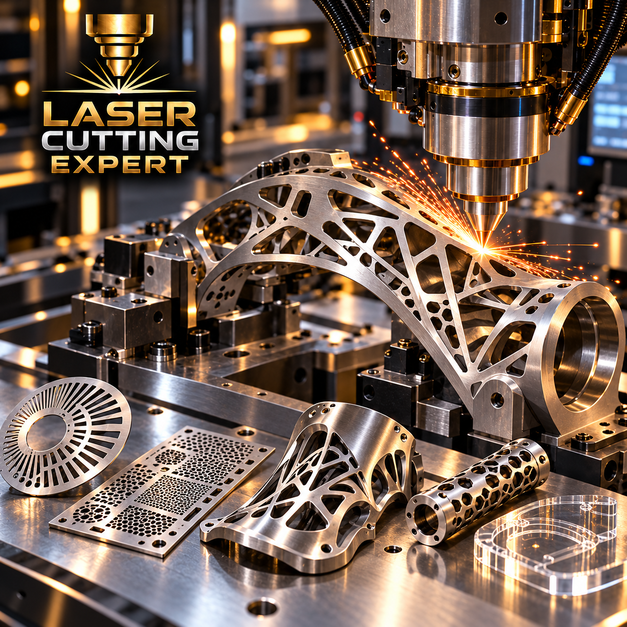
Some laser cutting jobs arrive as a clean flat sheet and a finished CAD file. Specialist work is usually different. The component may already be bent, welded, coated or formed. It might be ERW tube, require an angled edge, use an unusual material or need a cutting process chosen around what happens next in fabrication. Laser Cutting Expert handles advanced and specialist laser-cutting enquiries from our London workshop for manufacturers, engineers, fabricators, designers and product developers throughout the UK. Our work can include cut bended laser cutting, c02 laser cutting, erw laser cutting and suitable bevel laser cutting, alongside one-off prototypes and repeat manufacturing with no minimum quantity.
CALL OR EMAIL US FOR PRICES
“Order any time of the day or night and receive your order on the same day in London. You are welcome to visit our laser cutting shop for an instant laser cutting service. On-site collection or free delivery can be arranged. Email us at laser@makergroup.uk for a quick quote or call us on 02036339857 for an instant price”.
Same Day Laser Cutting & Delivery
We can arrange a same day courier delivery with customer live tracking. Or customers can collect from our Laser Cutting Expert shop.

OPEN 24 HOUR
We are open 7 days a week, and you can order at any time. There is no last ordering time and no deadline. We also offer an overnight laser cutting service.

100% Satisfaction
High Quality Laser Cutting & 100% Customer Satisfaction Guarantee. Top-Rated Laser Cutting Company on Google.

Free File Check
We offer a free file check and proof before sending your artwork for laser cutting.
Specialist Work Starts with the Component
We do not begin an unusual project by assuming a particular laser process is automatically correct. We first look at what the component is, what material it uses, its thickness, current physical shape and what needs to happen after cutting. A formed steel part requires a different approach from flat acrylic. ERW tube is different from sheet metal, and a bevelled fabrication edge has different requirements from a decorative profile. This assessment-led approach is important because specialist work can quickly become inefficient if the wrong manufacturing route is selected. Sometimes laser cutting is ideal; on other projects, machining, waterjet, sawing or another process may be more appropriate.
When Standard Flat Cutting Is Not Enough
Conventional flat-sheet cutting works well when all geometry can be reached from one plane. Specialist components may contain curved surfaces, bends, tube sections, angled edges or existing fabricated features that make this impossible. The job then becomes partly about access and positioning rather than only the shape of the cut. Depending on geometry, a specialist fixture, rotary system or multi-axis process may be required. Our related 3D & Multi-Axis Laser Cutting service can support suitable work where the laser path needs to follow a component beyond a simple flat X-Y plane. We assess this before production rather than attempting to force complex geometry through an unsuitable setup.
Cut Bended Laser Cutting
The phrase cut bended laser cutting can describe work where a component needs laser processing after it has already been bent or formed. This may be necessary when an opening needs to align with the final three-dimensional assembly rather than the original flat blank. Suitable applications can include bent brackets, folded panels, equipment housings, trays and prototype fabrications. Processing after bending is more complicated because the component needs to be positioned consistently and the laser must have access to the required surface. Where all features can be created accurately while flat, cutting before bending is often simpler. We decide the sequence according to the real geometry.
Why Cut After Bending?
There are situations where cutting first is not practical. A bend may slightly change the position or shape of a nearby feature, or a hole may need to reference another part only after the component has been formed. Cut bended laser cutting can then provide a way to create suitable openings or final trimming after the physical geometry exists. This can be useful during product development where engineers are still establishing final positions. However, forming variation must be considered. If each bent component differs significantly, a fixed laser path may not align consistently. Repeat specialist work therefore depends on controlling both the upstream forming process and the later cutting setup.
Bent Brackets and Formed Components
Custom brackets can begin as flat sheet, receive one or more bends and then require additional processing. Specialist laser work can be considered for mounting holes, slots, trimming or other suitable features on the formed component. Products may include machinery brackets, equipment mounts, sign supports, furniture components and fabricated connections. For repeat work, bend radius, material thickness and forming method should remain controlled because these factors determine where the final surfaces sit. Load-bearing brackets require appropriate engineering regardless of the cutting method. Laser Cutting Expert manufactures according to the approved geometry; the responsible engineer determines material strength, fastening method and safe working conditions.
Folded Enclosures and Housings
Enclosures normally have most openings cut before bending, but prototypes, modifications and specialist housings may require features after forming. Cut bended laser cutting can be assessed for suitable equipment boxes, covers, electrical housings and machine enclosures where the laser can reach the required area safely. The physical enclosure may need a dedicated fixture to maintain its position. If the same component is manufactured repeatedly, consistent bending becomes essential. Electrical safety, IP rating, ventilation, EMC and equipment compliance remain properties of the finished enclosure system. Producing an accurate opening does not establish whether the completed housing meets those requirements.
CO₂ Laser Cutting Technology
C02 laser cutting uses a gas laser source and has long been used for cutting and engraving a broad range of suitable materials. It is particularly associated with non-metal materials such as acrylic, wood, plywood, MDF, paper, card, leather and selected compatible plastics, although machine configuration determines actual capability. CO₂ and fibre lasers should not be treated as interchangeable names for the same process. Their wavelengths interact differently with materials. For a specialist project, we consider material and desired result before selecting the laser technology. The correct process is the one that works safely and effectively with the specified material rather than whichever machine sounds more advanced.
CO₂ Cutting for Acrylic
Acrylic is one of the materials commonly associated with c02 laser cutting. Suitable clear, coloured and mirrored acrylic can be shaped into signs, displays, awards, table numbers, menu holders, keyrings, jewellery and decorative panels. Acrylic grade and thickness influence the result, and cast and extruded materials can behave differently. Small features need enough surrounding material to remain strong. Protective films and surface treatments should also be identified before processing. PVC-based transparent or plastic-looking sheets must not be confused with acrylic. Unknown plastic should always be identified because chlorine-containing materials must not be laser cut due to the hazardous and corrosive gases they can release.
CO₂ Cutting for Wood and Plywood
Wood-based materials are another common application for c02 laser cutting. Products can include signs, architectural models, boxes, puzzles, ornaments, wall art, furniture details and craft shapes. Natural wood varies in grain, resin and moisture, while plywood introduces veneers, glue layers and possible internal voids. These factors affect cutting consistency and edge appearance. Some darkening along the edge is normal with many wood products. Specialist or treated boards need identification because fire-retardant chemicals, coatings or unusual adhesives may alter suitability. For interlocking plywood components, actual sheet thickness and kerf should be considered rather than relying only on the nominal thickness printed by the supplier.
CO₂ Cutting for Paper and Card
Paper and card allow detailed profiles for invitations, greeting cards, packaging prototypes, bookmarks, stencils and decorative stationery. C02 laser cutting can produce patterns that would be difficult to achieve using simple straight trimming. Material composition still matters. Coated, laminated, metallic or synthetic papers should be identified before production. Thin light-coloured stocks may show heat marking around fine cut areas. Intricate designs also need enough connecting material to remain intact when removed from the sheet. Printed products introduce another challenge because the cutting path must align with the existing artwork. Registration requirements should therefore be discussed before a complete batch of printed sheets is processed.
CO₂ Cutting for Leather
Suitable genuine leather can be cut into wallet components, labels, patches, keyrings, straps, luggage tags and decorative pieces using an appropriate laser process. C02 laser cutting can also create detailed shapes that would require physical dies under other production methods. Natural hide variation means grain, thickness and surface appearance can change across the usable area. Synthetic leather needs much more caution. PVC and chlorine-containing faux leather must not be laser cut. If a synthetic material cannot be identified reliably, supplier information or an SDS may be required. Cut edges can darken, so customers should consider whether this appearance suits the finished leather product.
CO₂ Cutting for Suitable Plastics
Some laser-compatible plastics can be processed through c02 laser cutting, but “plastic” is not a sufficient material description. Acrylic, certain polyester films and selected other polymers may be suitable, while PVC and chlorine-containing vinyl are prohibited. Polycarbonate, ABS, PETG and other materials behave differently and should not automatically be grouped together. Unknown sheets need manufacturer information before processing. Products can include templates, stencils, dividers, model components, panels and prototype parts. Safety takes priority over accepting a job quickly. If the polymer cannot be identified or produces unsuitable fumes or cutting behaviour, another manufacturing process should be used rather than increasing laser power and hoping for an acceptable result.
ERW Laser Cutting
Erw laser cutting relates to processing electric resistance welded tube or pipe. ERW products contain a longitudinal welded seam created during tube manufacture, which distinguishes them from seamless tube. Round, square and rectangular ERW sections can be used in furniture, frames, machinery, construction, displays, gates and fabricated structures. Laser processing can create suitable holes, slots, notches and end profiles depending on the section and equipment. The tube specification, outside dimensions, wall thickness and seam position may all matter. Structural applications should use material that meets the required engineering specification rather than selecting an ERW section based only on its external dimensions.
The ERW Weld Seam Matters
The welded seam is an important feature when planning erw laser cutting. Depending on tube manufacturing method and final component design, the seam can have different physical characteristics from the rest of the section. Its position may also matter when holes, slots, bends or highly loaded joints are nearby. Customers should identify any orientation requirements when they are important to the finished assembly. For general fabrication, the seam may have little practical effect on certain features, but structural or specialist components need proper engineering consideration. We do not assume that every face of every ERW section can be treated identically without understanding the intended application.
Round ERW Tube
Round ERW tube can be used for frames, rails, furniture, equipment and general fabricated products. Erw laser cutting can be considered for suitable holes, saddle cuts, slots and shaped tube ends. A shaped end can help one tube meet another more closely before welding, reducing manual grinding. Tube diameter, wall thickness and material grade should be known before production. Structural handrails, frames and load-bearing products require appropriate design and welding. If a tube is intended for a pressure-containing system, laser cutting alone does not establish pressure suitability. The completed assembly must be manufactured, tested and certified according to the relevant requirements of its actual service.
Square ERW Tube
Square ERW tube is common in machine frames, furniture, retail displays, gates and fabricated structures. Specialist laser processing can create openings and connection features on suitable faces of the tube. Corner radii need consideration because the physical section is not perfectly square at each edge. A feature placed too close to a corner can cross changing surface geometry. The weld seam may also occupy a specific face or corner depending on how the tube was manufactured. For repeat erw laser cutting, section dimensions and orientation should remain consistent. Components can then move into welding, coating and assembly according to the fabricator’s production sequence.
Rectangular ERW Sections
Rectangular hollow sections provide different proportions for equipment frames, tables, supports and architectural fabrications. Erw laser cutting can produce suitable mounting holes, slots, mitres and end profiles according to the digital model. Wider faces can provide space for connection features, while narrow faces may have more restrictive geometry. Wall thickness influences practical hole size and cutting conditions. If several tubes connect into one assembly, tabs, slots or reference features may help fabrication. These should be designed around real welding requirements rather than creating an excessively tight theoretical fit. Structural rectangular-section assemblies remain subject to engineering assessment and appropriate fabrication procedures.
ERW Tube for Furniture
Furniture manufacturers use ERW tube for table bases, shelving frames, benches, chairs and display products. Laser-cut connection features can reduce the amount of manual drilling and end preparation required during fabrication. Erw laser cutting can also work alongside flat laser-cut plates, brackets and decorative inserts within the same furniture assembly. Visible welds, surface finish and coating need consideration if the product is intended for retail or hospitality environments. Furniture that carries people or significant loads requires suitable engineering. A precise tube joint does not prove that the completed chair, bench or table is structurally safe. Final product testing and validation remain the manufacturer’s responsibility.
ERW Tube for Machine Frames
Machine frames often combine square or rectangular tube with laser-cut sheet components. Erw laser cutting can prepare suitable tube holes, slots and end connections while flat cutting produces base plates, brackets, guards and equipment panels. This can simplify assembly where the digital design coordinates all mating features. Machine structures may carry motors, actuators and moving loads, so material specification and weld design need proper engineering. Guarding and safety systems must also be assessed independently. The laser-cut geometry helps components fit together; it does not establish machine stability, fatigue life or compliance. Manufacturers should approve the complete frame design before repeat production begins.
ERW Tube for Signs and Displays
Sign structures, exhibition and retail displays can use ERW tube for frames and supports. Specialist cutting can add fixing holes, slots and connection profiles before the sections move into welding or mechanical assembly. Flat sign faces, logos and brackets can then be manufactured separately and attached to the frame. Erw laser cutting is particularly useful where several similar frames need repeatable connection positions. Large external sign structures require engineering for wind loading and foundations, while temporary display systems need adequate stability for public use. The sign or display contractor remains responsible for ensuring the complete installed structure is appropriate for its environment.
Bevel Laser Cutting
Bevel laser cutting creates an edge at an angle rather than producing only a cut perpendicular to the material surface. This can be useful for certain weld preparations, joint geometries and specialist fabrication components. The required bevel angle, material, thickness and final joint design should be specified before production. Not every laser system can produce every bevel geometry, so projects need assessment against available capability. Edge quality can also change as the cutting angle becomes more demanding. Where the bevel forms part of a structural weld, the welding engineer or fabricator should define the preparation rather than selecting an angle simply because it can be represented in CAD.
Bevel Cutting for Weld Preparation
One of the practical uses of bevel laser cutting is preparing suitable edges for welding. Depending on the joint, an angled edge can provide space for weld penetration and filler material. V, Y and other preparation concepts may be used in fabrication, but the exact geometry depends on material thickness, welding process and structural requirement. Laser Cutting Expert can assess suitable bevel requirements from approved drawings. The cutting process does not determine the welding procedure. Structural or pressure-related joints may require qualified procedures, inspection and documented preparation. Customers should therefore supply the bevel dimensions specified by the responsible welding engineer rather than asking us to choose a critical joint design.
Bevelled Plates and Brackets
Heavy plates, brackets and structural profiles can sometimes require edge preparation before welding into a larger fabrication. Bevel laser cutting may combine profile cutting and suitable angled-edge preparation within the manufacturing route, reducing some later manual grinding where the process is appropriate. Components can include gussets, connection plates, equipment supports and specialist brackets. The practicality of a bevel depends on plate thickness, edge length and required angle. Precision-machined edges may still need a secondary process. Structural components should always follow approved drawings and material specifications. We manufacture the specified profile and preparation; the engineer and fabricator remain responsible for the final joint and load performance.
Bevel Geometry on Complex Profiles
A bevel does not always run along one simple straight edge. Specialist components may require angled preparation around curved or irregular profiles. Bevel laser cutting for these shapes requires coordinated geometry and suitable machine capability. The cutting head must maintain an appropriate relationship with the edge as the profile changes direction. Sharp corners and small internal features can limit what is practical. Where the geometry becomes three-dimensional, multi-axis processing may be needed. Customers should provide a detailed CAD model or drawing showing the intended bevel location and angle. Complex edge preparation should not be inferred from a general note if the finished joint depends on precise geometry.
Fabrication Sequence Matters
Advanced cutting often sits in the middle of a manufacturing sequence rather than at the beginning. A part might be flat-cut, bent, processed again, welded and then machined. Another component might start as ERW tube, receive holes and notches, then join laser-cut plates during welding. Specialist production becomes easier when this sequence is understood before the first operation. Cut bended laser cutting, erw laser cutting and bevel laser cutting each solve different problems within fabrication. Trying to perform operations in the wrong order can increase setup time or make a feature inaccessible. We therefore consider the complete manufacturing route rather than treating every cut as an isolated task.
When Cutting Before Bending Is Better
Although cut bended laser cutting has useful applications, cutting the component while it is still flat is often more efficient. Flat sheet is easier to locate, nest and process, and multiple features can be completed within one setup. Brackets, enclosures and trays can normally have their holes and slots cut before they reach the press brake. The challenge is preparing the flat development correctly so features land in the required position after forming. Where this can be achieved reliably, there is little reason to add a more complicated post-bending operation. Specialist processing should solve a genuine manufacturing problem rather than replace a simpler sequence that already works.
When Cutting After Bending Is Better
There are also cases where the final formed geometry is the best reference. A hole may need to line up with another assembly after forming, or a trimmed edge may depend on the physical shape created by a press tool. Cut bended laser cutting can then be assessed as a later operation. The main challenge is repeatable positioning. If bend angle or springback varies substantially between components, the cutting path may no longer align correctly. Fixtures and controlled upstream manufacturing can therefore become part of the solution. For development work, producing one formed sample first allows the cutting strategy to be tested before repeat quantities are released.
Specialist Work on Existing Components
Customers sometimes provide an already manufactured component that needs additional cutting. It might be a folded panel requiring another opening, a tube needing extra holes or a fabricated part requiring final trimming. We can assess suitable existing products, but the material and construction need to be known. Coatings, hidden layers and unknown assemblies can create safety or processing issues. Components should also be clean enough for safe handling and fixturing. If the part is unique or expensive, a spare or representative sample can be useful for testing. We avoid treating a customer-owned component as ordinary raw sheet when its history or material construction changes the processing risk.
Specialist Cutting of Coated Metal
Painted, powder-coated, plated and otherwise finished metals require additional consideration. The coating can react to laser heat differently from the base metal and may discolour or degrade around the cut. Some coatings may also produce unsuitable fumes. For specialist work, we need to know the coating type rather than assuming every finished metal can be safely processed. In many cases, cutting before coating gives a cleaner manufacturing route. Where an existing coated component genuinely needs modification, the affected area may require later touch-up or refinishing. Galvanised materials also need consideration because zinc fumes become important during later welding and thermal fabrication.
High-Strength and Wear-Resistant Steels
Specialist steel grades such as high-strength structural steels and wear-resistant plate require more information than the word “steel”. Domex-type structural grades and Hardox-type wear plates have mechanical properties selected for particular applications. Cutting conditions and later fabrication need to respect the exact grade and thickness. Products can include wear plates, equipment components, structural brackets and machinery parts. Bending and welding requirements may differ significantly from ordinary mild steel. Customers should provide the proper material designation and fabrication requirements. The laser profile is only one part of maintaining the intended performance of a high-strength or wear-resistant component throughout manufacturing.
Titanium and Specialist Alloys
Titanium and other higher-value alloys may be used for aerospace development, motorsport, marine, scientific and specialist engineering applications. Advanced cutting enquiries should identify the exact grade, thickness and end use. Titanium Grade 2 and Grade 5, for example, have different mechanical characteristics and should not be treated as interchangeable. Material conservation also matters because offcuts can have significant value. Aerospace, medical and safety-critical applications may require traceability, approved processes and quality systems beyond general laser cutting. Producing an accurate profile does not automatically qualify the component for regulated service. These requirements need to be established before production begins.
Specialist Copper and Brass Work
Copper and brass can require suitable laser technology because of their reflective and thermal behaviour. Specialist products may include electrical profiles, busbar-style components, decorative plaques, furniture details and architectural pieces. The required edge and surface finish depend heavily on the final use. Electrical copper components need design around current, heat and connection conditions. Brass components may instead prioritise visible appearance and later polishing. Pre-finished or antique surfaces should be identified before cutting. Where very tight contact surfaces or bores are needed, laser profiling can produce the general shape before machining establishes the final functional dimension.
Carbon Fibre and Composite Enquiries
Composite materials require careful identification before any laser process is selected. Carbon fibre can mean dry fabric, prepreg or fully cured resin-bound laminate, and these are not equivalent materials. Laser heat can damage resin, create poor edge conditions or produce hazardous fumes. For cured composite parts, machining, waterjet or another process may be more suitable. Customers should provide material construction and supplier information. Specialist cutting is not about forcing every unusual material through a laser; it is about choosing an appropriate method. Where laser processing is technically unsuitable, we would rather identify that before production than create a damaged component.
Ceramic and Brittle Materials
Ceramic enquiries need similar caution. “Ceramic” can refer to ordinary tiles, porcelain, alumina, zirconia or other technical materials. These respond differently to thermal processing and may crack under steep temperature gradients. Thick tiles may be better suited to waterjet or diamond tooling, while advanced ceramics can require specialist laser systems, grinding or machining. Material grade, thickness and application should be provided before we assess a project. Electrical, medical or high-temperature ceramic components also require product-level validation. Specialist manufacturing begins with correctly identifying the material rather than assuming all hard or brittle sheets can be processed using the same laser settings.
Glass and Quartz Enquiries
Glass and quartz are also broad material descriptions. Ordinary glass, toughened glass, laminated glass, fused quartz and resin-bound engineered quartz all require different manufacturing approaches. Toughened glass generally needs cutting and drilling before the toughening process. Engineered quartz worktops are often better processed using waterjet, bridge saws or diamond tooling. Fused quartz may require specialist laser or machining technology depending on geometry. We assess these projects individually rather than listing them as routine laser-cutting materials. Where another process offers safer handling, lower cracking risk or better edge quality, that method should be selected instead of using a laser simply for convenience.
Specialist Plastic Assessment
Unknown plastic is one of the materials we will not process without further information. PVC and chlorine-containing vinyl must never be laser cut because hazardous and corrosive gases can be released. Other polymers such as acrylic, PETG, polycarbonate, ABS and acetal behave differently and cannot be grouped under one generic setting. Acetal/POM can produce hazardous decomposition fumes, including formaldehyde, so it should not be presented as routine laser work and mechanical machining may be preferable. Specialist plastic enquiries should include the exact polymer and supplier specification. Safe material identification comes before speed, price or production convenience.
Specialist Rubber and Foam
Rubber and foam materials can contain very different chemical formulations despite looking similar. Some EVA foams and identified suitable materials may be processed for inserts, packaging and craft applications, while PVC-containing rubber-like materials must not be laser cut. Silicone rubber also needs formulation confirmation. Products with adhesives, reinforcement or flame-retardant additives require additional assessment. For case inserts, gaskets and protective components, mechanical performance such as compression and recovery can matter as much as the cut profile. Customers should provide supplier information for specialist materials so we can assess both processing safety and whether the resulting edge is suitable for the intended product.
Specialist Fabric and Technical Textiles
Technical textiles can include polyester, nylon, felt, coated fabrics, composites and industrial membranes. Laser processing may cut and sometimes seal suitable synthetic fibres, but coatings and backing materials need identification. PVC-coated architectural fabrics must not be laser cut. Carbon-fibre fabrics, prepregs and cured composites require separate assessment. Healthcare textiles also need distinction between cutting capability and medical compliance. A clean cut does not certify a fabric for clinical use. Specialist textile projects should include the material specification, construction and end application. This allows us to assess whether laser processing offers a useful production method or whether another cutting technology would be more appropriate.
Combining Flat and Specialist Cutting
Many projects do not need specialist processing on every component. A machine frame might use erw laser cutting for tubular members, standard flat cutting for guards and brackets, and bevel laser cutting only on selected welded plates. Separating these operations according to need can keep manufacturing practical. The same applies to enclosures where most holes are cut flat and only one feature is added after bending. Advanced manufacturing should use specialist methods selectively rather than turning every component into a complex setup. Customers can send the complete assembly information where useful, allowing us to understand how individual laser-cut parts relate to one another.
Specialist Prototype Development
Unusual manufacturing routes should normally be proven before full production. One prototype can establish whether a formed component sits correctly in a fixture, whether a bevel matches the welding requirement or whether an ERW tube connection fits its mating part. We have no minimum quantity, so specialist work can begin with a single development piece. The physical result can then be measured, assembled and reviewed before another batch is manufactured. This is particularly important when several processes interact. A component may be individually accurate but still fail to fit because bending, welding or forming introduced variation elsewhere in the assembly.
CAD for Specialist Laser Cutting
Standard flat profiles can often be produced from simple 2D CAD, but specialist components may require full 3D information. Cut bended laser cutting, complex erw laser cutting and multi-axis bevel laser cutting can all benefit from a model showing the actual component geometry. Customers should also provide material, thickness, bend information and any critical dimensions. Where the part interfaces with another assembly, relevant surrounding geometry can help explain the required fit. Clean CAD reduces interpretation and allows manufacturing problems to be identified before the machine is set up. We can provide design support where suitable, but engineering-critical dimensions should come from the responsible designer.
Fixturing Specialist Components
A flat sheet naturally provides a stable reference. A curved tube or formed component does not. Specialist laser cutting may therefore require a fixture to hold the workpiece in a repeatable position. Fixtures can be simple for a one-off part or more developed for repeat production. They must support the component without obstructing the cutting path. Forming and welding variation also need consideration because a fixture cannot correct unlimited differences between incoming parts. If a specialist job is expected to become regular production, thinking about fixture strategy during the prototype stage can make later batches more efficient and consistent.
Tolerances on Specialist Work
Complexity does not automatically mean every feature can or should be produced to extremely tight tolerance. The achievable result depends on material, geometry, thickness, fixture, process and the condition of the incoming component. Cut bended laser cutting may inherit variation from the bend. Erw laser cutting depends partly on tube consistency, while bevel laser cutting adds another geometric variable through edge angle. Customers should identify critical dimensions and explain their function. Features requiring machining-level accuracy may be better completed through a secondary operation. A realistic tolerance strategy produces better manufacturing decisions than applying one arbitrary tight value across an entire specialist component.
When Waterjet Is the Better Process
Laser cutting is not the correct solution for every advanced material. Waterjet can be preferable for certain thick, heat-sensitive, brittle or composite materials because it does not create the same thermal cutting zone. Engineered quartz, thick ceramic, some composite laminates and other specialist materials may fall into this category depending on the requirement. The trade-off includes different edge conditions, speeds and process limitations. Our specialist assessment considers whether the laser offers a genuine technical advantage. Recommending another manufacturing process when appropriate is better than accepting a laser job that is likely to create cracking, heat damage or an unsuitable finished edge.
When CNC Machining Is Better
Machining is often preferable where a component requires precision bores, threads, deep pockets, sealing faces or tightly controlled three-dimensional surfaces. Laser cutting can still create the initial blank and remove excess material before machining. This combined route is useful for specialist brackets, flanges and equipment components. Rather than forcing bevel laser cutting or another laser operation to produce a machining-level surface, we can leave suitable stock for the later CNC process. Choosing the right process for each feature generally gives a better component. Advanced manufacturing is often a combination of methods rather than one machine performing every operation from raw material to finished part.
When Sawing or Mechanical Cutting Is Better
Tube, bar and certain thick sections do not always need a laser. A simple straight cut on ERW tube may be quicker and more economical using an appropriate saw, especially when there are no holes, slots or shaped ends. Erw laser cutting becomes more useful when the component needs additional geometry around the section. Similarly, some plastics and composites may be safer to machine or mechanically cut rather than expose to laser heat. We assess the value the laser adds to the part. If another method can produce the required component more safely and efficiently, there is no technical reason to make the manufacturing route unnecessarily complicated.
Customer-Supplied Specialist Components
Customers can supply their own suitable components, tubes and materials for assessment. We need accurate material information before processing, particularly for coated metals, plastics, composites and synthetic products. Existing parts should also be checked for hidden layers, adhesives or finishes that could react to heat. Where the item is valuable or irreplaceable, a comparable test piece is useful if available. Specialist processing always carries more variables than cutting ordinary known sheet stock. We therefore confirm as much information as possible before the job reaches the machine rather than discovering unknown construction after laser energy has already been applied to the component.
No Minimum Order for Specialist Work
Specialist does not have to mean high quantity. One unusual bracket, one modified enclosure, one tube prototype or one bevelled test plate can be ordered without a minimum production run. This is useful for engineers, product developers, fabricators, students and repair projects. Setup requirements still depend on complexity, so a one-off formed component may require CAD preparation or fixturing even though only one piece is being produced. Once the process has been proven, the same production information can support repeat work. Starting with a small quantity is often the sensible approach when the geometry or manufacturing sequence has not previously been tested.
Repeat Specialist Production
When a specialist component becomes a regular part, consistency in upstream manufacturing becomes essential. A repeat cut bended laser cutting job relies on the bend being produced consistently. Repeat erw laser cutting works best when tube dimensions, seam orientation and material specification remain controlled. Bevel laser cutting requires the approved edge geometry to stay unchanged unless a new revision is issued. Customers should therefore manage drawing numbers and material specifications carefully. If an upstream process changes, the laser setup may need reviewing. Repeatability comes from controlling the complete manufacturing chain, not simply loading the same digital file into the laser again.
Same Day Specialist Laser Cutting London
Our London production operates 24/7, including weekends and bank holidays. Suitable specialist projects can be considered for same-day work when material, CAD and processing requirements are clear. Straightforward c02 laser cutting or an established repeat component may move quickly, while a new formed part requiring fixturing and multi-axis programming will naturally need more preparation. Same-day courier delivery is available across London for suitable completed jobs. There is no minimum quantity. We assess urgent work according to its real complexity rather than treating every specialist process as though it can be set up instantly. Customers with deadlines should provide complete technical information as early as possible.
Advanced & Specialist Laser Cutting Across the UK
Laser Cutting Expert supports specialist projects throughout the UK from our London workshop. Customers can send CAD models, drawings, photographs, material specifications and quantities electronically for assessment. Projects can include cut bended laser cutting, c02 laser cutting, erw laser cutting, bevel laser cutting, formed components, specialist materials and mixed fabrication requirements. Suitable completed work can be delivered nationwide, including next-day options where production and package requirements allow. We work with manufacturers, engineers, fabricators, designers and individual customers, from one prototype through to repeat production. Where laser processing is not technically suitable, we will identify that rather than treating every unusual material or component as a routine laser job.
FAQs About Advanced & Specialist Laser Cutting
1. What do you mean by advanced and specialist laser cutting?
It covers laser-cutting jobs that need more assessment than ordinary flat-sheet profiling, including formed components, ERW tube, bevelled edges, unusual materials and specialist manufacturing sequences.
2. Can you laser cut a component after it has been bent?
Suitable cut bended laser cutting projects can be assessed where the laser has access to the required area and the formed component can be positioned consistently.
3. What is CO₂ laser cutting?
C02 laser cutting uses a gas laser source and is commonly used with suitable materials such as acrylic, wood, plywood, paper, card, leather and selected compatible plastics.
4. What is ERW laser cutting?
Erw laser cutting involves suitable processing of electric resistance welded tube or pipe, including holes, slots, notches and shaped ends.
5. What is bevel laser cutting?
Bevel laser cutting creates an angled edge rather than only a perpendicular cut. It can be useful for selected weld preparations and specialist joint geometry.
6. Can you process customer-supplied components?
Yes, suitable customer-supplied components can be considered once their material, construction, coatings and processing requirements are known.
7. Can you laser cut unknown plastic?
No. Unknown plastic should be identified first. PVC and chlorine-containing materials must not be laser cut.
8. Is laser cutting suitable for every specialist material?
No. Waterjet, machining, sawing, diamond cutting or another process may be better for some materials and geometries.
9. Can I order one specialist prototype?
Yes. There is no minimum order, so one development component or test piece can be produced where the project is suitable.
10. Do you provide specialist laser cutting outside London?
Yes. Production is based in London, and we support customers throughout the UK with nationwide delivery for suitable completed work.