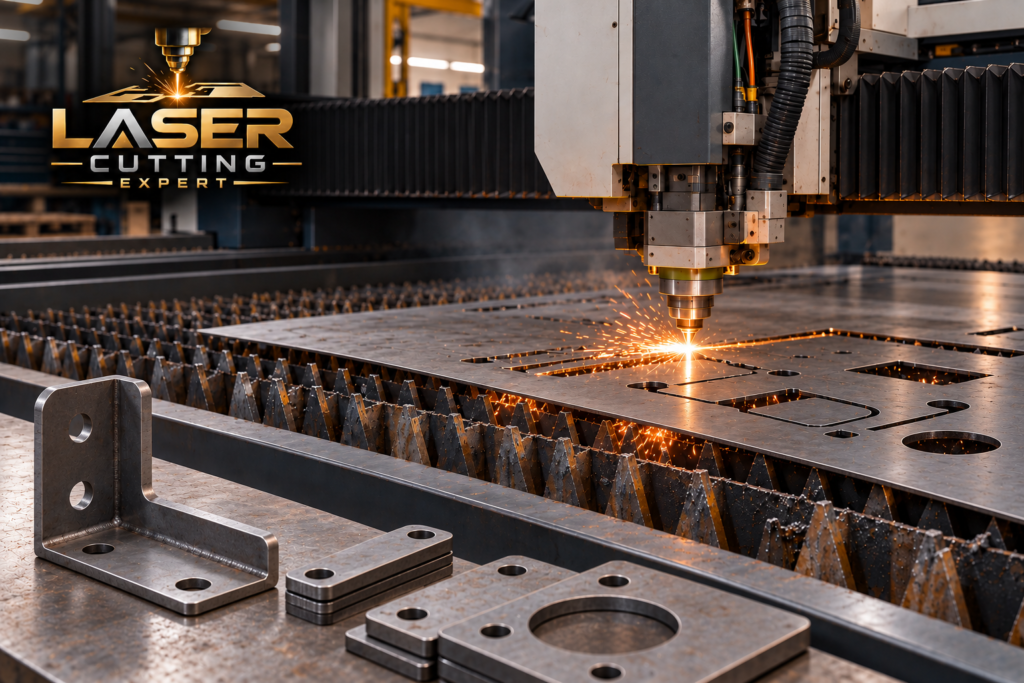
Mild steel is one of those materials that turns up almost everywhere once you start looking for it. Brackets, machine panels, base plates, frames, signs, furniture components and fabricated assemblies can all begin as a flat steel profile. Laser Cutting Expert provides mild steel laser cutting from our London workshop for businesses, engineers, fabricators, designers and individuals across the UK. We handle single prototypes, replacement parts, short production runs and repeat orders with no minimum quantity. Customers can send finished CAD files or use our design support where drawings still need preparation. Suitable urgent jobs can be produced and delivered across London on the same day, with next-day UK delivery available for appropriate completed work.
CALL OR EMAIL US FOR PRICES
“Order any time of the day or night and receive your order on the same day in London. You are welcome to visit our laser cutting shop for an instant laser cutting service. On-site collection or free delivery can be arranged. Email us at laser@makergroup.uk for a quick quote or call us on 02036339857 for an instant price”.
Same Day Laser Cutting & Delivery
We can arrange a same day courier delivery with customer live tracking. Or customers can collect from our Laser Cutting Expert shop.

OPEN 24 HOUR
We are open 7 days a week, and you can order at any time. There is no last ordering time and no deadline. We also offer an overnight laser cutting service.

100% Satisfaction
High Quality Laser Cutting & 100% Customer Satisfaction Guarantee. Top-Rated Laser Cutting Company on Google.

Free File Check
We offer a free file check and proof before sending your artwork for laser cutting.
From Flat Steel Sheet to a Usable Component
Most mild steel jobs do not end when the laser stops cutting. The profile often becomes the starting point for bending, welding, drilling, coating or assembly. Our mild steel laser cutting service therefore looks at the part as part of a wider fabrication process. A flat plate might later become an enclosure, bracket, frame connection or machine component. Holes, slots and outside profiles can be incorporated into the CAD file before cutting, reducing manual marking and secondary profiling. If the component will later be folded, bend positions and clearances should be considered from the beginning so the laser-cut blank works properly when it reaches the next manufacturing stage.
Brackets, Plates and Everyday Fabrication Parts
Brackets and mounting plates are common mild steel products because they can be designed quickly and manufactured without dedicated tooling. We produce L-bracket blanks, mounting plates, fixing plates, tabs, supports, joining pieces and custom profiles through mild steel laser cutting. Bolt holes, slots and locating features can be incorporated directly into each part. Components can remain flat or move into bending and welding afterwards. For one-off repair work, an existing drawing or measured component may provide the starting geometry. For new engineering projects, the designer should specify thickness, hole positions and load requirements so the steel profile is manufactured according to the actual assembly rather than simply copied from a sketch.
Base Plates for Frames and Equipment
Steel base plates connect structures, machines, posts and fabricated frames to supporting surfaces. They may appear simple, but hole positions and outside dimensions often need to align accurately with anchors or mating components. Our mild steel laser cutting service can produce square, rectangular, circular and custom-shaped base plates from suitable sheet. Bolt patterns, central openings and locating slots can be included within the same cutting operation. Where plates form part of structural steelwork, their thickness, material grade and fixing arrangement must be specified by the responsible structural engineer. We manufacture to the approved drawing rather than determining structural capacity from the cutting process itself.
Machine Guards and Equipment Panels
Machinery frequently needs access panels, guards, covers and internal plates manufactured to equipment-specific dimensions. Laser cutting allows ventilation openings, fixing holes, inspection windows and cable passages to be incorporated directly into the profile. Mild steel laser cutting is useful for both replacement panels and newly designed equipment because changes can be made digitally without creating dedicated cutting dies. Flat components can later be folded, welded or powder coated. Where a panel forms part of a machine safety guard, the responsible machinery designer must determine thickness, opening sizes, distances and safety requirements. Accurate cutting supports the design but does not replace the safety assessment of the complete machine.
Enclosures and Folded Steel Boxes
Electrical cabinets, equipment housings, control boxes and fabricated covers often start as laser-cut sheet before moving to a press brake. A good enclosure blank needs more than the correct outside shape. Cut-outs for switches, displays, ventilation, connectors and fixings must remain correctly positioned after bending. Our mild steel laser cutting service can produce these flat developments from supplied CAD files, while our Laser Cutting & Bending capability can support suitable projects that need both profiling and forming. Bend reliefs, corner details and allowances should be planned before production. Prototype enclosures are particularly useful for confirming component fit before a complete manufacturing batch is released.
Mild Steel Signs and Cut Metal Lettering
Mild steel can also be used for signs, logos, letters, numbers and decorative branding where the finished metal will normally be painted, powder coated or otherwise protected. Mild steel laser cutting makes it possible to reproduce custom vector artwork rather than relying on standard lettering. Business signs, property numbers, wall logos and directional pieces can include fixing holes or mounting features as part of the profile. Outdoor mild steel needs an appropriate protective finish because untreated material will rust when exposed to moisture. The customer or fabricator should therefore plan finishing alongside the design, particularly where edges, mounting points and welded sections need consistent protection after fabrication.
Gates, Railings and Decorative Steelwork
Decorative metalwork often combines conventional fabricated frames with laser-cut details. Mild steel panels can include geometric patterns, house numbers, names, silhouettes or custom artwork for gates, railings and entrance features. Larger open patterns need enough remaining material to maintain practical rigidity during handling and installation. Through mild steel laser cutting, matching decorative components can also be repeated across several panels without manually laying out every pattern. Outdoor steel should receive a suitable protective finish after cutting and fabrication. Where a gate, railing or barrier performs a safety function, dimensions, frame construction, fixing methods and structural requirements should be determined by the responsible fabricator or engineer.
Garden Screens and Outdoor Panels
Custom garden screens are another practical use for laser-cut mild steel. Panels can contain botanical patterns, geometric designs, abstract artwork, property names or bespoke decorative features. The design needs to balance open space with enough steel between cut-outs to keep the panel manageable. A very dense pattern may look good on screen but create narrow sections that distort or become difficult to handle. Our mild steel laser cutting service can produce individual screens or matching sets before they move into finishing and installation. Powder coating or another suitable outdoor protective system is normally required because mild steel will corrode if it remains exposed without protection.
Furniture Frames and Interior Steel Components
Tables, shelving, desks, benches and display furniture often combine mild steel with timber, glass or other materials. Laser-cut plates and profiles can provide mounting points, decorative sides, brackets and connection pieces within these assemblies. Mild steel laser cutting is useful when furniture requires repeated geometry or when a designer wants custom components rather than standard hardware. Slots can locate timber panels, while holes can accommodate bolts and adjustable fittings. Prototype parts allow furniture makers to check alignment before producing complete sets. Structural furniture components should still be designed around the expected load, material thickness and fixing arrangement, particularly for seating, shelving and other products that need reliable long-term strength.
Workshop Jigs and Fabrication Templates
Fabricators sometimes need steel parts that help manufacture other products rather than becoming part of the finished item. Welding templates, positioning plates, drilling guides, alignment pieces and workshop jigs can all be produced from mild steel. Our mild steel laser cutting service allows holes and reference geometry to follow a CAD drawing consistently. For repeated fabrication jobs, a durable steel template can save time compared with measuring every component individually. The required thickness depends on how the jig will be used and whether it needs to resist clamping or repeated handling. Where very tight positional accuracy is required, the complete jig design and any secondary machining should be considered together.
Replacement Parts and One-Off Steel Profiles
A broken bracket or unavailable machine component does not always justify ordering hundreds of replacements. Because we have no minimum quantity, mild steel laser cutting can be practical for one-off profiles where suitable drawings or measurements are available. Examples include mounting plates, covers, tabs, supports, brackets and simple machine components. If the original part is bent or badly worn, copying its current dimensions may reproduce the damage rather than the intended geometry. Wherever possible, use an original drawing or reliable reference dimensions. Once a replacement profile has been checked and approved, the digital file can also be retained as the basis for future repeat production.
Prototype Parts Before Production
Physical prototypes reveal things that CAD models sometimes hide. A mounting hole may need moving, a slot may require more clearance or a bracket may interfere with another component once assembled. Our mild steel laser cutting service allows engineers and product developers to order one or a few trial parts before committing to a larger quantity. There is no need to manufacture dedicated cutting tooling simply to test a new profile. Once the prototype has been fitted and checked, revisions can be made to the digital drawing. The approved geometry can then be nested efficiently for repeat production, reducing the risk of manufacturing a complete batch with an avoidable design problem.
Steel Blanks Ready for Bending
Many fabricated products begin as flat blanks that only take their final shape after press-brake forming. Brackets, channels, trays, covers and enclosure parts can all follow this route. With mild steel laser cutting, bend reliefs, slots, holes and other features can be positioned before the part reaches the forming stage. Designers need to account for bend allowance, material thickness and the relationship between holes and fold lines. Features positioned too close to a bend may distort during forming. Planning the flat development correctly is therefore just as important as cutting accuracy. For suitable jobs, profiling and bending can be coordinated as part of the same production workflow.
Parts Ready for Welding and Assembly
Laser-cut profiles can be designed specifically to make welding and assembly easier. Tabs, slots and locating features can help several pieces position themselves before welding, reducing repeated manual measurement. This is useful for frames, brackets, boxes, stands and small fabricated structures. Mild steel laser cutting can produce related components from the same CAD assembly so connection points correspond with one another. Weld preparation still depends on thickness, joint type and fabrication requirements, and some edges may require additional preparation before welding. For critical welded structures, material specification, joint design and welding procedure should be controlled by the responsible fabricator or engineer.
Laser Cutting Mild Steel with Nitrogen
Laser cutting mild steel with nitrogen can be useful when the required edge needs to remain relatively free from the oxide layer associated with oxygen-assisted cutting. Nitrogen acts as an inert assist gas and helps eject molten metal without intentionally supporting an oxidation reaction. This can be helpful for components that will move directly into certain welding, coating or finishing operations. It is not automatically the best choice for every mild steel job, however. Material thickness, cutting speed, gas consumption, edge requirement and overall cost all influence the decision. We select the cutting approach around the finished component rather than using one assist gas for every order.
Nitrogen or Oxygen – Why the Choice Matters
Mild steel can be processed using different assist-gas strategies. Oxygen can support the cutting reaction and is widely used for suitable steel thicknesses, while nitrogen can produce a different edge condition. For laser cutting mild steel with nitrogen, greater laser energy and gas flow may be required because the gas is not contributing the same exothermic reaction as oxygen. The appropriate choice depends on thickness and what happens to the component after cutting. A fabrication blank heading into further processing may have different priorities from a decorative panel. Customers can tell us the required final condition, and we can assess the most sensible production route for the job.
Sheet Nesting for Batch Production
When an order contains many parts, the way they are arranged across the steel sheet affects material use. Components can often be rotated and positioned together to reduce unnecessary scrap while maintaining suitable spacing for production. Our mild steel laser cutting service can handle mixed-part layouts containing brackets, plates, tabs and other related components. A fabrication project may therefore have several different profiles cut from the same sheet rather than ordering each item separately. For repeat work, an approved nesting plan can also support consistent future batches. Part identification should be considered when many similar profiles are included, particularly where small dimensional differences are difficult to recognise visually after cutting.
Thickness Changes More Than Weight
Increasing steel thickness affects cutting conditions, component weight, bendability and the practicality of small features. A hole or narrow slot that works comfortably in thin sheet may need reconsideration in much heavier plate. Mild steel laser cutting should therefore be designed around the actual specified material rather than creating one drawing and applying it to every thickness. Heavier components can also require different handling and fabrication equipment after cutting. For structural or load-bearing parts, thickness should be selected by the responsible engineer. Where the material is chosen primarily for fabrication rather than structural performance, we can discuss practical cutting considerations once the intended grade and thickness are known.
Tolerances, Holes and Slots
Not every dimension on a steel component needs the same tolerance. A decorative outside profile may have different requirements from a locating hole used in a mechanical assembly. Communicating critical dimensions helps us understand what matters most in the finished part. During mild steel laser cutting, kerf, thickness and feature size all influence the practical result. Very small holes relative to plate thickness may need another manufacturing method if a particular tolerance or surface finish is required. Parts that will later be machined can also be laser cut with suitable allowance. Designing around the complete manufacturing route is generally more effective than expecting one cutting operation to provide every finished feature.
Mild Steel Technical and Fabrication Considerations
Mild steel is straightforward to fabricate compared with many specialist alloys, but reliable production still depends on grade, thickness, flatness, surface condition and geometry. Heat input and assist gas affect the cut edge, while narrow features need to suit the material thickness. Laser cutting mild steel with nitrogen may be selected where reduced edge oxidation benefits later processing. Parts intended for bending need correctly prepared flat developments, and welded assemblies may benefit from locating tabs or slots. For structural components, laser accuracy does not determine load capacity. Material grade, connection design, welds, fixings and complete structural performance must remain under the control of the responsible engineer or fabricator.
Same Day Mild Steel Cutting in London
A missing bracket, exhibition component or fabrication blank can sometimes stop an entire job. Our London workshop operates 24/7, including weekends and bank holidays, so suitable mild steel laser cutting orders can be considered for same-day production when material and artwork are ready. We accept customer-supplied suitable steel or can source material for appropriate projects. Urgent work can be one replacement component, a prototype or a small fabrication set because there is no minimum order. Same-day courier delivery is available across London for suitable completed jobs. We also provide next-day delivery options throughout the UK where production timing and any additional fabrication stages allow.
Mild Steel Laser Cutting Near Me
If you are searching for mild steel laser cutting near me, Laser Cutting Expert handles production from our London workshop while serving customers throughout the UK. Send us your CAD drawing together with the steel thickness, grade where specified, quantity and any important tolerances. We work with engineering businesses, fabricators, sign makers, furniture manufacturers, designers, contractors, students and private customers. Design support is available if you have measurements or an idea but still need a production-ready file. Our mild steel laser cutting service has no minimum quantity, making it suitable for one-off repairs and prototypes as well as short runs and ongoing repeat production.
FAQs About Mild Steel Laser Cutting
1. What can you make from mild steel?
We can produce brackets, base plates, machine panels, enclosure blanks, signs, screens, furniture components, fabrication parts, templates and custom profiles.
2. Can you cut a single mild steel part?
Yes. Our mild steel laser cutting service has no minimum quantity, so one-off prototypes and replacement parts are welcome.
3. Why use nitrogen for mild steel?
Laser cutting mild steel with nitrogen can help produce an edge with less oxidation than oxygen-assisted cutting, which can be useful for certain downstream processes.
4. Can you cut parts ready for bending?
Yes. We can produce flat blanks containing the required profiles, holes, slots and bend reliefs before suitable parts move into press-brake forming.
5. Can you make mild steel signs and decorative panels?
Yes. We can produce letters, logos, plaques, screens and decorative profiles. Mild steel used outdoors normally requires a suitable protective finish.
6. Can I supply my own steel?
Yes. Customer-supplied suitable mild steel can be accepted. Please provide the material grade and thickness where known.
7. Do you offer same-day mild steel cutting?
Suitable production-ready jobs can be considered for same-day cutting and London delivery, depending on material availability, quantity and any additional fabrication required.