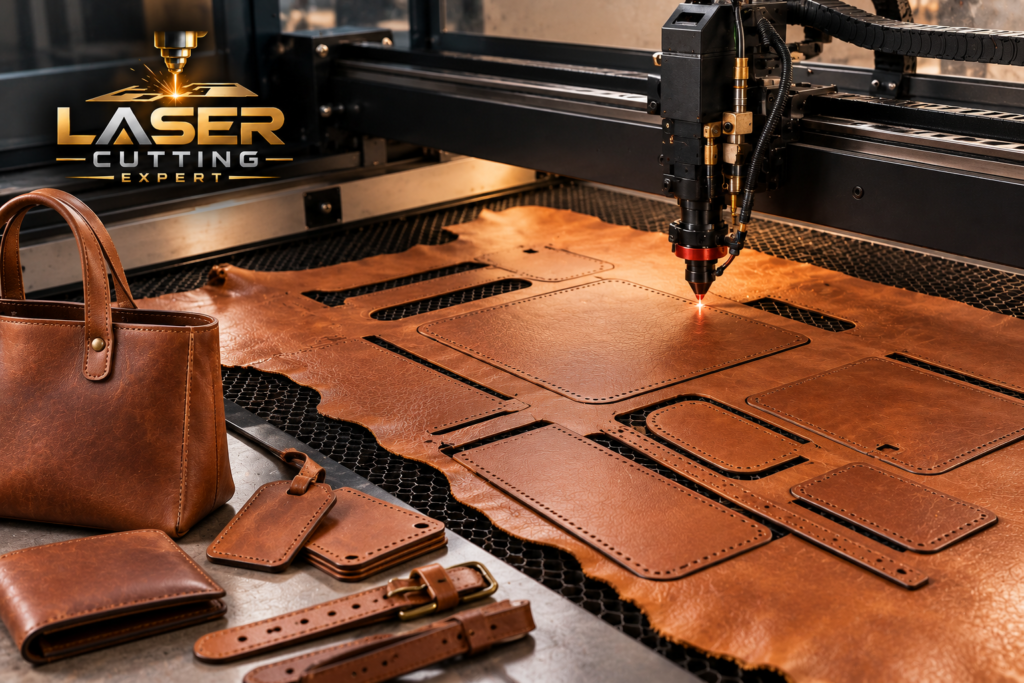
Leather rarely arrives as a perfectly uniform manufacturing sheet. Natural hides can change in thickness, grain, colour and surface quality from one area to another, so cutting starts with understanding the material rather than simply filling a rectangular sheet with parts. At Laser Cutting Expert, we laser cut leather for fashion, accessories, bags, wallets, labels, jewellery, gifts, interiors, craft products and prototypes. Our London workshop handles one-offs, personalised pieces and repeat production with no minimum quantity. We provide practical laser cutting solutions for leather supplied by customers or sourced for suitable projects, with design support available when patterns or artwork still need preparing for production.
CALL OR EMAIL US FOR PRICES
“Order any time of the day or night and receive your order on the same day in London. You are welcome to visit our laser cutting shop for an instant laser cutting service. On-site collection or free delivery can be arranged. Email us at laser@makergroup.uk for a quick quote or call us on 02036339857 for an instant price”.
Same Day Laser Cutting & Delivery
We can arrange a same day courier delivery with customer live tracking. Or customers can collect from our Laser Cutting Expert shop.
OPEN 24 HOUR
We are open 7 days a week, and you can order at any time. There is no last ordering time and no deadline. We also offer an overnight laser cutting service.
100% Satisfaction
High Quality Laser Cutting & 100% Customer Satisfaction Guarantee. Top-Rated Laser Cutting Company on Google.

Free File Check
We offer a free file check and proof before sending your artwork for laser cutting.
Every Hide Has Its Own Layout
Natural leather contains characteristics that do not exist in manufactured sheet materials. Grain can change across the hide, edges are irregular and scars or other natural markings may appear in particular areas. For visible products, these characteristics affect where individual pieces should be positioned. When we laser cut leather, nesting is therefore not always about squeezing the maximum number of components into a rectangle. Important pieces may need to avoid certain areas or maintain a consistent grain appearance. Customers supplying valuable hides can identify sections they want used or avoided. This is particularly helpful for premium bags, wallets and accessories where the visible surface forms an important part of the finished product.
Full-Grain and Top-Grain Leather
Full-grain and top-grain leathers are often selected for products where the natural surface remains visible. Wallets, card holders, belts, bags, notebook covers and premium accessories can all use these materials. Our laser cutting solutions for leather allow custom profiles to be created from digital patterns while preserving design consistency between related components. The hide should still be inspected before cutting because natural surface variation can affect the finished appearance. Laser processing can darken the cut edge, with the amount varying according to leather type, colour and thickness. If a particular edge appearance is important, sample testing can help establish what the finished component will look like before a complete hide is processed.
Leather Wallets and Card Holders
Wallet construction often involves several relatively small pieces that need to line up correctly during stitching and assembly. We laser cut leather into outer panels, card pockets, internal sections, tabs and other suitable components from supplied patterns. Stitching holes or positioning marks can also be incorporated where the product design calls for them. Digital patterns make it easier to modify pocket dimensions or create different wallet sizes without manufacturing physical cutting dies for every version. This is useful for designers developing a new range. A prototype set can be cut first, assembled and checked, then the pattern can be adjusted before additional wallet components are produced from the approved design.
Leather Bags and Bag Components
Tote bags, messenger bags, handbags, pouches and small cases can require many different leather pieces before assembly begins. Panels may include handle positions, strap slots, closures and stitching references that need to correspond across the complete pattern. Our laser cutting solutions for leather can support suitable bag-development work from digital CAD or vector patterns. Small components such as tabs, reinforcement pieces and tags can often be arranged around larger panels to make better use of the hide. Leather thickness and flexibility should be chosen around the construction method. The bag designer remains responsible for structural reinforcement, stitching specification, hardware and overall product performance after assembly.
Keyrings, Tags and Small Accessories
Small leather goods are particularly suited to digital production because many different designs can be produced without individual physical dies. We laser cut leather into keyrings, luggage tags, AirTag holder components, bookmarks, wristbands, bracelet pieces and decorative tags. Shapes can range from simple rectangles to custom outlines based on branding or artwork. Holes and slots for rings, rivets or straps can be incorporated directly into the cutting file. Small personalised batches are also practical because there is no minimum order. A business can produce several tag shapes or accessory styles from one suitable hide instead of committing to hundreds of identical pieces before knowing which design customers prefer.
Leather Jewellery and Fashion Details
Leather earrings, pendants, bracelet components and decorative fashion pieces can use fine profiles that would be time-consuming to cut individually by hand. Our laser cutting solutions for leather can create repeated shapes from approved digital artwork, allowing designers to experiment with collections containing different sizes and patterns. Very narrow sections should still have enough material to withstand handling and assembly. Depending on the leather, the laser-cut edge may become darker than the face, which can either complement the design or require consideration during finishing. Components can later be combined with metal findings, stitching, paint or other materials according to the designer’s intended finished product.
Belts, Straps and Long Leather Pieces
Long components introduce a different challenge from small accessories because usable hide length, thickness consistency and surface condition become important. Belt blanks, bag straps, fastening straps and similar pieces need to be positioned carefully across the available leather. When we laser cut leather, holes, slots and shaped ends can be incorporated into the digital pattern where appropriate. However, the leather maker should specify dimensions around buckles, hardware and the intended load. For belts and straps that will experience regular tension, material selection is especially important. Cutting creates the required profile but does not determine whether a particular hide has the strength or stretch characteristics needed for long-term use.
Leather Labels and Branding Patches
Leather labels can be used on garments, hats, bags, handmade goods and packaging to add a branded detail. We can laser cut leather into rectangular, rounded or fully custom label shapes, with suitable holes added for stitching or attachment. Depending on the material, laser engraving can also be considered for logos, names and other artwork. Natural leather, specialist leather and synthetic alternatives should be identified before processing because they do not all respond in the same way. Our related Laser Cutting & Engraving service can combine suitable profiling and surface marking where a project requires both. Small label batches and multiple shapes can be produced without dedicated cutting dies.
Notebook, Journal and Menu Covers
Leather is widely used for covers because it combines flexibility with a tactile finished surface. Suitable products include notebooks, journals, diaries, portfolios, menu covers and document holders. Our laser cutting solutions for leather can produce outer covers, closure straps, internal pieces and decorative overlays according to the design. Fold positions need to account for leather thickness so the finished cover closes naturally rather than becoming too tight around its contents. Holes for stitching, elastic or hardware can also be incorporated. For restaurant menus and frequently handled products, the leather grade and finish should be chosen around cleaning, wear and expected service conditions rather than appearance alone.
Desk and Office Leather Products
Desk mats, mouse mats, valet trays, cable organisers and business card holders can all begin with accurately cut leather profiles. These products often use relatively simple geometry, but corners, slots and folded sections still need to align properly. We laser cut leather for suitable office accessories in one-off personalised quantities as well as repeat batches. Larger desk products require careful material selection because natural hides may not provide perfectly uniform surfaces across very large areas. Smaller offcuts from the same hide can sometimes be used for matching accessories such as coasters, bookmarks or cable holders. This can help designers create coordinated product sets while making more efficient use of material.
Leather Coasters and Home Accessories
Leather can be used for coasters, trays, decorative shapes and other small home products. Circular, square, hexagonal and custom profiles can be manufactured from digital artwork using our laser cutting solutions for leather. Personalised products can also be combined with engraving where the selected material is suitable. For coaster sets, components can be arranged across the hide while avoiding obvious defects or unwanted colour changes. Leather should be chosen according to the intended use because exposure to liquids, heat and repeated cleaning can affect different finishes in different ways. Customers producing retail products should consider the complete finishing and care requirements of the item after cutting.
Leather Aprons and Garment Components
Aprons, jackets and other leather garments can contain larger panels as well as pockets, tabs, straps and reinforcement pieces. Digital patterns allow these components to be prepared consistently while still respecting the natural shape of the hide. When we laser cut leather, positioning needs to account for grain, stretch and visible surface quality, particularly on larger garment pieces. The garment maker should specify where flexibility or reinforcement is required because different areas of a hide may behave differently. Smaller components can often be nested around larger pattern pieces. Prototype garments are useful for checking fit and construction before an expensive hide is committed to a full production run.
Footwear and Sneaker Components
Footwear development can involve leather uppers, decorative overlays, tabs and prototype pattern pieces. Our laser cutting solutions for leather can support suitable shoe and sneaker projects where digital patterns are available. Matching left and right components should be clearly identified, and visible pieces may need consistent grain orientation or colour. Holes and decorative perforations can be incorporated where appropriate, although very dense patterns can weaken thin leather. Footwear performance depends on much more than accurate cutting, including material selection, reinforcement, stitching, adhesives, sole construction and fit. Those requirements remain with the footwear designer or manufacturer while we manufacture suitable leather profiles to the approved pattern.
Leather Components for Interiors
Leather is used beyond fashion in furniture, upholstery, automotive interiors and decorative installations. Suitable laser-cut components may include inserts, trim pieces, patches, decorative panels and prototype upholstery details. We laser cut leather according to supplied patterns while considering material thickness, grain and surface condition. Large upholstery pieces may not always be appropriate for laser production, especially where hide size or production scale favours another cutting technology. Smaller detailed components, however, can benefit from digital profiling. For automotive or aviation interiors, the responsible manufacturer must specify materials that meet any required fire, wear or safety standards; cutting alone does not provide those certifications.
Perforated and Decorative Leather Patterns
Decorative perforations can change both the appearance and flexibility of leather. Geometric holes, repeated motifs and custom patterns can be used for fashion pieces, bags, interior details and artwork. Our laser cutting solutions for leather can produce suitable repeated patterns directly from vector artwork. The spacing between openings needs careful consideration because removing too much material can weaken the remaining leather or cause narrow sections to distort. Pattern scale should therefore be designed around leather thickness and the intended product. For larger decorative panels, testing a smaller sample first allows the designer to check the visual effect, edge colour and flexibility before committing the complete piece.
Layered Leather Artwork and Personalised Gifts
Leather can be combined in layers to create names, silhouettes, maps, decorative artwork and personalised gift pieces. Separate profiles may use contrasting leather colours or be assembled over timber, acrylic or another backing material. We laser cut leather from supplied artwork for suitable wall pieces, bookmarks, keyrings, anniversary gifts and personalised accessories. Engraving can also be added to compatible materials for names, dates or short messages. Because there is no minimum order, each piece can be different. This is useful for personalised products where the basic design stays consistent but the name, date or shape changes from one customer order to the next.
Cutting Leather Before Stitching
Accurate cutting can make later assembly easier, particularly when several leather components need to line up. Stitching holes, reference marks and locating features can sometimes be incorporated into the digital pattern so pieces correspond during assembly. Our laser cutting solutions for leather are therefore useful for makers who want to move from manually traced templates to digital production. Hole spacing still needs to suit the intended thread, stitch style and leather thickness. Extremely small holes placed too close to the edge can weaken the component. Producing one complete prototype set before repeat production allows the maker to test stitching, folding and hardware placement with the actual leather.
Natural Leather Edge Behaviour
A laser-cut leather edge normally looks different from a knife-cut edge. Heat can darken the material, and the result varies according to leather type, colour, thickness and tanning process. On dark leather the change may be subtle, while pale leather can show it more clearly. When we laser cut leather, we consider whether the edge will remain visible or receive later finishing. Some designers deliberately use the darker edge as part of the product appearance. Others may burnish, paint or otherwise finish the edge afterwards. A small sample is useful where the customer needs a particular visual result from an unfamiliar or expensive leather.
Genuine Leather and Synthetic Leather Are Different
Material identification is particularly important when something is described simply as “leather”. Genuine leather, bonded leather and synthetic leather can contain completely different materials. Some imitation leathers contain PVC or other chlorine-bearing compounds that must not be laser cut because heating them can release hazardous and corrosive gases. We therefore do not automatically process unknown faux leather. Before offering laser cutting solutions for leather, we may request the supplier specification or safety information for synthetic products. Suitable PU-based materials can also vary in construction, so they still need assessment. If the material cannot be positively identified, another cutting method may be the safer production choice.
Making Better Use of an Irregular Hide
Efficient nesting for leather is different from nesting rectangular metal sheet. A natural hide has an irregular outline and may contain areas that should not appear on premium finished products. When we laser cut leather, large pattern pieces are normally positioned first, followed by smaller components that can use the remaining suitable spaces. Keyrings, tags, bookmarks, labels and small accessories can sometimes fit between bag or garment pieces. Grain direction and stretch may also affect orientation. This approach helps reduce unnecessary waste while respecting the material’s natural characteristics. For repeat manufacturing, the exact nesting arrangement may still change because no two natural hides are completely identical.
Leather Cutting Technical Considerations
Successful leather cutting depends on thickness, tanning method, moisture, surface finish and the construction of the material. Natural hide can vary across a single piece, while synthetic products may contain multiple polymer layers. When we laser cut leather, heat can darken the edge and produce smoke, so extraction and correct processing conditions are important. Fine holes and narrow sections need enough surrounding material to remain practical. Our laser cutting solutions for leather always begin with material identification, particularly for artificial leather. PVC and chlorine-containing materials are excluded from laser processing. Where the finished product has structural or regulated requirements, those must be validated separately by the responsible manufacturer.
Develop the Pattern Before Cutting a Full Hide
A complete hide can represent a significant material cost, so testing a new pattern first is often worthwhile. A wallet, bag, shoe or cover can be developed using a small sample or less expensive material before the final leather is committed. Once the pattern has been assembled physically, pocket size, fold position, stitching holes and hardware locations can be adjusted. Our laser cutting solutions for leather have no minimum quantity, making this prototype-first approach practical. After the design is approved, production can move to the selected leather. Digital files also make future modifications easier when a product is introduced in several sizes or slightly different versions.
Same Day Leather Laser Cutting London
Fashion deadlines, exhibitions, personalised gifts and prototype projects do not always arrive with weeks of notice. Our London workshop operates 24/7, including weekends and bank holidays, allowing suitable laser cut leather projects to be considered for same-day production. Artwork and material need to be ready, and customer-supplied leather must be suitable for laser processing. We accept one-off personalised pieces as well as small production batches because there is no minimum order. Same-day courier delivery can be arranged across London for appropriate completed work. Customers elsewhere in the UK can use next-day delivery options where production timing and any additional engraving or finishing requirements allow.
Leather Laser Cutting Across the UK
Laser Cutting Expert works with fashion designers, leather makers, craft businesses, artists, students, interior designers and product developers throughout the UK. Send us your digital pattern together with the leather type, approximate thickness, quantity and required finished dimensions. If you do not yet have production-ready artwork, we can help prepare a suitable file. Our laser cutting solutions for leather cover prototypes, personalised products, mixed small batches and repeat manufacturing. Customers can provide their own genuine leather or suitable identified synthetic material. Production takes place in London, with local same-day delivery available for appropriate urgent jobs and nationwide delivery available for completed orders.
FAQs About Leather Laser Cutting
1. What leather products can you laser cut?
We can produce suitable components for wallets, bags, keyrings, luggage tags, jewellery, labels, notebooks, menus, desk products, gifts, garments and interior projects.
2. Can you laser cut genuine leather?
Yes. We laser cut leather from suitable genuine hides, although thickness, tanning method and surface finish can affect the cutting result.
3. Can you cut synthetic leather?
Only when its composition is known and laser compatible. PVC and chlorine-containing artificial leather must not be laser cut.
4. Can you cut leather bag and wallet patterns?
Yes. Our laser cutting solutions for leather can produce pockets, panels, tabs, straps and other suitable components from digital patterns.
5. Can you add stitching holes?
Suitable stitching holes and locating features can be incorporated into the cutting file where their size and spacing work with the leather and product design.
6. Can I provide my own hide?
Yes. Customers can supply their own leather. For synthetic or specialist materials, we may require the supplier specification before processing.
7. Is there a minimum order?
No. You can order one prototype, one personalised piece, a small mixed batch or repeat production.