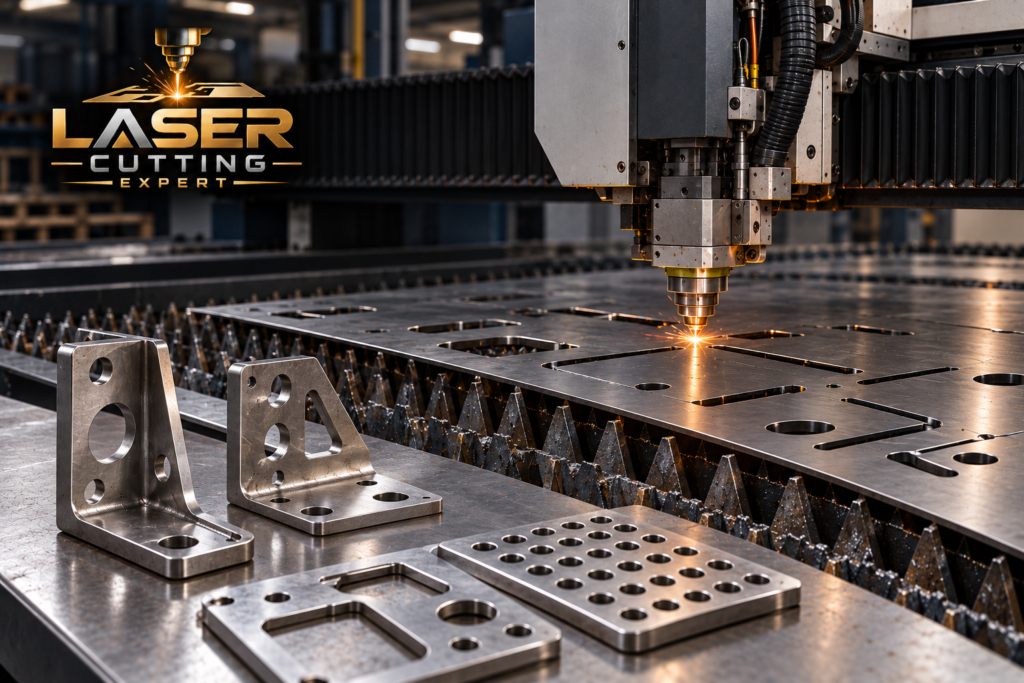
Titanium is usually chosen because a component needs more than simply being made from metal. Low weight, useful strength, corrosion resistance and performance in demanding environments are common reasons designers specify it. Those benefits also mean the material deserves careful manufacturing. Laser Cutting Expert provides titanium laser cutting services from our London workshop for prototypes, engineering profiles, equipment parts, brackets, panels and specialist components. We work with engineers, manufacturers, designers, universities and individual customers throughout the UK. Projects involving laser cutting titanium are reviewed around grade, thickness, geometry and final use before production begins. There is no minimum quantity, so development can start with a single component.
CALL OR EMAIL US FOR PRICES
“Order any time of the day or night and receive your order on the same day in London. You are welcome to visit our laser cutting shop for an instant laser cutting service. On-site collection or free delivery can be arranged. Email us at laser@makergroup.uk for a quick quote or call us on 02036339857 for an instant price”.
Same Day Laser Cutting & Delivery
We can arrange a same day courier delivery with customer live tracking. Or customers can collect from our Laser Cutting Expert shop.
OPEN 24 HOUR
We are open 7 days a week, and you can order at any time. There is no last ordering time and no deadline. We also offer an overnight laser cutting service.

100% Satisfaction
High Quality Laser Cutting & 100% Customer Satisfaction Guarantee. Top-Rated Laser Cutting Company on Google.

Free File Check
We offer a free file check and proof before sending your artwork for laser cutting.
Grade Comes Before Geometry
A drawing can tell us the shape of a component, but it does not tell us everything needed to manufacture it. Titanium exists in commercially pure grades and numerous alloys, each selected for particular mechanical, corrosion or temperature requirements. Before laser cutting titanium, we want to know the exact grade rather than relying on a generic material description. Grade 2, Grade 5 and other titanium materials should not automatically be treated as interchangeable. Customers supplying their own sheet should provide supplier or certification information where available. For engineered components, the responsible designer should specify the material grade according to the actual loads, environment and regulatory requirements of the completed assembly.
Strength Without Unnecessary Mass
One reason engineers investigate titanium is its useful strength-to-weight relationship. Reducing component mass can matter in aerospace, motorsport, robotics, specialist vehicles and portable equipment. Our titanium laser cutting services can produce suitable flat profiles where designers have already determined that titanium is the appropriate material. Weight reduction can also be built into the geometry through carefully designed openings and pockets in suitable sheet components. Removing material indiscriminately, however, can weaken a part or create stress concentrations. Structural optimisation belongs to the responsible engineer. We manufacture the approved geometry rather than deciding how much titanium can safely be removed from a load-bearing component.
Aerospace Development Components
Titanium is strongly associated with aerospace engineering, but an aerospace component requires far more than an accurate outside profile. Material traceability, approved manufacturing processes, inspection and documentation can all be required depending on the application. We can discuss laser cutting titanium for suitable development pieces, prototypes, tooling-related profiles and non-flight-critical components according to supplied specifications. Customers must identify any aerospace quality or certification requirements before ordering. A laser-cut component should never be assumed flight-approved simply because titanium has been used. Critical aerospace parts require the complete manufacturing and quality system specified by the responsible aerospace organisation, engineer or approved supplier.
Motorsport Parts and Prototypes
Motorsport development often involves repeated changes to brackets, shields, mounting plates and other lightweight components. Titanium laser cutting services can be useful for suitable flat profiles where teams need to move quickly from CAD to a physical prototype. A first component can be installed and checked before additional pieces are manufactured. Titanium may also be selected for parts exposed to demanding temperature or corrosion conditions, but the exact alloy should match the intended environment. Components associated with suspension, braking, steering or occupant safety require proper engineering and validation. Laser cutting provides the profile; it does not establish fatigue life, safe working load or suitability for competition use.
Motorcycle and Performance Vehicle Components
Custom vehicle builders may use titanium for brackets, heat-related components, trim pieces and lightweight fabrication. When laser cutting titanium, holes, slots and mounting details can be included directly from CAD so the flat part arrives ready for later fabrication where appropriate. The designer should consider how the component will be attached and whether bending, welding or machining will follow. Titanium fabrication procedures can differ significantly from ordinary steel work, particularly around welding and contamination control. Parts connected to safety-critical vehicle systems must be designed and tested by appropriately responsible specialists. Decorative or non-critical components still need sensible edge finishing and secure installation before the vehicle is used.
Heat Shields and Thermal Barriers
Titanium is sometimes considered for heat shields and thermal-management components because certain grades can perform well in demanding environments while keeping weight relatively low. Our titanium laser cutting services can manufacture suitable shield profiles with mounting holes, slots and custom outer shapes. However, the temperature of the actual application must be understood before selecting material and thickness. A component near an exhaust system, engine or industrial heat source experiences more than a simple room-temperature load. Expansion, mounting clearance and nearby materials should all be considered. The responsible engineer or product manufacturer must determine whether the specified titanium grade is appropriate for the operating temperature and service conditions.
Equipment Panels and Protective Plates
Specialist equipment may use titanium panels where corrosion resistance, low mass or material compatibility is important. Laser cutting titanium can produce custom equipment faces, protective plates, covers and internal panels from production-ready drawings. Openings for controls, connectors and fasteners can be included within the same profile. Visible components may require further finishing after cutting depending on the required appearance. Equipment used in regulated environments should be designed around the applicable standards and material requirements. Where a panel forms part of a protective enclosure, the equipment manufacturer remains responsible for validating impact resistance, environmental protection, electrical safety and other performance characteristics of the complete assembly.
Lightweight Brackets and Mounting Plates
A bracket may look simple, but material choice becomes important when weight, corrosion and mechanical performance all matter. Our titanium laser cutting services can produce suitable flat brackets, mounting plates and connection components from supplied CAD drawings. Parts that will later be folded should be developed with the correct bend allowances and feature positions. Holes placed too close to bends can distort during forming. Where the bracket carries structural loads, the responsible engineer should determine material grade, thickness, fasteners and geometry. We can manufacture one prototype first so fit can be checked before repeat production, which is particularly useful when working with a relatively valuable engineering material.
Marine and Saltwater Environments
Titanium’s corrosion behaviour makes it interesting for certain marine and saltwater applications. Suitable laser cutting titanium projects might include plates, brackets, equipment components and specialist profiles specified by marine engineers. Material grade remains important because not every titanium alloy is selected for exactly the same environment. Connections with other metals should also be designed carefully, particularly where galvanic interactions may become relevant. For boat, offshore or underwater equipment, the complete operating conditions need to be considered rather than focusing only on the cut component. Load-bearing or safety-critical marine parts should be specified and validated by the responsible naval architect, engineer or equipment manufacturer.
Chemical and Process Equipment
Certain industrial environments use titanium because ordinary metals may struggle with particular corrosive conditions. Titanium laser cutting services can support suitable flat components for process equipment, laboratory systems and specialist industrial assemblies. Material selection should be based on the actual chemicals, concentration, temperature and service conditions involved. The word “corrosion resistant” does not mean titanium is universally unaffected by every chemical environment. Pressure-containing components, chemical-processing equipment and safety-critical systems require proper engineering and applicable manufacturing standards. We manufacture profiles according to supplied specifications, while compatibility calculations, pressure design and regulatory approval remain the responsibility of the organisation designing the complete equipment.
Medical and Device Development
Titanium is widely recognised in medical and biomedical engineering, but medical use introduces strict requirements beyond cutting a shape accurately. We can discuss laser cutting titanium for suitable research pieces, development components, equipment parts and prototypes according to supplied drawings. Producing a titanium component does not make it implant-grade, sterile or approved for clinical use. Medical-device manufacturers must specify the exact material, traceability, surface condition, manufacturing route and validation required under their quality system. Where a prototype is purely for mechanical development or fit testing, these requirements may differ from a final regulated device. Customers should clearly explain the intended stage and purpose of the project before production.
Scientific and Laboratory Components
Universities, laboratories and research teams frequently need unusual one-off components that are difficult to purchase as standard parts. Our titanium laser cutting services can support suitable experimental plates, holders, brackets and custom profiles when the required geometry can be manufactured from sheet. No minimum order means researchers can request one development piece rather than purchasing production quantities. If the component operates in vacuum, high temperature, chemical exposure or another specialist environment, those conditions should be communicated before manufacturing. Material grade and post-processing may be important. Research teams remain responsible for determining whether the completed component is appropriate for the experiment or equipment in which it will be installed.
Robotics and Lightweight Mechanisms
Robotics often involves a constant trade-off between stiffness, strength and moving mass. Titanium may be considered for selected brackets, plates and linkage components where designers have determined that its properties justify the additional material cost. Through laser cutting titanium, suitable flat components can include mounting holes, sensor openings and connection features directly from CAD. Weight-saving openings can also be incorporated where the engineering design allows. Components requiring precision bearing bores, shafts or three-dimensional machining may need additional manufacturing processes. The robotic system designer should specify critical dimensions and loads so laser cutting is used where appropriate rather than forcing every feature into a two-dimensional sheet process.
Drone and Unmanned System Parts
Weight is particularly important in airborne systems because every component contributes to total payload and flight performance. Suitable titanium laser cutting services may be considered for specialist brackets, mounting plates, equipment supports and development components where titanium has been specified by the designer. The material should not be selected solely because it sounds high performance; aluminium, composites or other materials may be more appropriate for many drone parts. If titanium is chosen, the responsible engineer should validate the effect on structure, vibration and fatigue. Flight-critical components require appropriate testing and compliance. We manufacture the approved profiles rather than certifying the completed aircraft or unmanned system.
Titanium Shims and Thin Profiles
Thin metal components are sometimes used to adjust spacing, alignment or assembly position. Titanium shims may be specified where the surrounding environment or material system requires them. Laser cutting titanium can produce suitable custom shim outlines, holes and slots from digital drawings, subject to material thickness and required tolerances. Very thin sheet needs careful handling because small components can distort or become difficult to manage after cutting. Precision-critical shims may also require measurement or finishing beyond normal profile production. Engineers should specify the required final thickness and dimensional tolerances clearly. Mixed shapes can be nested together where several different shim profiles are needed for one assembly or maintenance kit.
Titanium Washers and Rings
Custom washers, rings and annular profiles can be required when standard hardware does not match a specialist assembly. Our titanium laser cutting services can produce suitable flat circular components according to specified inside and outside diameters. The required tolerance determines whether the laser-cut profile can serve as the finished feature or whether machining should follow. A precision bearing interface, for example, should not automatically be treated like a general clearance hole. Customers can combine several sizes within one order, which is useful for prototypes and experimental assemblies. Material grade should still be identified because the correct titanium specification depends on the function and operating environment of the completed component.
Custom Titanium Blanks for Machining
Sometimes the laser’s most useful role is removing material before another machine performs the precision work. Laser cutting titanium can create near-net blanks with irregular outside profiles, reducing the amount of expensive material and machining time involved later. Extra stock can deliberately be left around surfaces that will be milled to final tolerance. Holes can be omitted or undersized where the machinist prefers to finish them separately. This approach should be coordinated with the machine shop before cutting so the blank contains enough allowance for workholding and final machining. It can be particularly useful for prototypes, low-volume components and shapes that would otherwise begin from unnecessarily large rectangular stock.
Design Around the Material Value
Titanium is generally more expensive than ordinary mild steel, so nesting deserves careful thought. Our titanium laser cutting services consider component arrangement and useful remnants rather than treating leftover sheet casually. However, placing parts too close together simply to save material can create production problems, so efficiency must remain balanced with reliable cutting. Customers supplying their own titanium may want larger usable remnants returned for future work. Component orientation may also matter where rolling direction or downstream forming requirements have been specified. These details should be included in the production information before nesting begins, especially when a batch contains parts that will later be bent or formed.
Small Features Need Realistic Dimensions
Digital drawings can contain lines and openings much smaller than the physical process can sensibly reproduce. When laser cutting titanium, small holes, narrow slots and thin bridges should be considered in relation to material thickness. A feature that looks clear at 500% zoom may be impractical on the real component. If a small hole needs a close engineering tolerance, drilling, reaming or machining afterwards may provide a better result. Designers should identify which dimensions are functionally critical and which are general profile features. This allows us to discuss a sensible manufacturing sequence instead of applying unnecessary precision to the entire part and increasing production complexity without improving its function.
Cutting Is Only the First Fabrication Stage
Titanium parts may require bending, welding, machining, deburring or surface finishing after their flat profiles have been produced. Our titanium laser cutting services can therefore be planned around the next manufacturing operation rather than treating cutting as an isolated task. Bend lines, reliefs and locating features can be incorporated where suitable. Titanium welding requires appropriate procedures and careful shielding because contamination at elevated temperature can seriously affect the weld. Structural or safety-critical welds should be carried out and validated by suitably qualified fabricators. If secondary machining is planned, additional material can be left deliberately around critical surfaces so the final dimensions are established later.
Titanium Surface and Edge Considerations
The appearance of a laser-cut titanium component depends on grade, thickness, process and any finishing carried out afterwards. Laser cutting titanium introduces concentrated heat, so process control is important where edge condition matters. Components intended for visible products may require cleaning, deburring, polishing or another finishing stage after profiling. Engineering components may instead prioritise dimensional and metallurgical requirements. Customers should tell us whether the part is a rough fabrication blank, functional finished profile or visible component. That distinction helps establish realistic expectations. For highly critical applications, any requirements relating to heat-affected zones, surface integrity or metallurgical condition should be stated clearly before manufacturing begins.
Prototype Before Committing the Full Sheet
A physical prototype can reveal problems that are difficult to see in CAD. A bracket may interfere with another component, a mounting hole may need moving or a panel may require more clearance than expected. Because our titanium laser cutting services have no minimum order, customers can start with one part before using an entire sheet. This is particularly sensible for high-value material or a new design. After the prototype is fitted, the drawing can be revised and approved for additional production. The same digital file can then support short batches or repeat manufacturing, helping maintain consistency without creating dedicated cutting dies or manually reproducing the component.
Production Files for Titanium Components
Clear manufacturing information makes specialist metal work much easier. For laser cutting titanium, customers should ideally provide a clean CAD file along with grade, thickness, quantity and important tolerances. Bend direction, presentation face, rolling direction or secondary machining allowances should also be identified where relevant. Duplicate lines and overlapping geometry should be removed before production because they can create unnecessary machine paths. Our related Precision & Fine Detail Laser Cutting service can support suitable components where controlled small-scale geometry is required. If the drawing is not ready, design support is available to turn dimensions, sketches or early-stage files into more practical production artwork.
Technical Review of Titanium Projects
Before production, we look at the titanium grade, thickness, part geometry, tolerances, surface requirements and downstream manufacturing. Titanium laser cutting services need appropriate process control because titanium reacts strongly at elevated temperatures and its cut quality depends on the selected conditions. Laser cutting titanium should also be evaluated against alternative processes when exceptionally tight tolerances or specialised metallurgical requirements are involved. Aerospace, medical, pressure-related and other safety-critical components may require approved processes, traceability, inspection and certification beyond our general cutting service. Those requirements must be identified by the responsible manufacturer or engineer before the job is released for production.
Same Day Titanium Laser Cutting London
Development work does not always follow a convenient schedule. A prototype bracket or replacement profile may be needed quickly to keep another project moving. Our London workshop operates 24/7, including weekends and bank holidays, so suitable titanium laser cutting services can be considered for urgent production. Same-day work depends on having the correct grade, thickness, approved artwork and available production capacity. There is no minimum quantity, so an urgent request can be for one component. Same-day courier delivery is available across London for suitable completed jobs. Next-day UK delivery options can also be arranged where the production schedule, dimensions and any secondary work allow.
Titanium Laser Cutting Services Across the UK
Laser Cutting Expert works with engineering companies, product developers, universities, motorsport businesses, designers and manufacturers throughout the UK. For laser cutting titanium, send us the material grade, thickness, component dimensions, quantity and CAD file. Tell us about critical tolerances and whether the part will later be bent, welded or machined. Customer-supplied identified titanium can be considered, or material sourcing can be discussed for suitable projects. Our titanium laser cutting services cover prototypes, one-off replacement parts, development batches and repeat production. Manufacturing is based in London, with urgent local courier options and nationwide delivery available for suitable completed components.
FAQs About Titanium Laser Cutting
1. What titanium grades can you cut?
Projects are assessed according to the exact grade and thickness. Always tell us the titanium specification rather than describing the material simply as titanium.
2. Can you make one titanium prototype?
Yes. Our titanium laser cutting services have no minimum quantity, making one-off development components possible.
3. Can you cut titanium for aerospace projects?
We can discuss suitable development and non-critical components. Aerospace-certified or flight-critical work may require specific approved processes, documentation and quality systems that must be identified before production.
4. Can I supply my own titanium sheet?
Yes. Customer-supplied material can be considered. Please provide the grade, thickness and material documentation where available.
5. Can titanium be bent after laser cutting?
Suitable components can be designed for later forming. The grade, thickness, bend radius and feature positions need to be considered before laser cutting titanium.
6. Can you produce titanium brackets and plates?
Yes. Suitable brackets, mounting plates, shims, washers, equipment panels and fabrication blanks can be produced from approved CAD drawings.
7. Do you offer urgent titanium cutting?
Yes. Suitable production-ready projects can be considered for same-day London manufacturing, subject to material availability, specifications and production capacity.