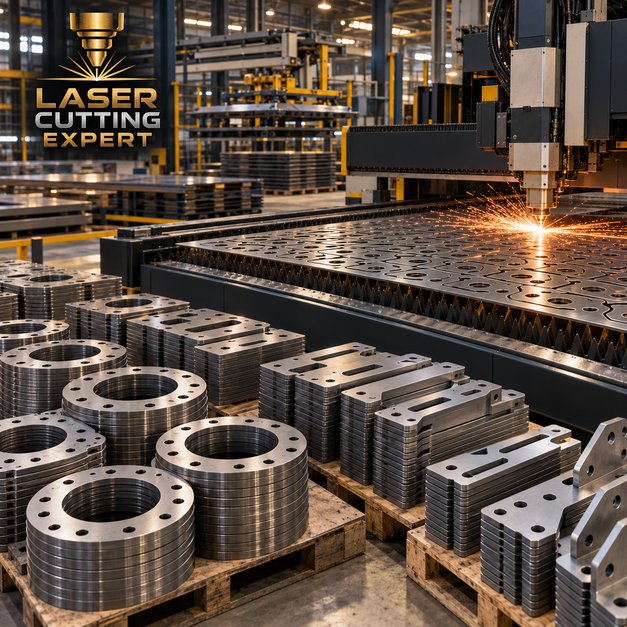
When laser-cut components become a regular part of your production, ordering each batch as a completely new job wastes time. Laser Cutting Expert provides contract laser cutting for companies that need ongoing access to cutting capacity, from planned monthly requirements to larger production runs and scheduled component releases. As a London-based laser cutting supplier, we work with manufacturers, fabricators, construction companies, furniture makers, sign businesses, equipment builders and product companies across the UK. Our high-volume laser cutting services can cover brackets, panels, guards, enclosure parts, screens, plates, signs, furniture components and other suitable profiles. We operate 24/7 and can also support urgent production when capacity and materials allow.
CALL OR EMAIL US FOR PRICES
“Order any time of the day or night and receive your order on the same day in London. You are welcome to visit our laser cutting shop for an instant laser cutting service. On-site collection or free delivery can be arranged. Email us at laser@makergroup.uk for a quick quote or call us on 02036339857 for an instant price”.
Same Day Laser Cutting & Delivery
We can arrange a same day courier delivery with customer live tracking. Or customers can collect from our Laser Cutting Expert shop.

OPEN 24 HOUR
We are open 7 days a week, and you can order at any time. There is no last ordering time and no deadline. We also offer an overnight laser cutting service.

100% Satisfaction
High Quality Laser Cutting & 100% Customer Satisfaction Guarantee. Top-Rated Laser Cutting Company on Google.

Free File Check
We offer a free file check and proof before sending your artwork for laser cutting.
Contract Cutting Built Around Your Production
A useful contract service should fit around the way your factory actually works. Some customers need a fixed quantity every week, while others order according to changing assembly demand. Our contract laser cutting can be organised around approved component files, agreed materials and practical production quantities. Instead of explaining the same part from the beginning each time, repeat components can be linked to controlled drawing information. This works well for machinery parts, equipment panels, brackets, fabrication blanks, furniture components and standard product ranges. If quantities increase or decrease, production can be adjusted rather than forcing every customer into one fixed batch size regardless of their real manufacturing requirements.
Your Laser Cutting Supplier for Repeat Parts
Choosing a laser cutting supplier for ongoing work is different from finding someone to make a single profile. Repeat manufacturing depends on drawing control, material consistency, production planning and communication when something changes. A component ordered today may need to fit equipment manufactured several months from now. We therefore encourage clear part numbers, revisions, material grades and thicknesses for repeat jobs. Products can include machine guards, base plates, mounting brackets, equipment covers, enclosure blanks, shims, washers, decorative panels and fabrication components. If a drawing changes, the new revision should be confirmed before another batch enters production so outdated geometry is not reproduced.
Commercial Laser Cutting
Our commercial laser cutting service supports companies producing physical products, installations and fabricated assemblies. Requirements can range from metal sign components and retail display parts to machinery panels, architectural screens and furniture components. Commercial work often involves several different parts rather than one repeated shape, so compatible components can be planned together where appropriate. Customers can send production-ready CAD files or request design support when drawings need preparation. We have no minimum quantity, which means a commercial relationship can begin with prototypes and move into larger batches after approval. Suitable customer-supplied materials are also welcome where their specification and laser compatibility are known.
High-Volume Laser Cutting Services
Volume production requires consistency across more than the first sheet. Our high-volume laser cutting services are intended for approved products that need to be reproduced in larger quantities while maintaining controlled geometry. Manufacturing may involve one repeated component or a family of parts needed for a complete assembly. Efficient sheet nesting, organised files and sensible production sequencing become increasingly important as quantities rise. Typical products include brackets, mounting plates, machine panels, covers, furniture components, signs, screens, washers, shims and fabrication blanks. Where parts need later bending, welding or machining, those downstream requirements should be built into the approved production drawing before the larger manufacturing run begins.
Start Small Before Going High Volume
Large orders do not have to begin with large quantities. A new contract can start with one prototype or a short validation batch. The customer can then bend, weld, assemble or install those parts and confirm that the design works under real conditions. Once approved, the same controlled drawing can move into high-volume laser cutting services. This approach is particularly useful for enclosures, furniture, equipment frames, brackets and multi-part products. It reduces the risk of discovering a basic design issue after hundreds of pieces have already been manufactured. Our no-minimum-order policy makes this staged route practical even when the expected final production requirement is much larger.
Scheduled Production and Call-Off Orders
Some manufacturers know their annual demand but do not want every component delivered at once. Contract laser cutting can support scheduled releases where practical, allowing production to follow the customer’s assembly or installation programme. A company might require regular batches of brackets, panels or equipment components rather than storing several months of finished parts. This can reduce unnecessary inventory while maintaining an established production route. Forecasts are particularly useful when unusual material grades or significant quantities are involved because stock and machine capacity can be planned ahead. The exact arrangement should reflect real demand rather than creating a rigid schedule that does not match the customer’s changing production requirements.
Multiple Part Numbers in One Contract
A product range rarely consists of one laser-cut shape. A machine may require base plates, guards, brackets, covers and control panels. Furniture might need table plates, frame brackets and decorative inserts. As a laser cutting bureau, we can handle suitable groups of different part numbers under the same broader production requirement. Compatible components can sometimes share material sheets, while each part remains connected to its own controlled drawing. This is useful for businesses that would otherwise place many small independent orders. Clear component identification remains important so similar-looking parts do not become confused during later fabrication, assembly or stock handling at the customer’s premises.
Component Families for Machine Builders
Machine manufacturers frequently reuse common components across several equipment models. Commercial laser cutting can support these component families with repeat machine guards, access panels, mounting plates, base plates, equipment faces and brackets. Some pieces may remain identical across every model, while others change according to machine size or options. Controlled CAD files allow these variations to remain organised. Suitable tabs and slots can also simplify downstream fabrication where parts need to locate during welding. Machinery safety requirements remain with the manufacturer. We produce according to approved drawings, while guard distances, material strength, access requirements and overall machine compliance must be determined through the manufacturer’s design and risk-assessment process.
Enclosure Production
Electrical and industrial equipment manufacturers often need repeated enclosure blanks containing switches, displays, ventilation openings, cable entries and fixing points. Our high-volume laser cutting services can produce suitable flat developments ready for bending and assembly. Different enclosure sizes can be managed as separate part numbers while sharing the same material specification where appropriate. Bend allowances and reliefs need to be correct before volume production begins. Electrical safety, ingress protection, EMC requirements and equipment certification depend on the finished enclosure and assembly rather than the laser-cut blank alone. For new enclosure designs, a physical prototype should be folded and fitted around the actual equipment before the larger batch is released.
Brackets and Mounting Hardware
Brackets are often small components, but manufacturers can use large numbers of them across a product range. Contract laser cutting can supply repeated mounting plates, angle-bracket blanks, shelf supports, equipment brackets and fixing components according to approved CAD. Slots, bolt holes and locating features can be incorporated directly into the flat profile. If the part will later be bent, its development should account for material thickness and bend radius. Load-bearing brackets require engineering around their actual use, fasteners and supporting structure. Our role as the laser cutting supplier is to reproduce the specified component consistently, while the product manufacturer remains responsible for its safe mechanical performance.
Guards, Covers and Equipment Panels
Guards and covers can be produced as individual components or as part of a complete equipment kit. High-volume laser cutting services can support repeated ventilation panels, machine guards, access covers and equipment faces with holes and openings included directly from CAD. This reduces the need for manual drilling during later assembly. Where ventilation patterns remove significant material, the designer should also consider panel stiffness. Safety guards need appropriate opening dimensions and fixing systems based on the actual hazard. Laser cutting creates the specified geometry but does not certify a guarding system. Machine builders should approve these details before releasing a design into repeat manufacturing.
Furniture Production Components
Furniture companies can use commercial laser cutting for table bases, brackets, shelving components, furniture plates, decorative screens and metal inserts. Repeat digital files make it easier to produce the same component as new furniture orders arrive. Products can combine laser-cut metal with wood, glass, acrylic, leather and tubular frames. Hole patterns need to align with these other materials, so prototyping the complete assembly before volume production is sensible. Visible metal may also require controlled grain direction or surface handling. Contract production can support several furniture models rather than requiring one enormous quantity of a single design, giving manufacturers more flexibility across their product range.
Signage Production for Multiple Locations
Retail chains, property businesses, hospitality groups and sign manufacturers may need similar signs across many locations. A laser cutting bureau can support repeated metal letters, logos, backing plates, plaques, sign brackets and display components from approved artwork. Individual dimensions or wording can still change between sites where required. Material and finish should be selected according to indoor or outdoor use. Freestanding or large external signs need suitable structural support for wind loading and installation conditions. For multi-site programmes, keeping the core artwork and manufacturing specification controlled helps new locations match earlier installations without rebuilding the design from the beginning each time.
Retail and Exhibition Systems
Display manufacturers often build systems containing several repeated metal parts. Contract laser cutting can supply base plates, brackets, shelves, graphic supports, panel components and frame connections for retail and exhibition structures. Aluminium can suit portable systems, while steel may be selected for heavier permanent installations. Parts can be produced according to event schedules or rollout programmes rather than all at once. Public-facing structures should be designed for safe loading and stability. Where tube frames are used alongside sheet components, connection holes can be coordinated between the different parts. This makes later assembly easier and reduces the amount of manual drilling needed during installation.
Architectural Panels and Screens
Architectural projects can involve large quantities of decorative panels, privacy screens, façade details and interior partitions. Commercial laser cutting allows repeated patterns to be produced from controlled digital artwork while still permitting variations between panels. Suitable materials can include Corten steel, stainless steel, aluminium and coated mild steel depending on the environment and design. Large patterned panels need sufficient remaining material to stay stable during handling and installation. Structural façade elements, balustrades and guarding require appropriate engineering rather than being treated as purely decorative products. The architect, engineer or contractor should approve material, fixing and loading requirements before the production quantity is released.
Large Format Laser Cutting
Large format laser cutting is relevant when a component or panel uses dimensions beyond ordinary small-sheet work. Applications can include architectural screens, large sign components, machine panels, equipment covers and oversized decorative profiles. Maximum workable dimensions depend on the specific machine, material, thickness and required geometry, so large pieces should be reviewed before material is ordered. Some designs may also be divided into several sections when one-piece manufacture is impractical. Joining positions can sometimes become part of the design rather than an unwanted compromise. Large components need careful handling after cutting because thin sheet can become flexible even when the material itself is relatively strong.
Large Decorative Screens
Garden screens, privacy panels and interior decorative panels are suitable examples of large format laser cutting where appearance and structural behaviour need to be considered together. Botanical patterns, geometric artwork and custom designs can remove a substantial percentage of the original sheet. Narrow bridges may become flexible, particularly on large panels. Border width, fixing points and support frames should therefore be considered during design. Corten steel can provide a weathered outdoor appearance, while aluminium and stainless steel offer different weight and corrosion characteristics. Where screens form part of guarding, fencing or balustrades, the complete installation needs appropriate engineering and safety assessment.
Large Machine Panels
Industrial machinery can require broad access panels, equipment covers and protective faces. Our large format laser cutting capability can be assessed for suitable oversized components where machine capacity, material and geometry allow. Large panels may include ventilation patterns, access openings and fixing holes within one profile. If they will later be bent, the available press-brake capacity and handling requirements also need consideration. Removing large areas of material can reduce stiffness, so designers may use folds, ribs or support frames within the finished assembly. The machine manufacturer should establish structural and safety requirements before releasing large protective components for manufacturing.
Mild Steel Contract Production
Mild steel is commonly used for brackets, guards, machinery, furniture, sign structures and general fabrication. As a laser cutting supplier, we can produce repeat mild-steel profiles in suitable quantities according to controlled drawings. Components can move into welding, bending, powder coating, painting or galvanising after cutting. Material grade should be specified where it affects structural performance. Outdoor products need an appropriate corrosion-protection system because bare mild steel will rust. Large repeat orders should use a consistent material specification rather than changing grade simply according to immediate stock availability. Structural components remain subject to the engineering requirements of the finished product or installation.
Stainless Steel Contract Production
Stainless steel can be used for machinery, hospitality products, architecture, signs and equipment where corrosion resistance or appearance is important. Our contract laser cutting service can support repeated stainless panels, brackets, plaques, covers, screens and enclosure components. Grade and surface finish should be identified clearly. Brushed sheet may require consistent grain direction across parts, especially where several panels appear together in the same product. Food, medical and pharmaceutical applications can require additional material traceability, finishing and validation beyond profile cutting. The customer should specify these requirements before production rather than assuming any stainless steel automatically satisfies a regulated application.
Aluminium Contract Production
Aluminium components are common in equipment, displays, furniture, signs and products where lower weight is useful. High-volume laser cutting services can support suitable aluminium brackets, equipment faces, enclosure panels, covers and decorative components. Alloy and temper should remain consistent where bending or mechanical performance matters. Surface condition is also important if the aluminium will remain visible or move into anodising. Large batches can combine several compatible component types through sensible nesting. Structural aluminium parts require engineering around the chosen alloy, section and connection method. Our production follows the approved specification rather than substituting a different aluminium grade solely because it is visually similar.
Stainless, Aluminium and Steel Product Families
A single manufacturer may use several materials within the same product. An equipment assembly might contain a mild-steel frame plate, stainless cover and aluminium control panel. Working with one laser cutting bureau for compatible profiles can simplify the ordering process even though each material still requires separate production planning. Part numbers and drawings should identify material clearly to prevent substitutions. Components can include brackets, panels, covers, shims, washers, signs and mounting plates. Where several materials eventually join together, the product designer should also consider galvanic corrosion, welding compatibility, fasteners and finishing. Laser cutting is only one stage within the complete multi-material manufacturing system.
Repeat Shims, Washers and Spacers
High-volume requirements are not always large components. Manufacturers may regularly need custom washers, shims, spacers and rings that are unavailable as standard hardware. Commercial laser cutting can produce suitable flat components in repeated quantities from specified sheet. Different diameters and profiles can often be nested together where material and thickness match. Extremely close bores or bearing interfaces may require machining after cutting. Thin parts also need appropriate handling and packaging so they do not become mixed or damaged. These products can form part of scheduled contract supply, allowing manufacturers to order according to consumption rather than repeatedly sourcing non-standard hardware from scratch.
Fabrication Kits as Complete Sets
Some customers prefer receiving all laser-cut profiles for one assembly together rather than ordering every part separately. Our contract laser cutting can support suitable fabrication kits containing base plates, brackets, gussets, panels, covers and connection pieces. Kits can be useful for machine frames, furniture, display systems and fabricated structures. Tabs and slots may be included to assist assembly where the design supports them. Clear part identification helps the fabricator understand where each profile belongs. A complete prototype kit should ideally be assembled before a large repeat quantity is released. This checks not only individual dimensions but also whether all parts work correctly together.
Parts Ready for Bending
High-volume production becomes inefficient if every cut part needs manual correction before it reaches the press brake. Our laser cutting supplier service can provide bend-ready blanks when the approved drawing contains the correct flat development. Material thickness, bend radius and bend allowance should be based on the intended forming process. Corner reliefs and hole positions also need consideration. Brackets, trays, covers, enclosures and equipment panels can all move from cutting into bending. Where a new part is being developed, one prototype should be folded and measured before the full high-volume laser cutting services quantity is released. This catches development errors before they become repeated production problems.
Components for Welding and Assembly
Laser-cut parts often become useful only after they are joined into an assembly. Commercial laser cutting can create suitable tabs, slots, notches and locating features to reduce manual measurement on the welding bench. Components can include frame plates, gussets, brackets, equipment supports and enclosure parts. Joint design should suit the material and welding process rather than being dictated solely by cutting convenience. Structural welding requires approved procedures and appropriate quality control. Galvanised steel also needs particular attention because heating zinc can create hazardous fumes. We manufacture the approved components, while the fabricator remains responsible for welding practice and the performance of the completed assembly.
Near-Net Parts for Machining
Laser profiling can also reduce the amount of material a machine shop needs to remove. A laser cutting bureau can produce suitable near-net blanks for later milling, turning, drilling or reaming. Instead of machining a small irregular component from a large rectangular plate, the bulk profile can first be cut closer to its final shape. Extra material is intentionally retained around critical machining surfaces. This route can be useful for equipment parts, replacement components and engineering products. The machinist should specify machining allowance before the laser file is released. Cutting a feature directly to nominal size may leave insufficient material for the later precision operation.
Material Procurement for Contract Work
Reliable production depends on having the correct material available when it is needed. As a laser cutting supplier, we can discuss sourcing suitable sheet according to the customer’s specified grade, thickness and finish. For regular contracts, advance forecasts can help with materials that are less commonly stocked. Customers can also supply their own material where required, particularly when certified or specialist stock has already been purchased for a project. Customer-supplied materials need to be identified clearly before processing. Unknown plastics, coatings or composites may require technical information, while PVC and chlorine-containing materials must not be laser cut because of the hazardous and corrosive gases produced when heated.
Customer-Supplied Material Programmes
Some manufacturers control their own material purchasing but outsource only the cutting operation. Contract laser cutting can work within this arrangement when stock arrives clearly identified and suitable for processing. Material can be allocated to specific projects or component families according to the customer’s instructions. This is useful where a company has negotiated its own material supply, requires a particular certification or needs tight control over stock ownership. Sheet condition should be checked before production, particularly where visible surfaces matter. If supplied material is insufficient or damaged, production quantities may need to be adjusted rather than substituting another grade without customer approval.
Sheet Nesting Across Multiple Components
Efficient nesting becomes particularly valuable in high-volume laser cutting services because even a small improvement in sheet utilisation can become meaningful across repeated batches. Compatible part numbers can sometimes share the same sheet, provided material, thickness, finish and orientation requirements match. Brackets may fit between larger panel profiles, while small washers or tags can use areas that would otherwise become scrap. Nesting should still respect grain direction, bending requirements and sufficient spacing for reliable cutting. Material efficiency is useful, but it should never compromise component quality. For contract work, established nesting arrangements can also make repeat production easier to plan and cost.
Production Capacity During Busy Periods
Manufacturers can experience sudden peaks when a large customer order arrives or an internal machine becomes unavailable. A laser cutting bureau can provide additional capacity without the customer purchasing machinery for a temporary workload. Our 24/7 operation allows suitable production to continue across nights, weekends and bank holidays where required. This can support contract peaks, installation deadlines and unexpected replacement requirements. Production availability still depends on material, quantity and existing schedules, so advance notice is useful for substantial orders. Where a genuinely urgent component is holding up assembly, commercial laser cutting can also be prioritised when the required stock and approved files are ready.
Automated Production for Repeat Work
Repeatable parts can benefit from production methods designed to reduce unnecessary manual handling. Our related Automated & Robotic Laser Cutting service can support suitable projects where automation or multi-axis processing forms part of the manufacturing route. Automation is particularly useful when volume, repetition and geometry justify the setup, but it is not automatically the correct answer for every contract. Small changing batches may require a different production approach. The objective is to select a manufacturing route that fits the component and quantity. High-volume work should become more controlled as quantities rise rather than simply running the same inefficient setup for a longer period.
Drawing Numbers and Revision Control
A long-term laser cutting supplier relationship depends heavily on identifying exactly which version of a component should be manufactured. Every repeat part should ideally have a clear drawing or part number and revision. If a mounting hole moves by 5 mm, the new file must replace the previous production instruction rather than exist beside it ambiguously. This becomes especially important when old and new equipment models remain in production at the same time. We encourage customers to communicate revisions clearly before placing repeat orders. Good file control reduces the risk of producing accurate components that unfortunately belong to an obsolete version of the customer’s product.
Managing Engineering Changes
Products evolve. A bracket becomes thicker, a connector changes position or a panel gains another ventilation opening. Contract laser cutting makes digital revisions relatively straightforward, but the change still needs to be controlled. Customers should confirm whether the new drawing replaces the previous version completely or applies only to a particular model. Material changes also need attention because changing thickness can affect tabs, slots, bending and fasteners. Where a modification is significant, producing another prototype before returning to high-volume laser cutting services can be sensible. This prevents a seemingly small digital change from creating an unexpected problem later during fabrication or assembly.
Component Identification and Packing
Large production orders can contain hundreds of parts that look similar but belong to different assemblies. Good organisation after cutting therefore matters. Depending on the project, components can be separated or packed according to agreed part groups and quantities. This is particularly useful for fabrication kits, installation programmes and multi-SKU manufacturing. Customers should communicate any specific packing or identification requirements when ordering commercial laser cutting, especially if parts will be distributed to different sites. Delicate surfaces may also need additional protection. Brushed stainless, visible aluminium and finished decorative components should not be handled in exactly the same way as ordinary fabrication blanks.
Commercial Confidentiality and Customer Designs
Contract work can involve unreleased products, custom machinery and commercially sensitive designs. Customers should send only the drawings necessary for manufacturing and identify any particular handling requirements associated with the project. As a production laser cutting bureau, our role is to manufacture from the supplied or approved information rather than reuse customer-specific designs for unrelated projects. Customers should also ensure they hold the necessary rights to logos, artwork, patented components or other intellectual property they instruct us to reproduce. Where a project requires formal contractual confidentiality arrangements, these should be discussed before commercially sensitive production information is exchanged.
Large Production Does Not Remove Engineering Responsibility
Producing a thousand identical components does not prove that the original design is safe or appropriate. High-volume laser cutting services reproduce approved geometry efficiently, but structural calculations, machinery safety, electrical compliance and regulated-product requirements remain with the responsible manufacturer or engineer. The same applies to medical, automotive, aerospace and load-bearing components. Material traceability, inspection and specialist quality requirements should be specified before production. Where critical dimensions require measurement or additional documentation, these requirements should be agreed rather than assumed. Manufacturing scale increases the importance of getting the specification right before the first full production batch begins.
Urgent Contract Production in London
Regular customers occasionally need an unexpected top-up batch before the next scheduled release. A missing component, damaged installation part or sudden customer order can change the production plan quickly. Our London workshop operates 24/7, including weekends and bank holidays, allowing suitable contract laser cutting to be reviewed for urgent manufacture. Same-day production and courier delivery across London can be arranged for appropriate jobs where material, approved files and capacity are available. Urgent production is easiest when the component already has an established drawing and material specification. Larger emergency quantities may require staged delivery depending on manufacturing time and available stock.
UK-Wide High-Volume Laser Cutting Services
Laser Cutting Expert provides high-volume laser cutting services from London for businesses throughout the UK. Customers can send drawings, quantities and material requirements electronically, while completed production can be dispatched nationwide. Suitable next-day delivery is available for many completed orders, depending on size, weight and production schedule. We support engineering companies, fabricators, sign manufacturers, furniture businesses, construction suppliers, equipment manufacturers and product companies. Whether you need a regular laser cutting supplier, a flexible laser cutting bureau, ongoing commercial laser cutting or a planned large format laser cutting project, production can be structured around your actual components and delivery requirements.
FAQs About High-Volume & Contract Laser Cutting
1. What is contract laser cutting?
Contract laser cutting is an ongoing manufacturing arrangement where approved components are produced according to agreed drawings, materials, quantities and production requirements.
2. Can you handle high-volume orders?
Yes. Our high-volume laser cutting services can support suitable repeat components, multiple part numbers and larger production batches.
3. Do you also accept smaller initial orders?
Yes. There is no minimum order. A contract product can begin with one prototype or a small validation batch before moving into higher-volume production.
4. What products can you manufacture regularly?
Suitable products include brackets, machine panels, guards, enclosure blanks, base plates, screens, signs, furniture components, washers, shims and other fabrication profiles.
5. What does a laser cutting bureau do?
A laser cutting bureau provides cutting capability to businesses that need components manufactured without carrying out every cutting operation within their own facility.
6. Can you cut large panels?
Suitable large format laser cutting projects can be assessed according to panel dimensions, material, thickness and available machine capacity.
7. Can we supply our own material?
Yes. Customer-supplied stock can be used where the material is clearly identified and compatible with the required process.
8. Can you produce parts ready for bending or welding?
Yes. Approved drawings can include bend-ready developments, tabs, slots, notches and other suitable fabrication features.
9. Do you provide urgent production?
Yes. Suitable urgent commercial laser cutting can be considered through our 24/7 London operation, including same-day production and courier delivery where material and capacity allow.
10. Can you supply businesses outside London?
Yes. We work with customers throughout the UK and can arrange nationwide delivery for suitable completed contract and production orders.