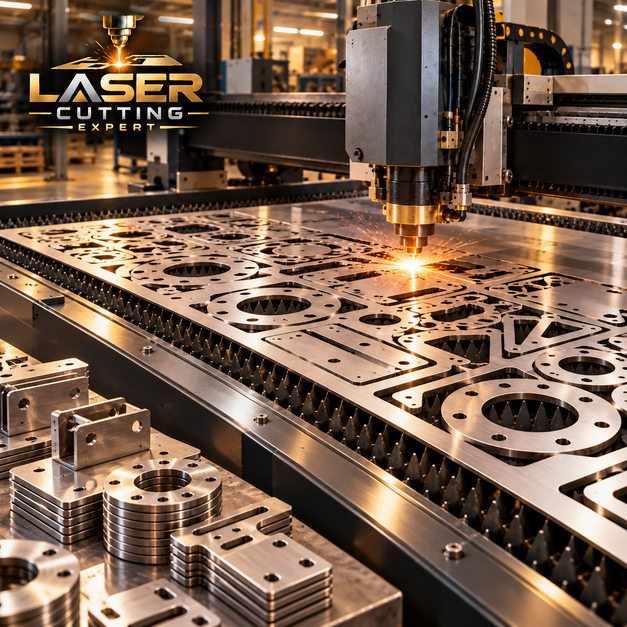
A large part of laser cutting starts with something very simple: a flat sheet of material that needs to become useful components. Laser Cutting Expert provides flat bed laser cutting, sheet laser cutting and flatbed laser cutting services from our London workshop for custom profiles, panels, brackets, signs, screens, blanks and fabrication parts. We can handle one-off requirements, prototypes, short batches and repeat production with no minimum quantity. Suitable open section laser cutting can also be assessed where channels, angles or other open profiles need custom features. We operate 24/7, including weekends and bank holidays, with same-day London service and UK delivery available for suitable completed jobs.
CALL OR EMAIL US FOR PRICES
“Order any time of the day or night and receive your order on the same day in London. You are welcome to visit our laser cutting shop for an instant laser cutting service. On-site collection or free delivery can be arranged. Email us at laser@makergroup.uk for a quick quote or call us on 02036339857 for an instant price”.
Same Day Laser Cutting & Delivery
We can arrange a same day courier delivery with customer live tracking. Or customers can collect from our Laser Cutting Expert shop.

OPEN 24 HOUR
We are open 7 days a week, and you can order at any time. There is no last ordering time and no deadline. We also offer an overnight laser cutting service.

100% Satisfaction
High Quality Laser Cutting & 100% Customer Satisfaction Guarantee. Top-Rated Laser Cutting Company on Google.

Free File Check
We offer a free file check and proof before sending your artwork for laser cutting.
Start with the Sheet, Not Just the Shape
Before discussing cutting speed or intricate geometry, it helps to understand the stock itself. Sheet laser cutting begins with material type, thickness, sheet dimensions, surface condition and the quantity available. A 2 mm stainless decorative panel presents a very different manufacturing job from a thick mild-steel base plate, even if both have simple rectangular profiles. Sheet size can determine how many components fit into one blank, while grain or surface direction can restrict their orientation. By considering the stock first, we can plan the cutting layout around the real material rather than treating the CAD profile as though it exists independently from the sheet it will be manufactured from.
Flat Bed Laser Cutting
Flat bed laser cutting uses a machine layout designed around flat sheet and plate. Material sits on the cutting bed while the laser follows programmed profiles across its surface. This makes the process useful for components that can be defined as two-dimensional geometry before later fabrication. Outside profiles, holes, slots, ventilation patterns and decorative cut-outs can be produced during the same cutting stage where suitable. Products may remain completely flat, such as signs or shims, or move into bending and welding afterwards. The flatbed route is particularly practical when several different components need to be arranged together on one sheet of the same material and thickness.
Flatbed Laser Cutting Services
Our flatbed laser cutting services support manufacturers, engineers, fabricators, sign companies, furniture makers, designers, construction businesses and individual customers. Typical work includes machine panels, brackets, base plates, guards, enclosure blanks, garden screens, signs, furniture components, washers, shims, decorative panels and fabrication kits. Customers can supply DXF or other suitable production files, or we can discuss CAD preparation where required. Materials and thicknesses are assessed according to the actual job. Because there is no minimum order, customers can use the same service for one replacement bracket, a prototype panel, a complete sheet of different parts or repeat production quantities.
Sheet Laser Cutting
Sheet laser cutting is useful because many manufactured products begin as flat material even when the finished item becomes three-dimensional. An enclosure starts as a developed blank. A bracket begins as a profile before bending. A machine frame may use several flat gussets and mounting plates before welding. The laser prepares these components directly from digital geometry without requiring a dedicated cutting die for each shape. This makes design changes relatively straightforward during development. Sheet cutting can also create internal features before later fabrication, reducing the need for manual drilling or sawing. The final manufacturing route should therefore be considered while the flat profiles are being designed.
Mild Steel Sheet Cutting
Mild steel sheet is commonly used for brackets, machine parts, guards, plates, furniture components and general fabrication. Sheet laser cutting can produce outside profiles, holes, slots and connection features before components move into bending, welding or coating. Material grade and thickness should be stated where they matter to the final product. Thin sheet may need folds or supports to gain stiffness, while thicker plate changes practical feature sizes and handling requirements. Mild steel also needs suitable corrosion protection where the finished component will be exposed to moisture. Structural components require appropriate engineering; laser cutting reproduces the approved geometry but does not determine safe loads or structural performance.
Stainless Steel Sheet Cutting
Stainless sheet can be used for architectural panels, kitchen equipment, machine covers, signs, furniture details and industrial components. Our flatbed laser cutting services can produce suitable stainless profiles while taking account of material grade, thickness and visible surface requirements. Brushed finishes may need consistent grain direction, meaning parts cannot always be rotated freely during nesting. Protective film and cosmetic faces also require suitable handling. Stainless grades such as 304 and 316 should not be treated as interchangeable where corrosion conditions matter. Food, marine, chemical and other specialist applications should specify the appropriate material requirements before production rather than selecting stainless steel based only on appearance.
Aluminium Sheet Cutting
Aluminium sheet is useful for signs, equipment panels, enclosures, furniture, display systems and lightweight fabrication. Flat bed laser cutting can produce suitable profiles with mounting holes, ventilation features and decorative geometry. Alloy and temper matter, especially if components will later be bent. Surface condition also deserves attention when the sheet remains visible in the finished product. Aluminium may later be powder coated, painted or anodised depending on application. Thin aluminium can be relatively flexible, so large panels may require folds or supporting frames. Customers should therefore design around the finished use rather than assuming that a large flat panel will remain rigid simply because its outline has been cut accurately.
Galvanised Sheet Cutting
Galvanised steel combines a steel substrate with a zinc coating intended to provide corrosion protection. Sheet laser cutting can produce suitable ventilation parts, brackets, equipment panels, covers and general fabrication components from galvanised sheet. The cut edge locally exposes the steel rather than retaining the same zinc coverage as the sheet face. Bending and later fabrication can also affect the coating. Welding galvanised steel produces hazardous zinc oxide fumes and requires appropriate extraction and working procedures. Where long-term corrosion protection is important, the designer should consider whether pre-galvanised sheet or post-fabrication galvanising is the more appropriate manufacturing route for the finished product.
Corten Sheet Cutting
Corten and other weathering steels are often supplied as flat sheet before being transformed into screens, signs, planters, edging and outdoor artwork. Our flatbed laser cutting services can create suitable profiles and decorative patterns from specified material. The appearance changes naturally as the surface develops its weathered patina. Early weathering can produce runoff that may stain nearby paving or walls, so installation conditions matter. Large screens may require frames or folded returns for stiffness. Weathering steel is not automatically maintenance-free in every environment. Drainage, trapped moisture and material specification should be considered as part of the complete outdoor product rather than relying only on the characteristic Corten appearance.
Brass and Copper Sheet
Brass and copper sheet can be used for signs, plaques, decorative panels, electrical parts, furniture inserts and artwork. Sheet laser cutting of these metals requires an appropriate process because their thermal and reflective behaviour differs from ordinary steel. Copper may be used for electrical plates, contact profiles or busbar-style components, while brass is commonly selected for visible decorative work. Surface finish can be important because fingerprints, oxidation and patination change appearance over time. Small precision electrical features may need additional machining depending on their tolerance. Customers should provide alloy and thickness information where known rather than describing every yellow metal simply as brass or every reddish sheet as copper.
Large Flat Panels
Large panels make sheet planning particularly important. Flat bed laser cutting can create machine panels, architectural screens, wall panels, equipment covers and large signs where the available machine bed and stock dimensions are suitable. Size alone is not the only concern. A large thin panel can become flexible after significant material is removed. Decorative patterns can reduce stiffness further. Handling also becomes more important because a finished panel can be damaged while being lifted or transported. Large components may therefore need folded edges, frames or additional support. Installation requirements should be considered before the panel is cut rather than after an oversized flexible sheet has already been manufactured.
Small Sheet Components
The same flat sheet that produces large panels can also contain many small components. Our flatbed laser cutting services can produce washers, shims, spacers, brackets, tabs, fixing plates and other small profiles. Small components require sensible feature design. A tiny part can move or tip during processing depending on geometry, while extremely small holes may not be practical relative to material thickness. Precision bores may require drilling or reaming after laser cutting. Components should therefore be designed according to their function. For many engineering jobs, the laser creates an efficient near-net profile while another process establishes the final critical dimensions.
Brackets from Sheet
Custom brackets often begin as simple flat profiles. Sheet laser cutting can create mounting holes, slots, outside geometry and bend reliefs before the blank moves into forming. Angle brackets, U-brackets, equipment mounts, shelf supports and sign brackets can all follow this route. If the part will be bent, the flat geometry needs to account for material thickness and bend allowance. Holes positioned very close to fold lines can distort during forming. Load-bearing brackets require appropriate engineering and material selection. The fact that a profile fits neatly onto a sheet does not establish how much weight the finished bracket can safely support after installation.
Base Plates and Mounting Plates
Base plates provide a connection between equipment and another structure, floor, frame or support. Flat bed laser cutting can produce custom outside shapes, bolt holes, slots and access features directly from sheet or plate. Products may be used beneath machinery, furniture, signs or fabricated structures. Large mounting holes can often be cut directly, while high-precision bores may require later machining. Plate thickness should follow the actual load and support conditions. Structural or machinery mounting applications require suitable engineering. Laser Cutting Expert can manufacture the specified geometry, but customers remain responsible for ensuring the plate and fixing arrangement are appropriate for the forces involved.
Machine Panels
Machine panels are well suited to sheet laser cutting because many different features can be created while the material remains flat. Openings for switches, displays, ventilation, handles and access points can all be incorporated into one profile. The panel may remain flat or later be bent into a cover or housing. If several machine models use similar panels, digital files can control each version separately. Machine safety and electrical requirements remain the responsibility of the equipment manufacturer. A correctly cut opening is not automatically safe simply because it matches the drawing. Prototype panels are useful for checking real switches, connectors and hardware before repeat production begins.
Machine Guards
Flat sheet can be converted into machine guards containing ventilation slots, fixing holes and visibility openings. Our flatbed laser cutting services can produce these profiles before suitable guards move into folding or fabrication. Pattern design needs to balance airflow and visibility with panel strength. Machine guarding is safety-related, so opening sizes and distances from hazards require proper assessment. The complete guard must also be securely installed. We manufacture according to approved drawings rather than deciding whether an opening prevents access to a particular moving part. The machine manufacturer or responsible engineer should validate the complete guarding system before the equipment is placed into service.
Electrical Enclosure Blanks
An enclosure often starts as one flat developed sheet. Sheet laser cutting can create its outside profile, corner reliefs, cable entries, switch openings and ventilation before the material is folded into shape. This allows several features to be completed before the enclosure becomes harder to position on a flat machine bed. Material thickness and bend development need to be coordinated. Electrical safety, ingress protection and EMC performance depend on the completed enclosure and installed equipment, not only the flat blank. Manufacturers should therefore validate the final assembly. A prototype blank can be cut and folded first so internal clearances and hardware positions can be checked physically.
Ventilation Panels
Ventilation panels can contain repeated slots, holes or decorative patterns. Flat bed laser cutting can produce these features alongside the outside panel profile. The amount of open area should be determined according to the airflow requirement, but removing material also affects stiffness. A large panel containing hundreds of openings may need supporting folds or a frame. If the panel forms part of a machine guard, safety distances also matter. Fine patterns increase cutting time, so a design with thousands of tiny openings may have different production economics from one using larger slots. The pattern should serve the product rather than adding unnecessary cutting purely for visual complexity.
Decorative Metal Screens
Decorative screens are a good example of using most of a sheet as the final product. Sheet laser cutting can create geometric, botanical, abstract or custom artwork in steel, stainless steel, aluminium or Corten. Screens can be used for gardens, privacy, interiors, restaurants, offices and architectural features. The design needs enough remaining material to hold together after cutting. Very narrow connections can make a large screen flexible or vulnerable to damage. Borders are often useful around the pattern for strength and fixing. Outdoor screens should also be designed around wind loading, support and corrosion protection appropriate to the selected material.
Signs and Lettering
Metal and acrylic sheet can be converted into signs, letters and numbers, logos using flatbed laser cutting services. The design may contain individual characters or a complete sign panel with cut-out lettering. Fine script fonts sometimes need adjustment because narrow connections that look acceptable on screen can become physically fragile. Mounting holes or locating features can be incorporated into the same file. Outdoor signs require appropriate material and installation. Large individual letters may need returns, studs or supporting structures. Laser cutting creates the visual geometry, while the sign maker or installer remains responsible for secure mounting and any structural requirements associated with the location.
Furniture Components
Flat sheet can provide brackets, table plates, shelf supports, decorative inserts and other furniture components. Sheet laser cutting allows connection holes and custom profiles to be integrated directly into each part. Components can later be bent, welded or combined with timber, glass and upholstery. Visible metal may require careful nesting according to surface direction. Furniture intended to support people or significant loads requires appropriate engineering and physical testing. Laser-cut components can be consistent and accurate while the complete furniture item still depends on joints, fasteners, welds and other materials. Product manufacturers remain responsible for validating the finished furniture before sale or public use.
Retail Display Panels
Retail displays often combine sheet components with printed graphics, shelves and product supports. Flat bed laser cutting can create metal or suitable non-metal panels with slots, holes and shaped edges. Components may be designed for flat-pack assembly or repeated installation across several stores. A physical prototype is useful because actual retail products and packaging can differ from the nominal dimensions used during CAD design. Public-facing displays also need adequate stability and safe edges. Laser cutting can produce the structural or decorative sheet parts, while printing, coating and assembly can be planned as later stages according to the appearance and durability required.
Exhibition Components
Exhibition work can require panels, brackets, sign parts, product stands and decorative shapes on short deadlines. Our flatbed laser cutting services can support suitable components where production files and materials are ready. Flat components can be particularly convenient for transport because they may be assembled after arrival at the venue. Tabs and slots can help locate parts, while fixing holes can reduce manual drilling on site. Temporary structures still need safe installation. Large panels, freestanding displays and overhead elements may require engineering or venue approval. Laser cutting supplies the components according to the design but does not certify the finished exhibition structure.
Flat Acrylic Sheet Cutting
Flatbed processing is not limited to metal. Suitable acrylic sheet can be cut into signs, displays, menu holders, awards, table numbers, jewellery and decorative products using an appropriate laser process. Sheet laser cutting can create outside profiles and internal features directly from digital artwork. Clear, coloured, frosted and mirrored acrylic each provide different visual results. Plastic identification remains essential. PVC and chlorine-containing vinyl must not be laser cut because hazardous and corrosive gases can be released. Acrylic should therefore be confirmed rather than assumed from appearance. Unknown plastic sheet may require supplier specifications before we consider laser processing.
Plywood Sheet Cutting
Plywood is supplied as flat sheet and can be used for models, furniture prototypes, boxes, signs, puzzles and decorative products. Our flatbed laser cutting services can produce suitable plywood profiles where sheet construction and thickness are appropriate. Plywood contains several veneers and adhesive layers, meaning internal voids and glue can affect cutting consistency. Actual thickness also matters for interlocking products. A nominal 3 mm board may vary enough to change how tightly a tab fits into a slot. Grain direction and visible face quality can restrict nesting orientation. A small test joint is often worthwhile before an entire sheet of interlocking components is manufactured.
MDF Sheet Cutting
MDF provides a relatively uniform flat board for signs, models, craft products and interior components. Sheet laser cutting can create detailed profiles without the natural grain variation found in solid timber. The edge normally becomes darker due to the thermal process. Different MDF grades contain different binders and densities, so specialist, moisture-resistant or treated boards should be identified before production. Very thick material may not always be the best choice for laser processing. Large MDF panels can also become heavy. If the product will be painted, assembly and edge preparation should be planned around the required final appearance rather than treating the laser-cut board as automatically finished.
Paper and Card Sheets
Paper and card may be thin, but they are still flat-sheet materials that benefit from digital cutting. Flat bed laser cutting can produce invitations, cards, packaging prototypes, decorative inserts and paper artwork. Fine detail is possible, but narrow bridges need enough strength to survive handling. Light paper may show slight heat marking around the edge. Laminated or synthetic stocks require material identification because their coatings may affect suitability. Printed sheets can also need registration between the graphic and cut path. For very large production runs, another cutting process may sometimes be more economical, so quantity and design complexity should be considered together.
Working with Full Sheets
Customers may supply complete sheets for sheet laser cutting, or we can discuss sourcing suitable stock. Full-sheet production can be useful when many components share the same material and thickness. The cutting layout can then make efficient use of the available area. However, sheet dimensions vary between materials and suppliers, so CAD nesting should not assume unlimited stock size. Edge damage or protective-film condition can also reduce usable area on customer-supplied sheets. If appearance is critical, customers should identify which face is cosmetic. This helps us understand whether scratches, mill marks or existing surface defects affect where components can be positioned.
Working with Remnants
Not every job requires a full sheet. Small brackets, labels, test pieces and prototypes may fit suitable remnants already available for a project. Flatbed laser cutting services can sometimes make efficient use of remaining material where grade, thickness and condition are known. Remnants should not be treated as unidentified scrap. For engineering work, material specification may still matter even when only a small piece is required. Cosmetic products also need a surface large enough to contain the component without defects. Using remnants can reduce waste for suitable jobs, but material suitability and traceability requirements should always take priority over simply finding a piece that is physically large enough.
Sheet Nesting
Nesting arranges components across available material before sheet laser cutting begins. A good nest considers more than how many parts fit. Surface grain, bend direction, component identification and heat distribution may influence orientation and spacing. Several different profiles can often share one sheet when they use the same material and thickness. This is useful for fabrication kits containing brackets, gussets, panels and plates. Very small components may need additional handling consideration after cutting. Nesting should therefore balance material efficiency with reliable production. Saving a small amount of sheet is not worthwhile if the resulting layout creates difficult handling or compromises visible surface direction.
Common-Line and Close Nesting Considerations
Components can sometimes be positioned close together to reduce material waste, but there must still be a reliable cutting strategy. During flat bed laser cutting, excessive closeness can create heat concentration or make small remnants unstable. Sharing boundaries between components may be technically possible in some processes, but it is not automatically appropriate for every material, geometry or quality requirement. Visible parts may need more separation to protect edges. Thick plate behaves differently from thin sheet. Rather than applying one nesting rule to every project, we arrange components according to the actual material, part size and required result.
Edge Distance
A component placed extremely close to the original sheet edge may encounter material distortion, surface damage or uncertainty in the stock boundary. Sheet laser cutting layouts therefore need a practical relationship between parts and the usable sheet area. The exact margin depends on material, condition and production setup. Customer-supplied sheets with damaged edges may require additional clearance. This is particularly relevant when a customer calculates quantities based on every theoretical millimetre of material. CAD software can show that profiles mathematically fit, but real manufacturing also needs space for stable cutting and handling. A slightly less aggressive layout can sometimes produce a more reliable result.
Holes and Slots in Sheet
One advantage of flatbed laser cutting services is that outside profiles and many internal features can be produced during the same operation. Brackets can include mounting slots, panels can contain ventilation and signs can include fixing holes. Feature size still needs to suit material thickness. Very small holes can have different quality from larger profiles and may require drilling or reaming when a precision fit is needed. Slots should also have enough surrounding material to remain strong. If the sheet will later be bent, holes close to fold lines can distort. The flat cutting design should therefore consider what happens to the component after it leaves the laser.
Tabs and Interlocking Sheet Parts
Tabs and slots can turn several flat pieces into a self-locating assembly. Sheet laser cutting can create these features for boxes, furniture, display systems, fabrication kits and models. Their fit depends on actual material thickness and cutting kerf. A nominal sheet thickness should not automatically be used as the exact slot width without checking the real stock. Metal assemblies also need enough clearance for coating or welding where applicable. A prototype joint can establish the correct fit before a complete sheet is filled with repeated components. Good interlocking design can simplify assembly, but excessively tight joints can make production harder rather than easier.
Parts for Bending
Many flatbed-cut components are deliberately unfinished when they leave the cutting bed. They are blanks prepared for forming. Flat bed laser cutting can create the developed profile, bend reliefs, holes and slots before the component moves to a press brake. Flat development needs to account for material thickness, bend radius and allowance. Our related Laser Profile Cutting capability can support custom profiles where geometry needs to be prepared accurately before later fabrication. A perfect flat blank can still become an incorrect folded component if the development was calculated wrongly. New folded products should therefore be checked through the complete cutting and forming sequence before repeat production.
Parts for Welding
Flat plates, gussets, brackets and panels can be cut as components for later welding. Flatbed laser cutting services can incorporate tabs, slots and locating features that help fabricators position pieces before joining them. Weld access needs to remain practical. A CAD joint that looks neat digitally can become difficult if the torch cannot reach the seam. Welding also introduces heat and possible distortion. Galvanised steel requires suitable fume control because heating zinc creates hazardous zinc oxide fumes. Structural welding should follow the relevant engineering and fabrication requirements. Laser cutting prepares accurate parts but does not certify the strength of the completed welded assembly.
Near-Net Parts for Machining
Laser cutting does not need to create every final feature. Sheet laser cutting can produce near-net blanks that later move into milling, turning, drilling, tapping or grinding. This can remove unnecessary stock before more expensive machining begins. Products might include bearing plates, precision mounts, tooling components and specialist engineering blanks. Enough material should remain where the machinist needs to establish a final surface. Critical bores may also be left undersize for later machining. Combining processes can be more practical than demanding machining-level tolerances directly from every laser-cut feature. The manufacturing drawing should make clear which dimensions are final at the laser stage.
Open Section Laser Cutting
Open section laser cutting applies to suitable structural or fabricated profiles that are not closed tubes. Examples can include channels, angles and other open sections where holes, slots, notches or end features are required. These jobs differ from ordinary flat sheet because the material already has a three-dimensional cross-section. The section needs appropriate support, orientation and machine access. Depending on geometry, specialist equipment or another cutting route may be required. We assess the actual profile before confirming the process. Section dimensions, wall thickness, material grade and required features should be supplied so the manufacturing method can be selected around the real component.
Channel Section Cutting
Channels can be used for frames, supports, equipment bases and construction components. Suitable open section laser cutting may involve holes, slots, notches or end profiles added to the channel. Access to each face depends on the machine arrangement and section geometry. A feature that crosses around a corner is more complicated than a simple hole through one web. Structural channels require engineering appropriate to their use, particularly when material is removed from load-bearing areas. Cutting a slot or large opening can change the section’s strength. The responsible engineer should therefore approve modifications to structural members before production rather than treating them as ordinary decorative cut-outs.
Angle Section Cutting
Angle sections are widely used for frames, brackets, supports and fabrication. Open section laser cutting can be assessed for suitable holes, slots and end features depending on section dimensions and equipment access. Because an angle has two perpendicular legs, it cannot always be processed like flat sheet without considering orientation. Features close to the internal corner may also present access limitations. Structural angles need appropriate engineering where openings reduce the effective section. If a project only needs simple straight cuts or drilled holes, another manufacturing process may sometimes be more practical. We select the method according to geometry rather than automatically using a laser for every feature.
Open Sections for Frames
Frames used for machinery, displays, furniture and equipment can incorporate open structural profiles. Open section laser cutting may help prepare connection features before assembly where the section and geometry are suitable. Slots and notches can help locate cross members, while holes can support fasteners or accessories. Welding and assembly requirements should be considered before features are added. Removing too much material near a joint can weaken the connection. Structural frames require suitable design and validation. Laser processing can improve repeatability of component preparation, but the finished frame still depends on section selection, joint design, welding quality and overall engineering.
Open Sections for Equipment Supports
Equipment supports can use channels and angles where a full closed tube is unnecessary. Suitable open section laser cutting can create mounting features according to approved drawings. Hole positions may need to align with machinery, floor fixings or secondary brackets. If adjustment is required, slots can be incorporated where structurally appropriate. The section’s orientation should be clearly shown in the drawing so features are placed on the correct leg or web. Load-bearing supports need engineering that considers both the original section and material removed during cutting. We manufacture the geometry supplied rather than assigning load capacities to modified structural profiles.
Flat Sheet vs Open Section
Choosing between sheet laser cutting and open section laser cutting depends on the stock form of the component. Flat sheet is ideal when the part begins as a two-dimensional blank, even if it will later be bent. Open sections already have a formed cross-section such as an angle or channel. This changes how the material needs to be held and how the laser accesses each face. In some cases, it can be more efficient to laser cut a flat blank and bend it into a channel afterwards. In others, using an existing standard section makes more sense. The complete fabrication route should guide the decision.
Flat Sheet vs Tube Cutting
A flatbed system and a tube-processing system solve different manufacturing problems. Flat bed laser cutting is intended primarily for flat stock, while tube laser equipment handles closed sections such as round, square and rectangular tube. Open section laser cutting sits between these categories because channels and angles already have three-dimensional geometry but are not closed tubes. The most appropriate process depends on profile, length, feature position and quantity. We do not force a component onto the wrong machine simply because laser cutting is possible. Selecting the correct stock format and production route can simplify the design and reduce unnecessary fabrication.
One-Off Sheet Components
There is no minimum quantity for our flatbed laser cutting services. Customers can order one replacement panel, one bracket, one custom sign or a single prototype component. This is useful when testing a design or repairing equipment for which standard replacement parts are unavailable. One-off work still needs suitable manufacturing information. Material, thickness and dimensions should be clear, and safety-critical replacement parts should not be copied from appearance alone. Once a prototype has been tested and approved, the same digital geometry can support later quantities. Starting with one component can therefore be a practical first stage of a larger manufacturing project.
Prototype Sheet Cutting
Prototype sheet laser cutting lets customers move from CAD to a physical component without committing to a large production quantity. A prototype panel can be installed on the actual machine, a bracket can be tested against existing mounting points and a decorative screen can be reviewed at full size. Physical testing often reveals details that are difficult to judge on screen. If changes are required, the digital file can be revised before another piece is cut. For structural or safety-related products, prototypes still need appropriate engineering testing. Fit alone does not establish that a component can safely withstand its intended operating conditions.
Small Batch Sheet Production
After prototype approval, customers may need a modest quantity rather than a large manufacturing run. Our flatbed laser cutting services can support small batches of brackets, panels, signs, screens, furniture parts and fabrication components. Digital production allows quantities to increase without creating a dedicated cutting die. This can suit specialist machinery, limited product ranges and businesses that prefer to hold less stock. Several compatible components may also be nested together where material and thickness match. A controlled drawing should be maintained once the design is approved so later batches do not accidentally return to an earlier prototype revision.
Repeat Sheet Production
Repeat sheet laser cutting relies on consistent digital information and appropriate material control. A component produced again several months later should reference the approved drawing or part number rather than an informal description. Material grade and thickness should remain consistent where they affect function. Visible products may also need the same surface finish. If the design changes, the new revision should be clearly identified. Repeat production can cover machine panels, brackets, signs, furniture parts, guards and other components. Digital files make recurrence straightforward, but the quality of repeat manufacturing still depends on maintaining the correct production information between orders.
Customer-Supplied Sheet Material
Customers can provide suitable sheet for flat bed laser cutting, subject to material identification, dimensions and condition. We need to know what the material actually is, particularly for plastics, coated products and specialist alloys. Unknown plastic should not be laser processed until its composition is confirmed. PVC and chlorine-containing materials must not be laser cut. Metal sheets should be reasonably flat and free from conditions that prevent safe machine handling. If the sheet has a cosmetic face, indicate which side matters. Customers should also consider providing spare material for new jobs where testing may be required before the final components are manufactured. our Tube & Pipe Laser Cutting service can be used alongside the sheet production process.
Sheet Thickness Matters
Thickness affects cutting parameters, feature size, weight, stiffness and later fabrication. Sheet laser cutting should therefore be specified using the actual material and thickness rather than only the component outline. A design that works well in 1 mm sheet may behave very differently at 10 mm. Thin material can distort or flex, while thicker material changes practical hole sizes and bend requirements. Weight also becomes significant on large plates. Where customers are unsure which thickness is structurally appropriate, the responsible engineer should establish it according to the intended load. We can explain manufacturing considerations but should not replace structural design calculations.
Surface Finish Matters
Two sheets of the same metal and thickness can still require different handling because of their surface finish. Flatbed laser cutting services can involve mill-finish metal, brushed stainless, pre-finished aluminium or other surfaces depending on the project. Cosmetic parts may need protection against scratching, and their orientation can matter. If components will later be painted or powder coated, the raw surface requirement may be less visually critical but still needs suitable preparation. Customers should identify which faces remain visible after fabrication. This allows cutting, nesting and handling decisions to reflect the final product rather than treating every sheet simply as raw engineering stock.
Sheet Flatness
Flatbed equipment expects material that can be supported safely and consistently. Flat bed laser cutting can become more difficult when sheet is badly bowed, warped or damaged. Thin stock may naturally have some movement, while heat or poor storage can create additional distortion. Customer-supplied material should therefore be inspected before production. Flatness can also affect finished components after cutting, especially where large areas of material are removed. If the final product requires unusually tight flatness, additional manufacturing or straightening requirements may need consideration. Laser cutting controls the profile but cannot automatically correct every property of the original sheet.
Designing for Material Efficiency
Good sheet laser cutting design can reduce unnecessary waste without compromising the component. A designer might arrange related parts so smaller pieces use areas left around larger profiles. However, nesting efficiency should not dictate engineering geometry. Adding unnecessary complexity merely to fill a gap can increase cutting time without creating value. Surface direction and later bends may also restrict orientation. We aim to use sheet sensibly while preserving manufacturing requirements. Material efficiency becomes particularly useful when working with expensive metals such as copper, brass, titanium or specialist stainless grades, where poor nesting can have a noticeable effect on overall material cost.
Designing for Handling
A component needs to survive the journey from the cutting bed to its final installation. Very narrow sheet profiles can be difficult to handle without bending. Large decorative panels can become flexible after extensive cut-outs. Tiny pieces can be easy to lose. Flatbed laser cutting services therefore benefit from practical product design. Temporary connecting tabs may be useful for some assemblies, while larger components may need frames or folded edges. Packaging should also reflect the finished part. A precisely cut cosmetic panel can still arrive damaged if it is poorly protected during transport. Manufacturing quality includes thinking beyond the cutting operation itself.
Designing for Later Fabrication
Sheet cutting is often only the first manufacturing stage. Sheet laser cutting files can incorporate bend reliefs, welding tabs, assembly slots and machining allowances before the part reaches another department. Thinking about these operations early can remove manual work later. A hole that will eventually be tapped may need a suitable pilot diameter. A plate that will be machined can retain extra material around a critical edge. A component that will be powder coated may need practical hanging or drainage features. Coordinating these requirements at the flat-sheet stage helps create parts that move through fabrication more smoothly rather than requiring avoidable modifications afterwards.
Same Day Flatbed Laser Cutting London
Suitable production-ready flat bed laser cutting jobs can be considered for same-day manufacturing from our London workshop. Turnaround depends on material availability, sheet size, thickness, quantity, cutting complexity and current capacity. Straightforward brackets or panels from approved files can normally be assessed faster than a new project requiring CAD development or specialist material sourcing. We operate 24/7, including weekends and bank holidays. Suitable completed jobs can be delivered by same-day courier across London. Customers with urgent work should send the CAD file, material, thickness, quantity and deadline together so we can review the full requirement without waiting for missing production information.
Flatbed Laser Cutting Services Near London
Our flatbed laser cutting services support customers across London who need custom sheet components without a minimum order. Fabricators may require an urgent plate, a sign company may need custom letters, or an engineer may need a prototype panel for testing. Customers do not need to visit the workshop simply to submit artwork. Drawings and specifications can be sent electronically for review. Suitable finished jobs can then be collected or delivered. Where bending, welding, engraving or another production stage is required, this should be mentioned at the beginning so the sheet cutting can be prepared around the complete manufacturing route.
UK-Wide Sheet Laser Cutting
Our sheet laser cutting service is produced in London but available to customers throughout the UK. Manufacturers, fabricators, engineers, furniture companies, sign makers, artists and product designers can send drawings electronically and receive completed components by nationwide delivery. Suitable next-day delivery is available where production timing and parcel requirements allow. Orders can include individual prototypes, small batches or repeat components. Customers may provide their own material or discuss sourcing with us. Open section laser cutting enquiries can also be submitted with section dimensions, material grade, wall thickness and feature drawings so we can assess the most appropriate production method.
FAQs About Flatbed & Sheet Laser Cutting
1. What is flat bed laser cutting?
Flat bed laser cutting uses a laser system designed to process flat sheet or plate, producing outside profiles, holes, slots and other suitable features from digital geometry.
2. What are flatbed laser cutting services used for?
Our flatbed laser cutting services can produce brackets, panels, guards, signs, screens, enclosure blanks, base plates, furniture components and general fabrication parts.
3. What is sheet laser cutting?
Sheet laser cutting is the process of creating custom components directly from flat sheet material using a digitally controlled laser cutting path.
4. What materials can you sheet laser cut?
Suitable work can include mild steel, stainless steel, aluminium, galvanised steel, Corten, brass, copper, acrylic, plywood, MDF and other compatible materials, depending on the process required.
5. What is open section laser cutting?
Open section laser cutting refers to suitable laser processing of profiles such as channels and angles rather than ordinary flat sheet or closed tube.
6. Can you laser cut one sheet-metal component?
Yes. There is no minimum order. We can manufacture a single prototype, replacement part or custom component.
7. Can several different parts be cut from one sheet?
Yes. Compatible parts using the same material and thickness can often be nested together where orientation and production requirements allow.
8. Can flatbed-cut parts be bent afterwards?
Yes. Many brackets, enclosures, trays and panels are laser cut as flat developments before moving into bending.
9. Can I provide my own sheet material?
Yes, suitable customer-supplied material can be assessed. Material type, grade, thickness, dimensions and surface requirements should be provided.
10. Do you offer same-day sheet laser cutting?
Suitable production-ready jobs can be considered for same-day London cutting and courier delivery, depending on material, complexity, quantity and production capacity.