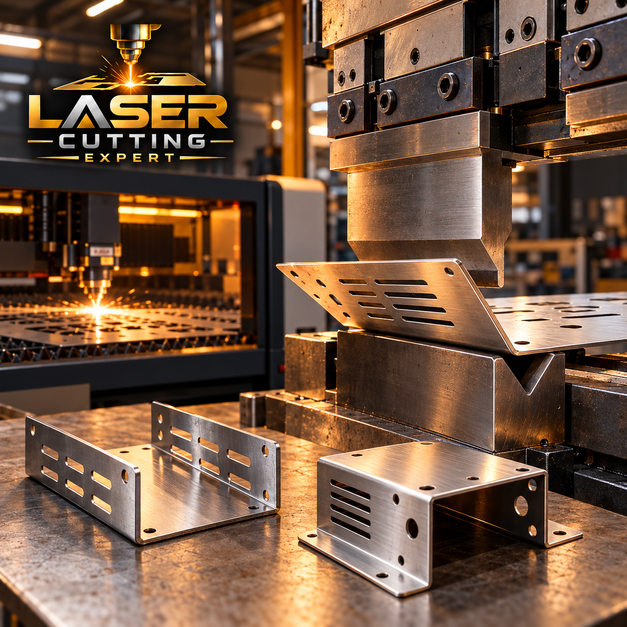
Many metal components are not finished when the laser stops cutting. Brackets need angles, trays need sides, enclosures need corners and covers often need several folds before they become usable parts. Laser Cutting Expert provides laser cutting and bending services from our London workshop, combining accurately cut flat blanks with suitable forming for one-off components, prototypes and repeat production. Our work covers brackets, boxes, trays, panels, guards, enclosures, signs, furniture parts and general fabrication components. We have no minimum order and operate 24/7, including weekends and bank holidays. Suitable urgent projects can be produced with same-day London service, with nationwide delivery available for customers throughout the UK.
CALL OR EMAIL US FOR PRICES
“Order any time of the day or night and receive your order on the same day in London. You are welcome to visit our laser cutting shop for an instant laser cutting service. On-site collection or free delivery can be arranged. Email us at laser@makergroup.uk for a quick quote or call us on 02036339857 for an instant price”.
Same Day Laser Cutting & Delivery
We can arrange a same day courier delivery with customer live tracking. Or customers can collect from our Laser Cutting Expert shop.

OPEN 24 HOUR
We are open 7 days a week, and you can order at any time. There is no last ordering time and no deadline. We also offer an overnight laser cutting service.

100% Satisfaction
High Quality Laser Cutting & 100% Customer Satisfaction Guarantee. Top-Rated Laser Cutting Company on Google.

Free File Check
We offer a free file check and proof before sending your artwork for laser cutting.
Think About the Fold Before Cutting the Sheet
A good folded component starts before the material reaches the press brake. The flat blank must already account for material thickness, bend position, internal radius and the dimensions required after forming. Our laser cutting and folding work is therefore planned as one manufacturing sequence rather than two unrelated operations. If the flat development is wrong, even an accurately cut blank will become the wrong size after bending. We look at how the component needs to finish, where each fold sits and what features are close to the bend. This approach is useful for everything from a simple right-angle bracket to a multi-fold equipment enclosure.
Laser Cutting and Bending Services
Our laser cutting and bending services are used by fabricators, engineers, product designers, sign companies, furniture makers, construction businesses and individual customers. Suitable metals can be laser profiled before being formed into practical three-dimensional components. Products can include mounting brackets, machine guards, electrical enclosure blanks, shelves, equipment covers, sign trays, furniture frames and custom fabrication parts. Customers can provide finished CAD drawings or ask for help preparing suitable manufacturing files. Cutting and bending within one planned workflow can also reduce the need to transfer partially completed components between several suppliers. Every job is assessed according to material, thickness, bend geometry, quantity and final use.
From Flat Sheet to Finished Form
A bent component begins life as a flat shape. The laser creates the outside profile, holes, slots and reliefs before the blank moves to forming. During laser cutting and folding, the press brake then applies controlled force along defined bend lines to create the required angles. This sounds simple, but the final dimensions depend on several interacting factors. Material thickness, tooling, internal radius and springback all affect the result. A CAD drawing that shows only the final three-dimensional shape may therefore need to be developed into a suitable flat pattern before production. Correct preparation at this stage is important for both prototypes and repeat manufacturing.
Mild Steel Cutting and Bending
Mild steel is widely used for brackets, trays, machine components, base plates, guards and general fabrication. Our laser cutting and bending services can combine profile cutting with suitable press-brake forming to produce components ready for welding, coating or assembly. Material thickness influences both the laser process and the bending force required. Tight corners should not simply be specified without considering a practical internal bend radius. If the component will later be welded, tabs or locating features can sometimes be included during cutting. Structural parts still require appropriate engineering. Accurate cutting and bending reproduce the specified geometry but do not determine whether a bracket or frame is strong enough for its load.
Stainless Steel Cutting and Bending
Stainless steel can be used for kitchen components, equipment housings, machine panels, architectural products, signs and furniture. Laser cutting and folding allows holes and profiles to be created before the sheet is formed into the required shape. Visible stainless products need additional planning because bending can affect the appearance of brushed or polished surfaces. Grain direction may also matter when several panels sit together. Protective film can sometimes remain during appropriate manufacturing stages, depending on material and process. Stainless grades are not interchangeable for every application, so the required grade should be specified where corrosion resistance, food environments or other service conditions are important.
Aluminium Cutting and Bending
Aluminium is useful where lower weight, corrosion resistance or a particular surface finish is required. Our laser cutting and bending services can produce suitable aluminium brackets, panels, covers, signs, trays and enclosures. Alloy and temper matter because different aluminium grades behave differently during forming. A material that cuts well is not automatically suitable for a very tight bend. Incorrect bend orientation or radius can increase the risk of cracking in some alloys. If the component will later be anodised, powder coated or painted, that finishing route should also be considered during design. Prototype forming can be useful when a new aluminium component contains demanding bend geometry.
Galvanised Steel Components
Galvanised sheet can be used for ventilation products, equipment panels, brackets, covers, cable-support components and outdoor fabrications. Laser cutting and folding can create the flat profile and form it into the required component, but the zinc coating needs consideration throughout manufacturing. Laser cutting locally exposes the steel at the cut edge, while bending can place additional stress on the coating. If components are later welded, zinc creates hazardous fumes and requires appropriate extraction, preparation and working procedures. Pre-galvanised sheet should not be treated as equivalent to a fabrication that is hot-dip galvanised after manufacturing. The intended corrosion-protection system should be decided accordingly.
Custom Brackets
Brackets are one of the clearest applications for laser cutting and bending services. A flat blank can contain mounting holes, slots, clearance features and a custom outside profile before one or more bends create the finished bracket. Products can include wall brackets, equipment mounts, shelf supports, sign brackets, furniture fittings and machine components. Slots can provide adjustment, while tabs may help locate the bracket within another assembly. Hole position relative to the bend is important because features placed too close to a fold can distort. Load-bearing brackets require suitable material, thickness and engineering. We manufacture to the approved design rather than selecting safe working loads on the customer’s behalf.
U-Shaped Brackets
A U-shaped bracket usually needs two folds, making bend sequence and internal dimensions important. During laser cutting and folding, the flat blank is prepared so both sides reach the intended position after forming. The width between the finished legs may be more important than the original flat dimensions, particularly when the bracket fits around another component. Press-brake tooling also needs enough access to form the second bend without the first side interfering. Products can include mounting channels, equipment supports and protective brackets. A prototype is useful when the component needs a close physical fit, allowing the flat development to be adjusted before repeat quantities are produced.
Angle Brackets
Simple angle brackets may contain only one bend, but that does not mean design can be ignored. Our laser cutting and bending services can produce custom L-shaped brackets with holes, slots, rounded corners and other features already included. Bend position determines where those holes finish relative to each face. For installation work, one side may attach to a wall while another supports equipment, signage or furniture. Material thickness should suit the actual load and fixing method. Structural performance remains an engineering responsibility. Where the bracket only needs to locate a lightweight product, a different thickness may be practical from a bracket supporting machinery or an architectural component.
Trays and Pans
Metal trays often use several bends around a flat base. Laser cutting and folding can produce equipment trays, drip trays, storage trays, machine pans and general fabrication components. Corner design is particularly important because material needs somewhere to move as adjacent sides are formed. Reliefs can be incorporated into the laser-cut blank to prevent unwanted overlap or tearing. Corners may later be welded if a sealed or stronger construction is required. If the tray needs to hold liquid, the finished fabrication and welding method must be designed and tested accordingly. Laser cutting and bending alone do not establish that a tray is leak-proof or suitable for chemical containment.
Electrical Enclosures
Electrical enclosures typically combine cut-outs, ventilation, mounting features and several folds. Our laser cutting and bending services can manufacture suitable enclosure blanks from approved designs before they move into assembly and finishing. Openings for switches, cable glands, displays and connectors can be laser cut while the material is flat. Bend reliefs and corner details then allow the enclosure to form correctly. Electrical safety, ingress protection, EMC and equipment certification remain responsibilities of the enclosure or equipment manufacturer. Producing accurate dimensions does not automatically give the finished product an IP rating. Prototype enclosures are useful for checking component clearance and assembly before repeat production.
Machine Guards
Machine guards can use folded sheet to cover moving parts or create protective barriers around equipment. Laser cutting and folding can integrate ventilation slots, access openings, fixing holes and stiffening folds into suitable guard designs. Folding can increase rigidity without adding separate structural components. However, machine guarding is safety-critical. Hole size, opening position, distance from hazards and the strength of the complete installation require proper risk assessment. Laser Cutting Expert manufactures according to the approved design but does not determine whether a guard meets the safety requirements of a particular machine. The responsible machine manufacturer or engineer should validate the complete guarding system before equipment enters service.
Equipment Covers
Covers for machinery and equipment often start as one flat sheet containing all the necessary openings. Our laser cutting and bending services can create covers with folded sides, flanges and mounting features. A well-designed cover can reduce the number of separate components required in an assembly. It may also be easier to remove for maintenance. Ventilation patterns, handles and fastener locations can be incorporated during cutting. The bending sequence needs to consider whether one flange will block access for forming another. Where a cover sits near heat, moving machinery or electrical components, the final design must account for those operating conditions rather than focusing only on its external appearance.
Control Panels
Control panels can contain cut-outs for buttons, displays, switches, meters and connectors before the sheet is folded into its final form. Laser cutting and folding keeps these features tied to the same CAD geometry used for the outside profile. This helps when openings need to align with components mounted behind the face. Brushed stainless steel and aluminium can be useful where the panel remains visible. Identification may also be added through suitable engraving or printing in a separate finishing stage. Electrical clearance, operator safety and regulatory information remain the responsibility of the equipment manufacturer. A prototype panel can be fitted to the real hardware before production quantities are approved.
Sign Trays
Folded sign trays are widely used for shop signs, wall signs and branded display panels. Laser cutting and bending services can produce suitable metal faces with folded returns that add depth and rigidity. Fixing holes, cable access and other openings can be incorporated before bending. Aluminium is commonly considered where lower weight and corrosion resistance are useful, while other metals may suit different installations. Large exterior sign trays require suitable support and installation for wind loading. Powder coating or printing can be completed as separate finishing stages where required. The sign contractor remains responsible for confirming the completed installation is secure for its location.
Folded Metal Letters
Some three-dimensional lettering uses folded or fabricated metal components rather than flat cut shapes alone. Laser cutting and folding can prepare suitable faces, returns or supporting pieces depending on the letter construction. Tight curves may require a different fabrication technique from straight folded sections, so not every letter is created entirely on a press brake. Material thickness, letter size and desired depth all influence the production method. Stainless steel and aluminium can provide different visual finishes. If lighting will be installed within fabricated letters, electrical design and weatherproofing need to be addressed separately by the sign manufacturer or installer.
Shelves and Storage Components
Metal shelving components can use folds to increase stiffness while keeping the basic product relatively simple. Our laser cutting and bending services can produce shelf pans, brackets, storage trays and workshop organisation parts with holes or slots incorporated into the flat blank. Folded edges can also remove an exposed raw edge from the front of a shelf. Load capacity depends on material, thickness, span, bend geometry and support method. A laser-cut shelf should therefore not be assigned a working load simply from its appearance. Commercial storage systems should be designed and tested according to the intended use and installation environment.
Furniture Components
Furniture makers can use laser cutting and folding for table brackets, chair components, cabinet fittings, shelf supports and decorative metal details. Bending allows flat sheet to become a stronger three-dimensional component without always requiring several welded pieces. Tabs and holes can also help metal parts connect with timber, glass or other furniture materials. Visible surfaces need consideration before forming, particularly with brushed stainless or pre-finished sheet. Furniture supporting people or significant loads requires appropriate design and testing. Laser Cutting Expert can manufacture the specified components, but the finished table, chair, bench or storage product remains the furniture manufacturer’s responsibility.
Retail Display Components
Retail displays often require small brackets, product shelves, sign holders and shaped metal supports. Laser cutting and bending services can create these components with mounting slots and branding-related features already included. Folded sheet can provide stiffness while keeping the display relatively lightweight. If several stores require matching displays, an approved component file can support repeat production. Prototype assemblies are useful because real products and packaging may differ slightly from their published dimensions. Public-facing displays also need stable installation and safe edge conditions. Finishing such as powder coating can be planned after cutting and forming once the physical component geometry has been confirmed.
Exhibition Fabrication
Exhibition stands can contain folded brackets, display panels, equipment mounts and sign supports manufactured through laser cutting and folding. Components may need to pack efficiently for transport and assemble quickly on site. Slots, tabs and fixing holes can be included during laser cutting to help repeat assembly. A prototype joint can establish whether tools and fasteners are accessible once the component is folded. Exhibition structures used around the public still need appropriate stability even when they are temporary. Larger frames and overhead components require proper engineering and venue approval where applicable. Laser cutting and bending provide components rather than certification of the completed exhibition structure.
Ventilation Panels
Ventilation openings can be cut into a flat panel before it is formed into a cover, cabinet or equipment housing. Our laser cutting and bending services can create slots, perforation patterns and larger airflow openings alongside mounting features. The amount of removed material affects panel stiffness, so heavily ventilated designs may need folds or other reinforcement. Ventilation requirements should be established by the equipment designer, particularly where heat-generating electronics are involved. A visually open pattern does not automatically provide sufficient airflow. Where fan guards or safety openings are incorporated, access to moving components must also be considered by the responsible machine or equipment designer.
HVAC Components
Ductwork fittings, ventilation covers and equipment components can involve both profile cutting and folding. Laser cutting and folding can produce suitable flanges, panels, brackets and custom sheet-metal parts according to supplied drawings. Galvanised steel and other sheet metals may be used depending on the application. Fold lines and connection details need to coordinate with the intended assembly method. HVAC performance, pressure, fire requirements and building compliance depend on the complete installed system rather than the laser-cut component alone. Where a component forms part of regulated ductwork or fire-control equipment, customers should specify the relevant material and fabrication requirements before production.
Base Plates with Folded Features
Some base components combine a broad flat mounting area with one or more raised flanges. Our laser cutting and bending services can create holes, slots and outside profiles before forming these features. Products may support equipment, furniture, signage or fabricated assemblies. Where the plate carries significant loads, the material and bend geometry should be engineered accordingly. A bend can stiffen a component but should not be treated as a substitute for proper structural calculation. If precision mounting surfaces are required, secondary machining may also be needed after fabrication. Laser cutting and forming can create the main geometry while another process establishes critical machined features.
Folded Decorative Panels
Decorative screens do not always remain flat. Laser cutting and folding can create side returns, mounting flanges or three-dimensional shapes that help panels become freestanding features, planters, wall systems or interior elements. Materials may include mild steel, stainless steel, aluminium or Corten depending on the intended environment. Pattern density needs to leave enough material for the panel to remain stable during forming. Bending directly through a very open decorative pattern can also produce unpredictable distortion. It is therefore useful to keep suitable solid areas around planned bend lines. Large outdoor panels require appropriate support and structural consideration for wind and public safety.
Planters and Garden Products
Metal planters can be produced from laser-cut blanks that are folded and later welded or assembled. Our laser cutting and bending services can create sides, bases, drainage holes and connection features according to the approved design. Corten steel, mild steel and other metals may be considered depending on the required appearance. Corten develops a weathered surface and early runoff can stain surrounding paving, so installation should account for drainage. Large planters also need adequate material thickness and internal support where soil loads are significant. Laser cutting and bending create the main components, while welding, coating and final assembly determine the completed planter construction.
Automotive Development Components
Prototype automotive and motorsport work can include brackets, shields, panels and equipment mounts produced through laser cutting and folding. Development quantities may begin with one component before fit is checked on the vehicle or test assembly. Aluminium, stainless steel, mild steel and other specified metals may be used according to the design. Automotive safety-critical components require appropriate engineering, material traceability and validation. A laser-cut and folded part should not be assumed roadworthy or competition-safe simply because it fits. Customers working on structural, braking, restraint or other critical systems should use the relevant approved design and testing processes.
Heat Shields
Heat shields often use thin metal sheet with bends or flanges that increase stiffness and create separation from hot components. Laser cutting and bending services can produce suitable shield profiles with fixing holes and ventilation features. Stainless steel and aluminium may be considered depending on temperature and application. The designer needs to establish material, air gap, mounting and operating temperature. A folded shape alone does not guarantee effective thermal protection. Automotive, industrial and equipment heat shields should be tested in the real operating environment. Prototypes are useful because they allow clearance and fixing points to be checked before additional pieces are manufactured.
Stainless Kitchen Components
Commercial kitchen fabrications can use folded stainless sheet for covers, trays, splashbacks, brackets and equipment components. Laser cutting and folding allows openings and mounting features to be created before forming. Stainless grade, surface finish and cleaning requirements should be specified according to the intended environment. Food-contact equipment may have additional hygiene and fabrication requirements beyond cutting and bending. Corners, welds and joints need suitable design where food or liquid can collect. Laser Cutting Expert can manufacture approved components, but food-safety compliance depends on the complete fabricated and installed product, including material specification, welding, finishing and cleaning design.
Corner Reliefs
When two bends meet, the material around the corner needs somewhere to move. Corner reliefs can be incorporated into the flat profile during laser cutting and folding to reduce tearing, overlap or unwanted deformation. The appropriate relief depends on material thickness, bend radius and final appearance. Enclosures, trays and boxes commonly use this type of detail. Too much relief can leave an unnecessarily large opening, while too little can create interference during forming. Prototype fabrication can help establish the correct geometry. If corners will later be welded, the relief can also be designed with the welding and finishing process in mind.
Holes Near Bend Lines
A hole positioned very close to a bend can distort as the surrounding material stretches and compresses. Our laser cutting and bending services consider this relationship when reviewing suitable component geometry. Slots, large cut-outs and ventilation patterns can be affected in the same way. Moving the feature slightly away from the bend may solve the problem. Where its position cannot change, the manufacturing sequence or design may need adjustment. The exact behaviour depends on material, thickness and tooling. Producing one prototype is often worthwhile when a component contains critical holes close to several folds, especially if those holes must align with another assembly.
Bend Radius
A perfectly sharp inside corner is not how normal sheet-metal bending behaves. The formed component has an internal radius influenced by tooling, material and thickness. Laser cutting and folding designs should therefore use realistic bend geometry. Specifying an unnecessarily tight radius can increase the risk of cracking or require different tooling. Aluminium alloys can be particularly sensitive depending on grade and temper. The bend radius also affects the flat development and final dimensions. Customers with established fabrication requirements can provide their preferred radius. For new products, the design should be developed around a practical forming method rather than drawing an impossible zero-radius corner in CAD.
Bend Allowance
As sheet metal bends, material around the bend zone stretches and compresses. This means the flat length cannot always be calculated simply by adding the finished outside dimensions. Bend allowance accounts for what happens through the formed area. Accurate laser cutting and bending services therefore depend on a flat development suited to the material, thickness, radius and tooling. For repeat components, prototype measurement can help confirm the development before production quantities are released. Different workshops and tooling setups can produce slightly different results. Where the final folded dimensions are critical, customers should communicate those dimensions rather than relying solely on an unverified flat pattern.
Springback
Metal does not always remain exactly at the angle where the press brake first releases it. Some elastic recovery occurs, known as springback. During laser cutting and folding, this behaviour is considered as part of forming. The amount depends on material, grade, thickness, radius and bend method. High-strength materials and some aluminium grades can behave differently from ordinary mild steel. Tooling and machine setup compensate for suitable repeat production, but new materials or unusual geometries may benefit from a test bend. Understanding springback is particularly important where several folded components need to meet accurately during welding or assembly.
Grain Direction
Sheet material can have directional characteristics created by rolling or surface finishing. During laser cutting and bending services, orientation may matter for both forming behaviour and appearance. Brushed stainless steel is an obvious example because the visible grain direction should normally remain consistent across related panels. Some aluminium materials may also bend differently depending on orientation relative to rolling direction. For decorative products, nesting purely for minimum material waste can therefore create inconsistent visual results. We consider orientation where it has been specified as important. Customers should identify any grain or surface direction requirements when supplying their drawings or approving production.
Cutting Before Bending
For most sheet-metal components, cutting while the material is flat is the practical manufacturing route. Laser cutting and folding normally starts with profiling because flat sheet is easier to position and allows holes, slots and outside geometry to be produced in one operation. The blank then moves to forming. This sequence works for brackets, trays, covers, enclosures and panels. Cutting first also makes efficient nesting possible. The key is preparing the correct flat development. If the design has been created only as a finished 3D object, manufacturing information may need to be developed before the sheet can be cut accurately.
When Post-Bend Cutting May Be Needed
Although cutting first is normal, some specialist components require features after forming. A hole may need to reference the final physical position, or an existing bent component may require modification. These jobs need different equipment and fixturing from ordinary laser cutting and folding. The formed component must be held consistently, and the cutting head needs suitable access. Where the feature can be created reliably in the flat blank, that route is generally simpler. Post-bend processing should therefore solve a genuine geometric requirement rather than being used automatically. Complex formed-part cutting may move into specialist multi-axis manufacturing depending on the component.
Tabs and Slots for Fabrication
Tabs and slots can help fabricators locate components before welding or assembly. Our laser cutting and bending services can incorporate these features directly into suitable parts. A folded bracket might use a tab to locate into a base plate, while an enclosure can use slots to position an internal support. Fit should allow for real material and cutting variation. Designing every joint as an extremely tight press fit can create assembly problems, particularly after coating. Weld access should also remain available. A prototype assembly allows the fabricator to test these features and suggest practical adjustments before a full kit enters repeat production.
Bend-Ready Fabrication Kits
A complete fabrication may contain several different laser-cut and folded components. We can prepare suitable brackets, plates, panels and supports as a coordinated kit. Laser cutting and folding can reduce manual drilling and cutting during later fabrication because connection features are already included. Components may also be identified according to the customer’s assembly drawings. Where several materials or thicknesses are involved, each group needs the appropriate manufacturing route. The final welding and structural performance remain with the fabricator. Supplying a kit of accurately prepared components can simplify assembly, but it does not replace qualified welding, inspection or engineering where those requirements apply.
Welding After Bending
Many folded components move directly into welding. Trays may need closed corners, frames may require brackets and enclosures may use welded seams. Our laser cutting and bending services can prepare the geometry for these later operations. Material selection should reflect the welding process. Galvanised steel requires particular caution because heating zinc creates hazardous zinc oxide fumes, so appropriate extraction and preparation are required. Stainless and aluminium also need material-specific welding procedures. If a weld is structural or pressure-containing, the responsible fabricator must use the required qualified procedures and inspection. Accurate parts help fabrication, but they do not certify the finished welded assembly.
Powder Coating After Folding
Mild-steel and aluminium components are often powder coated after cutting, bending and welding are complete. Laser cutting and folding should therefore be planned so decorative finishing occurs after operations likely to damage the coating. Holes, tabs and mounting features are normally easier to create before coating. Surface preparation and coating thickness can influence final fit, particularly on close-fitting tabs or threaded areas. Hanging points may also be useful for coating. Colour and coating specification should suit the product’s environment. Outdoor components need a coating system appropriate for external exposure rather than simply selecting a colour intended for indoor decorative use.
Parts for Secondary Machining
Laser cutting and bending can create the main component geometry before selected features receive precision machining. A folded bracket might require a reamed hole, threaded feature or machined mating surface. Our laser cutting and bending services can produce suitable near-net components while leaving appropriate material for later machining. Trying to force every feature into the laser stage is not always the best manufacturing decision. Bearing seats, precision bores and sealing surfaces may need another process. Customers should identify these features on the drawing so they are not mistaken for ordinary laser-cut holes. Combining processes can create a more practical and accurate final component.
Prototyping Folded Components
One physical prototype can reveal more about a folded component than several hours of looking at a screen. Laser cutting and folding prototypes allow customers to check final dimensions, hole positions, clearances and assembly. If the part needs adjustment, the flat development can be changed before repeat production. This is particularly useful for enclosures, U-brackets, trays and components containing several bends. There is no minimum order, so development can begin with one piece. Where the prototype is safety-critical or structural, appropriate engineering testing is still required. The prototype confirms manufacturing geometry; it does not by itself prove safe performance under load.
From Prototype to Small Batch
After one folded component has been approved, customers may want a small production run rather than immediately ordering hundreds. Our laser cutting and bending services support this gradual move into manufacturing. A batch of five, ten or twenty parts can provide useful information about assembly time and production consistency. If another design change is discovered, the drawing can still be revised before larger quantities are ordered. This is useful for new products, specialist equipment and furniture ranges. Digital cutting also avoids dedicated profile tooling, making design revisions easier than manufacturing methods that depend on a fixed physical cutting die.
Repeat Production
Once the component and forming method are approved, laser cutting and folding can support repeat orders. The controlled drawing should identify material, thickness, finished dimensions and relevant bend information. If the design changes, a new revision should be issued rather than replacing the old file without explanation. Repeatability also depends on material consistency and tooling. Switching to a different grade or thickness can change forming behaviour even if the flat geometry remains identical. Businesses ordering regular components should therefore maintain clear part numbers and revision references. This helps future batches match the intended product rather than relying on informal descriptions from previous orders.
Cutting and Folding Customer-Supplied Metal
Customers can provide suitable sheet material for laser cutting and bending services, subject to material identification and condition. We need to know the metal grade, thickness and any surface finish that needs protecting. Pre-coated or unusual sheet may require additional assessment because bending can affect coatings. Material should also be sufficiently flat and suitable for machine handling. If the customer supplies only enough material for the exact number of parts, it is worth considering whether additional stock may be required for setup or testing. For new bend geometries, having spare material from the same batch can be particularly useful for confirming the forming result.
CAD for Laser Cutting and Folding
A manufacturing drawing for laser cutting and folding should communicate more than the outside shape. We need material, thickness, finished dimensions and enough information to understand the bends. Flat DXF files can be useful for established parts, while 3D CAD or folded drawings provide additional context for new components. Our related Subcontract & Industrial Laser Cutting service supports digitally controlled profile production where accurate flat geometry is required before forming. If customers only have a sketch, suitable CAD preparation can be discussed. Engineering-critical dimensions should always be confirmed by the responsible designer before material is committed to repeat production.
Laser Cutting and Bending Services Near Me
Customers searching for laser cutting and bending services near me often need more than a flat sheet delivered from a cutting company. They may need a bracket ready to install, an enclosure ready for welding or a tray already formed to the required dimensions. Our London workshop combines suitable cutting and folding within one production route and operates 24/7. This is useful for urgent fabrication, prototype development and replacement components where transferring work between separate suppliers would add time. Customers can send drawings electronically, and suitable completed work can be collected, delivered by courier across London or dispatched to locations elsewhere in the UK.
Same Day Cutting and Bending London
Suitable urgent laser cutting and bending services can be considered for same-day production in London. Turnaround depends on material availability, drawing readiness, number of bends, quantity and machine capacity. A straightforward mild-steel angle bracket from an approved file can move much faster than a new multi-fold enclosure requiring CAD development and prototype checking. Same-day courier delivery is available across London for suitable completed jobs. We are open 24/7, including weekends and bank holidays. For urgent orders, send the material specification, thickness, quantity, flat or folded drawing and deadline together so the complete manufacturing requirement can be assessed without unnecessary delays.
UK-Wide Laser Cutting and Folding
Our laser cutting and folding service is produced in London but available to customers throughout the UK. Engineers, manufacturers, fabricators, designers, sign companies and individual customers can send CAD files and drawings electronically. Suitable completed brackets, panels, enclosures, trays, guards, furniture components and fabrication parts can be dispatched nationwide, including next-day delivery where the production schedule and parcel requirements allow. There is no minimum order, so customers can start with one prototype and later move into repeat production. Where a project needs further welding, coating, machining or assembly, the cutting and bending stages can be planned around those later operations from the beginning.
FAQs About Laser Cutting & Bending
1. What are laser cutting and bending services?
Laser cutting and bending services combine laser profiling of flat sheet with controlled forming to create brackets, trays, enclosures, panels and other three-dimensional metal components.
2. What is laser cutting and folding?
Laser cutting and folding involves cutting the required flat blank first and then forming it along specified bend lines, usually using suitable press-brake equipment.
3. What metals can you cut and bend?
Suitable projects can include mild steel, stainless steel, aluminium and galvanised steel, depending on grade, thickness and required bend geometry.
4. Can you make custom brackets?
Yes. We can produce suitable angle brackets, U-brackets, mounting brackets, sign brackets and other custom folded components from approved drawings.
5. Can you make folded enclosures?
Yes. Suitable enclosure blanks can include holes, ventilation, cable openings and mounting features before they are formed.
6. Can I order one folded prototype?
Yes. There is no minimum order, so one component can be cut and bent for fit and assembly testing before repeat production.
7. Do holes distort near bends?
They can. Holes and slots placed too close to a bend may distort during forming, so their location should be considered during design.
8. Can you bend customer-supplied metal?
Suitable customer-supplied material can be assessed where the metal grade, thickness, surface finish and condition are known.
9. Do you offer laser cutting and bending services near me in London?
Yes. Customers looking for laser cutting and bending services near me in London can use our 24/7 production service, with suitable same-day cutting, bending and courier delivery available.
10. Can you deliver folded components throughout the UK?
Yes. Production is based in London, and suitable completed components can be delivered throughout the UK, including next-day options where available.