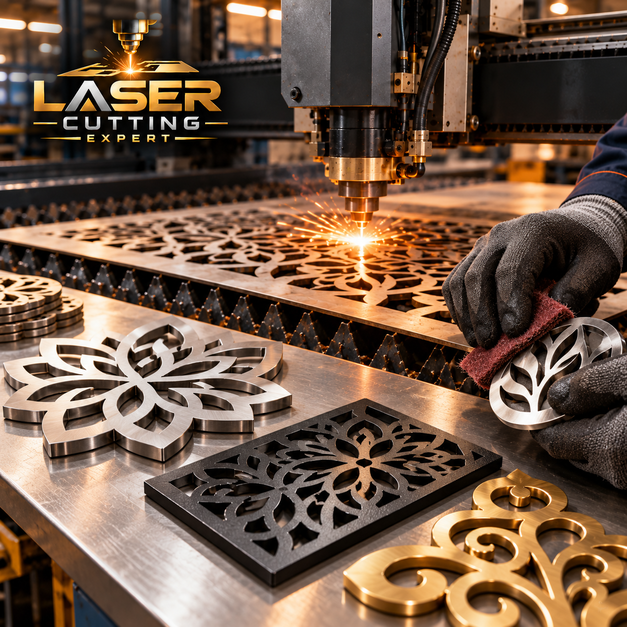
A component coming off the laser is not always ready to install, assemble, print or hand to a customer. Some parts need sharp edges removed, others need surface preparation, printed graphics, etched details, bending or a decorative finish. Laser Cutting Expert provides a complete laser cutting and finishing service from our London workshop for businesses, manufacturers, designers, artists and individual customers throughout the UK. We can combine cutting with suitable deburring, etching, printing and further fabrication so customers do not have to treat every production stage as a separate job. There is no minimum order, and suitable urgent London projects can be completed with same-day production and delivery.
CALL OR EMAIL US FOR PRICES
“Order any time of the day or night and receive your order on the same day in London. You are welcome to visit our laser cutting shop for an instant laser cutting service. On-site collection or free delivery can be arranged. Email us at laser@makergroup.uk for a quick quote or call us on 02036339857 for an instant price”.
Same Day Laser Cutting & Delivery
We can arrange a same day courier delivery with customer live tracking. Or customers can collect from our Laser Cutting Expert shop.
OPEN 24 HOUR
We are open 7 days a week, and you can order at any time. There is no last ordering time and no deadline. We also offer an overnight laser cutting service.
100% Satisfaction
High Quality Laser Cutting & 100% Customer Satisfaction Guarantee. Top-Rated Laser Cutting Company on Google.

Free File Check
We offer a free file check and proof before sending your artwork for laser cutting.
Start with the Finished Product, Not Just the Cut
Finishing decisions are easier when we know how the component will eventually be used. A mild-steel bracket that will be welded and powder coated needs a different production route from a brushed stainless plaque that will remain visible. An acrylic display with printed branding is different again. Our laser cutting and finishing service therefore begins by looking at the complete requirement. We consider material, visible surfaces, edge condition, later fabrication and final presentation before deciding which stages are useful. This avoids spending time creating a decorative finish on an area that will later be welded, or leaving an edge untreated when it will remain exposed in the finished product.
Laser Cutting and Finishing Service for Custom Work
Our laser cutting and finishing service can support prototypes, one-off products, short runs and repeat orders. Suitable work includes signs, plaques, machine panels, brackets, labels, furniture parts, displays, garden screens, equipment covers, decorative panels and personalised products. Depending on the job, a part may move from cutting into deburring, engraving, etching, printing, bending, polishing or another appropriate finishing stage. Not every component needs every process. Industrial fabrication blanks may need only basic edge preparation, while a customer-facing product may require more attention to appearance. We plan the sequence around the actual product rather than automatically adding unnecessary finishing operations to every laser-cut part.
Deburring Laser Cut Components
Deburring laser cut components can remove unwanted sharpness, small edge irregularities or residual material left after cutting. The amount of finishing required depends on material, thickness, cutting process and final application. A fabrication blank that will immediately be welded may have different edge requirements from a hand-held product or furniture component. Deburring can also make components easier to handle during assembly. It should not be confused with precision machining or full cosmetic polishing. Where a specific edge radius, surface roughness or engineering finish is required, that needs to be stated clearly. We assess whether ordinary deburring is enough or whether another finishing process is more suitable.
Why Edge Condition Matters
Edges are easy to overlook on a CAD drawing because the drawing mainly describes geometry. In the physical product, however, users and fabricators interact directly with those edges. A bracket may be handled during assembly, a sign may have visible sides and a decorative panel may sit where people can touch it. Deburring laser cut parts can therefore improve handling and preparation for later work. Edge requirements also change according to thickness and material. Thin stainless sheet, heavy steel plate and acrylic should not be treated as though they need identical finishing. Understanding whether an edge is hidden, visible, welded or touched helps determine the right level of post-cut work.
Deburring Engineering Parts
Machine components, brackets, guards and equipment panels may need practical rather than decorative finishing. Deburring laser cut engineering parts can help remove sharp areas before components reach assembly, bending or installation. Products can include mounting plates, machine covers, base plates, shims, brackets and enclosure blanks. Critical functional dimensions should not be altered unintentionally during finishing, particularly on small tabs, slots or locating features. Where a component needs precision-machined edges, bearing fits or sealing surfaces, deburring alone is not sufficient. The engineering drawing should identify these areas so general edge preparation can be separated from features that need a controlled secondary machining operation.
Deburring Signs and Decorative Products
Visible products require a different approach from hidden fabrication parts. Metal signs, plaques, letters, furniture inserts and decorative panels may have exposed edges that contribute to the overall appearance. Deburring laser cut components can prepare these edges for handling or later finishing. Stainless steel may retain a brushed surface, aluminium may move into anodising and mild steel may be powder coated. Brass or copper could require polishing or intentional ageing. The final appearance should be considered before edge work begins because aggressive finishing can change nearby surfaces. For customer-facing products, the objective is not simply removing a burr but creating an edge condition appropriate to the design.
Laser Cutting Etching
Laser cutting etching combines profile manufacturing with surface detail on suitable materials. Cutting defines the physical outside shape or openings, while etching creates information, patterns or decorative details without necessarily passing through the complete material thickness. This combination can be useful for signs, labels, plaques, awards, model components, personalised gifts and identification products. The appearance of etched detail depends on the material and laser process. Fine text that would be too delicate as a cut-out may work better as an etched surface feature. Customers can provide vector artwork, text and layouts, or ask for design support where the production file needs preparing before manufacture.
Cutting and Etching on Acrylic
Acrylic products can combine custom outside shapes with logos, text, patterns or identification details. Laser cutting etching can be used for suitable acrylic signs, awards, menu holders, table numbers, displays, keyrings and decorative products. Clear acrylic can create a particularly different visual result from opaque or mirrored sheet. The engraving or etching appearance depends on acrylic type and surface. Very small details should be tested at their real physical size rather than judged only from enlarged artwork. Protective films and printed surfaces also need consideration. If printing, cutting and etching appear on the same component, registration between each production stage becomes important.
Cutting and Etching on Wood
Wood and plywood can use cut profiles together with etched names, illustrations, instructions or decorative patterns. Laser cutting etching is useful for plaques, signs, boxes, puzzles, coasters, bookmarks, wedding products and personalised gifts. Natural wood varies in grain, resin and colour, so etched areas may not look completely identical across every piece. Plywood can also vary according to veneer and adhesive construction. Heat can darken both cut and etched areas, which is often part of the intended appearance. If a very light, uniform marking is required, samples can help establish whether the selected timber provides the visual result the customer expects.
Cutting and Etching on Leather
Suitable genuine leather can be cut into keyrings, luggage tags, patches, labels, wallet parts and other accessories before names, logos or decorative details are added. Laser cutting etching can combine these operations where the leather type is suitable. Natural hide variation means grain and colour can affect the appearance of the marking. Synthetic leather must be identified before laser processing. PVC and chlorine-containing faux leather must not be laser cut because heating it can release hazardous and corrosive gases. Unknown synthetic products require supplier information or an SDS. Edge darkening and engraved colour should also be considered when planning the finished leather product.
Fine Information Through Etching
Not every piece of information should be physically cut through a component. Serial numbers, instructions, small logos and fine decorative lines may be clearer when retained as surface detail. Laser cutting etching allows the outside shape to remain strong while smaller information is added within it. Applications include machine labels, product tags, equipment plates, signs and model components. Where the information is safety-critical or legally required, the manufacturer remains responsible for specifying the correct wording, size and permanence. We can reproduce approved content, but the cutting or etching process itself does not determine which warnings, ratings or regulatory marks are required on the finished product.
Laser Cut Printing
Laser cut printing combines printed graphics with accurately shaped components. Depending on the material and product, printing may be completed before or after profile cutting. Applications can include signs, branded displays, promotional products, plaques, decorative panels and personalised items. Registration becomes important because the cutting path must align with the printed design. A small positional error can become obvious when artwork is intended to follow a shaped edge. Bleed and safe areas should therefore be considered during artwork preparation. The most practical sequence depends on the printing method, material and whether the printed surface can tolerate the later laser process without unwanted marking or damage.
Printing and Laser Cutting Services
Our printing and laser cutting services are useful when a product needs both visual graphics and a custom physical shape. Instead of treating printing and cutting as unrelated operations, the artwork can be prepared with both stages in mind. Products may include branded acrylic signs, display panels, promotional pieces, event products, labels, decorative items and presentation materials. Variable names or graphics can also be considered for suitable projects. Customers should provide high-quality artwork where available. If the printed design needs to align precisely with holes, edges or cut-outs, a production template can be created so both processes reference the same dimensions.
Printed Acrylic Signs
Acrylic signs can combine colour printing with custom-cut edges, holes and logo shapes. Printing and laser cutting services allow the graphic and physical profile to be developed as one product. Applications include business signs, directional panels, door signs, branded displays and exhibition graphics. Clear acrylic can be printed selectively while leaving transparent areas, whereas white or coloured acrylic creates different visual effects. Mounting holes should be positioned with enough surrounding material to avoid weak areas. Outdoor signs require suitable print technology, material and installation. Large signs also need appropriate support and wind-load consideration. Cutting and printing create the sign components but do not replace safe installation design.
Printed Display Components
Retail displays and exhibition products often combine unusual shapes with branding. Laser cut printing can produce suitable header panels, display shapes, product markers, branded inserts and decorative pieces. Acrylic, board and other compatible materials may be selected according to the required appearance and lifespan. Cut-outs can create slots for assembly or openings around products. If the display packs flat, the design should account for repeated assembly and disassembly. Public-facing display structures also need sufficient stability. For temporary events, delivery deadlines can be particularly important, so artwork approval and material choice should be completed early enough to leave time for both printing and cutting stages.
Printed Promotional Products
Custom shapes can make printed promotional items different from ordinary rectangular products. Printing and laser cutting services can support suitable branded tags, plaques, display pieces, event items and personalised products. The production method depends on material and required quantity. A small one-off presentation item may follow a different workflow from hundreds of repeated promotional components. Artwork should contain sufficient resolution and appropriate bleed where needed. Fine cut-outs should not pass through important printed information unless intentionally designed that way. For variable names, numbers or messages, the production file needs clear organisation so each printed design remains matched with the correct cut component.
Printed Panels and Information Boards
Information panels can contain branding, instructions, diagrams and directional graphics while using a custom outer profile. Laser cut printing can be suitable for reception panels, wayfinding signs, display boards and equipment information plates. Holes and mounting slots can be integrated into the profile rather than drilled later. If the product is installed outdoors, print durability and substrate choice should match the environment. Safety signage must use the correct content, colour and dimensions required for its application. We manufacture according to approved artwork, but the responsible organisation remains responsible for confirming regulatory information. A sample can be useful where colour, scale or surface appearance is important.
Printed and Cut Personalised Products
Names, dates, photographs and custom messages can be combined with shaped products through printing and laser cutting services. Suitable examples include acrylic gifts, photo plaques, wedding signs, table decorations, keepsakes and branded presentation items. The printed element provides colour and image detail, while laser cutting controls the physical shape. Personalisation files should be checked carefully before production because every item may contain different information. Small batches and individual products are welcome because we have no minimum order. Where a product will be frequently handled, the print method and material should be selected according to expected wear rather than appearance alone.
Surface Preparation Before Printing
A printed result depends partly on the condition of the surface underneath it. Dust, oil, protective film or residue can interfere with adhesion and appearance. For suitable laser cut printing projects, the production sequence should therefore include appropriate preparation before graphics are applied. Some materials arrive with protective film that should remain during cutting but be removed before printing. Others may need cleaning after fabrication. Surface preparation should match the printing technology rather than using one generic cleaning method on every material. If a part will also be bent, welded or coated, printing is usually scheduled after operations that could otherwise damage the finished graphic.
Cutting Before Printing
For some products, cutting the blank first makes printing easier because the printer works with the final component shape. This can suit smaller rigid products, plaques or individual personalised pieces. The advantage is that the exact physical edge already exists. The disadvantage is that handling many separate shapes can be less efficient than printing a complete sheet. Our printing and laser cutting services therefore consider quantity, material and artwork before choosing the sequence. If printing extends to the edge, bleed still needs to be handled correctly. Fixtures or positioning methods may also be needed so individual components remain aligned during the printing stage.
Printing Before Cutting
Printing a full sheet before laser profiling can be efficient for multiple products arranged together. Laser cut printing then uses the approved cutting paths to separate each item and create the final shape. Registration is critical because the physical cut must follow the intended printed outline. Suitable bleed can reduce the visibility of minor production variation at the edge. The material and ink also need to tolerate the later cutting process. Unknown printed coatings should not be exposed to laser heat without understanding their composition. Where the print chemistry is unsuitable for laser processing, the manufacturing sequence or cutting method may need to change.
Surface Preparation for Powder Coating
Mild-steel components often move from laser cutting into powder coating. Edge condition, oil, scale and oxide can influence preparation requirements. Where fiber laser cutting with oxygen or another oxygen-assisted process creates an oxidised edge, that condition may need attention before coating. Our laser cutting and finishing service can be planned around the later coating requirement so customers know whether additional edge preparation is expected. Powder coating itself does not correct sharp geometry or poor surface preparation. Components should be designed with drainage, hanging and assembly in mind where relevant. The coating supplier’s process requirements should also be considered for demanding applications.
Preparing Parts for Painting
Painted components can include signs, brackets, machinery, furniture and architectural products. Deburring laser cut profiles before painting can help remove unwanted sharp areas and prepare parts for handling. Depending on the material and cutting method, further cleaning or surface treatment may also be required. Paint performance depends on coating system, preparation and environment. Outdoor steel requires an appropriate corrosion-control approach rather than relying on a decorative topcoat alone. If parts will be welded before painting, finishing is normally planned after fabrication. Understanding the complete sequence avoids preparing a surface twice or damaging a completed finish during a later manufacturing operation.
Preparing Parts for Welding
A fabrication component does not normally need decorative finishing before it is welded. Instead, edge preparation should support assembly and the welding procedure. Our laser cutting and finishing service can supply suitable brackets, gussets, plates and frame components with practical edge preparation. Tabs and slots can also help locate assemblies. Galvanised steel requires particular caution because welding zinc creates hazardous fumes and needs proper extraction and preparation. Stainless steel and aluminium also require appropriate material-specific welding practices. Structural welding should follow approved procedures. Laser cutting prepares the component geometry; the fabricator remains responsible for producing and inspecting the finished welded joint.
Parts Ready for Bending
Some laser-cut components move directly to the press brake. In these cases, finishing should not damage features or surfaces required for accurate forming. Our laser cutting and finishing service can support suitable bend-ready brackets, trays, enclosure blanks and panels. Bend allowances, material thickness and corner reliefs need to be correct in the original flat development. If a visible surface has protective film, its condition may also matter during bending. Our related Subcontract & Industrial Laser Cutting service can be useful where identification or decorative information needs to be added to suitable parts as part of the wider manufacturing workflow. Production order should always reflect what happens next.
Brushed Stainless Steel Products
Brushed stainless is often selected because the sheet surface becomes part of the final appearance. Products can include signs, plaques, kitchen panels, equipment faces, lift panels and decorative interior components. A laser cutting and finishing service for brushed stainless should consider grain direction from the beginning. Several parts installed side by side can look inconsistent if the brushing runs in different directions. Protective film may help preserve the visible face during production, subject to material compatibility. Cut edges have a different appearance from the broad brushed surface and may require additional finishing depending on the design. Customers should identify which surfaces remain visible after installation.
Polished and Decorative Metals
Brass, copper and stainless steel can be used where the metal itself provides the decorative finish. Laser cutting establishes the profile, while polishing or other finishing can influence the final appearance. Products include plaques, signs, furniture inserts, awards and decorative details. Deburring laser cut components may form one stage before more cosmetic finishing begins. Brass and copper naturally change appearance through oxidation unless protected or intentionally patinated. Mirror and highly polished surfaces also show handling marks more easily than ordinary fabrication sheet. Decorative requirements should therefore be specified before production so the component is handled according to its final visual importance.
Aluminium Finishing
Aluminium products may remain mill finish, be brushed, powder coated, painted or anodised after laser cutting. Our laser cutting and finishing service can be planned around the intended route. Products include signs, equipment panels, display parts, furniture components and enclosures. Alloy choice matters if bending or anodising follows. Visible surfaces also need suitable handling to avoid unnecessary scratches. Anodising is a separate finishing process and the final colour can vary according to alloy, surface preparation and treatment. If a component has precision mating surfaces or electrical contact areas, these should be identified because a decorative finish may not be appropriate across every part of the product.
Corten Steel Finishing
Corten steel is unusual because weathering itself becomes part of the visual finish. Laser-cut garden screens, signs, planters, edging and artwork may initially look similar to ordinary steel before the patina develops. The weathering process depends on exposure and environment. Early runoff can stain surrounding paving or walls, so installation should account for drainage. A laser cutting and finishing service for Corten may therefore involve planning how the product will be supplied and whether the customer wants natural weathering to develop later. Corten should not automatically be sealed or coated without considering how that changes the intended weathering behaviour.
Acrylic Edge and Surface Finish
Laser-cut acrylic can produce a distinctive edge, but final appearance varies with acrylic type, thickness and process. Signs, awards, displays, menu holders and personalised products may require careful handling so the broad surfaces remain free from unnecessary marks. Laser cutting etching can add text or artwork, while laser cut printing can introduce full-colour graphics. Combining these techniques creates many design options from one sheet material. Not every acrylic product needs polishing after cutting. The correct finishing route depends on the required appearance. Stress-sensitive components should also avoid unnecessarily sharp internal corners, particularly where they will be drilled, fastened or heavily loaded.
Wood Edge Finishing
Wood and plywood commonly show a darker edge after laser cutting. Some customers like this contrast because it clearly shows the manufacturing process, while others prefer sanding, painting or another finishing stage. A complete laser cutting and finishing service should therefore consider the intended visual result. Products can include signs, boxes, models, wedding items, puzzles and decorative artwork. Natural timber can vary in colour across the same batch, while plywood may reveal different internal veneer layers at the edge. If a product will be painted, the surface and edge may need preparation. Very fine details should be sanded carefully so delicate bridges are not accidentally broken.
MDF Finishing
MDF provides a consistent surface for signs, prototypes, models, decorative panels and furniture components. Laser-cut edges can appear darker than the broad face and may absorb paint differently. Deburring laser cut is not normally used in exactly the same sense as metal deburring, but MDF edges may require sanding or sealing before decorative finishing. Paint preparation becomes particularly important where a uniform surface is required. Fine dust should be removed before coating. MDF is also available in different densities and specialist grades, so material should be selected according to the product. Indoor decorative MDF should not automatically be assumed suitable for damp or external environments.
Finishing Leather Products
Laser-cut leather can be used for tags, keyrings, wallet components, patches, labels and accessories. The cut edge may darken and can sometimes be incorporated into the finished aesthetic. Laser cutting etching can add names, logos and decorative patterns to suitable genuine leather. Additional leather finishing may include edge treatment, assembly or hardware fitting depending on the product. Natural hides vary in grain and colour, so some variation should be expected. Synthetic leather requires material confirmation. PVC-containing faux leather must never be laser cut, and unknown synthetic materials should not be processed until their composition has been confirmed by suitable supplier information.
Signs with Cutting, Printing and Etching
A single sign can combine several manufacturing techniques. The outside profile and mounting holes can be laser cut, a logo can be printed in colour and smaller information can be etched. Our printing and laser cutting services allow these stages to be planned together for suitable signs and plaques. Acrylic, wood and selected metals can each create a different result. The sequence depends on material and artwork. Outdoor signage additionally needs weather-resistant graphics, suitable substrate and secure installation. Large external signs require appropriate structural support. Combining several production processes improves design flexibility, but every stage still needs to be compatible with the material and final environment.
Labels and Equipment Plates
Equipment labels may need a custom physical shape, permanent information and mounting holes. Laser cutting etching can create suitable profiles and surface details for machine plates, asset tags, identification labels and equipment references. Printing can also be used where colour graphics or branding are required. The responsible equipment manufacturer should specify safety warnings, ratings and legally required information. We reproduce the approved content rather than deciding what regulatory information belongs on the plate. Materials can include suitable metal, acrylic or other compatible substrates according to the environment. Outdoor, chemical or high-temperature applications require material and marking methods appropriate to those conditions.
Awards and Presentation Products
Awards can combine clear acrylic, coloured acrylic, wood, metal and printed graphics. Laser cut printing can create custom-shaped pieces with logos, names and photographic artwork, while etching can add finer text or decorative detail. Layered construction can also combine several materials within one award. Stable bases and sensible material thickness are important where the product needs to stand upright. Individual names and dates can be produced without requiring every award to have identical artwork. Small orders are welcome because there is no minimum quantity. For event deadlines, final names and approved artwork should be supplied early enough to allow production and any required assembly.
Wedding and Event Products
Wedding signs, table numbers, place names, menus, invitations and decorative pieces can use combinations of cutting, printing and etching. Our printing and laser cutting services can create suitable acrylic, wood, plywood, paper and card products according to the design. Script lettering needs enough thickness to survive handling, while printed designs need appropriate bleed and registration. Laser cutting etching can be useful where small names or decorative details would be too delicate as complete cut-outs. Event work often has a fixed deadline, so artwork approval is important. A sample can be produced first where material appearance or typography needs checking before the full set is manufactured.
Furniture and Interior Products
Furniture makers can use our laser cutting and finishing service for metal brackets, decorative panels, table plates, signage, acrylic inserts and other interior components. Finishing may be practical, decorative or both. Steel brackets might be deburred before coating, while stainless inserts may need careful surface handling. Printed acrylic panels can introduce graphics into retail furniture and displays. Components should be planned around assembly so visible surfaces are not unnecessarily damaged during welding or fixing. Furniture carrying substantial loads requires appropriate engineering. Finishing improves appearance and handling, but it does not compensate for inadequate material thickness, weak connections or an unsuitable structural design.
Industrial Components
Industrial products generally prioritise function over decorative appearance, but finishing still matters. A sharp edge can make assembly difficult, an oxidised surface can affect coating and unclear identification can create problems during maintenance. Deburring laser cut machine parts, adding etched references and preparing surfaces for fabrication can therefore form part of the production route. Suitable products include guards, covers, brackets, panels, base plates and equipment components. Where parts require formal material traceability, inspection or regulated manufacturing controls, these requirements should be agreed before production. A general finishing operation should never be assumed to meet a specialised aerospace, medical or safety-critical specification without appropriate validation.
Prototypes with Final-Style Finishing
A prototype can be more useful when it resembles the eventual product rather than existing only as a rough shape. Our laser cutting and finishing service can combine suitable cutting, etching, printing or surface preparation on prototype signs, panels, products and equipment components. This allows designers to evaluate not only dimensions but also visual hierarchy, readability and handling. A printed acrylic prototype, for example, can reveal whether a logo sits too close to a cut edge. A finished metal bracket can show whether an edge remains exposed after assembly. Testing these details before production reduces the risk of repeating a visual or practical issue across a larger batch.
Finishing Repeat Production
Once a product is approved, finishing requirements should become part of the controlled production specification. It is not enough to store only the cutting file if later processes determine the final appearance. Printing and laser cutting services may need print artwork, registration information and colour requirements. Laser cutting etching requires marking artwork and positioning. Metal components may need documented surface or edge requirements. If the finishing specification changes, the revision should be communicated alongside the cutting drawing. This helps repeat batches resemble the approved sample rather than relying on workshop assumptions about how the customer wanted the previous order to look.
Customer-Supplied Products for Finishing
Customers can provide suitable blanks, sheets and products for customisation. This can include acrylic panels, metal plates, wooden products and suitable leather items. Before providing laser cutting etching, laser cut printing or other finishing, we need to know the material and any existing coating. Unknown plastics and synthetic surfaces require particular care because their composition may make laser processing unsafe. PVC and chlorine-containing materials must not be laser cut. Where an item is expensive or unique, a spare sample can be useful for testing. Customer ownership of the product does not remove the need to confirm that the proposed process is technically appropriate.
Design Files for Cutting and Finishing
A complete production file may contain several layers of information. One path can define the outside cut, another can show holes, while separate artwork controls etching or printing. Our printing and laser cutting services work best when these functions are clearly separated. Vector geometry is generally useful for cutting, while high-quality image artwork may be required for certain printing applications. Customers should also indicate finished dimensions and material thickness. Where necessary, we can help prepare suitable production artwork. Clear files reduce the risk of a printed line accidentally becoming a cut path or an intended engraved feature being interpreted as an opening.
Quality Checks Between Processes
Multi-stage products benefit from checking at sensible points rather than waiting until every operation is complete. After cutting, dimensions and general profile can be reviewed before a component moves into further finishing. Printed products can be checked for alignment, while etched information can be checked for position and readability. A laser cutting and finishing service involves several processes, so an early error can otherwise carry forward into every later stage. For repeat production, an approved sample provides a useful visual reference. Customers with critical requirements should communicate them before production so appropriate checks can be agreed rather than relying on subjective expectations after the order has been completed.
No Minimum Order
Finishing services are available without forcing customers into a large production quantity. One plaque can combine laser cutting etching, one acrylic sign can use laser cut printing, and one metal prototype can receive appropriate edge preparation. This makes the service practical for prototypes, personalised gifts, replacement components and development work as well as commercial batches. A small first order can also establish the finish before repeat production begins. Setup and process requirements still depend on the job, so a one-off complex printed and fabricated product may require more preparation than a simple repeated part. Quantity alone does not determine the amount of manufacturing work involved.
Same Day Laser Cutting and Finishing London
Laser Cutting Expert operates 24/7 in London, including weekends and bank holidays. Suitable laser cutting and finishing service projects can be considered for same-day production where the material, artwork and required finishing stages are ready. Straightforward cutting and basic edge preparation can generally move faster than a job involving several printing, fabrication or finishing processes. Same-day courier delivery is available across London for appropriate completed orders. We do not promise an unrealistic turnaround where a finish needs curing, external processing or extensive preparation. Urgent customers should send final artwork, dimensions, material and finishing requirements together so the complete production sequence can be reviewed immediately.
Laser Cutting and Finishing Across the UK
Our London workshop supports customers throughout the UK with printing and laser cutting services, laser cutting etching, laser cut printing, edge preparation and complete custom component production. Suitable finished orders can be dispatched nationwide, including next-day delivery options where the production schedule and parcel size allow. Customers can supply their own artwork and compatible materials or ask us about design support and sourcing. From one personalised plaque to repeat equipment panels, the finishing route is selected around the actual product. The aim is to deliver components that are prepared for their next use rather than stopping automatically at the moment the laser finishes cutting.
FAQs About Laser Cutting & Finishing
1. What is a laser cutting and finishing service?
A laser cutting and finishing service combines laser profiling with suitable post-cut operations such as edge preparation, etching, printing, bending preparation or decorative finishing.
2. Can you deburr laser-cut metal?
Yes. Deburring laser cut components can be included where appropriate to remove unwanted sharpness or prepare parts for handling and further fabrication.
3. Can you cut and etch the same product?
Yes. Laser cutting etching can combine a shaped profile with suitable surface text, logos, patterns or identification details.
4. Do you provide printing and laser cutting together?
Yes. Our printing and laser cutting services can combine suitable printed artwork with custom-cut shapes for signs, displays, plaques and personalised products.
5. What is laser cut printing?
Laser cut printing combines printed graphics with a laser-cut physical profile. Printing can take place before or after cutting depending on the material and production method.
6. Can you finish one prototype?
Yes. There is no minimum quantity. A single prototype can receive suitable cutting and finishing before a larger batch is approved.
7. Can you prepare metal parts for powder coating?
Suitable laser-cut metal components can receive appropriate edge or surface preparation before coating, depending on the material and coating specification.
8. Can I supply my own product for etching or printing?
Yes, suitable customer-supplied products can be assessed once the material, coating and construction are known.
9. Do you offer same-day cutting and finishing?
Suitable jobs can be considered for same-day London production. Turnaround depends on how many cutting, printing, fabrication and finishing stages are required.
10. Can you deliver finished products across the UK?
Yes. We manufacture in London and provide UK-wide delivery for suitable completed laser-cut and finished products.