
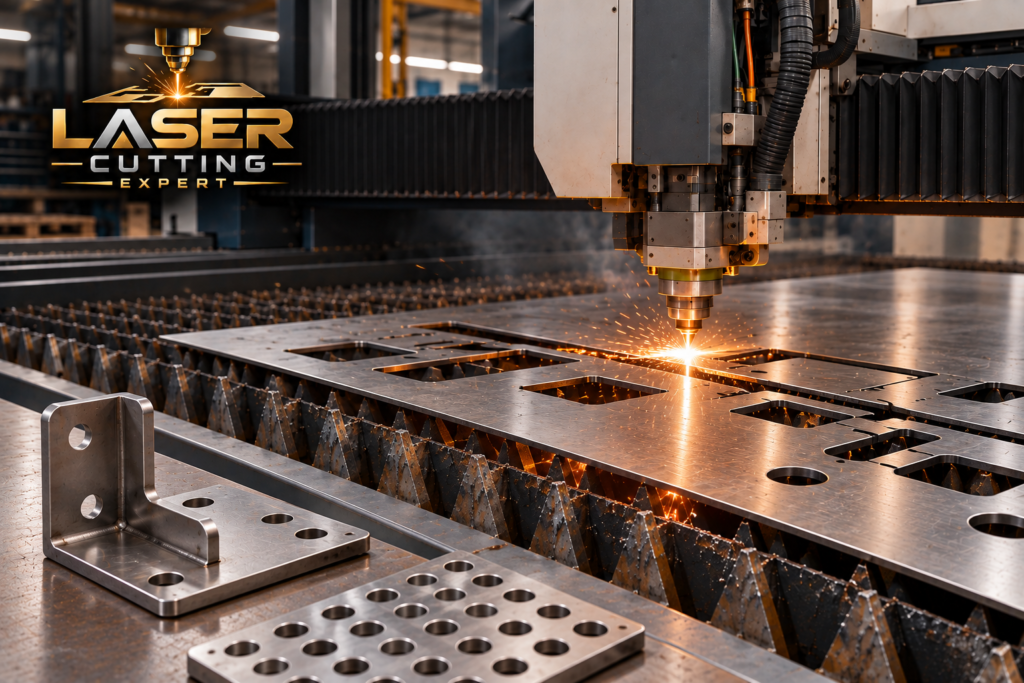
Metal responds to a fibre laser very differently from wood, card or acrylic, which is why the process has become important in modern sheet-metal production. Laser Cutting Expert provides fibre laser cutting from our London workshop for suitable steel, stainless steel, aluminium, brass, copper and other compatible metals. We manufacture brackets, machine panels, enclosure blanks, base plates, signs, screens, shims, washers, furniture components and custom fabrication profiles. Our fiber laser cutting services cover one-offs, prototypes, short runs and repeat production with no minimum quantity. Customers can supply CAD files and suitable identified materials, or ask us about drawing preparation and material sourcing before production begins.
CALL OR EMAIL US FOR PRICES
“Order any time of the day or night and receive your order on the same day in London. You are welcome to visit our laser cutting shop for an instant laser cutting service. On-site collection or free delivery can be arranged. Email us at laser@makergroup.uk for a quick quote or call us on 02036339857 for an instant price”.
Same Day Laser Cutting & Delivery
We can arrange a same day courier delivery with customer live tracking. Or customers can collect from our Laser Cutting Expert shop.

OPEN 24 HOUR
We are open 7 days a week, and you can order at any time. There is no last ordering time and no deadline. We also offer an overnight laser cutting service.

100% Satisfaction
High Quality Laser Cutting & 100% Customer Satisfaction Guarantee. Top-Rated Laser Cutting Company on Google.

Free File Check
We offer a free file check and proof before sending your artwork for laser cutting.
Why Fibre Lasers Are Used for Metal
A fibre laser generates and delivers its beam differently from traditional CO₂ laser systems. Its wavelength is well suited to many metal-cutting applications, making fibre laser cutting useful across engineering, fabrication, signage and product manufacturing. The process can produce narrow cutting paths and detailed profiles while working directly from digital geometry. This makes it suitable for components containing holes, slots, curves and irregular outer shapes. The correct result still depends on more than the laser source. Material grade, thickness, surface condition, assist gas, machine setup and required edge quality all influence production. We select the cutting approach around the actual component rather than the process name alone.
Fiber Laser Cutting Services for Custom Components
Our fiber laser cutting services are used for parts that range from a single development bracket to repeated industrial components. Suitable products include machine guards, mounting plates, equipment panels, electrical enclosure blanks, metal signs, letters, logos, furniture plates, garden screens, privacy panels, washers, shims and fabrication blanks. Parts can leave the laser as flat components or continue into bending, welding, machining and finishing. Where another process follows, we want to know that before cutting. Hole positions near bends, machining allowances and visible surfaces can all influence how the profile should be prepared. Production is therefore planned around the finished use of the component.
Mild Steel Fibre Laser Cutting
Mild steel is one of the most common materials used for fabricated products. Fibre laser cutting can produce suitable brackets, base plates, machine guards, equipment covers, sign components, furniture parts, gussets and structural fabrication blanks. Steel grade and thickness should match the final application rather than being selected only according to availability. Components can later be bent, welded, painted, powder coated or galvanised as required. Bare mild steel needs appropriate corrosion protection when used in damp or outdoor environments. Where a part carries structural loads, the engineer must specify material, thickness and connection geometry. Laser cutting accurately produces the approved profile but does not establish its safe working load.
Stainless Steel Fibre Laser Cutting
Stainless steel works well for products where corrosion resistance, hygiene or visible appearance matters. Our fiber laser cutting services can manufacture stainless machine panels, kitchen components, signs, plaques, equipment covers, brackets, architectural details and decorative screens. Grade selection remains important because 304, 316 and other stainless grades are not interchangeable in every environment. Surface finish also needs attention on visible work. Brushed sheet may require all components to follow the same grain direction. Food, pharmaceutical and medical products can require additional controls beyond laser cutting. The customer or manufacturer remains responsible for determining whether the complete fabricated product meets the standards required by its final application.
Aluminium Fibre Laser Cutting
Aluminium presents a different cutting challenge because it conducts heat efficiently and can be reflective. Appropriate fibre laser cutting equipment and settings can process suitable aluminium sheet for brackets, equipment panels, signs, enclosures, furniture parts and display components. Alloy and temper should be identified where mechanical performance or bending matters. Visible sheet also needs careful handling if it will remain unfinished or move into anodising. Thin aluminium can be useful for lightweight products, while thicker components may form part of engineering assemblies. Structural aluminium requires appropriate design around alloy, thickness, fasteners and joints. We manufacture according to the approved material and geometry rather than assuming all aluminium grades behave identically.
Brass Fibre Laser Cutting
Brass is used for plaques, decorative signs, furniture inserts, interior details, artwork, name plates and selected engineering components. Its reflective nature means the cutting process needs suitable equipment and control. Fiber laser cutting services can be assessed for compatible brass grades and thicknesses according to the required component. Surface appearance is often important with brass, particularly when the material will remain visible rather than being painted. Natural oxidation and patination can also change its colour over time. Antique or pre-finished brass sheets require additional consideration because the visible coating may react differently around the cut. Customers should identify the exact material and finish when appearance is important.
Copper Fibre Laser Cutting
Copper’s high thermal conductivity and reflectivity make it very different from ordinary carbon steel. Modern fibre laser cutting can process suitable copper applications when the equipment and material specification are appropriate. Products may include electrical plates, busbar-style profiles, terminal components, heat-management parts, decorative panels, signs and artwork. Electrical components require engineering around current capacity, temperature and connection design rather than only physical shape. Surface oxidation can also influence appearance after production. Where copper is intended for electrical or thermal service, the customer should specify material grade and critical dimensions clearly. Secondary machining may be necessary for precision contact or connection surfaces.
Galvanised Steel with a Fibre Laser
Galvanised steel combines a steel substrate with a protective zinc coating. Suitable fiber laser cutting services can produce equipment panels, brackets, duct components, trays, covers and outdoor fabrication parts from this material. The cut passes through both coating and steel, leaving the edge different from the original zinc-coated face. This needs consideration where long-term corrosion resistance is important. Subsequent welding also requires appropriate preparation and extraction because heating zinc can generate hazardous fumes. Pre-galvanised material and post-fabrication galvanising are different production routes. Customers should consider the complete manufacturing sequence before deciding which form of corrosion protection is appropriate for their finished product.
Corten and Weathering Steel
Weathering steel can be used for garden screens, planters, outdoor signs, landscape edging, façade details and decorative artwork. Fibre laser cutting can create suitable profiles and patterns before the steel develops its characteristic weathered surface. Designers should remember that Corten does not arrive with its final mature patina. Weathering develops through environmental exposure and early runoff can stain nearby surfaces. Drainage and installation details therefore matter. The material is not automatically suitable for every constantly wet, coastal or chemically aggressive environment. Structural Corten components also require proper engineering. Laser cutting produces the required geometry, while weathering performance depends on material grade, environment and complete product design.
Fiber Laser Cutting with Oxygen
Fiber laser cutting with oxygen uses oxygen as an assist gas during suitable metal-cutting operations. With materials such as carbon steel, oxygen can contribute additional heat through an exothermic reaction, helping the cutting process under appropriate conditions. This can be useful for certain thicknesses and production requirements. The resulting edge can develop oxide, which may matter if the part is going directly into painting, powder coating or welding. Oxygen is therefore not automatically the correct assist gas for every job. Edge requirement, material, thickness and downstream finishing should all be considered before the gas strategy is selected.
Oxygen Cutting for Carbon Steel
Carbon steel is a common application for fiber laser cutting with oxygen because the oxygen reaction can assist material removal during the cut. This may be useful for brackets, plates, machinery components and fabrication blanks, particularly where production conditions favour oxygen-assisted processing. The trade-off is that the cut edge can carry an oxide layer. If a coating needs strong adhesion or a weld specification requires particular edge preparation, this oxide may need removal. Customers should tell us what happens after cutting so edge condition can be considered as part of production. The fastest cutting approach is not always the best route for the finished fabricated component.
Nitrogen and Other Assist-Gas Choices
Although fiber laser cutting with oxygen is useful for certain applications, other assist gases may be selected where a cleaner, low-oxidation edge is more important. Nitrogen is commonly considered for stainless steel and suitable aluminium work, depending on thickness and machine capability. Gas choice can influence edge appearance, speed and downstream finishing. A stainless decorative panel and a mild-steel fabrication blank do not necessarily need the same cutting strategy. Rather than treating assist gas as a fixed setting, we consider the material and final use. Customers with specific edge or finishing requirements should communicate them before production begins so the process can be planned accordingly.
Edge Quality for Visible Components
A cut edge on a hidden machine bracket has different requirements from an edge visible on a sign or furniture product. Our fiber laser cutting services can be planned according to the component’s use, material and required finish. Stainless signs, aluminium panels and decorative brass pieces may need greater attention to surface handling and edge appearance. Fabrication parts may instead prioritise dimensional fit and suitability for later welding or coating. Laser cutting does not automatically produce a polished finished edge. Depending on the product, deburring, linishing, machining or other finishing may still be appropriate. These requirements should be considered when quoting and planning the complete manufacturing route.
Thin Sheet Metal Components
Thin sheet is used for equipment covers, signs, ventilation panels, labels, enclosures and decorative products. Fibre laser cutting can produce complex profiles while keeping the manufacturing process digital and flexible. Thin material, however, can become less rigid as large areas are removed. A decorative screen with many openings may require wider borders or additional support to remain stable. Small parts also need appropriate nesting and handling after cutting. If a thin sheet will later be folded, bend geometry should be considered before the laser file is finalised. Material thickness should be selected around the product’s function rather than choosing the thinnest sheet simply to reduce weight.
Thicker Metal Profiles
As material becomes thicker, cutting behaviour, heat input and practical feature size change. Fiber laser cutting services can be assessed for thicker steel and other suitable metals according to machine capability and required quality. Small holes and narrow slots become more demanding as thickness increases, so engineering drawings should avoid assuming that geometry practical in 1 mm sheet will behave identically in much thicker plate. Heavy brackets, base plates, equipment supports and fabrication profiles may also require secondary machining where tight bores or precision surfaces are needed. The exact material grade and thickness should be confirmed before production so the appropriate process can be selected.
Brackets and Mounting Plates
Brackets are a regular application for fibre laser cutting because their geometry can include several holes, slots, reliefs and irregular outside edges within one flat profile. Products can include machine brackets, equipment mounts, shelf supports, sign brackets, furniture fittings and construction plates. Parts intended for bending should include appropriate bend allowances and sufficient distance between features and fold lines. Slots can provide installation adjustment or help components locate during fabrication. Structural brackets require engineering around loads, fasteners and supporting materials. We can manufacture one development piece or repeat batches, but the responsible engineer or manufacturer determines whether the final bracket is suitable for its intended load.
Machine Guards and Panels
Machine manufacturers can use fiber laser cutting services for protective guards, access panels, ventilation covers and equipment faces. Cut-outs for switches, handles, viewing areas and fasteners can be produced directly from CAD. Patterned ventilation openings can also be incorporated where suitable. Guard design needs more than accurate cutting. Opening dimensions, material strength, fixing systems and distance from hazards should come from the machinery risk assessment. A laser-cut panel does not become a compliant safety guard simply because it matches the drawing. The machinery manufacturer remains responsible for validating the complete guarding system and ensuring it meets the requirements applicable to the equipment.
Electrical Enclosure Components
Enclosures often begin as flat sheets containing numerous openings. Fibre laser cutting can create blanks for control boxes, equipment housings, back plates and access covers before they move into bending. Switch holes, fan openings, connector cut-outs and cable entries can all be positioned digitally. Correct flat development is essential because openings need to remain in the right location once the enclosure is folded. Electrical safety, earthing, EMC performance and ingress protection depend on the complete enclosure design and assembly. We manufacture the metal components according to approved information while the equipment manufacturer remains responsible for testing and certifying the finished product where required.
Signs, Letters and Logos
Metal signage can benefit from the flexibility of fiber laser cutting services because custom lettering and logos can be manufactured directly from digital artwork. Products can include house signs, business signs, plaques, metal letters, logo shapes, wayfinding components and backing panels. Mild steel, stainless steel, aluminium, brass and Corten can each produce a different visual result. Fine artwork needs enough material between cut areas to remain stable. Outdoor signs require suitable corrosion protection and fixing systems. Large freestanding signs also need structural assessment for wind loads. We manufacture the visible metal components while the sign installer remains responsible for appropriate support and installation.
Garden Screens and Outdoor Panels
Garden screens, privacy panels, fence inserts and decorative outdoor artwork can use repeated geometric or organic patterns. Fibre laser cutting allows these patterns to be produced from suitable metal sheet according to digital artwork. Corten steel, aluminium, stainless steel and coated mild steel can all create different appearances. Removing large areas of material affects panel stiffness, so pattern density and border width need consideration. Outdoor installation also requires suitable fixings and corrosion strategy. Screens used purely as decoration differ from panels serving as guarding, fencing or balustrades. Where a product performs a protective or structural role, its strength and installation should be validated accordingly.
Furniture and Interior Metalwork
Tables, shelving, desks and interior products can include laser-cut metal plates, brackets, decorative inserts and structural components. Our fiber laser cutting services can support furniture makers with prototypes and repeat parts in steel, stainless steel, aluminium and suitable decorative metals. Accurate hole positioning helps metal components align with timber, glass, acrylic and other materials during assembly. Visible surfaces may need consistent grain direction or protective handling. Furniture carrying people or substantial loads needs appropriate structural design. For repeat product ranges, an approved digital profile can be manufactured again as orders arrive, reducing the need for furniture companies to keep large quantities of specialist metal components in storage.
Shims, Washers and Spacers
Custom shims and washers are often required when standard hardware does not provide the correct dimensions. Fibre laser cutting can create suitable rings, spacers and adjustment plates from specified sheet. Different profiles can sometimes share the same production sheet where material and thickness match. Very small internal holes or precision fits may need drilling, reaming or machining after cutting. Thin components also require careful handling because they can be easily mixed or damaged. Manufacturers can order one development set, maintenance replacements or repeated quantities. Material should be selected according to the mechanical, corrosion and temperature conditions present in the final assembly.
Metal Labels and Name Plates
Metal labels can be used for equipment identification, room signs, asset information, machine references and product branding. Fiber laser cutting services can create the outside profile and mounting holes before engraving, marking or printing is applied through a suitable secondary process. Stainless steel, aluminium, brass and other metals may be selected according to appearance and environment. Labels containing safety-critical or legally required information should follow wording and sizing specified by the responsible manufacturer or organisation. The cutting process determines the physical shape but does not determine what regulatory information needs to appear. Custom labels can be produced individually or as repeat batches with consistent dimensions.
Fabrication Blanks
Many components produced through fibre laser cutting are not finished products when they leave the machine. They are fabrication blanks waiting for bending, welding or machining. These can include gussets, frame plates, base plates, brackets, flanges, equipment supports and enclosure parts. Designing with the next operation in mind can save considerable workshop time. Tabs and slots may assist assembly, while machining allowances can be left around precision surfaces. Our related Laser Cutting & Bending service can support suitable projects where flat profiles need to move into formed components. Coordinating these operations early helps prevent holes, slots or edges ending up in unsuitable positions after bending.
Bend-Ready Sheet Metal
A flat component can be cut perfectly and still produce the wrong final size if its bend development is incorrect. Fiber laser cutting services can manufacture bend-ready blanks for trays, brackets, enclosures, covers and panels when material thickness, bend radius and allowance have been considered properly. Holes positioned close to folds may distort, while corner reliefs can help more complex parts form cleanly. Different materials also behave differently during bending. Aluminium alloy, stainless grade and steel thickness can all influence the forming operation. Prototype bending is sensible for a new product before the same flat development is repeated across a larger manufacturing batch.
Weld-Ready Components
Fabricators can use fibre laser cutting to produce plates and profiles that move directly into welding. Suitable tabs, slots, notches and joint features can reduce manual measurement during assembly. Products may include frames, brackets, equipment supports, furniture structures and machinery. The laser can create accurate mating geometry, but welding procedure remains material-specific. Stainless steel, aluminium, galvanised steel and carbon steel each require appropriate preparation and technique. Structural welding may require qualified procedures and inspection. Laser cutting supports the fabrication process by producing repeatable components; it does not replace the technical controls needed to create a safe and reliable welded assembly.
Near-Net Engineering Blanks
For some engineering components, laser cutting is most useful as the first stage rather than the final precision operation. Fiber laser cutting services can create near-net blanks that remove unnecessary material before milling, drilling or turning. This can be more practical than machining an irregular component entirely from a large rectangular plate. Additional stock can be left intentionally around critical surfaces so the machine shop can establish final dimensions. Products may include equipment parts, specialist brackets, flanges and replacement components. Machining allowances should be agreed before the laser drawing is prepared. Cutting directly to final nominal size can leave insufficient material for later precision finishing.
Hole and Slot Design
Holes and slots are common in laser-cut components, but their practical minimum dimensions depend on material and thickness. Precision fibre laser cutting requirements should therefore be considered in relation to function. A general bolt-clearance hole is different from a bore intended to locate a precision pin. Small functional bores may be better finished through drilling or reaming after the main profile is produced. Slots also need sufficient width to cut reliably. Where tabs and slots fit together, actual material thickness and cutting kerf should be considered. Testing one assembly before repeat production can confirm whether the chosen fit works under real workshop conditions.
Complex Profiles Without Dedicated Dies
One advantage of fibre laser cutting is that changing the component profile usually involves changing digital geometry rather than manufacturing a new physical cutting die. This is useful for prototypes, specialist equipment, bespoke signs, furniture and evolving products. A bracket can gain another hole, a panel can change shape or a logo can be updated before the next production run. This flexibility supports low-volume and high-mix manufacturing where many different components are required in relatively modest quantities. Digital flexibility does not remove the need for drawing control. Once a component enters repeat production, revisions should be managed carefully so the correct version continues to be manufactured.
One-Off Fibre Laser Cutting
Our fiber laser cutting services have no minimum order. Customers can request one prototype bracket, one machine panel, one sign or one replacement component without purchasing a full production batch. This is particularly useful when an existing part has failed or a new design needs physical testing. A first component can be fitted, bent, welded or assembled before the design is approved for further manufacture. Engineers, students, artists, product designers and private customers can all use this approach. Once the geometry has been confirmed, the same controlled digital file can support later quantities rather than rebuilding the part manually from measurements each time.
Repeat and Batch Production
Approved components can move from prototype work into repeat fibre laser cutting. Batches may contain one repeated part or several compatible component types needed for a complete assembly. Efficient nesting can improve sheet utilisation, particularly where small brackets or washers fit around larger panels. Repeat production still depends on controlled material and drawing information. Changing steel grade, aluminium alloy or sheet thickness can affect the finished component even when the outside geometry remains unchanged. Customers should therefore reference the correct drawing revision and material specification with repeat orders. This is especially important when components later need to fit products manufactured at different times.
Customer-Supplied Metal
Customers can provide suitable metal sheet for our fiber laser cutting services when they already hold the required grade or finish. This is useful for specialist alloys, certified material or decorative stock purchased specifically for a project. We need to know the material type, grade where relevant and thickness before production. Protective films and surface coatings should also be identified because not every covering is suitable to remain on the material during laser processing. Unknown coated stock may need further information. Alternatively, we can discuss sourcing suitable material according to the project specification. The material should be confirmed before final production settings and cutting strategy are selected.
Artwork, CAD and File Preparation
Production-ready CAD helps fibre laser cutting move efficiently from enquiry to manufacturing. Outside profiles should be closed, duplicate geometry removed and critical dimensions clearly defined. Customers can provide suitable DXF, CAD or other production information. If you only have a sketch, dimensions or existing component, our design support can help prepare appropriate cutting geometry where feasible. Engineering parts should identify material, thickness and critical tolerances. Decorative products should be checked at their final physical size because extremely fine details may become fragile. Good file preparation reduces avoidable machine issues and helps ensure the produced profile matches the intended component rather than an accidental feature within the artwork.
Same Day Fibre Laser Cutting London
An urgent fabrication job can depend on one missing plate or bracket. Laser Cutting Expert operates 24/7 in London, including weekends and bank holidays, so suitable fibre laser cutting projects can be considered for same-day production. Jobs move fastest when the customer provides approved CAD, confirmed material, thickness and quantity. We can handle one-off components as well as urgent short batches where capacity and stock allow. Same-day courier delivery is available across London for suitable completed work. Projects requiring unusual materials, extensive design preparation, additional fabrication or specialist finishing may require longer. We confirm the practical production route according to the actual job rather than promising the same turnaround for every component.
Fibre Laser Cutting Across the UK
Our fiber laser cutting services are available to engineering companies, fabricators, sign makers, furniture manufacturers, designers, artists and private customers throughout the UK. Production is carried out in London, with nationwide delivery available for suitable completed components. Customers can order prototypes, repeat parts, fabrication blanks, decorative products and industrial components without a minimum quantity. Send the material, thickness, dimensions, quantity and CAD files where available. If you need fiber laser cutting with oxygen or have a particular edge requirement for later coating, welding or finishing, tell us at the enquiry stage so the cutting approach can be considered as part of the complete manufacturing sequence.
FAQs About Fibre Laser Cutting
1. What is fibre laser cutting?
Fibre laser cutting uses a fibre-delivered laser source to cut suitable metals from digital geometry. It is commonly used for sheet-metal and fabrication components.
2. What materials can a fibre laser cut?
Suitable materials can include mild steel, stainless steel, aluminium, brass, copper, galvanised steel and other compatible metals, subject to grade and thickness assessment.
3. What products can you make?
Products include brackets, machine guards, panels, enclosure blanks, signs, letters, screens, furniture components, base plates, washers, shims and fabrication blanks.
4. What is fiber laser cutting with oxygen?
Fiber laser cutting with oxygen uses oxygen as the assist gas. For suitable carbon-steel applications, the oxygen reaction can contribute heat to the cutting process.
5. Does oxygen affect the cut edge?
Yes. Oxygen-assisted cutting can leave an oxidised edge, which may need preparation before certain coating, painting or welding processes.
6. Can you cut stainless steel with a fibre laser?
Yes, suitable stainless steel grades and thicknesses can be processed. Assist-gas and edge requirements depend on the job.
7. Can you fibre laser cut aluminium?
Yes, suitable aluminium sheet can be processed using appropriate fibre-laser equipment and settings.
8. Is there a minimum order?
No. Our fiber laser cutting services cover single prototypes, one-off replacement parts, short runs and repeat batches.
9. Can I provide my own metal?
Yes. Suitable identified customer-supplied metal can be accepted after checking the material, thickness and any coatings or protective films.
10. Do you offer urgent fibre laser cutting?
Yes. Suitable production-ready work can be considered for same-day London production and courier delivery, depending on material availability, complexity and capacity.