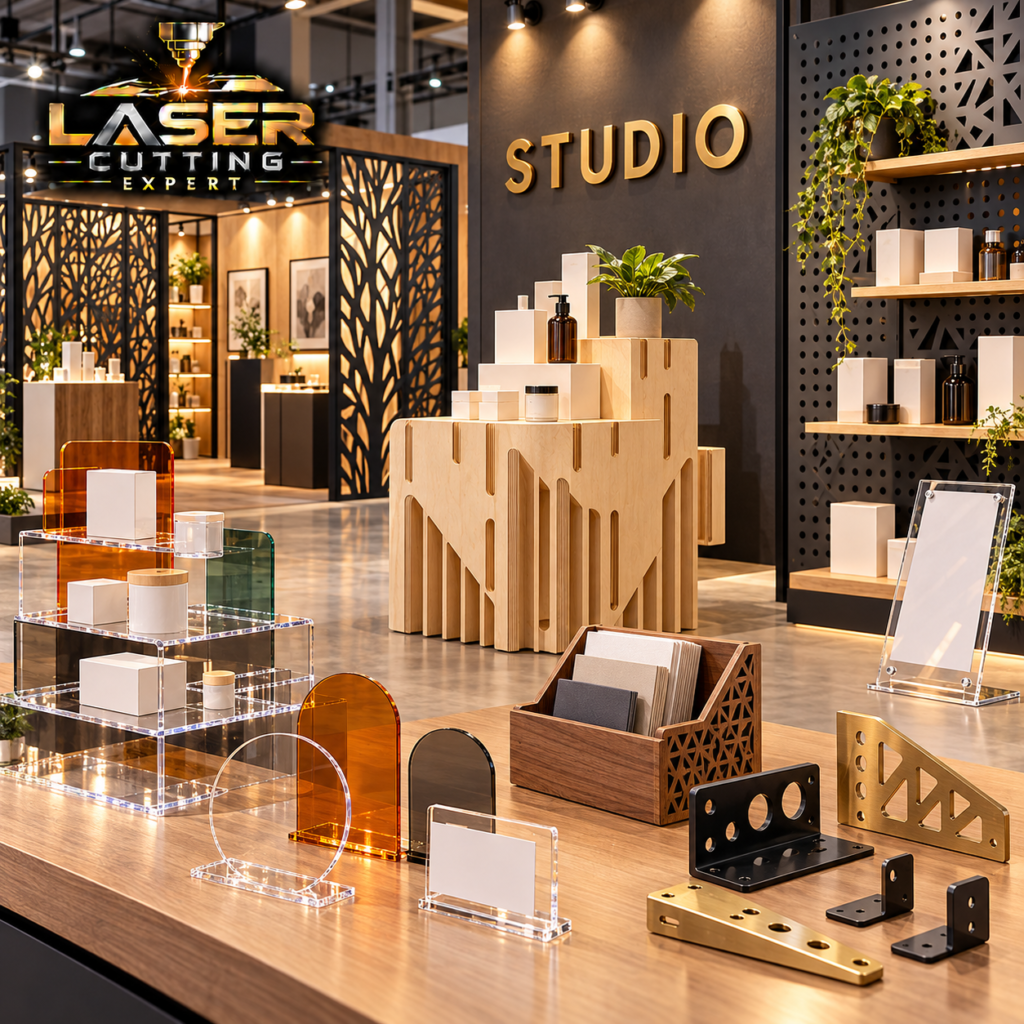
Retail and exhibition spaces have one practical challenge in common physical components need to present products clearly while surviving regular handling, installation and changeovers. Laser Cutting Expert supports laser cutting for exhibitions, laser cutting for shopfitting units, laser cutting for high end retail shops and custom laser cutting display solutions from our London workshop. We work with shopfitters, retail designers, visual merchandisers, exhibition contractors, architects, joiners, display manufacturers, agencies and brands throughout the UK. Suitable work can include display panels, shelves, product stands, signage, counter components, decorative screens, branded details, metal brackets, acrylic displays and fabrication parts in one off or repeat quantities.
CALL OR EMAIL US FOR PRICES
“Order any time of the day or night and receive your order on the same day in London. You are welcome to visit our laser cutting shop for an instant laser cutting service. On-site collection or free delivery can be arranged. Email us at laser@makergroup.uk for a quick quote or call us on 02036339857 for an instant price”.
Same Day Laser Cutting & Delivery
We can arrange a same day courier delivery with customer live tracking. Or customers can collect from our Laser Cutting Expert shop.
OPEN 24 HOUR
We are open 7 days a week, and you can order at any time. There is no last ordering time and no deadline. We also offer an overnight laser cutting service.

100% Satisfaction
High Quality Laser Cutting & 100% Customer Satisfaction Guarantee. Top-Rated Laser Cutting Company on Google.

Free File Check
We offer a free file check and proof before sending your artwork for laser cutting.
Laser Cutting as Part of a Physical Retail Space
A shop interior is assembled from many materials and trades rather than manufactured as one product. Joinery may sit beside metal frames, acrylic displays, illuminated signage and decorative panels. Laser cutting is useful because it can provide accurately shaped components across several parts of that environment without forcing everything into the same material. We can produce suitable metal, acrylic, plywood, MDF, card, leather and other compatible components before they move into assembly or installation.
Retail Entrance & Shopfront Components
Shopfront Branding
The customer normally sees the shopfront before seeing the products. Laser cut letters, logos, plaques, decorative panels and sign components can help translate brand artwork into physical elements. Stainless steel, aluminium, brass, acrylic, plywood and other suitable materials can each produce a different result. Outdoor shopfront components need appropriate weather resistance and secure installation. Large letters also need suitable returns, supports or mounting arrangements. Laser cutting produces physical profile, while the sign maker, shopfitter or installer remains responsible for illumination, structural fixing, electrical work and safe installation.
Retail Fascia Components
Fascia signs can use laser cut letters, logos, backing details and metal fabrication components. Laser cutting for high end retail shops may involve particularly close attention to alignment, spacing and surface finish because small inconsistencies can become obvious across a clean storefront. Brand artwork often needs conversion from graphic files into practical manufacturing geometry. Extremely fine logo details may require adjustment depending on material and scale. Outdoor fascia components should also be designed around wind exposure, water drainage and the fixing method rather than appearance alone.
Entrance Logo Panels
Entrance areas can use acrylic, metal or layered logo panels to introduce the brand before customers enter the main retail space. Laser cutting display solutions can combine backing plates, raised lettering and decorative profiles. Transparent acrylic needs careful consideration of fixings because poorly positioned adhesive or hardware can remain visible. Heavy metal panels require suitable wall structures. Fire escape routes, door operation and accessibility should not be affected by decorative installations.
Door and Window Graphics Components
Physical lettering, symbols and logo shapes can be added around doors and windows using suitable laser cut materials. Acrylic, thin metal and plywood can provide alternatives to printed vinyl where a three dimensional effect is required. Laser cutting for high end retail shops can be useful for permanent names, opening hour surrounds, department identifiers and decorative elements. Glass mounted components should use a fixing system appropriate for the glazing. Toughened glass itself should not be drilled or modified after toughening unless the glazing system has been specifically designed for it.
Window Displays
Retail Window Display Structures
A shop window may need to attract attention from several metres away while remaining practical for staff to change. Laser cutting display solutions can provide plinth details, product holders, decorative shapes, frames, lettering and layered backgrounds. Lightweight components can simplify installation, while reusable structures can reduce the need to rebuild the complete display for every campaign. Designers should consider viewing distance, lighting and reflections. Fine details that look attractive on a laptop can disappear when seen through a shop window from across the street.
Seasonal Window Displays
Christmas, Valentine’s Day, Mother’s Day, Easter, summer campaigns and product launches can all require temporary display components. Laser cutting for high end retail shops can produce campaign specific shapes, lettering, decorative screens and product platforms without changing the permanent shop fit. Plywood, MDF, acrylic, card and metal can be selected according to required life and appearance. Temporary does not mean poorly built. Components should remain stable for the full campaign and be installed without creating hazards for staff working inside the window area.
Window Display Backdrops
Laser cut backdrops can use repeated patterns, silhouettes, logos or architectural shapes. Laser cutting display solutions can produce modular panels that join together behind products. Breaking a large backdrop into manageable sections can make transport and installation easier. Joints can be incorporated into the pattern to reduce their visibility. Large flat panels can bow, particularly when made from thin sheet, so support frames or stand offs may be required.
Suspended Window Elements
Lightweight letters, shapes and decorative components can be suspended within a window display. Suitable plywood, acrylic, card and other lightweight materials can be considered. Laser cutting for high end retail shops can create repeated pieces with controlled geometry across a large installation. Suspension points need enough surrounding material to resist tearing or cracking. Anything positioned overhead should use a secure installation method appropriate for its weight. Retail staff should not rely on decorative thread where a safer fixing system is required.
Layered Window Graphics
Three dimensional window graphics can be created by layering cut materials rather than printing everything onto one flat surface. Laser cutting display solutions can combine clear acrylic, coloured acrylic, plywood, metal effect surfaces and printed panels. Spacing between layers creates depth and shadow. Designers should consider how shop lighting changes the appearance after dark. Transparent materials also reveal fixings more easily, making assembly details particularly important.
Product Presentation
Laser Cutting Display Solutions
Good laser cutting display solutions start with the product rather than the display itself. A stand for jewellery has different requirements from one supporting footwear, electronics, cosmetics or heavy homeware. Laser cut components can create risers, trays, product cradles, holders, shelves and information panels around the actual product dimensions. Slot and tab construction can make some displays easy to assemble. Where customers handle products directly, edges and stability become important. The display should support merchandising without making the product difficult to remove, replace or examine.
Acrylic Product Displays
Acrylic can provide clear, coloured, frosted or mirrored display components for retail environments. Laser cutting display solutions can include acrylic risers, stands, holders, dividers, signage and product supports. Clear acrylic is useful where the display should visually disappear behind the merchandise. Protective film can help prevent scratching during production and transport. Acrylic thickness needs to match the load. A thin sheet may be adequate for jewellery but unsuitable for supporting heavy bottles or electronic equipment.
Wooden Display Stands
Plywood and suitable wood based sheets can create warm, natural looking retail displays. Laser cutting display solutions can use interlocking construction for product stands, shelving inserts, countertop units and branded displays. Wood grain varies naturally between sheets. Laser cut edges can darken, which can either form part of the appearance or be finished afterwards. Displays exposed to repeated customer handling should use sufficient material thickness and stable joints rather than relying on delicate decorative connections.
Metal Product Stands
Metal displays can provide greater stiffness and durability for heavier products. Laser cutting for high end retail shops can include stainless steel, aluminium, brass or mild steel display components that are later bent, welded and finished. Products can be presented on shelves, brackets, frames and pedestal structures. Surface finish matters where metal remains visible. Brushed grain direction, polished surfaces, powder coating and plated finishes should be considered before fabrication because they can affect handling throughout production.
Product Risers
Risers create different heights across shelves, windows and tables. Laser cutting display solutions can produce flat pack acrylic or plywood risers, folded metal platforms and layered presentation blocks. The footprint should remain stable relative to the product. Tall narrow risers can become easy to knock over. Transparent displays also need clean joints because internal tabs and adhesive can remain visible from several angles.
Product Cradles
Some products need shaped supports rather than flat shelves. Laser cut sheet can form cradles for bottles, electronics, accessories and other merchandise. Laser cutting display solutions can use slots or shaped profiles to keep products positioned consistently. The contact area should not scratch delicate packaging or finishes. Products that vary slightly in size may need more clearance than a single prototype suggests.
Retail Display Trays
Display trays can organise jewellery, cosmetics, stationery, samples and small accessories. Acrylic, plywood and metal can be used according to the intended appearance. Laser cutting for high end retail shops can incorporate dividers, removable inserts and branded details. The internal layout should match the actual merchandise and allow staff to restock quickly. Displays used around food or cosmetics should not be assumed suitable for direct product contact unless the material and complete construction have been assessed accordingly.
Counter & Point of Sale Areas
Countertop Display Units
Counter displays need to use limited space efficiently. Laser cutting display solutions can create compact product stands, brochure holders, QR code displays, menu holders and promotional units. Slot construction can reduce assembly hardware in suitable materials. The unit should not block staff visibility or interfere with payment equipment. Lightweight displays may require a wider base if customers regularly touch them. Replaceable printed inserts can make the same structure useful across several promotions.
Point of Sale Displays
Point of sale areas often combine pricing, product information and promotional messages. Laser cutting display solutions can provide frames, sign holders, branded shapes and merchandise supports. Permanent branding can be cut or engraved while frequently changing information is printed separately. This approach can extend the useful life of the display. Retailers should consider how quickly staff can replace promotional information without tools or dismantling the entire unit.
Till Area Components
Till areas can contain screen surrounds, equipment brackets, cable management pieces and small customer facing displays. Laser cutting for shopfitting units can provide suitable components that integrate with the counter joinery. Electronic equipment needs ventilation and service access. Cable holes should use appropriate edge protection. Components around payment systems should not interfere with equipment security or accessibility.
Counter Panels
Retail counters can combine timber joinery with decorative metal or acrylic panels. Laser cutting for shopfitting units can create patterned fronts, ventilation details, logos and access panels. Decorative patterns should retain enough material to remain stiff. Kick areas may require more durable surfaces than upper decorative sections. Removable panels can make future electrical or plumbing maintenance easier.
Shopfitting Units
Laser Cutting for Shopfitting Units
Laser cutting for shopfitting units can support the construction of counters, shelving systems, cabinets, wall displays, gondolas, product bays and branded furniture. Laser cut metal brackets, decorative panels, acrylic inserts and plywood components can be combined with traditional joinery. Digital manufacturing is particularly useful where several units share a common design but have different dimensions. The shopfitter can supply production ready files, or we can assist with preparing suitable cutting geometry. Final load capacity, fixing, fire performance and installation remain part of the complete shopfitting system.
Retail Shelving Components
Shelving systems can require metal brackets, end panels, dividers and decorative details. Laser cutting for shopfitting units can manufacture these elements according to the unit design. Shelf loads need to be understood before bracket thickness and fixing arrangements are finalised. Adjustable slots can provide flexibility, but removing too much material can reduce stiffness. Heavy merchandise requires properly engineered supports rather than decorative brackets selected only for appearance.
Wall Mounted Retail Units
Wall displays can carry clothing, accessories, electronics, cosmetics and many other products. Laser cutting for shopfitting units can provide backing panels, mounting plates, brackets and decorative overlays. The wall construction matters because plasterboard, masonry and framed partitions require different fixings. The shopfitter or installer should establish load capacity before installation. Laser Cutting Expert manufactures the components but does not determine whether the existing wall can safely support the complete display.
Retail Cabinets
Cabinet systems can use laser cut ventilation panels, decorative doors, metal trims and internal brackets. Laser cutting for shopfitting units allows these pieces to be coordinated with joinery dimensions. Cabinets containing electronics or lighting need access for maintenance. Lockable units may require reinforcement around hardware. Where glass shelves or doors are used, the glass should be manufactured according to the required dimensions before toughening where applicable.
Retail Gondola Components
Freestanding gondola displays need enough stability to carry merchandise without being fixed to a wall. Laser cutting for shopfitting units can support suitable base plates, shelf brackets, end panels and signage components. Product weight and customer interaction should be considered. A display can become less stable as products are removed if the merchandise itself contributes significant weight. Structural design should therefore work safely in both full and empty conditions.
Shopfitting Access Panels
Counters, wall systems and display units often hide electrical equipment, lighting drivers or storage areas. Laser cutting for shopfitting units can create removable access panels with ventilation, finger pulls or fixing holes. Access should remain practical after the shop is fully installed. A beautifully finished panel that cannot be removed without dismantling nearby joinery creates unnecessary maintenance problems.
Decorative Shopfitting Panels
Laser cut screens and patterned panels can add texture to walls, counters and partitions. MDF, plywood, acrylic and metal can all provide different results. Laser cutting for high end retail shops can use custom patterns based on branding, architecture or product themes. Fine patterns need sufficient remaining material for stiffness. Panels used as barriers or guarding require additional engineering and should not be treated as purely decorative elements.
High End Retail Environments
Laser Cutting for High End Retail Shops
Laser cutting for high end retail shops often involves fewer visible fixings, tighter alignment and greater attention to the way materials meet. Luxury fashion, jewellery, cosmetics, watches, automotive showrooms and premium technology stores can use laser cut metal, acrylic and wood components within displays and architectural details. The cutting itself is only one part of the result. Brushing, polishing, coating, engraving, assembly and installation can determine whether a component looks appropriate once customers see it under retail lighting.
Luxury Jewellery Displays
Jewellery displays often work at a small scale where minor inconsistencies become easy to notice. Laser cutting for high end retail shops can produce acrylic display pieces, metal logo details, trays, small stands and decorative components. Materials touching jewellery should not scratch delicate finishes. Display geometry also needs to consider security and staff access. Expensive products should be supported by appropriately stable structures rather than relying on fragile decorative stands.
Watch Displays
Watch retailers can use shaped stands, branded panels, product risers and display trays. Laser cutting display solutions can create repeatable components across a collection while allowing different brand or model information. Clear acrylic, metal and layered materials can be combined. Watch displays should remain stable when customers or staff remove the product. Any component directly contacting a finished watch should use a surface appropriate for that contact.
Cosmetics Displays
Cosmetics counters frequently require organised presentation for bottles, testers, palettes and promotional products. Laser cutting for high end retail shops can provide acrylic trays, dividers, branded panels and tiered stands. Product dimensions should be checked because packaging can change between ranges. Displays used around testers need to be easy to wipe. Material compatibility with cosmetic products and cleaning agents should also be considered.
Fashion Retail Displays
Fashion stores can use laser cut signage, accessory stands, decorative screens, shelving components and branded wall elements. Laser cutting for shopfitting units can also support rails, mounting plates and display furniture components. Clothing itself is relatively light, but large wall displays can still create significant structural loads. Seasonal layouts may benefit from modular systems that can be rearranged without replacing the full shop fit.
Footwear Displays
Shoe displays can use individual shelves, wall brackets, product risers and presentation platforms. Laser cutting display solutions can produce consistent supports across a retail wall. Different shoe sizes and styles should be considered so the display does not fit only one sample. Angled shelves need a method of preventing products sliding forward. Brackets should be designed around the expected load and customer handling.
Premium Technology Stores
Technology retail can use product stands, cable management components, security device mounting plates and information displays. Laser cutting for high end retail shops can produce clean metal and acrylic components around phones, computers, audio products and other electronics. Cables need room to move without being trapped by sharp edges. Product security hardware should be integrated without compromising stability or customer access.
Automotive Showrooms
Vehicle showrooms can use branded signs, specification stands, brochure displays and decorative metal components. Laser cutting display solutions can provide freestanding information panels and model specific presentation pieces. Large floor displays need stable bases while remaining movable when the showroom layout changes. Edges and corners should be safe around customers walking between vehicles.
Branding Inside the Store
Laser Cut Retail Logos
Logos can appear behind tills, on feature walls, inside display units and on freestanding structures. Acrylic, plywood and metal each produce different visual results. Laser cutting for high end retail shops can translate supplied brand artwork into dimensional signage. Fine graphic elements may need manufacturing adjustments. The final scale should be selected according to viewing distance rather than simply enlarging artwork proportionally.
Retail Letters and Numbers
Department names, floor numbers, collection names and promotional words can be produced as separate cut letters. Laser cutting display solutions can use matching material across different areas of the shop. Templates can help installers maintain consistent spacing. Large lettering needs appropriate fixing, particularly when positioned above customers. Temporary promotional lettering should use removal methods that do not damage the permanent shop interior.
Brand Plaques
Small plaques can identify product collections, designers or special features. Laser cutting for high end retail shops can use brass, stainless steel, aluminium, acrylic or wood depending on the design. Engraving or printing can add detailed information. Plaques should be positioned where customers can read them without obstructing merchandise.
Retail QR Code Displays
QR codes can connect physical stores with online product pages, loyalty programmes or digital catalogues. Laser cutting display solutions can create stands and plaques containing printed or suitably engraved QR codes. Codes need sufficient contrast and accurate geometry. Every finished code should be tested before installation. Decorative patterns should remain outside the quiet area required for reliable scanning.
Retail Screens & Partitions
Decorative Retail Screens
Laser cut screens can divide departments, conceal service areas or create visual backgrounds without constructing solid walls. Laser cutting for shopfitting units can produce patterned plywood, MDF, acrylic or metal panels. Open patterns can preserve light and visibility. Large freestanding screens require suitable frames or bases. Where screens form part of a barrier, guarding system or escape route, their design needs to meet the relevant functional requirements rather than serving decoration alone.
Changing Room Screens
Retail fitting areas can use decorative partitions and identification panels. Laser cutting for high end retail shops can provide custom patterned screens and signage. Privacy is the main functional requirement, so pattern openness needs careful consideration. Panels and doors should not create sharp edges or trapping points. Accessibility and emergency egress requirements remain part of the complete changing room design.
Service Area Screens
Retailers may need to hide storage, equipment or staff areas from customer view. Laser cutting for shopfitting units can create ventilated screens that provide partial visual concealment while allowing airflow. Pattern density should reflect what needs to be hidden. Equipment behind the screen must still remain accessible for maintenance.
Exhibition Manufacturing
Laser Cutting for Exhibitions
Laser cutting for exhibitions can support exhibition contractors, stand designers and brands with reusable stand components, product displays, signage, logos, demonstration units and decorative panels. Exhibition work has different practical requirements from permanent retail because everything must be transported to the venue, installed within a limited build window and removed afterwards. Components should therefore be designed around handling as well as appearance. Modular parts can make transport easier and allow a stand to be adapted for several venues rather than rebuilding it completely each time.
Exhibition Stand Components
Stands can combine plywood, MDF, acrylic, metal and printed graphics. Laser cutting for exhibitions can produce brackets, sign components, display panels, product holders and decorative details that integrate with the main stand structure. Heavy or structural elements require appropriate engineering. Venue rules can also affect permissible materials and installation methods. Exhibition contractors should confirm fire performance and structural requirements before specifying materials.
Exhibition Branding
Large logos, dimensional lettering and branded shapes can help make a stand visible across a busy exhibition hall. Laser cutting for exhibitions can manufacture acrylic, wood and metal branding at different scales. Large letters may be divided into sections for transport. Lighting can also change the appearance of reflective or transparent materials. Brand colours should be considered together with the final finish rather than relying on raw material alone.
Exhibition Product Displays
Products at exhibitions need to remain visible while visitors move around the stand. Laser cutting display solutions can create product platforms, shelves, holders and presentation stands. Demonstration products may need access to power or data cables. These should be routed without creating trip hazards or untidy visible wiring. Valuable products can require security attachments that should be considered during the display design.
Exhibition Demonstration Units
Interactive demonstrations can require equipment panels, housings, brackets and display structures. Laser cutting for exhibitions can support suitable mechanical components around the demonstration. Visitors may operate the display repeatedly throughout the day, so durability matters. Moving mechanisms and electrical systems need suitable guarding. The exhibition environment should not be used as a reason to overlook ordinary machinery or electrical safety.
Exhibition Brochure Stands
Brochure holders can be produced from acrylic, plywood or metal. Laser cutting for exhibitions allows pockets and branding to be sized around the printed literature. Tall freestanding units need enough base area to remain stable. Flat pack construction can simplify transport. Replaceable graphics make the holder reusable at future exhibitions.
Exhibition Counter Components
Reception and demonstration counters can use laser cut logo panels, ventilation pieces, access panels and internal brackets. Laser cutting for exhibitions can help integrate these details into joinery. Counters may need to break down for transport. Electrical equipment stored inside requires ventilation and access. Counter edges should withstand repeated contact from visitors throughout the event.
Exhibition Signage
Directional, informational and promotional signs can all be produced as part of laser cutting for exhibitions. Freestanding signs should be stable without creating obstacles in aisles. Suspended signage requires approved venue rigging. Changeable information is often better printed and inserted into a reusable laser cut frame rather than permanently engraving each event date.
Pop Up Retail
Pop Up Shop Components
Temporary shops need to be installed quickly while still presenting the brand properly. Laser cutting for shopfitting units can support flat pack shelving, product displays, signs, counter components and decorative panels. Slot together plywood or acrylic systems can reduce assembly time for lightweight displays. Heavier structures still require appropriate mechanical fixings. A temporary lease does not reduce responsibility for structural stability, electrical safety or fire requirements.
Retail Kiosks
Shopping centre kiosks and promotional units can use custom panels, signage, product holders and equipment brackets. Laser cutting display solutions can help create compact layouts where every part of the available footprint matters. Customer circulation and accessibility should remain clear. Kiosk operators should also consider storage, staff working space and access to power before the visible display is finalised.
Concession Displays
Brands operating inside department stores can use modular display systems that sit within the host retailer’s existing environment. Laser cutting for high end retail shops can provide branded panels, logo elements, shelves and product stands. Components may need to follow strict dimensions and finish standards set by the host store. Modular construction can help the concession change product ranges without replacing its complete infrastructure.
Materials for Retail & Exhibitions
Acrylic for Retail Displays
Acrylic is one of the most flexible materials for laser cutting display solutions because it can be clear, coloured, frosted or mirrored. It can be used for stands, risers, signs, holders, dividers and decorative panels. Thickness should reflect the load. Acrylic can scratch, so protective handling matters during fabrication and installation. Flame polished appearance should not be assumed for every cut edge or acrylic grade without assessing the required finish.
Plywood for Shopfitting
Plywood can be used for display furniture, signage, wall panels and flat pack structures. Laser cutting for shopfitting units can create tabs, slots, decorative patterns and shaped profiles. Actual thickness can vary, which matters for tightly fitted slot construction. Sheet quality, veneer and internal voids also influence cutting. Visible plywood components should be selected with the intended face quality in mind.
MDF for Retail Interiors
MDF is useful for painted letters, decorative panels, display structures and shopfitting details. Laser cutting for high end retail shops can create accurate shapes before painting or another finish. Large thin panels may need framing to remain flat. Raw laser cut MDF edges can require preparation before premium paint finishing. MDF should also be specified appropriately where venue fire performance requirements apply.
Stainless Steel
Stainless steel can create durable retail trims, logos, brackets, signs and display components. Laser cutting for high end retail shops can use brushed or other suitable finishes where visible metal forms part of the interior. Grain direction should be controlled across adjacent pieces. Welding and grinding need careful handling if a consistent cosmetic surface is required.
Aluminium
Aluminium can provide lightweight metal panels, brackets, signage and display structures. Laser cutting for exhibitions can benefit from lower component weight where displays travel regularly. Alloy and temper influence bending and fabrication. Powder coating or anodising can provide the final appearance. Large thin aluminium panels may still require stiffening.
Brass
Brass can create warm metallic details in luxury retail interiors. Laser cutting for high end retail shops can produce logos, plaques, trims, display components and decorative inserts. Brass changes appearance naturally through oxidation unless protected or maintained. Where a consistent bright finish is required, the finishing strategy should be established before manufacturing.
Card and Paper
Short term retail promotions and exhibitions can use laser cut card for lightweight displays, invitations, promotional pieces and decorative components. Laser cutting display solutions made from card can be economical for temporary campaigns but are less suitable where customers will repeatedly handle the structure. Fire requirements may also apply within exhibition venues.
Display Development
From Visual Concept to Physical Display
A designer may begin with a rendering showing a clean product display without visible joints or fixings. Laser cutting display solutions need to convert that image into parts that can actually be manufactured and assembled. Material thickness, tabs, screws, adhesive and support structures all need space. The strongest display is often one where these practical details are considered early rather than hidden after the visual design is complete.
Display Prototypes
Before producing displays for several stores, a prototype can reveal problems with product fit, stability and staff use. Laser cutting for shopfitting units allows suitable prototype components to be made without dedicated profile tooling. The product can be physically placed into the display and the merchandising team can assess it. Changes can then be made to the CAD before repeat manufacturing.
Retail Mock Ups
Brands developing new store concepts can use laser cut components in mock up environments before committing to a full rollout. Laser cutting for high end retail shops can support prototype signs, shelves, panels and display details. A mock up allows designers to see real materials under realistic lighting. It can also expose practical problems that remain hidden in rendered images.
Exhibition Stand Prototypes
Complex stands can benefit from testing important joints or display sections before the exhibition build. Laser cutting for exhibitions can produce scaled models or full size sample sections depending on the project. This can help confirm slot connections, product mounting and branded details. The prototype does not replace structural assessment for large stand systems.
Modular & Reusable Systems
Reusable Retail Displays
Retailers running frequent campaigns can benefit from displays that separate permanent structure from temporary graphics. Laser cutting display solutions can use reusable acrylic, plywood or metal frames with replaceable inserts. Product holders can also be changed while the main structure remains. This approach can reduce storage volume and make future campaigns faster to install.
Modular Shopfitting
Laser cutting for shopfitting units can support modular systems where shelves, brackets and display panels share common mounting points. A store can then change layouts without manufacturing entirely new furniture. Hole and slot positions need to remain controlled between batches. Components should also be clearly identified if several similar sizes are used across the shop.
Reusable Exhibition Stands
Laser cutting for exhibitions can support stand elements designed for repeated transport and assembly. Flat pack product displays, sign frames and branded panels can be stored between shows. Repeated assembly introduces wear, so joints intended for one event may not be suitable for a touring exhibition programme. Replaceable hardware or reinforced connection points can extend service life.
Retail Roll Out Programmes
Multi Store Display Production
A retail campaign may need the same display across several branches. Laser cutting display solutions can provide repeatable geometry while allowing store specific information to change where necessary. Production files should be controlled so every batch uses the approved revision. Packaging and labelling can also become important because installers need to know which components belong at each location.
Store Specific Components
Not every branch has identical dimensions. Laser cutting for shopfitting units can create variations around a standard design where wall widths, columns or existing furniture differ. The underlying component family can remain consistent while selected dimensions change. Accurate site information is essential because laser cutting will reproduce the supplied geometry accurately even if the original site measurement is wrong.
Retail Refurbishment
Existing shops may keep some furniture while replacing branding, panels and display components. Laser cutting for high end retail shops can support refurbishment with replacement logos, decorative overlays, new brackets and modified display parts. Older shopfitting can contain undocumented changes, so site dimensions should be verified rather than relying entirely on archived drawings.
Installation Considerations
Fixing Retail Displays
Wall mounted and freestanding displays need fixings appropriate for their weight and substrate. Laser cutting for shopfitting units can include fixing holes, keyhole style features or mounting plates where suitable. The installer should determine the final fixing method. Laser Cutting Expert cannot establish wall capacity from a cutting drawing alone.
Floor Stability
Freestanding laser cutting display solutions should remain stable when products are removed, customers touch them or doors and drawers are operated. Base size, centre of gravity and product weight all matter. Tall narrow structures may require floor or wall fixing. Stability should be tested using the real merchandising arrangement.
Overhead Components
Logos and decorative pieces installed above customers require secure support. Laser cutting for exhibitions and retail installations can include lightweight overhead elements, but venue approved rigging or structural fixings should be used. The fact that a component is decorative does not make falling object risk insignificant.
Fire & Venue Requirements
Retail centres and exhibition venues can specify requirements for material fire performance, electrical installations and escape routes. Laser cutting for exhibitions should therefore begin with an understanding of venue restrictions where they apply. A material being laser cuttable does not mean it automatically satisfies exhibition fire regulations. The exhibitor, contractor and venue should confirm applicable requirements.
Urgent Retail Production
Retail Campaign Deadlines
Campaign launches often have fixed dates because advertising, product deliveries and store changes are coordinated nationally. Suitable laser cutting display solutions can be considered for urgent production when drawings and materials are ready. Complex finishing or fabrication may add time even when laser profiling itself is fast. Early identification of the critical components helps determine what can realistically be produced within the deadline.
Replacement Display Components
Displays can be damaged during installation, transport or everyday use. Laser cutting for shopfitting units can reproduce suitable replacement panels, brackets, signs and display pieces where the correct file or dimensions are available. Keeping approved production files can make replacement work much easier than reverse engineering the complete unit after a failure.
Last Minute Exhibition Components
Exhibition deadlines are particularly unforgiving because venue build up happens within a fixed window. Suitable laser cutting for exhibitions can be considered on an urgent basis from our London workshop. Replacement logos, brackets, product holders and panels may be possible depending on material, artwork and capacity. Structural or safety critical stand components still need proper engineering regardless of deadline.
Same Day Retail & Exhibition Laser Cutting London
Laser Cutting Expert operates 24/7, including weekends and bank holidays. Suitable laser cutting for exhibitions, laser cutting for shopfitting units, laser cutting for high end retail shops and laser cutting display solutions can be considered for same day London service where artwork, material and workshop capacity allow. We have no minimum cutting quantity, which means a single replacement bracket or display panel can be considered alongside larger store roll outs. Same day delivery within London may also be available for suitable completed work. Finishing, fabrication and complex assembly can affect the final turnaround.
UK Wide Retail, Shopfitting & Exhibition Support
From our London production base, we support shopfitters, retail designers, exhibition contractors and brands throughout the UK. Projects can range from one prototype display to repeat components for several stores or exhibition venues. Suitable materials include acrylic, plywood, MDF, card, stainless steel, mild steel, aluminium, brass, copper and other identified laser compatible materials. Our related services Acrylic Laser Cutting, Wood Laser Cutting, Metal Laser Cutting, CNC Laser Cutting, Laser Cutting & Bending, Laser Cutting & Engraving, CAD, Design & Prototyping.
FAQs About Laser Cutting for Retail, Exhibitions & Shopfitting
1. What can laser cutting for exhibitions be used for?
Laser cutting for exhibitions can produce suitable stand branding, product displays, signs, counter details, brochure holders, decorative panels, brackets and demonstration components.
2. Do you provide laser cutting for shopfitting units?
Yes. Laser cutting for shopfitting units can support counters, shelving, cabinets, wall displays, decorative panels, metal brackets, acrylic inserts and other custom shopfitting components.
3. Can you work on luxury retail interiors?
Yes. Laser cutting for high end retail shops can include premium signage, brass or stainless details, acrylic displays, product stands, decorative screens and shopfitting components.
4. What laser cutting display solutions can you make?
Our laser cutting display solutions can include product risers, acrylic stands, holders, trays, shelving components, QR code displays, sign holders and custom product presentation systems.
5. Can you manufacture one prototype display?
Yes. We have no minimum cutting quantity, so one off display prototypes and test components can be produced before a larger retail rollout.
6. Can you produce components for several retail stores?
Yes. Once the design is approved, suitable components can be manufactured for multi store campaigns, with store specific variations where required.
7. Can you make flat pack exhibition displays?
Yes. Suitable plywood, acrylic and other sheet materials can be designed with slots and tabs for flat pack construction where the product weight and application allow.
8. Which materials are suitable for retail displays?
Depending on the project, suitable materials can include acrylic, plywood, MDF, card, stainless steel, aluminium, brass, copper and mild steel.
9. Do you provide urgent exhibition laser cutting in London?
Yes. Suitable production ready laser cutting for exhibitions can be considered for same day London service, depending on material, quantity, artwork and current workshop capacity.
10. Can you supply shopfitting and display components throughout the UK?
Yes. Our production is based in London, and suitable retail, shopfitting and exhibition components can be supplied to customers throughout the UK.