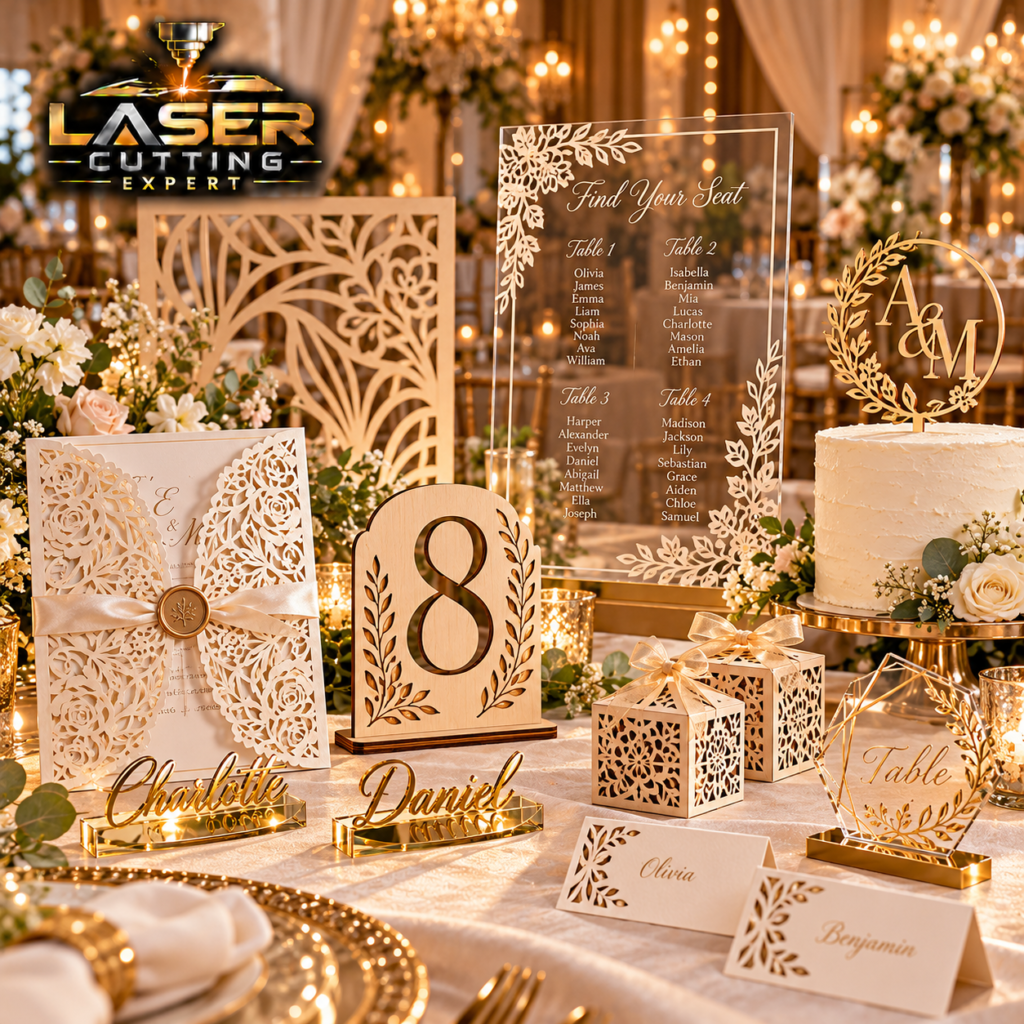
Events are temporary, but the details still need to look considered when guests arrive. Weddings, corporate events, exhibitions, award evenings, private parties, product launches and celebrations can all use laser cut pieces to connect the theme across invitations, signs, tables, displays and décor. Laser Cutting Expert provides laser cutting for events and weddings from our London workshop, working with wedding planners, event organisers, venues, florists, stylists, caterers, exhibition companies, designers and individuals throughout the UK. We cut suitable acrylic, plywood, MDF, card, paper, leather, fabric and metals, with no minimum cutting quantity and urgent production available for suitable projects.
CALL OR EMAIL US FOR PRICES
“Order any time of the day or night and receive your order on the same day in London. You are welcome to visit our laser cutting shop for an instant laser cutting service. On-site collection or free delivery can be arranged. Email us at laser@makergroup.uk for a quick quote or call us on 02036339857 for an instant price”.
Same Day Laser Cutting & Delivery
We can arrange a same day courier delivery with customer live tracking. Or customers can collect from our Laser Cutting Expert shop.
OPEN 24 HOUR
We are open 7 days a week, and you can order at any time. There is no last ordering time and no deadline. We also offer an overnight laser cutting service.
100% Satisfaction
High Quality Laser Cutting & 100% Customer Satisfaction Guarantee. Top-Rated Laser Cutting Company on Google.

Free File Check
We offer a free file check and proof before sending your artwork for laser cutting.
Starting with the Event Theme
Event laser cutting works best when individual pieces feel like they belong to the same occasion. A monogram used on an invitation can appear again on the welcome sign, table numbers, place settings and favour tags. Corporate branding can move from entrance signage to stage graphics and award pieces. Instead of treating every item separately, the artwork can be developed as a visual family. Material choice then helps establish the overall appearance. Clear acrylic creates a different result from birch plywood, mirrored acrylic or brushed metal.
Wedding Laser Cutting
Laser Cut Wedding Details
Weddings often involve many small visual details spread across the ceremony and reception. Laser cutting can help repeat names, initials, patterns and shapes consistently across these pieces. Suitable applications include invitations, save the dates, place names, table numbers, menus, cake toppers, signs, favour tags and decorative panels. Couples can provide finished artwork, or we can assist with preparing suitable cutting files. Fine script and delicate patterns need enough connection between letters and shapes to remain physically strong. The design therefore needs to work as a real object, not only as attractive artwork on a computer screen.
Wedding Invitations
Laser cut wedding invitations can use paper, card, suitable plywood, acrylic and other compatible materials. Cutting can create lace style borders, initials, floral patterns, geometric openings and shaped invitation formats. Very fine paper designs need careful handling because narrow connections can tear. Acrylic invitations can provide a more rigid format and can be combined with engraving or printing where required. The cutting artwork should account for the material thickness and final assembly method. Sleeves, backing cards and envelopes should also be considered before the invitation dimensions are finalised so every part fits together properly.
Save the Date Cards
Save the date pieces can introduce the visual style of a wedding before the main invitation arrives. Laser cut names, initials, calendar shapes, landmarks and small decorative details can be produced in suitable card, wood or acrylic. Lightweight materials are usually more practical when the pieces will be posted. Very thick acrylic or wood can increase postage costs and may require protective packaging. The design can later be carried into other wedding stationery so the save the date does not feel disconnected from the main event. Dates and spellings should always be checked carefully before personalised production begins.
Wedding Place Names
Individual place names can become both table markers and small keepsakes. Names can be cut from acrylic, plywood, card or suitable metal depending on the table styling. Script fonts are popular, but letters need enough physical connection to survive handling. Names containing dots or separate letter elements may require small design adjustments. Mirrored and coloured acrylic can work well for formal tables, while plywood can suit rustic or natural settings. Guest lists should be supplied in a clear final format because even a single spelling change creates a different personalised component.
Wedding Place Cards
Traditional folded place cards can be combined with laser cut edges, decorative shapes or separate name elements. Card thickness matters because very thin stock can lose stiffness after detailed areas are removed. Laser cut sleeves and overlays can also be layered over printed cards. When place cards contain meal choices or other information, the design should leave enough clear space for readable text. Decorative cutting should support the table function rather than making essential guest information difficult to see.
Wedding Table Numbers
Table numbers can be freestanding, inserted into holders or incorporated into larger table centre designs. Acrylic, plywood, MDF and suitable metal can all create different styles. Laser cutting allows numbers, words or complete table names to be shaped rather than simply printed onto rectangles. The base needs enough width and weight to keep the piece stable around flowers, glasses and table service. Where table numbers are designed to slot into stands, the slot width should match the actual material thickness rather than only its nominal specification.
Wedding Table Names
Some couples use places, films, songs, flowers or personal references instead of numbered tables. Laser cutting allows each table name to have a different word while retaining the same typography and material. Plywood and acrylic lettering can be mounted on stands or incorporated into centrepieces. Longer names may need a wider base or smaller type than shorter names. A consistent overall height can sometimes create a neater visual set. The final list should be checked before manufacturing because personalised table names are difficult to reuse if the event plan changes.
Wedding Menu Cards
Menus can combine printed information with laser cut covers, borders or decorative overlays. Acrylic and wood can also be used for reusable or premium menu formats. The main consideration is readability. Highly decorative patterns should not interfere with dish descriptions, dietary information or headings. Table menus may also be handled repeatedly during service, so fragile details should be avoided. Where engraving is used instead of printing, the available area and letter size need to remain practical for guests to read in normal venue lighting.
Wedding Welcome Signs
The welcome sign is often one of the first personalised pieces guests see. Laser cut acrylic lettering, plywood names, metal logos and layered decorative elements can be mounted onto a suitable sign panel. Freestanding cut letters can also form part of an entrance display. Large signs need practical support, particularly at outdoor venues where wind can become an issue. A lightweight panel that works perfectly inside a hotel may need a much stronger stand outdoors. Venue access, installation time and transport should therefore be considered alongside the artwork.
Wedding Directional Signs
Large venues, outdoor weddings and multi room celebrations can benefit from directional signage. Laser cut arrows, words and plaques can guide guests towards the ceremony, reception, toilets, bar, photo area or accommodation. Materials should suit the environment. Plywood may require protection outdoors, while acrylic and suitable metals can provide greater weather resistance depending on the application. Signs should remain readable from the distance at which guests actually make a decision. Decorative typography is useful, but directions need to be immediately understandable.
Wedding Seating Plans
Seating plans can become a major entrance feature. Acrylic panels, wooden boards and layered displays can incorporate laser cut headings, names, table identifiers and decorative motifs. The layout should remain flexible until the guest list is genuinely close to final because seating arrangements often change. One approach is to create the main reusable structure separately from individual table list inserts. This can make late changes easier. Large seating plans also need suitable transport protection because mirrored acrylic, painted panels and delicate raised lettering can be damaged if stacked carelessly.
Wedding Order of the Day Signs
An order of the day display can show ceremony time, drinks, dinner, speeches, entertainment and other key moments. Laser cut icons and headings can make the schedule easy to scan. The design should prioritise clear information rather than fitting too many decorative elements around each line. Acrylic, plywood and layered board formats can all be used. Where the timetable may still change, removable sections or printed inserts can provide more flexibility than permanently engraving every time onto an expensive panel.
Wedding Bar Signs
Bar signage can include cocktail menus, personalised drink names, welcome messages and small directional signs. Laser cut or engraved acrylic can work particularly well around bar areas because it is rigid and easy to wipe. Wooden signs can provide another style but should be finished appropriately if exposed to spills. Menus should use readable text and enough contrast between lettering and background. Freestanding signs need stable bases because busy bars are frequently bumped during an event.
Wedding Cake Toppers
Names, initials, dates, short phrases and silhouettes can be produced as cake toppers in suitable acrylic or plywood. The stem needs enough strength to support the design, especially when the wording is wide. Fine script can look attractive but becomes fragile if connections are too narrow. Material intended to come into contact with food should be selected and handled appropriately, and the cake maker should confirm how the topper will be positioned. Decorative manufacturing does not automatically make every sheet material food contact approved.
Cupcake Toppers
Small toppers can repeat initials, ages, numbers, logos or simple shapes across cupcakes and dessert displays. Because these pieces are small, designs need to remain relatively simple. Tiny internal details can disappear or become too fragile. Where a topper is inserted into food, appropriate food safe arrangements should be considered by the caterer. Another option is to use the laser cut piece as decoration on the display rather than directly contacting the food.
Wedding Favour Tags
Favour tags can carry guest names, initials, dates or short thank you messages. Small plywood, acrylic, card or suitable leather tags can be tied to bags, boxes, bottles and other gifts. Hole diameter should match the ribbon or cord being used. Text also needs to remain legible at a small scale. When hundreds of tags are personalised individually, a clean guest data file helps reduce mistakes. Tags can double as place names, allowing one component to perform two functions at the table.
Wedding Gift Boxes
Laser cut plywood, card and compatible sheet materials can be developed into favour boxes and small gift packaging. Tabs, slots and folds need to suit the chosen material. Wood behaves differently from folding card, so the construction should be designed specifically for the sheet rather than copying the same box pattern across every material. Names, dates and decorative openings can be incorporated into the box. For food gifts, suitable internal packaging should be used where required rather than assuming the decorative outer material is approved for direct food contact.
Wedding Card Boxes
Card boxes can be produced for guests to leave cards and envelopes during the reception. Plywood and acrylic versions can use interlocking panels, engraved messages and decorative openings. The slot should accommodate the expected envelope sizes. Removable lids or access panels make it easier to retrieve the contents afterwards. If transparent acrylic is used, the contents will remain visible, which may or may not suit the event. The box should also be positioned securely because it can contain personal messages and gifts.
Wedding Guest Book Signs
Small signs can guide guests towards a guest book, audio guest book or message station. Laser cut lettering and plaques can match the wider wedding stationery. These signs do not need to be large, but they should be visible enough that guests understand what to do. Acrylic, wood and card can all work depending on the table styling. If instructions are longer than a short sentence, printing or engraving onto a panel is usually more readable than cutting every word as separate lettering.
Wedding Photo Booth Signs
Photo areas can use speech props, frames, hashtags, names and themed shapes. Laser cut plywood or acrylic can provide stronger props than ordinary card when many guests will handle them. Edges should be smooth and comfortable to hold. Very narrow handles can snap under repeated use. The design should also avoid sharp projections around faces. Large photo frames need enough stiffness to stay reasonably flat while still being light enough for guests to lift safely.
Wedding Hashtags
A wedding hashtag can appear as freestanding letters, wall décor, table signage or a photo backdrop element. Laser cutting allows the entire hashtag to be produced as one connected piece where the design permits. Long phrases can become flexible if cut from thin material, so thickness and mounting method matter. Acrylic can create a clean contemporary look, while plywood provides a warmer appearance. The hashtag can also be engraved onto smaller signs rather than manufactured as a large standalone word.
Wedding Monograms
Initials and monograms can be repeated throughout an event to create a recognisable visual identity. They can appear on invitations, signs, place settings, menus, favours and backdrops. A laser cut monogram needs sufficient connection between individual elements. Fine graphic lines that work in print may need thickening before they become physical objects. Once the cutting version is prepared, the same basic artwork can often be adapted to several sizes and materials while keeping the visual theme consistent.
Ceremony Details
Ceremony Welcome Displays
Ceremony entrances can combine flowers, fabric and laser cut signage. Names, dates and short welcome messages can be mounted onto acrylic, wood or metal panels. Outdoor ceremonies need stable stands and materials appropriate for weather conditions. Wind can catch large flat signs easily, so the support is as important as the sign itself. Temporary event installations should also avoid obstructing walkways. The display should be positioned where arriving guests can see it without creating congestion around the entrance.
Reserved Seat Signs
Small reserved signs can identify seats for family members, speakers or special guests. Plywood, acrylic and card are practical options. Signs can be tied to chairs or placed on seats depending on the venue. Names can be personalised individually or a simple “Reserved” message can be repeated. The fixing method should not damage hired furniture. Lightweight components are usually preferable because they only need to remain in position for the ceremony.
Ring Boxes
Small laser cut wooden boxes can be created for rings and other ceremonial items. Interlocking construction can be combined with engraved names, initials or dates. Hinges and closures require careful design at this scale. The internal compartment can use a suitable insert or lining to protect jewellery. A decorative wooden box is not the same as a precision jewellery case, so dimensions should be developed around the actual items being placed inside.
Ceremony Arch Decorations
Wedding arches can include laser cut initials, words, silhouettes and decorative panels. Large pieces should be attached securely to the main structure. Outdoor arches experience wind and should be stabilised by the event supplier. Decorative laser cut elements should not be expected to provide structural support. Plywood, acrylic and lightweight sheet materials can be selected according to the required appearance and installation method.
Reception Table Styling
Personalised Table Settings
Laser cutting makes it practical to give every guest a different name while keeping the same design style. Acrylic names, wooden place settings and small tags can sit directly on the table or be attached to napkins and favours. Material colour can be coordinated with flowers, linen and tableware. Names should be large enough to read without dominating the setting. Fine scripts may require adjustment so letters remain connected. A final guest list in spreadsheet form can help manage larger personalised sets accurately.
Napkin Names
Small laser cut names can be placed across folded napkins as part of the table styling. Acrylic and thin plywood are common possibilities. The size should suit the napkin fold and plate arrangement. Extremely long names may need reduced lettering or an alternative layout. Sharp points should be avoided because guests will handle the pieces directly. After the event, the names can also become small keepsakes.
Drink Markers
Small personalised markers can help guests identify glasses at private events. Suitable acrylic shapes can be cut with names, initials or simple symbols. The attachment design needs to fit the actual glassware. Fragile clips should be avoided. These pieces are decorative accessories rather than food contact products, and they should be positioned so they do not interfere with drinking surfaces.
Table Centrepiece Elements
Centrepieces can combine flowers, candles, numbers and laser cut decorative components. Wooden silhouettes, acrylic shapes, metal details and layered pieces can be incorporated. Candle placement needs appropriate clearance from combustible materials such as card, wood and textiles. Laser cut decorations should not be positioned where they can fall into a flame. Event stylists and venues remain responsible for candle and fire safety.
Event Laser Cutting
Corporate Events
Corporate events often need branding to appear consistently across registration areas, stages, tables and displays. Laser cut logos, directional signs, table identifiers, presentation pieces and branded décor can help create that continuity. Acrylic and metal can provide a clean professional finish, while plywood can suit informal or sustainability focused event styling. Reusable pieces can be designed without a specific date so they can appear at several events. Temporary event branding should also consider transport and storage between venues.
Product Launches
A product launch can use laser cutting for display plinth details, logos, product stands, information panels and presentation pieces. The physical display should support the product rather than compete with it. Acrylic can provide transparent or coloured structures, while metal and wood create different visual effects. Display components carrying valuable products need adequate stability. Prototype stands can be tested before the event to make sure products fit correctly and remain secure under normal visitor interaction.
Award Ceremonies
Award evenings can use laser cut stage signs, table numbers, sponsor logos, trophies, plaques and presentation boxes. Awards can combine acrylic, plywood and metal layers with engraving or printing. The design should leave enough room for recipient names and categories. Where winner information is confidential until close to the event, production timing needs to be planned carefully. Generic award bodies with separately personalised nameplates can sometimes provide more flexibility for last minute results.
Exhibitions
Exhibition stands need components that can be transported, installed and removed efficiently. Laser cut logos, product displays, wall lettering, information panels and model components can form part of the stand. Interlocking plywood or acrylic pieces can reduce the need for permanent fixings in some designs. Large components should fit through venue access routes and transport packaging. Exhibition organisers may also specify fire performance requirements for materials used on stands, which remain the responsibility of the exhibitor and stand contractor.
Trade Shows
Trade show environments place displays in front of large numbers of visitors over a short period. Laser cut brochure holders, QR code signs, product stands, branding elements and table displays can help organise the stand. Components need to tolerate repeated handling. Delicate decorative pieces that work at a private dinner may not survive a busy exhibition. Reusable display components can be designed around replaceable printed inserts so information can change between shows without remaking the complete structure.
Conferences
Conference organisers can use laser cutting for stage branding, speaker name displays, directional signs, table identifiers, sponsor panels and registration desk details. Large events often involve several rooms, making consistent wayfinding important. Signs should be readable from normal walking distances. Small decorative text is less useful when delegates are trying to find a breakout session quickly. Laser cut branding can be combined with printed information where schedules need to change.
Networking Events
Networking events can use table signs, company logos, sector markers and conversation area identifiers. These pieces can help organise guests without making the space feel heavily signposted. Small freestanding acrylic or wooden signs can be moved as layouts change. Where attendee names change frequently, reusable sign holders with replaceable printed cards may be more practical than individually cutting every attendee name.
Charity Events
Charity dinners, fundraising evenings and community events can use laser cut sponsor signs, table numbers, donation point signs, awards and decorative pieces. Sponsor branding often changes between events, so modular displays can provide flexibility. QR code plaques can direct guests towards donation pages where the code itself is printed or engraved clearly enough to scan. Event organisers should test QR codes at the actual size and contrast before relying on them during the event.
Gala Dinners
Gala dinners can combine table plans, place names, menus, sponsor logos and stage décor into one coordinated visual system. Laser cutting allows these elements to share materials and typography. Mirrored acrylic, metallic finishes and dark stained wood can each create different results. Table pieces need to remain practical around plates, glassware and serving staff. Large decorative centrepieces should also preserve guest sightlines across the table.
Birthday Parties
Birthday events can use laser cut names, ages, cake toppers, signs, photo props and table decorations. Children’s parties need particular attention to safe edges and small detachable parts. Decorations should not be treated as toys unless they are designed and tested as such. Adult celebrations can use more complex acrylic or wooden signage and personalised bar details. The design can be scaled according to venue size rather than simply making every element large.
Anniversary Events
Anniversary celebrations can incorporate dates, names, photographs and milestone numbers into laser cut décor. Table signs, cake toppers, photo frames and memory displays can be produced from suitable materials. Layered designs can combine several colours or textures. Where old photographs or historical artwork is being incorporated, printing can work alongside laser cut frames and headings.
Baby Showers
Names, welcome signs, cake toppers, table decorations and favour tags can be produced for baby showers. Soft colour acrylics, plywood and card can suit different themes. Decorations intended around children should avoid small loose pieces where they may become accessible. Laser cut products used purely as event décor should be kept separate from items intended as children’s toys.
Engagement Parties
Engagement celebrations can use many of the same visual elements as weddings without requiring a full stationery suite. Initials, dates, welcome signs, cake toppers and table details can establish the event theme. Some pieces can later be reused at the wedding if the design avoids event specific wording. This can be particularly useful for monograms, sign stands and generic decorative panels.
Venue & Event Signage
Venue Directional Signs
Hotels, halls, outdoor venues and temporary event spaces can require signs directing guests between entrances, rooms, toilets, cloakrooms, bars and dining areas. Laser cut arrows and headings can be mounted on reusable boards. Signs should use straightforward language and sufficient contrast. Decorative styling can follow the event theme, but navigation should remain easy for guests unfamiliar with the venue.
Toilet Signs
Temporary event toilet signs can be produced in acrylic, plywood or metal to match the rest of the venue styling. Symbols and words should be immediately understandable. Accessibility signage should follow the venue’s requirements rather than being changed purely for decoration. Signs can use removable fixing methods where the venue does not permit permanent attachment.
Bar and Drinks Signs
Event bars can use cocktail menus, drinks lists and branded signs. Engraved acrylic can be useful where the information is fixed, while sign holders with printed inserts provide more flexibility when drinks change. Laser cut logos and headings can add branding around the menu. Surfaces close to drinks should tolerate regular wiping and occasional spills.
Food Station Signs
Buffets, dessert tables and food stations can use small signs to identify dishes or sections. Allergen information is safety critical and should be handled clearly by the caterer rather than hidden within decorative typography. Laser cut holders can support replaceable printed food labels, allowing catering information to remain accurate even when menus change close to the event.
Photo Area Signage
Photo zones can use names, dates, hashtags and event logos as backdrops or freestanding elements. Large lettering needs enough support to stay flat. Wall mounted components require appropriate venue approved fixings. Temporary adhesive methods should be tested so they do not damage painted or decorative venue surfaces.
Backdrops & Decorative Installations
Laser Cut Event Backdrops
Backdrops can combine repeated geometric patterns, names, logos and decorative shapes. Plywood, MDF, acrylic and suitable metal can be used depending on scale and finish. Large backdrops are often better divided into manageable sections for transport. Joints can be positioned within the pattern so they remain less noticeable. The support frame needs adequate stability, particularly where guests may stand directly in front of the installation for photographs.
Stage Logos
Corporate conferences, award ceremonies and launches can use large laser cut logos on stage. Lightweight material may be useful where components are attached to temporary scenery. The stage supplier should approve mounting methods, particularly for pieces positioned above people. Logos can be cut as separate letters or as one connected panel depending on the brand design.
Layered Event Signs
Layering different materials creates depth without requiring a very thick single sheet. A plywood base can carry acrylic lettering, or clear acrylic can be combined with metal effect elements. Registration signs, welcome boards and sponsor displays can all use this approach. Adhesives and fixing methods should suit both materials. Transparent acrylic can reveal untidy adhesive if bonding is not planned carefully.
Hanging Decorations
Laser cut snowflakes, stars, flowers, leaves, geometric pieces and branded shapes can be suspended above event spaces where the venue permits. Lightweight material reduces load, but overhead installations still need secure rigging. Fire performance may also be relevant depending on venue rules. Event rigging should be handled by competent installers rather than relying on decorative cord or temporary fixings without assessment.
Decorative Screens
Freestanding screens can divide event areas, create photo backgrounds or conceal service spaces. Laser cut plywood, acrylic and metal panels can create different levels of privacy. Large panels need stable frames or bases. Outdoor installations require particular care because wind loads on screens can be substantial even when the pattern contains openings. Temporary does not mean structurally unimportant.
Floral & Styling Components
Florist Signage
Florists and event stylists can integrate laser cut names, table numbers and messages into arrangements. Small wooden or acrylic components can sit within floral displays without requiring separate sign stands. Stem length and material weight should suit the arrangement. Pieces positioned near water need materials and finishes that tolerate moisture.
Flower Box Labels
Flower boxes and decorative containers can use cut logos, names and plaques. These can be produced separately and attached to reusable boxes. This approach allows the container to be repurposed for another event by changing the personalised element rather than replacing the whole display.
Floral Arrangement Templates
Florists creating repeated event pieces may use simple templates for spacing, shapes or decorative construction. Suitable plywood or acrylic templates can provide repeatable geometry. They should be designed around the actual working method rather than becoming unnecessarily complex. Templates used around water should use materials appropriate for repeated exposure.
Event Displays
Product Display Stands
Brands can use laser cut acrylic, plywood or metal components to create small product stands for events. Slots and tabs can make some displays quick to assemble without permanent fixings. Material thickness needs to match slot dimensions accurately. Valuable or heavy products require stable bases. A sample stand can be tested before producing multiples for a larger event.
QR Code Displays
QR codes are common at events for menus, registrations, social media and payments. Laser cut stands can hold printed QR codes, while suitable engraving may also reproduce the code directly on certain materials. Codes need sufficient contrast and accurate geometry to scan reliably. Every finished code should be tested with several phones before the event. Decorative styling should not interfere with the functional code area.
Brochure Holders
Exhibitions and conferences can use laser cut brochure and leaflet holders. Acrylic and plywood can be developed into interlocking or folded structures. Pocket dimensions should match the actual printed material. Tall holders need enough base depth to avoid tipping. Reusable holders can include removable branding so they work across several campaigns.
Business Card Holders
Small desk style card holders can be used on exhibition stands, registration desks and networking tables. Laser cut plywood and acrylic designs can use simple slot construction. The slot should account for the thickness of a stack rather than one card. Corporate logos can be engraved or applied separately.
Awards & Recognition
Laser Cut Awards
Awards can combine shaped acrylic, plywood and metal components into layered presentation pieces. Recipient names, categories, dates and sponsor logos can be engraved or printed. The base needs enough weight to keep the award stable. Sharp points and fragile extensions should be avoided because awards are frequently handled and transported. Where several categories share one design, the main award body can remain consistent while the personalised information changes.
Event Plaques
Plaques can recognise sponsors, speakers, winners or contributors. Stainless steel, brass, acrylic and wood can create very different appearances. Laser cutting establishes the outside shape while engraving or printing provides the information. Mounting holes, stands or presentation boxes can be considered as part of the overall design.
Medals
Suitable sheet metal, acrylic or plywood can be cut into medal style shapes for events, competitions and informal awards. Ribbon holes need enough surrounding material to resist breaking. Formal sporting medals or regulated competition products may have separate requirements, but custom event medals can provide flexible shapes and branding.
Material Choices for Events
Acrylic
Acrylic is widely used for wedding and event pieces because it is available in clear, coloured, frosted and mirrored finishes. Suitable products include signs, place names, table numbers, invitations, cake toppers and display stands. Protective film can help preserve the surface during manufacturing. Mirrored acrylic should be handled carefully because scratches become highly visible. Large thin sheets may flex and need support.
Plywood
Plywood provides a natural material appearance suitable for rustic weddings, outdoor celebrations, craft events and branded displays. It can be used for signs, table details, boxes, invitations, models and decorations. Wood grain varies from sheet to sheet, which is part of the material rather than a printing defect. Laser cutting can darken the edge. The amount of edge colour depends on plywood construction, thickness and cutting conditions.
MDF
MDF is useful for painted signs, display components, letters and event backdrops. Its consistent surface makes it suitable for finishing after cutting. Raw MDF is not normally the final appearance for formal events, so painting or another surface treatment may follow. Large thin pieces can bend, particularly in humid environments. MDF should also be kept away from direct food contact unless an appropriate approved system is used.
Card and Paper
Paper and card suit invitations, stationery, menus, table details and lightweight decorations. Laser cutting can create fine patterns that would be difficult to reproduce manually. Edge darkening depends on stock type and colour. Very delicate designs need sufficient connections between features. Printed sheets can also require registration between the printed artwork and the laser cut profile.
Leather
Suitable genuine leather can be used for event tags, menu covers, luggage style place markers and premium accessories. Natural leather varies in grain, thickness and colour. Synthetic leather requires material identification before laser processing. PVC or chlorine containing faux leather must not be laser cut. Unknown synthetic leather should be supported by supplier specifications or an SDS before processing.
Fabric
Compatible textiles can be used for event decorations, applique, banners and styling components. Fibre composition affects edge behaviour. Some synthetic fibres can develop a sealed edge, while natural fibres may show more fraying or darkening. Coated fabrics need identification before processing. PVC coated fabrics must not be laser cut.
Metal
Metal can create durable event signs, table numbers, plaques, awards and decorative components. Stainless steel, aluminium, brass, copper and mild steel can each produce a different appearance. Metal is particularly useful where pieces are intended to be reused after the event. Weight, sharp edges and support need consideration. Finishing can include brushing, polishing, coating or other appropriate processes.
Personalisation
Names and Initials
Personalisation is central to many wedding and event projects. Individual names can be cut or engraved onto place settings, tags, awards and gifts. Data should be supplied in a clear final list. Capitalisation and punctuation should be checked because production follows the information provided. When a particular name creates a weak letter connection, small design changes may be needed to make the physical piece durable.
Dates
Dates can appear on invitations, signs, cake toppers and keepsakes. The format should remain consistent throughout the event materials. Once a date has been permanently cut or engraved, changing it means remaking the personalised component. For events where the date could move, reusable structures with replaceable printed sections can provide greater flexibility.
Event Logos
Corporate logos and wedding monograms can be adapted into cuttable artwork. Extremely fine lines or isolated graphic elements may need joining or thickening. Brand owners should approve any necessary adjustments where exact identity standards matter. Once prepared, the same cutting artwork can often be scaled for stage signs, table displays and smaller accessories.
Event Production Planning
Working from a Final Guest List
Personalised weddings often contain dozens or hundreds of unique names. Production becomes much smoother when the final list is supplied in a structured file rather than across multiple messages. Duplicate names, spelling and capitalisation can then be reviewed together. Late guest changes may still be possible, but producing them separately can affect turnaround and consistency.
Venue Measurements
Large signs, backdrops and display structures should be planned around the real venue. Door widths, ceiling height, lift dimensions and available floor space can determine how large a component can practically be. A backdrop that fits perfectly in a digital rendering may not fit through the venue entrance as one piece. Modular construction can solve this without making the installation look obviously segmented.
Transport
Wedding and event pieces often travel after manufacturing. Acrylic signs need protection from scratching, while delicate plywood lettering needs support to prevent snapping. Large backdrops may need separate panels. Packaging should therefore be considered during design rather than after production. Reusable event products can benefit from dedicated storage boxes or protective separators.
Installation
Some event pieces simply sit on a table, while others need wall, ceiling or freestanding installation. The venue may restrict drilling, adhesives or overhead suspension. Fixing methods should therefore be confirmed beforehand. Heavy or overhead components need competent installation. Laser Cutting Expert can produce fixing holes and mounting features, but safe venue installation remains the responsibility of the event or installation team.
Reusable Event Pieces
Not everything needs to contain a date or individual name. Generic welcome stands, table number bases, sign frames, menu holders and display structures can be reused for future events. Personalised inserts can then be replaced. This can be useful for venues, wedding planners and event companies that manage multiple events every month. Material choice should reflect the amount of handling and storage the piece will experience.
Urgent Event Production
Last Minute Wedding Pieces
Guest changes, seating plan revisions and forgotten signs can happen close to a wedding. Suitable production ready pieces may be considered for urgent manufacture from our London workshop. Same day availability depends on material, artwork, quantity and current production capacity. Simple place names or signs can be more realistic for urgent work than a large complex installation requiring design development and finishing. Providing the final artwork and exact deadline immediately gives the best chance of meeting a last minute requirement.
Same Day Event Laser Cutting London
Laser Cutting Expert operates 24/7, including weekends and bank holidays. Suitable event components can be produced with same day laser cutting and London delivery where the material, artwork and production schedule allow. This can include signs, table numbers, place names, cake toppers, awards, display components and other prepared designs. There is no minimum cutting quantity, so one replacement name or one urgent sign can be considered without requiring a larger order.
Event Laser Cutting Across the UK
Our production is based in London, but we support weddings, corporate events, exhibitions, conferences, award ceremonies and private celebrations throughout the UK. Suitable completed items can be dispatched for next day UK delivery depending on production requirements and timing. Wedding planners, venues and event companies can also use us for repeat work involving different names, dates and themes. Our related services Acrylic Laser Cutting, Wood Laser Cutting, Paper Laser Cutting, Fabric Laser Cutting, Metal Laser Cutting, CAD, Design & Prototyping can be combined according to the project.
FAQs About Laser Cutting for Events & Weddings
1. What can you laser cut for weddings?
We can produce suitable wedding invitations, place names, table numbers, signs, seating plan elements, cake toppers, favour tags, menus, decorative panels and other personalised wedding pieces.
2. What materials can be used for wedding laser cutting?
Suitable materials can include acrylic, plywood, MDF, card, paper, genuine leather, compatible fabric and metals such as stainless steel, aluminium and brass.
3. Can every guest name be different?
Yes. Place names, favour tags and other pieces can be individually personalised. A clear final guest list helps us prepare larger personalised sets accurately.
4. Can you laser cut wedding invitations?
Yes. Suitable card, paper, plywood and acrylic can be used for laser cut wedding invitations depending on the required design.
5. Can you create large event signs?
Yes. Welcome signs, stage logos, seating plan displays, directional signs and backdrops can be produced in suitable materials. Large pieces may be divided into modules for transport and installation.
6. Can you work from our own event artwork?
Yes. You can provide production ready artwork, or we can help prepare suitable cutting files from your design.
7. Is there a minimum quantity?
No. We have no minimum cutting quantity, so we can consider anything from one personalised sign or replacement place name to larger event sets.
8. Can you provide urgent wedding laser cutting in London?
Yes. Suitable production ready work can be considered for same day laser cutting and London delivery, depending on material, artwork, quantity and workshop capacity.
9. Do you work with wedding planners and event companies?
Yes. We work with planners, venues, stylists, exhibition businesses, corporate event organisers, designers and individuals.
10. Can you supply event laser cut products throughout the UK?
Yes. Production is based in London, with suitable completed wedding and event pieces available for delivery throughout the UK.