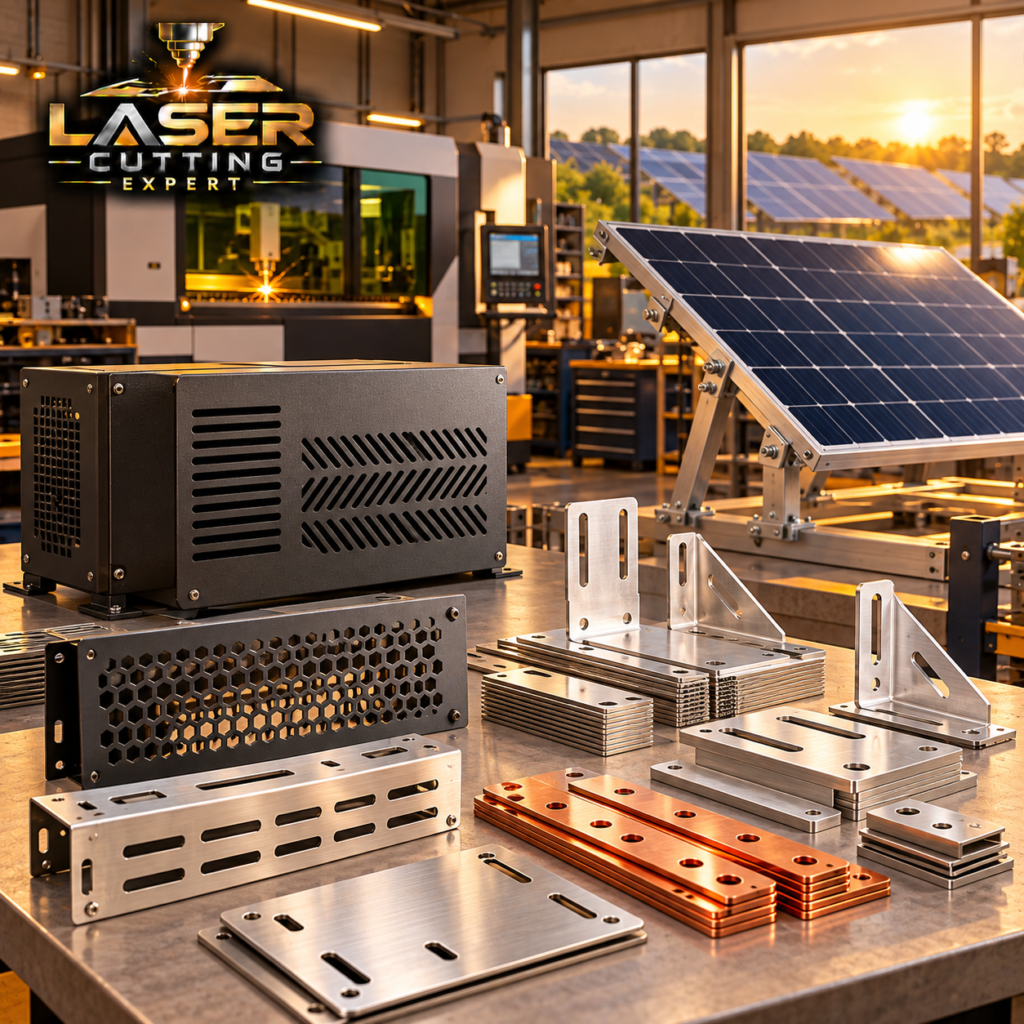
Energy equipment has to keep working in environments where heat, weather, vibration, corrosion and continuous operation can all influence component life. Laser Cutting Expert supports power generation laser cutting, laser cutting in the solar industry, laser cutting solar structures and suitable laser cutting for oil & gas applications from our London production facility. We work with energy engineers, equipment manufacturers, solar fabricators, maintenance contractors, plant operators and specialist engineering companies throughout the UK. Manufacturing can cover development components, replacement parts, equipment panels, mounting systems, brackets, guards, structural fabrication blanks and maintenance related profiles. Material, thickness, operating environment and engineering requirements are considered before the cutting route is selected.
CALL OR EMAIL US FOR PRICES
“Order any time of the day or night and receive your order on the same day in London. You are welcome to visit our laser cutting shop for an instant laser cutting service. On-site collection or free delivery can be arranged. Email us at laser@makergroup.uk for a quick quote or call us on 02036339857 for an instant price”.
Same Day Laser Cutting & Delivery
We can arrange a same day courier delivery with customer live tracking. Or customers can collect from our Laser Cutting Expert shop.

OPEN 24 HOUR
We are open 7 days a week, and you can order at any time. There is no last ordering time and no deadline. We also offer an overnight laser cutting service.

100% Satisfaction
High Quality Laser Cutting & 100% Customer Satisfaction Guarantee. Top-Rated Laser Cutting Company on Google.

Free File Check
We offer a free file check and proof before sending your artwork for laser cutting.
Laser Cutting Around Energy Infrastructure
Energy sector laser cutting is rarely about producing an isolated decorative shape. Components normally become part of larger mechanical, electrical or structural systems. A bracket may support electrical equipment outdoors for decades. A plate can become part of a solar mounting frame. A guard may sit around rotating generation equipment. A replacement panel can be needed because ageing plant must return to operation quickly. For this reason, energy work needs attention to material grade, corrosion protection, temperature, loading and downstream fabrication.
Power Generation Laser Cutting
Components for Power Generation Equipment
Power generation laser cutting can support the manufacture and maintenance of equipment used around conventional generation, renewable energy systems, standby power, industrial energy plants and distributed generation. Suitable components can include mounting plates, equipment panels, ventilation sections, brackets, guards, access covers, base plates, shims, supports and fabrication blanks. These parts may later be bent, welded, machined or coated before installation. The operating conditions need to be known because equipment near heat, vibration, chemicals or outdoor environments requires different material decisions. Laser cutting manufactures the specified geometry while the plant or equipment engineer determines the functional and safety requirements.
Power Plant Equipment Panels
Generation facilities contain substantial amounts of mechanical and electrical equipment that require protective panels and access covers. Power generation laser cutting can manufacture suitable steel, stainless steel and aluminium panels with ventilation openings, inspection access and fixing features. Panels may need to be removable for maintenance, making bolt locations and handling important. Large panels can require folds or reinforcement to control flexing. Where panels protect electrical or rotating equipment, their openings need to maintain appropriate safety. Laser cut accuracy supports assembly, but the equipment manufacturer remains responsible for guarding, electrical protection and plant compliance.
Generator Components
Industrial and standby generators can require brackets, base plates, covers, ventilation panels and mounting components. Power generation laser cutting can support suitable components for new equipment, development work and maintenance. Generator systems experience vibration, making bracket stiffness and fastener arrangement important. Ventilation should provide sufficient airflow around engines, alternators and electrical systems. Components located near exhaust systems also need appropriate thermal consideration. Laser Cutting Expert can manufacture the required profiles, while generator manufacturers and engineers remain responsible for vibration, thermal performance, electrical systems and the finished equipment.
Generator Base Plates
Base plates provide mounting interfaces between equipment and its supporting structure. Power generation laser cutting can produce custom base plates containing bolt holes, service openings and equipment location features. Thick plates may require further machining where precision mounting surfaces are necessary. Generator loads can include static weight and dynamic vibration, so plate thickness and foundation connections need engineering. A laser cut plate that physically fits the equipment is not automatically sufficient for the operational loads. The complete support arrangement should be designed around the actual generator and installation.
Turbine Support Components
Power generation turbines involve specialised engineering, but supporting equipment around them can require custom plates, guards, access components and fabrication profiles. Power generation laser cutting can manufacture suitable non rotating components according to approved drawings. Turbine rotor parts, blades and other critical high speed components normally require specialist manufacturing, materials, inspection and quality systems beyond general laser fabrication. We do not treat those components as ordinary laser cut parts. Plant engineers should identify criticality, material traceability and documentation requirements before production begins.
Plant Maintenance Components
Existing energy plants frequently need replacement covers, brackets, equipment plates and access components. Power generation laser cutting can support maintenance teams where the original component is damaged, corroded or unavailable. Reverse engineering should be approached carefully. An old component can be distorted or worn, meaning copying it directly may reproduce defects. Material grade can also be difficult to determine visually. Where the component carries significant load or performs a safety function, the plant engineer should confirm the specification before a replacement is manufactured.
Replacement Plant Parts
Long running generation equipment can outlive the commercial availability of some original components. Power generation laser cutting can help reproduce suitable flat or fabricated replacement parts where reliable dimensions and material requirements are available. Examples can include equipment covers, mounting plates, guards, access panels, brackets and spacers. Digital drawings can then be retained for future production. Replacement manufacturing should not be used to bypass engineering approval for critical components. If the original part’s material or function is uncertain, further investigation is needed before manufacture.
Power Station Guards
Rotating shafts, couplings, belts, fans and other moving systems can require guarding. Power generation laser cutting can create guard panels, perforated sections, mounting brackets and frame components. Opening sizes and access arrangements need to reflect the actual hazard. Guards should also be removable where maintenance requires access, without becoming inconvenient enough that operators leave them off. Laser Cutting Expert manufactures specified components, while the responsible machinery engineer remains responsible for risk assessment and the effectiveness of the complete guarding system.
Power Station Ventilation Panels
Electrical rooms, generator enclosures and mechanical equipment can require substantial airflow. Power generation laser cutting can produce ventilation panels containing slots, louvred panel blanks or patterned openings. Open area needs to be calculated around the required airflow rather than appearance alone. Removing a large percentage of material can reduce panel stiffness. Outdoor installations may also require protection from rain or debris. Ventilation design, acoustic performance and environmental protection remain system level requirements.
Energy Equipment Brackets
Energy infrastructure contains many relatively simple components that perform important support functions. Power generation laser cutting can produce brackets for sensors, cables, pipe supports, electrical equipment, control boxes and auxiliary systems. Adjustment slots can simplify installation where existing plant dimensions vary. Brackets exposed outdoors or in industrial environments need suitable corrosion protection. Load bearing brackets should be engineered around the equipment they support. The fact that a bracket is physically small does not necessarily mean its failure would be unimportant.
Laser Cutting in the Solar Industry
Solar Manufacturing and Installation
Laser cutting in the solar industry can support the mechanical infrastructure surrounding photovoltaic and solar energy systems. Solar installations require mounting plates, brackets, rails, equipment supports, inverter panels, battery system components, cable management pieces and custom fabrication parts. These components can spend decades outdoors, where wind, rain, temperature cycling and corrosion influence their performance. Aluminium, stainless steel and galvanised steel are common possibilities depending on the design. Laser cutting provides repeatable geometry, while structural and electrical engineers determine whether the finished solar system is suitable for its location and expected operating life.
Solar Panel Mounting Components
Mounting hardware forms the physical connection between photovoltaic modules and the supporting structure. Laser cutting in the solar industry can produce suitable brackets, fixing plates, clamps, support components and fabrication blanks according to approved engineering drawings. Solar mounting systems experience wind uplift and other environmental loads. Roof installations also interact with the existing building structure and waterproofing. Material thickness, fasteners and corrosion protection need to be selected accordingly. Laser cutting manufactures the component shape but does not establish the structural capacity of the completed mounting system.
Laser Cutting Solar Structures
Laser cutting solar structures can support custom ground mounted frames, roof mounting assemblies, solar canopies and specialist photovoltaic installations. Suitable laser cut components can include base plates, connection plates, gussets, brackets, rail interfaces and structural fabrication profiles. The design needs to consider wind, snow, module weight, maintenance access and local site conditions. Large solar structures should be engineered as complete systems. Accurate cutting can help components align during fabrication, but it cannot replace structural calculations, appropriate welding procedures or site specific foundation design.
Ground Mounted Solar Systems
Large ground mounted solar arrays use repetitive structural components across substantial areas. Laser cutting solar structures can support connection plates, support brackets, base components and equipment mounting parts for suitable systems. Repetition makes dimensional consistency important because small alignment problems can become significant across hundreds of modules. Outdoor corrosion resistance is also essential. Galvanised steel or other protective systems may be specified. Ground conditions, pile design and structural loading remain outside the cutting process and should be handled by the appropriate solar and civil engineering teams.
Solar Roof Mounting
Roof mounted photovoltaic installations need components that transfer loads safely into the building. Laser cutting in the solar industry can manufacture suitable roof brackets, interface plates and custom mounting components. Roof construction varies considerably between tile, metal sheet, membrane and flat roof systems. Waterproofing should not be compromised by poorly planned fixings. Wind uplift can be significant, particularly around roof edges and corners. The solar installer and structural engineer should determine fixing requirements before custom parts are manufactured.
Solar Canopy Components
Solar canopies combine photovoltaic generation with structural frames used over car parks, walkways or other spaces. Laser cutting solar structures can provide connection plates, brackets, gussets, base plates and equipment supports within suitable engineered assemblies. These structures are exposed to wind and weather while also being positioned above people and vehicles. Structural validation is therefore essential. Drainage may also need integration into the canopy design. Laser cut components can simplify fabrication and alignment, while the responsible engineer determines structural capacity and foundation requirements.
Solar Carport Structures
Solar carports can use steel and aluminium structures supporting photovoltaic modules above parking areas. Laser cutting solar structures can manufacture suitable connection plates, equipment brackets, signage components and fabrication blanks. Vehicle clearance, impact risk, drainage and electrical cable routing should all be considered. EV charging equipment may also be integrated into the structure. Structural and electrical systems need coordinated design. Laser cutting supplies approved components rather than determining whether the complete carport satisfies building or electrical requirements.
Solar Farm Equipment Components
Solar farms contain more than photovoltaic modules. Inverters, transformers, monitoring equipment, fencing and electrical distribution systems all require physical support. Laser cutting in the solar industry can support equipment plates, brackets, guards, cable supports, signs and enclosure components. Outdoor equipment may be exposed to UV, rain, mud and temperature changes. Material and finish should therefore reflect the environment. Electrical components require suitable protection and access arrangements. The solar plant designer remains responsible for the complete installation.
Solar Inverter Mounting
Inverters can be wall mounted, frame mounted or integrated into larger equipment stations. Laser cutting in the solar industry can produce mounting plates, protective panels and support brackets according to the inverter manufacturer’s requirements. Inverters generate heat and need adequate ventilation. Heavy equipment also requires secure structural support. Cable entry and maintenance access should be considered before bracket geometry is finalised. Laser cut mounting parts provide the mechanical interface while electrical and thermal requirements remain with the solar system designer.
Solar Battery Enclosures
Solar installations increasingly include battery energy storage systems. Laser cutting in the solar industry can support suitable enclosure panels, equipment plates, brackets and ventilation components for battery system development. Battery storage introduces significant electrical, thermal and fire considerations. Large battery systems require specialist engineering, monitoring and protection. Laser Cutting Expert manufactures specified mechanical components but does not certify battery enclosures or energy storage systems. Material, ventilation, separation and fire strategy need to be established by the responsible manufacturer.
Solar Cable Management Components
Large photovoltaic installations contain extensive DC and AC cabling. Laser cutting in the solar industry can produce suitable cable support brackets, equipment plates and routing components. Exterior cable systems need protection from weather, movement and mechanical damage. Sharp metal edges should not contact cable insulation. Components should allow practical installation and maintenance. Electrical separation and cable sizing requirements remain the responsibility of the electrical designer.
Solar Equipment Guards
Ground mounted equipment can require guards or protective panels around electrical and mechanical systems. Laser cutting in the solar industry can create suitable perforated panels, covers and frame components. Guards should protect equipment without blocking required ventilation. Exterior components also need appropriate corrosion protection. If a guard prevents access to electrical hazards, opening size and removal method become safety considerations. The complete protection strategy should therefore come from the equipment designer.
Solar Monitoring Equipment
Solar installations often include irradiance sensors, weather stations, cameras and electrical monitoring devices. Laser cutting in the solar industry can provide sensor brackets, mounting plates and protective housings. Sensor position can affect measurement quality, so brackets need sufficient stiffness and correct orientation. Weather exposure also needs consideration. Laser cutting creates controlled mounting geometry while calibration and monitoring system accuracy remain separate responsibilities.
Solar Structures & Fabrication
Connection Plates
Structural frames frequently use plates to connect beams, posts and other members. Laser cutting solar structures can produce connection plates with controlled bolt patterns and outside geometry. Hole size and edge distance should follow the structural design. Where plates are welded, access and weld preparation need consideration. Structural connections should not be modified on site without appropriate engineering approval. Laser Cutting Expert manufactures according to supplied drawings.
Solar Base Plates
Posts and equipment frames can require base plates for connection to foundations. Laser cutting solar structures can create suitable plate geometry and bolt patterns. Plate thickness, anchor size and foundation design depend on structural loads. Large base plates may require additional machining where flatness or specialised holes are required. The structural engineer should define these requirements before production.
Solar Frame Gussets
Gussets can reinforce joints in solar frames and can be produced through laser cutting solar structures. Their geometry should follow the load path rather than simply filling available space. Excessively stiff local reinforcement can sometimes move stress elsewhere in a structure. Weld access is also important. Structural engineers should specify gusset material and dimensions according to the frame design.
Solar Equipment Platforms
Inverters, batteries and other solar equipment may be mounted on dedicated steel platforms. Laser cutting solar structures can support plates, brackets, stair components, guards and fabrication parts within these systems. Platforms carrying people or heavy equipment require proper structural engineering. Exterior surfaces should also manage drainage and slip risk. Laser cutting produces the component profiles while the complete platform remains an engineered structure.
Power Generation Materials
Mild Steel in Energy Equipment
Mild steel is widely used in power generation laser cutting because it can be fabricated into frames, brackets, guards, panels and equipment supports. Corrosion protection is particularly important for outdoor or damp environments. Components may be powder coated, painted, galvanised or otherwise protected. Thickness should be selected according to load and stiffness. Laser cutting provides the profile while the downstream fabrication and protective finish determine much of the component’s service life.
Stainless Steel for Energy Applications
Stainless steel can be useful where corrosion, moisture, chemicals or appearance matter. Power generation laser cutting can produce stainless brackets, panels, equipment plates, labels and covers. Grade selection should reflect the actual environment. Coastal or chemically aggressive locations can require different consideration from an indoor plant room. Welding and finishing can influence corrosion behaviour. Stainless steel should therefore be specified by grade rather than simply described as “stainless”.
Aluminium in Solar Systems
Aluminium is widely associated with laser cutting in the solar industry because its low weight and corrosion resistance can be useful for mounting and equipment components. Alloy and temper influence strength, forming and welding. Contact with dissimilar metals in wet outdoor conditions can introduce galvanic corrosion. Appropriate isolation may therefore be required. Structural components should use material selected by the responsible engineer rather than whichever aluminium sheet is most readily available.
Galvanised Steel for Solar Structures
Galvanised steel is common in outdoor structures because the zinc coating provides corrosion protection. Laser cutting solar structures can involve pre galvanised components, but the cut edge locally exposes the steel and is not identical to the original coated surface. Welding galvanised material creates hazardous zinc oxide fumes and requires appropriate extraction and working procedures. Coating repair may also be necessary after fabrication. For some structural systems, fabrication followed by hot dip galvanising may be preferred. These manufacturing routes should not be treated as equivalent.
Corten in Energy Infrastructure
Corten may be considered for selected outdoor equipment screens, architectural energy installations or non critical exterior structures. Power generation laser cutting can produce suitable Corten panels and profiles. The weathering surface develops over time and can produce early runoff that stains surrounding materials. Water traps should be avoided. Structural use requires appropriate grade specification and engineering. Corten should be selected for its material behaviour as well as its appearance.
Copper for Energy Systems
Copper is important in electrical generation and distribution because of its conductivity. Power generation laser cutting can assess suitable copper plates, terminal profiles and busbar style components. Current capacity depends on cross sectional area, temperature rise and electrical design. Contact surfaces may need additional finishing. Laser cutting produces the specified profile but does not establish electrical rating or short circuit performance.
Oil & Gas Industry Applications
Laser Cutting for Oil & Gas
Laser cutting for oil & gas can support suitable non pressure and fabricated components used around processing equipment, maintenance operations, control systems and industrial infrastructure. Examples can include equipment panels, guards, mounting plates, brackets, access covers, labels, shims and fabrication blanks. Oil and gas environments can involve pressure, hydrocarbons, hazardous areas, corrosion and elevated temperatures. These conditions make material specification and component classification particularly important. Pressure containing, safety critical and certified components require specialist engineering, approved manufacturing procedures and inspection systems. General laser cutting should not be presented as automatically suitable for every oil and gas component.
Oil & Gas Equipment Panels
Processing facilities contain control, instrumentation and mechanical equipment requiring panels and protective covers. Laser cutting for oil & gas can manufacture suitable sheet metal components from approved drawings. Stainless steel may be specified for corrosive environments, while coated steel can be used elsewhere. Access and maintenance need to be considered because industrial equipment is routinely inspected. Components installed in hazardous areas may form part of certified equipment. Modifications should not be made without understanding their effect on certification.
Oil & Gas Equipment Brackets
Instrumentation, cable systems and auxiliary equipment often require support brackets. Laser cutting for oil & gas can produce suitable brackets with holes, slots and formed geometry. Offshore and exposed environments can impose significant corrosion requirements. Vibration can also influence bracket design around pumps and rotating machinery. Load, material and finish should be specified by the responsible engineer. Laser cutting manufactures the profile rather than establishing suitability for a hazardous installation.
Instrument Mounting Plates
Industrial instrumentation can include pressure, temperature, flow and gas monitoring devices. Laser cutting for oil & gas can provide mounting plates and brackets according to equipment layouts. Instruments need to remain accessible for calibration and maintenance. Tubing and cable routes also require space. If the equipment is part of a safety system, mounting should not interfere with its function. Laser Cutting Expert supplies the mechanical component while instrumentation engineering remains with the plant team.
Oil & Gas Guards
Pumps, couplings, motors and rotating equipment can require protective guards. Laser cutting for oil & gas can create suitable guard panels and mounting components. Guards need to prevent unsafe contact without unnecessarily restricting ventilation or maintenance. Their design should follow the machinery risk assessment. Hazardous area requirements may also affect materials and construction. Accurate profiling helps fabrication but does not replace the safety assessment of the complete machine.
Access Covers
Industrial processing equipment can require removable access covers around non pressure systems, machinery and service areas. Laser cutting for oil & gas can produce covers with fixing holes, inspection openings and identification features. If a cover forms part of a pressure boundary, flameproof enclosure or other certified system, it requires specialist engineering and should not be treated as an ordinary sheet metal cover. The functional classification must therefore be known before manufacture.
Equipment Skid Components
Oil, gas and energy systems often package equipment onto fabricated skids. Laser cutting for oil & gas can support suitable base plates, brackets, guards, panels and equipment mounting components within skid fabrication. Skids may carry pumps, vessels, pipework and electrical systems, making structural design important. Lifting arrangements also require specialist engineering. Laser cut components can simplify fabrication, while the skid manufacturer remains responsible for the complete structure and equipment integration.
Pipeline Support Components
Pipeline systems can use support plates, guides and structural brackets. Laser cutting for oil & gas can manufacture suitable non pressure support components according to approved engineering drawings. Pipe movement from temperature, pressure and vibration needs consideration. A support that is too rigid or incorrectly positioned can create unwanted loads. Pressure piping itself is governed by specialist codes and procedures. Laser Cutting Expert should not be treated as certifying pressure containing systems simply because associated support components have been accurately cut.
Pipe Identification Components
Industrial plants often use metal tags and labels to identify pipelines, valves and equipment. Laser cutting for oil & gas can produce stainless steel, aluminium or other suitable label blanks before engraving or printing. Holes and slots can be included for attachment. The plant operator determines identification colours, wording and standards. Durable material and secure fixing are particularly important outdoors or in harsh industrial environments.
Flange Blanks and Development Parts
Suitable non certified development work may involve flange shaped blanks produced through laser cutting for oil & gas before machining. Pressure containing flanges are safety critical engineered components and should be manufactured according to the relevant material, dimensional, inspection and certification requirements. A laser cut disc with bolt holes should never automatically be represented as a certified pressure flange. Where the profile is only an intermediate machining blank, that should be clearly understood.
Oil & Gas Shims
Equipment alignment can require custom shims. Laser cutting for oil & gas can produce suitable shim profiles where material and thickness fit the process. Pumps, motors and other rotating equipment can be sensitive to alignment, making actual shim thickness important. Very thin foil or high precision applications may require specialist manufacturing. Laser cut shims should be used according to the maintenance engineer’s alignment procedure.
Offshore Energy Components
Offshore energy environments combine saltwater exposure, wind and difficult maintenance access. Laser cutting for oil & gas can support suitable panels, brackets, guards, labels and fabrication components where the required material and documentation are established. Stainless grades and protective coatings may be selected according to the environment. Offshore structural or safety critical components can require substantial traceability and certification. These requirements need to be identified before production.
Renewable Energy Beyond Solar
Wind Energy Support Components
Although the page focuses strongly on solar and generation infrastructure, power generation laser cutting can also support suitable components around wind energy equipment. Examples include electrical cabinet panels, brackets, access components, equipment plates and maintenance parts. Wind turbines experience vibration, cyclic loading and difficult environmental conditions. Structural and rotating components require specialist wind industry manufacturing and should not be treated as ordinary laser cut parts. Supporting sheet metal and maintenance components can nevertheless benefit from digital profiling.
Hydroelectric Equipment Support Parts
Hydroelectric facilities can require equipment panels, guards, brackets and maintenance components. Power generation laser cutting can support suitable non critical profiles according to approved drawings. Water exposure and humidity influence material selection. Turbine and pressure containing components require specialist manufacturing. General laser cutting is more appropriate for supporting fabricated components than for highly engineered hydraulic machinery unless the required specialist process and controls are established.
Biomass Plant Components
Biomass facilities can contain conveyors, boilers, ventilation equipment and material handling systems. Power generation laser cutting can produce suitable guards, access panels, brackets and equipment components. Dust, heat and fire risks may influence the design. Wear areas can require specialist materials. Plant engineers should determine material and safety requirements before manufacturing.
Energy from Waste Equipment
Energy from waste plants operate in demanding environments involving heat, dust and potentially corrosive materials. Power generation laser cutting can support suitable maintenance panels, guards, brackets and equipment plates. Material selection should follow the specific exposure conditions. Components close to combustion or process areas may need heat resistant or corrosion resistant grades. Safety critical process equipment requires appropriate specialist engineering.
Energy Storage Infrastructure
Battery Storage Structures
Large battery energy storage installations require substantial supporting infrastructure. Laser cutting in the solar industry can overlap with battery storage projects through enclosure panels, equipment frames, mounting plates, cable supports and ventilation components. Battery systems introduce high energy electrical and fire risks. Structural, thermal and electrical requirements should be coordinated. Laser Cutting Expert manufactures suitable specified components but does not certify the battery system.
Battery Rack Components
Battery modules may be arranged in racks or cabinets. Power generation laser cutting can support suitable rack plates, brackets, equipment supports and enclosure components. The rack may need to resist substantial weight while maintaining access and airflow. Battery thermal events can also influence system design. Structural and fire requirements should come from the responsible battery system manufacturer.
Energy Storage Ventilation Panels
Some energy storage systems need controlled cooling or ventilation. Laser cutting in the solar industry can provide suitable grille and panel geometry. The required airflow should come from thermal engineering. Openings can affect fire containment and environmental protection, so ventilation design should not be separated from the overall enclosure strategy.
Energy Equipment Fabrication
Parts for Bending
Many power generation laser cutting components move directly into folding after profiling. Brackets, equipment covers, trays and enclosures should therefore be developed around the bend sequence. Hole positions near folds can distort. Material grain and bend radius may also matter. Designing the laser cut blank together with the later forming operation can reduce workshop correction.
Weld Ready Profiles
Energy equipment often relies on fabricated steel structures. Laser cutting solar structures can produce profiles that move into welding with tabs, slots or locating features where useful. Weld design still needs to follow the structural or equipment requirements. Zinc coated material requires appropriate fume controls during welding. Stainless, aluminium and high strength materials each need their own welding procedures.
Machining Blanks
Power generation laser cutting can produce near net blanks for components that require later machining. This can reduce the amount of material removed by the machine shop. Precision bores, sealing faces, bearing seats and critical interfaces should generally be finished using the process suited to their tolerance and surface requirements. Laser cutting and machining can therefore complement rather than replace one another.
Equipment Frames
Solar, generation and oil and gas equipment can use fabricated frames built from sheet, plate, open sections and tube. Laser cutting solar structures and laser cutting for oil & gas can support connection plates, brackets, gussets and mounting components within suitable frames. Structural loading, lifting and equipment weight need engineering. Laser cutting provides accurate fabrication pieces but does not certify the finished frame.
Maintenance & Operational Continuity
Planned Maintenance Components
Energy operators often know in advance when equipment will be taken offline. Power generation laser cutting can produce replacement panels, guards, brackets and maintenance parts before a planned shutdown begins. Having components ready can reduce unnecessary workshop work during the maintenance window. Drawings and material specifications should be checked before production so parts arriving on site match the equipment revision currently installed.
Shutdown Support Components
Industrial shutdowns can reveal components that need replacement unexpectedly. Suitable power generation laser cutting and laser cutting for oil & gas work can sometimes be considered on urgent schedules where material, drawings and production capacity allow. Critical parts still require the same engineering controls even when the plant is under time pressure. An urgent deadline should not be used to bypass material verification or safety requirements.
Legacy Energy Equipment
Older plants can contain machinery for which drawings are incomplete or suppliers no longer exist. Power generation laser cutting can support suitable replacement fabrication parts after dimensions and materials are properly established. Existing components may be measured or converted into new CAD geometry. Wear, corrosion and previous modifications need to be considered before copying the old part. Critical components should be reviewed by the plant engineering team.
Spare Component Programmes
Repeated maintenance can justify keeping digital manufacturing files for suitable spare components. Power generation laser cutting can then reproduce approved panels, covers, brackets and guards when required. Drawing numbers and revisions should be controlled so outdated parts are not accidentally reproduced. For multi site operators, consistent documentation can simplify maintenance across several facilities.
Engineering Control in Energy Projects
Material Traceability
Energy projects can require clear knowledge of the material used in a component. Laser cutting for oil & gas in particular may involve project specifications covering grade, origin or certification. These requirements need to be stated before manufacturing. Material that looks identical can have very different mechanical or corrosion properties. Traceability should therefore follow the project’s actual criticality rather than being assumed from appearance.
Corrosion Environment
Laser cutting in the solar industry, power generation and oil and gas projects can all involve outdoor or chemically aggressive conditions. Material selection should consider moisture, salt, chemicals, temperature and contact with other metals. Laser cutting itself does not provide corrosion protection. Coating, galvanising, passivation or other finishing may form part of the complete manufacturing route.
Temperature
Energy equipment can operate close to engines, boilers, electrical systems, exhausts and process heat. Power generation laser cutting components should therefore use material appropriate for their expected temperature. Thermal expansion can influence long panels, guards and supports. Protective finishes also need to tolerate the operating environment. Temperature requirements should be communicated before material is selected.
Vibration
Generators, pumps, compressors and other energy equipment can create continuous vibration. Components manufactured through power generation laser cutting need sufficient stiffness and appropriate fixing. Slots and lightweight sections can become fatigue points if poorly designed. Vibration performance comes from the complete component and mounting arrangement rather than cut accuracy alone.
Structural Loading
Components manufactured through laser cutting solar structures can carry wind, equipment or other structural loads. Material thickness, bolt patterns and edge distances need to follow engineering calculations. Laser cutting can reproduce the approved design accurately, but it does not establish load capacity. Structural validation remains with the responsible engineer.
Pressure Systems
Laser cutting for oil & gas can support many fabricated components around pressure equipment, but pressure containing parts require specialist controls. Vessels, pipelines, pressure flanges and related safety critical components may be governed by codes, certified materials, welding procedures, inspection and testing. General laser cutting should not be represented as certification for pressure service.
Hazardous Areas
Oil, gas and some energy installations can contain potentially explosive atmospheres. Laser cutting for oil & gas may produce mechanical components used around this equipment, but hazardous area certification applies to the complete equipment and installation. Modifying a certified enclosure or component can affect its approval. The responsible engineer should review such changes before manufacturing.
Prototyping for Energy Projects
Energy Equipment Prototypes
New generation, solar and storage products can begin with prototype panels, brackets and mounting systems. Power generation laser cutting allows development geometry to be manufactured without dedicated profile tooling. Engineers can test assembly and maintenance access before finalising the design. Prototype success should not be confused with operational approval. Load, electrical, thermal and environmental performance still need validation.
Solar Mounting Prototypes
Laser cutting solar structures can support prototype connection plates and brackets when developing a new mounting system. Physical components help engineers assess assembly sequence and tool access. Structural testing may then be required before the system moves into production. Digital geometry can be updated after testing without rebuilding dedicated cutting dies.
Energy Research Projects
Universities, engineering teams and technology developers can use power generation laser cutting for experimental energy equipment, test rigs and demonstration systems. One off mounting plates, guards, brackets and equipment panels can be manufactured without a minimum cutting quantity. Research status does not remove electrical, mechanical or pressure safety requirements. Experimental equipment should still be operated under an appropriate risk assessment.
24/7 Energy Sector Laser Cutting in London
Energy and infrastructure work does not always fit normal office hours. Laser Cutting Expert operates 24/7 from our London production facility, including weekends and bank holidays. Suitable power generation laser cutting, laser cutting in the solar industry, laser cutting solar structures and laser cutting for oil & gas components can be assessed for urgent production where drawings, material and capacity allow. Same day London service and delivery may be available for suitable projects. Providing the material grade, thickness, drawing revision, quantity, downstream process and deadline together allows the manufacturing requirement to be assessed properly.
UK Wide Energy & Solar Laser Cutting
From our London workshop, we support energy sector engineering and manufacturing throughout the UK. Work can include power generation laser cutting for plant components, laser cutting in the solar industry for mounting and equipment systems, laser cutting solar structures for fabricated support assemblies and suitable laser cutting for oil & gas infrastructure components. Our related services Fibre Laser Cutting, CNC Laser Cutting, Tube & Pipe Laser Cutting, Laser Cutting & Bending, Precision & Fine Detail Laser Cutting, Laser Cutting & Finishing and Subcontract & Industrial Laser Cutting. The manufacturing route is selected according to the component rather than forcing every energy project through the same process.
FAQs About Laser Cutting for Energy & Solar
1. What is power generation laser cutting used for?
Power generation laser cutting can produce suitable equipment panels, brackets, guards, base plates, ventilation components, access covers, shims and fabrication profiles used around generation equipment and energy infrastructure.
2. Do you provide laser cutting in the solar industry?
Yes. Laser cutting in the solar industry can support solar mounting brackets, equipment plates, inverter supports, battery enclosure components, cable management parts and suitable fabrication components.
3. Can you provide laser cutting solar structures?
Yes. Laser cutting solar structures can include suitable connection plates, base plates, gussets, brackets and fabrication components for engineered solar frames, canopies and mounting structures.
4. Do you provide laser cutting for oil & gas?
Suitable laser cutting for oil & gas work can include equipment panels, brackets, guards, mounting plates, labels, shims and fabrication blanks. Pressure containing and certified components require specialist engineering and manufacturing controls.
5. Can you manufacture solar mounting brackets?
Yes. We can manufacture suitable brackets and mounting plates according to approved drawings. Structural capacity and roof or ground connections remain the responsibility of the solar system engineer.
6. Can you produce replacement components for existing power plants?
Yes, suitable panels, guards, brackets and other fabrication components can be reproduced where reliable dimensions and material requirements are available.
7. What materials can you cut for energy sector projects?
Depending on the application, suitable materials can include mild steel, stainless steel, aluminium, galvanised steel, Corten, brass, copper and other identified materials.
8. Can you manufacture pressure system components?
Pressure containing oil and gas components require specialist engineering, certified materials, manufacturing procedures, inspection and testing. General laser cutting alone does not certify a component for pressure service.
9. Can you support energy sector prototypes?
Yes. We have no minimum cutting quantity and can support suitable prototype brackets, panels, mounting components, test equipment and development structures.
10. Do you provide energy sector laser cutting throughout the UK?
Yes. Production is based in London, with suitable energy, solar, power generation and oil and gas components supplied to engineering and manufacturing customers throughout the UK.