
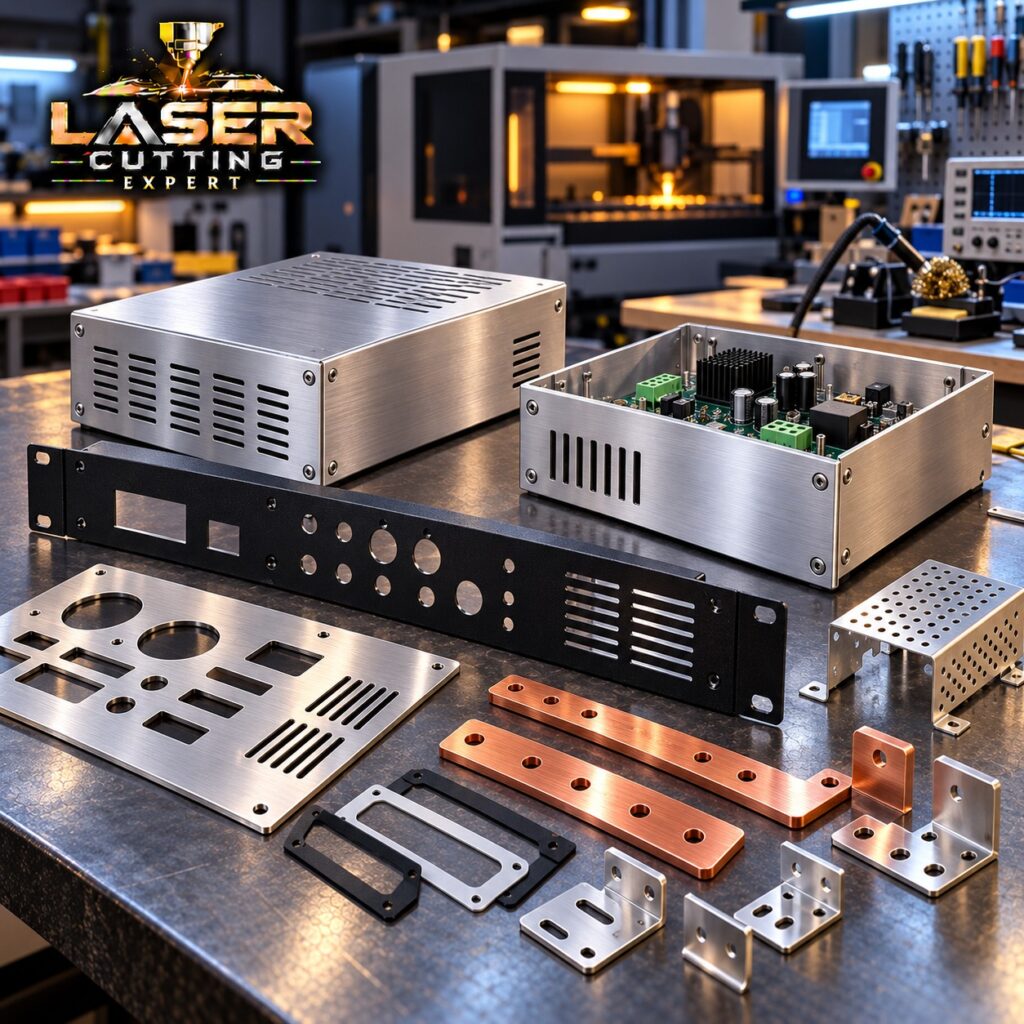
Electronics can be tiny, but the manufacturing around them is not always small. Circuit boards need fixtures and housings, power electronics need thermal management, control equipment needs panels and enclosures, and electrical assemblies require brackets, plates, shields and accurately positioned openings. Laser Cutting Expert supports electronics industry laser cutting from our London production facility for electronics developers, electrical engineers, control panel builders, equipment manufacturers, research teams, automation companies and product designers across the UK. Our work can include laser cutting pcb development applications, laser cutting electrical enclosures, control panels, mounting plates, copper profiles, insulating components, stencils, brackets and prototype assemblies using the process suited to each material.
CALL OR EMAIL US FOR PRICES
“Order any time of the day or night and receive your order on the same day in London. You are welcome to visit our laser cutting shop for an instant laser cutting service. On-site collection or free delivery can be arranged. Email us at laser@makergroup.uk for a quick quote or call us on 02036339857 for an instant price”.
Same Day Laser Cutting & Delivery
We can arrange a same day courier delivery with customer live tracking. Or customers can collect from our Laser Cutting Expert shop.

OPEN 24 HOUR
We are open 7 days a week, and you can order at any time. There is no last ordering time and no deadline. We also offer an overnight laser cutting service.

100% Satisfaction
High Quality Laser Cutting & 100% Customer Satisfaction Guarantee. Top-Rated Laser Cutting Company on Google.

Free File Check
We offer a free file check and proof before sending your artwork for laser cutting.
Electronics Manufacturing Needs More Than One Type of Laser Cutting
The electronics and electrical sector uses metals, plastics, films, laminates, technical sheet materials and circuit board constructions with very different processing behaviour. Electronics industry laser cutting therefore cannot be treated as one universal process. Fibre lasers may suit many metal enclosure components, while CO2 processing can be appropriate for certain compatible insulating or polymer materials. Fine electronics work can require specialist precision systems. Unknown laminates, flame retardant materials and coated substrates need identification before thermal processing. PVC and chlorine containing materials must not be laser cut. Material construction always comes before machine selection.
Electronics Industry Laser Cutting
Electronics industry laser cutting can support equipment development from an early bench prototype through suitable manufacturing components. Typical work includes enclosure panels, internal mounting plates, brackets, sensor mounts, display surrounds, ventilation panels, shielding components, terminal plates and fabrication profiles. Laser processing is particularly useful where component geometry changes during product development because CAD files can be revised without creating dedicated profile tooling. Electrical equipment still needs appropriate engineering around insulation, current, temperature, creepage, clearance, electromagnetic compatibility and mechanical protection. Laser cutting manufactures geometry; it does not establish the electrical safety of the completed product.
From Circuit Design to Physical Equipment
An electronic product may begin with a circuit diagram, but eventually the circuitry has to live inside something physical. Electronics industry laser cutting can help create the mechanical components surrounding the electronics: chassis plates, covers, mounting brackets, connector panels and equipment housings. Mechanical design should develop alongside the PCB rather than after it. Connector positions, cable bend radius, airflow, display locations and maintenance access can all affect the enclosure. A perfectly functioning circuit can still become difficult to manufacture if its mechanical packaging has not been considered. Laser cutting helps connect electronic design with the physical structure of the finished equipment.
PCB Related Laser Cutting
Laser Cutting PCB Applications
Laser cutting pcb work requires much more care than ordinary sheet metal profiling because “PCB” can describe many different board constructions. Standard FR 4, flexible circuits, metal backed boards, ceramic substrates and specialist laminates are not interchangeable. Copper layers, glass reinforcement, resin systems and coatings affect how a board responds to laser energy. Some PCB processes require dedicated UV, ultrafast or other specialist laser equipment rather than general purpose cutting systems. We therefore assess the exact substrate and required operation before confirming suitability. Where specialist PCB micromachining is required, an appropriate dedicated process may be necessary.
PCB Prototype Development
During electronics development, laser cutting pcb requirements may involve board outline development, supporting fixtures, templates or associated mechanical components. Prototype projects frequently change as connector positions, board dimensions and component layouts evolve. Physical mock ups can help verify how the PCB fits into the enclosure before larger manufacturing decisions are made. Where the actual board material requires specialist processing, the PCB itself may be manufactured through a dedicated electronics process while Laser Cutting Expert produces the surrounding enclosure, mounting plate or fixture. Separating these operations can provide a more technically appropriate manufacturing route.
PCB Board Outlines
Board outlines define how a circuit board fits into its product. Laser cutting pcb outlines may be technically possible for certain suitable constructions using the correct specialist laser process, but substrate composition needs to be understood first. Glass reinforced laminates behave differently from flexible polymer circuits or ceramic boards. Heat can affect resin and edge condition. Board manufacturers may instead use routing, scoring or dedicated PCB laser systems. The correct method depends on thickness, substrate, required edge quality and production quantity. Laser Cutting Expert does not assume that every circuit board material belongs on a general laser system.
Flexible PCB Applications
Flexible circuits can use thin polymer based substrates containing copper conductors and other layers. Laser cutting pcb applications involving flexible circuits can require very small features and controlled heat input. Material identity is particularly important because not all polymer films are safe or suitable for laser processing. Polyimide is commonly associated with flexible electronics, while PVC containing materials must never be laser cut. Adhesives and cover layers also influence processing. True flexible PCB manufacturing can require specialist laser micromachining and electronics quality controls beyond general fabrication, so the required process should be established from the actual board specification.
Metal Core PCB Components
Power electronics and LED systems can use metal core circuit boards to improve thermal management. Laser cutting pcb enquiries involving these boards need to distinguish between the metallic backing, dielectric layer and circuit construction. Processing the complete laminated board is different from laser cutting an aluminium support plate before the PCB is manufactured. In many projects, it may be more practical to laser cut the separate aluminium thermal plate or enclosure component while the circuit board itself is produced by a specialist PCB manufacturer. Electrical isolation and thermal performance remain the responsibility of the product designer.
Ceramic PCB Substrates
High temperature and power electronics applications can use ceramic substrates such as alumina. Laser cutting pcb work involving technical ceramics requires specialist assessment because ceramic materials are brittle and can react differently to thermal processing. Grade, thickness and metallisation need to be known. Fine electronic ceramic processing may require specialist laser equipment, grinding or other precision methods. Cutting a ceramic substrate does not establish its dielectric performance or electrical safety. The electronics manufacturer remains responsible for creepage, clearance, insulation and finished product validation.
PCB Panels and Break Out Features
Electronics production can manufacture several circuit boards within a larger panel before separation. Laser cutting pcb panelisation and depanelisation can require dedicated systems designed around the board material and component sensitivity. Mechanical stress, dust and heat can all matter depending on the separation method. Components positioned near the board edge can also affect process selection. Where laser depanelisation is not appropriate with available equipment, routing or another specialist PCB process may be preferable. The manufacturing route should protect the circuitry rather than choosing laser processing simply because the outline is digitally defined.
PCB Stencils
Electronics assembly frequently uses stencils to deposit solder paste onto PCB pads. Electronics industry laser cutting can include suitable stencil related work where material, thickness and required aperture quality match the available process. Fine pitch electronics can require extremely controlled aperture geometry and specialist stencil manufacturing. Stainless steel is commonly used, but the required edge and aperture quality should be defined according to the assembly process. A general decorative stencil and a precision solder paste stencil are not equivalent products. Electronics manufacturers should identify pitch, thickness and process requirements before production.
Electronics Assembly Templates
Not every electronics template requires micro scale precision. Electronics industry laser cutting can produce suitable assembly templates, positioning plates and workshop aids for connectors, switches, wiring and mechanical components. Acrylic, compatible plastics, plywood or metal may be used depending on the job. Templates can help technicians reproduce positions during assembly without repeatedly measuring each product. They should be clearly identified so they are not mistaken for finished electrical insulation or safety components. A workshop template assists manufacturing; it does not become part of the product’s compliance system.
Electrical Enclosures
Laser Cutting Electrical Enclosures
Laser cutting electrical enclosures allows custom cabinets, boxes, control housings and equipment covers to be developed around the actual electronics rather than forcing every project into a standard enclosure. Sheet metal blanks can contain openings for displays, switches, connectors, fans, glands and access panels before bending. Mild steel, stainless steel and aluminium are common possibilities depending on environment. Enclosure performance depends on much more than the cut blank. Doors, seals, joints, ventilation and cable entries all influence ingress protection, EMC and electrical safety. Laser cutting does not establish an IP or electrical rating.
Electrical Enclosure Blanks
The flat development is the starting point for many laser cutting electrical enclosures projects. Holes, slots, ventilation and bend reliefs can be incorporated before the sheet reaches the press brake. Bend allowance needs to match material, thickness and tooling. Features placed too close to a bend can distort during forming. A good enclosure blank is therefore designed around the final folded component rather than treated as a flat drawing alone. Prototyping one housing before manufacturing a larger quantity can help confirm dimensions around doors, lids, internal equipment and fastening systems.
Control Cabinets
Industrial control cabinets contain PLCs, drives, relays, power supplies, terminals and other electrical equipment. Laser cutting electrical enclosures can produce cabinet panels, doors, gland plates, internal mounting plates and ventilation components. Equipment spacing should consider heat generation and maintenance access. Cable routing also needs enough room for safe installation. Large cabinets may require reinforcement because wide flat panels can flex. Electrical engineers and panel builders remain responsible for wiring standards, protection devices, earthing, creepage, clearance, EMC and the complete cabinet’s regulatory requirements.
Control Panel Fronts
Operator panels can contain switches, emergency stops, displays, meters and indicator lights. Laser cutting electrical enclosures can create accurate openings from controlled CAD geometry. Actual hardware dimensions should be used rather than relying only on nominal descriptions. A display marketed by screen size may require a much larger rear opening, while switches can have specific anti rotation features. Prototype panels are useful for checking layout and ergonomics. Safety related controls such as emergency stops must be positioned and integrated according to the machinery or electrical system requirements, not simply wherever space is available.
Gland Plates
Cable gland plates provide controlled cable entry into cabinets and electrical equipment. Electronics industry laser cutting can produce custom gland plates containing circular openings, slots and fixing holes. Cable quantity and gland size should be confirmed before production. If the enclosure requires a particular ingress protection rating, the complete gland arrangement and sealing method matter. Laser cutting an accurate opening does not make it watertight. Material thickness should also suit the gland and mechanical support required. Removable gland plates can make later installation or modification easier.
Electrical Backplates
Backplates provide a mounting surface for electrical components inside cabinets. Laser cutting electrical enclosures can include custom internal plates with fixing holes, cable management openings and equipment positions. Some panel builders prefer a relatively plain plate and drill during assembly, while others use pre cut geometry for repeated products. The appropriate method depends on production style. Mounting hole positions should reflect actual component data. Heavy transformers, drives or other equipment may need additional structural support rather than relying only on thin sheet.
Junction Boxes
Custom junction boxes can be developed through laser cutting electrical enclosures where standard products do not suit the equipment arrangement. Flat blanks can be cut before bending and welding or mechanical assembly. Cable entries, mounting holes and lid features can be incorporated. Outdoor or wet environment junction boxes require suitable material, seals and construction. Laser cutting does not establish weatherproofing or electrical certification. Where a rated enclosure is required, modifying a certified standard enclosure can also affect its original rating and should be reviewed appropriately.
Terminal Boxes
Terminal boxes provide connection points between cables and equipment. Laser cutting electrical enclosures can support suitable custom housings, gland plates and internal mounting components. The layout needs enough space for terminals, wire bending and safe technician access. Electrical clearance requirements may affect the enclosure dimensions. External boxes need environmental protection suitable for their location. Metal enclosures also require proper earthing or bonding according to the electrical design. Laser Cutting Expert manufactures the mechanical component; electrical safety remains with the responsible equipment manufacturer.
Electrical Equipment Doors
Cabinet doors can contain windows, displays, switches, vents and locking components. Laser cutting electrical enclosures can prepare these openings before forming or finishing. Large doors may need stiffening to avoid flexing. Hinge and lock locations should be coordinated with the enclosure frame. If a door contributes to an IP or EMC rating, its seals and contact surfaces become important. Cutting additional openings into an existing rated door may change the system’s performance. Any modification should therefore be assessed by the responsible manufacturer.
Removable Access Panels
Electrical equipment often needs access for inspection and servicing. Electronics industry laser cutting can produce removable covers and service panels with suitable fixing holes and ventilation. Maintenance staff should be able to remove panels without encountering unnecessary sharp edges or unstable components. Safety related access may require tools, interlocks or other controls depending on the voltage and equipment. Laser cutting creates the physical cover; the electrical designer determines the safe access strategy.
Electronics Chassis & Product Housings
Electronics Chassis
An electronics chassis supports circuit boards, power supplies, connectors and other components. Electronics industry laser cutting can produce chassis blanks, internal partitions, mounting plates and covers. Aluminium is often considered where low weight and thermal behaviour are useful, while steel can provide stiffness and shielding characteristics. Chassis design should consider airflow, cable routing and assembly sequence. Small changes to PCB layout can affect connector openings or standoff positions, making digital laser manufacturing useful during development. The finished chassis should protect the electronics without making maintenance unnecessarily difficult.
Rack Mount Equipment
Laboratory, telecommunications, audio and industrial electronics frequently use rack mounted housings. Laser cutting electrical enclosures can produce front panels, rear connector panels, chassis parts and internal supports. Rack dimensions may follow established standards, but the equipment inside remains project specific. Front panels can include displays, controls and ventilation, while rear panels can carry connectors and power entries. Heavy equipment may require substantial support beyond the front panel. Electrical safety and rack loading need consideration when the completed product is installed.
Server and Data Equipment Panels
Data and computing equipment can require custom equipment panels, fan plates, rack accessories and prototype chassis. Electronics industry laser cutting can create controlled ventilation patterns and connector openings. Airflow design is particularly important because high density electronics generate significant heat. A visually open grille can still restrict airflow if the total free area is inadequate. Sharp internal transitions can also affect airflow noise. Thermal engineers should establish the ventilation requirement while laser cutting reproduces the approved geometry.
Audio Equipment Enclosures
Amplifiers, processors and specialist audio electronics often use metal front panels and chassis. Laser cutting electrical enclosures can create openings for knobs, displays, connectors, switches and ventilation. Visible components may require careful surface finishing because the enclosure forms part of the product appearance. Aluminium and steel are common possibilities. Grounding and shielding arrangements should be considered within the electrical design. Laser Cutting Expert can manufacture the mechanical enclosure, while audio performance and electrical compliance remain with the product developer.
Test Equipment Housings
Electronic test systems often combine displays, connectors, controls and internal instrumentation. Electronics industry laser cutting can support custom housings for laboratory and production test equipment. Development teams may change connector positions several times as the instrument evolves, making digitally manufactured panels useful. Equipment used around higher voltages needs appropriate insulation and access protection. Calibration requirements relate to the electronics and instrumentation rather than the enclosure manufacturing process. The housing provides physical protection and organisation but does not establish measurement accuracy.
Power Supply Enclosures
Power supplies can generate heat and contain potentially hazardous voltages. Laser cutting electrical enclosures can produce housings with fan openings, connector positions and mounting features. Ventilation and clearances should be determined by the power supply design. Metal housings need appropriate bonding or earthing. Openings should not allow unsafe access to live parts. Where fans are used, guards may be necessary. The enclosure forms part of the safety strategy but needs to be designed together with the internal electrical system.
Power Electronics
Power Electronics Components
Power electronics brings higher currents and greater heat into electronic assemblies. Electronics industry laser cutting can support mounting plates, busbar style profiles, heat spreader components, enclosure panels and equipment brackets. Copper and aluminium are commonly relevant materials, but their electrical and thermal functions need engineering. Current capacity, temperature rise and short circuit behaviour cannot be determined simply from the outside profile. Laser cutting can create specified geometry while the electrical engineer establishes conductor cross section, insulation, spacing and protection requirements.
Copper Electrical Profiles
Copper’s conductivity makes it useful for electrical distribution components. Electronics industry laser cutting can assess suitable copper plates, terminal profiles, connector shapes and busbar style components. Copper is highly reflective and thermally conductive, making its laser behaviour different from steel. Material thickness and grade need consideration. Cut geometry alone does not establish current carrying capacity. Edge condition, hole quality, plating and connection pressure can also influence electrical performance. Safety critical power distribution parts should be designed and validated by the responsible electrical engineer.
Busbar Style Components
Custom copper or aluminium conductors can connect batteries, power electronics and electrical distribution systems. Electronics industry laser cutting can produce suitable specified busbar style profiles where the material and thickness fit the process. Hole positions can be established for bolted connections, although critical contact surfaces may need additional finishing or machining. Bend radii also matter where the conductor will be formed. Electrical clearance and insulation must be designed around the actual voltage. Laser cutting manufactures the conductor geometry; it does not certify ampacity or fault current performance.
Battery System Components
Battery systems can use cell holders, module plates, enclosure parts, electrical connection components and thermal management hardware. Electronics industry laser cutting can support suitable mechanical and conductive parts during development. Battery systems can store significant energy and introduce electrical, thermal and fire hazards. High voltage packs require specialist engineering. Laser Cutting Expert manufactures specified components but does not design or certify battery protection systems. Materials around cells should be selected according to thermal, electrical and mechanical requirements.
Inverter and Drive Housings
Motor drives and inverters can generate substantial heat and electrical noise. Laser cutting electrical enclosures can create suitable chassis parts, covers and mounting panels. Ventilation or cooling system openings should be based on thermal analysis. EMC performance depends on enclosure continuity, cable entries, grounding and internal design, not simply the metal material. Where a housing forms part of an approved drive system, modifications need to be assessed carefully. Accurate laser cut geometry helps assembly while electrical and thermal performance remain product level responsibilities.
Thermal Management
Electronics Cooling Components
Electronic equipment can fail if heat is not managed properly. Electronics industry laser cutting can support fan plates, ventilation panels, heat spreader blanks, mounting components and ducting related sheet parts. Openings should direct rather than obstruct airflow. Material thickness and surface area can also influence thermal behaviour. Copper and aluminium components may be used where heat conduction matters. Laser cutting provides geometry, while thermal modelling or physical testing determines whether the completed cooling arrangement maintains acceptable operating temperatures.
Fan Mounting Panels
Fans are common in control cabinets, power supplies, servers and industrial electronics. Laser cutting electrical enclosures can incorporate fan openings, fixing holes and protective grille patterns into the enclosure itself. Fan dimensions and mounting hole centres should be taken from actual technical data. The grille needs enough open area to avoid excessive airflow restriction. Noise can increase when blades operate close to poorly designed openings. Finger protection may also be required. Mechanical panel design should therefore work with the selected fan rather than using a generic circular cut out.
Ventilation Slots
Slots provide a simple way to ventilate electronic housings. Electronics industry laser cutting allows slot dimensions and spacing to be controlled digitally. Their total open area matters more than appearance alone. Long narrow slots can also reduce panel stiffness. Electrical safety may limit opening dimensions where live parts are nearby. Outdoor enclosures have additional requirements because ventilation can allow water or contaminants to enter. The enclosure designer should balance cooling, protection and structural requirements before the slot pattern is released for manufacturing.
Heat Spreader Blanks
Copper and aluminium sheets can be profiled into heat spreader blanks for electronics development. Electronics industry laser cutting can create outside geometry, mounting holes and clearance features before further machining or finishing. Flatness and surface condition may be important where the component contacts electronic devices or thermal interface materials. Laser cutting alone may not produce the contact surface required for high performance thermal transfer. Milling, grinding or another finishing operation may therefore follow. Thermal engineers should define the actual interface requirement.
EMI & Electrical Shielding Components
Metal Shielding Panels
Electronic products can use conductive enclosures and partitions to help manage electromagnetic interference. Electronics industry laser cutting can produce metal shielding panels, covers and chassis components. Shielding effectiveness depends on much more than sheet material. Gaps, seams, apertures, cable entries and bonding can all allow electromagnetic energy through. A laser cut metal box should not automatically be assumed to meet an EMC requirement. The electronics manufacturer needs to test the completed product or assembly according to its applicable requirements.
Internal Shielding Partitions
Internal metal partitions can separate noisy power electronics from sensitive circuitry. Laser cutting electrical enclosures can include partitions with mounting tabs, cable openings and ventilation features. Openings should be considered carefully because they can affect shielding performance. The partition also needs appropriate electrical bonding where required. Laser Cutting Expert can manufacture the approved shape, while EMC engineers determine the arrangement and verify its performance through testing.
Connector Panels
Electronic equipment can contain USB, Ethernet, RF, power, industrial and custom connectors. Electronics industry laser cutting can produce front and rear panels with connector specific openings. Accurate geometry helps connectors mount cleanly without excessive gaps. Actual manufacturer drawings should be used because visually similar connectors can have different panel cut outs. RF and high frequency applications may also have grounding requirements around connectors. The mechanical opening supports installation but does not determine signal integrity.
Sensors, Controls & Automation Electronics
Sensor Housings
Sensors used in automation, research and monitoring can require custom protective housings. Laser cutting electrical enclosures can support suitable covers, brackets and equipment boxes. The housing should protect the sensor without blocking its measurement path. Optical, ultrasonic, radar and environmental sensors all have different needs. Outdoor units may require weather protection. Metal around wireless sensors can also affect radio performance. Sensor system engineers should therefore establish housing requirements before the component is manufactured.
Sensor Mounting Plates
Electronics industry laser cutting can create mounting plates for cameras, proximity sensors, encoders, measurement devices and other electronic equipment. Slots can provide adjustment during setup. Stiffness is important where sensor position influences measurement quality. A thin plate that vibrates can introduce error even if its hole positions are correct. Material thickness and support therefore need to reflect the application. Laser cutting provides controlled geometry while calibration remains part of the sensor system.
PLC Panel Components
Automation systems frequently use PLCs inside electrical cabinets. Laser cutting electrical enclosures can provide cabinet doors, internal mounting plates, cable entry panels and ventilation components for PLC installations. The panel builder needs to allow adequate space for wiring, cooling and future maintenance. Safety circuits and emergency controls may have additional requirements. Laser Cutting Expert produces the sheet metal components according to approved information, while the control system integrator remains responsible for electrical design and machine safety.
HMI Panel Openings
Human machine interfaces can require large rectangular openings in cabinet doors or operator stations. Laser cutting electrical enclosures allows these openings to be created accurately before finishing. HMI dimensions should come from the manufacturer’s installation drawing, including clips, seals and rear clearance. If the panel is expected to maintain an ingress protection rating, the interface between HMI gasket and enclosure surface is important. Laser cutting creates the opening but does not establish the final rating.
Electrical Distribution & Control
Switchgear Panels
Switchgear systems use sheet metal cabinets, doors, internal partitions and mounting components. Electronics industry laser cutting can support suitable mechanical components for these assemblies. High current and high voltage equipment has substantial safety requirements, including clearances, fault containment and access protection. These need specialist electrical engineering and appropriate standards. Laser Cutting Expert can manufacture specified panels but does not certify switchgear assemblies. Material, thickness and geometry should come from the responsible manufacturer or engineering team.
Distribution Board Components
Custom electrical distribution equipment can use laser cut front panels, internal plates and enclosure components. Laser cutting electrical enclosures can provide controlled openings for devices, meters and cable systems. Electrical equipment arrangement should allow safe wiring and maintenance. If the board requires a certified enclosure or system, changes to the physical construction can affect compliance. The manufacturing drawing should therefore reflect the approved electrical design rather than being developed independently in the workshop.
Meter Panels
Metering equipment can require custom openings for displays, switches, terminals and communication devices. Electronics industry laser cutting can create these features in suitable metal panels. Outdoor meter equipment may require weather protection, while industrial environments can introduce dust or chemicals. Panel material and finish should reflect the location. The electrical designer remains responsible for safe access, insulation and equipment spacing.
Transformer Enclosure Components
Transformers can require guards, housings, mounting plates and ventilation panels. Laser cutting electrical enclosures can produce suitable sheet metal parts according to the equipment design. Heat and airflow are important because transformers can generate significant operating temperatures. Large units may also be heavy and require substantial structural support. Openings should prevent unsafe access while providing the required cooling. Electrical and fire requirements depend on transformer type and installation environment.
Electrical Insulation & Non Metal Components
Insulating Sheet Components
Electrical assemblies can use insulating barriers, spacers and plates made from specialist sheet materials. Electronics industry laser cutting may be suitable for some confirmed compatible materials, but the exact chemistry and grade must be identified. A material being electrically insulating does not automatically make it safe to laser cut. Some laminates contain resins, glass fibres or additives that require another manufacturing process. PVC and chlorine containing insulation must not be laser cut. Electrical performance after processing also remains the responsibility of the equipment manufacturer.
Plastic Electronics Components
Compatible acrylic, selected polyester films and certain identified plastics can be processed for electronics related covers, windows, templates and spacers. Electronics industry laser cutting requires material confirmation because visually similar plastics can have completely different chemistry. Polycarbonate often gives poor laser cut results and may be better processed mechanically. ABS is not treated as a routine laser material. PETG requires assessment. PVC is excluded. Supplier specifications should be provided for unfamiliar engineering plastics.
Acrylic Display Windows
Electronic housings often use acrylic windows over screens and indicators. Laser cutting electrical enclosures can be combined with laser cut acrylic inserts to create coordinated panel assemblies. Clear, tinted or coloured acrylic can be used where suitable. The window needs enough overlap for secure fixing or bonding. Where the product requires impact resistance, fire performance or a particular optical property, material grade should be selected accordingly. Ordinary acrylic should not be assumed to satisfy every regulated electronics application.
Fine & Precision Electronics Components
Fine Detail for Electronics
Small electronics can require equally small mechanical components. Electronics industry laser cutting can support suitable thin brackets, labels, shielding pieces, washers, spacers and precision profiles. Feature size needs to be realistic for the material and thickness. Very small holes may require drilling or specialist micromachining. Narrow bridges can distort or become fragile. For projects where these details dominate the component, our Precision & Fine Detail Laser Cutting capability provides a related route for assessing appropriate manufacturing methods.
Small Metal Brackets
Circuit boards, sensors and connectors often need compact brackets. Electronics industry laser cutting can produce small steel, stainless, aluminium, brass or copper profiles depending on application. Components can contain slots or tabs before forming. Thin brackets should still provide enough stiffness to resist handling and vibration. Where precise alignment matters, additional machining or formed locating features may be needed. The smallest possible bracket is not always the most practical component to assemble.
Electronics Shims
Thin shims can help align sensors, optical systems, housings and mechanical electronics assemblies. Electronics industry laser cutting can produce custom shim profiles from suitable thin materials. Actual sheet thickness tolerance matters where the shim controls precision alignment. Very thin foil or extremely tight dimensional requirements may require specialist processes. Laser cut shims should be specified according to function rather than treated as ordinary sheet components simply because they are small.
Electrical Washers and Spacers
Custom flat washers and spacers can be useful around equipment mounting and enclosure assemblies. Electronics industry laser cutting can produce suitable non standard profiles. Where a component is intended to provide electrical insulation, the material’s electrical properties need to be known and preserved. A metal spacer obviously behaves differently from a polymer insulating washer. Safety related insulating parts should follow the electrical engineer’s material specification.
Metal Labels and Equipment Plates
Electrical cabinets and electronic equipment can use serial plates, equipment labels and identification tags. Electronics industry laser cutting can create custom metal blanks in stainless steel, aluminium, brass or other suitable materials before engraving or printing. Mounting holes can be included. The equipment manufacturer determines which safety, rating or regulatory information needs to appear. Laser Cutting Expert can reproduce approved content but does not determine statutory labelling requirements.
Electronics Product Development
Electronics Prototypes
Early electronic prototypes often sit on a bench with temporary wiring and no proper enclosure. Electronics industry laser cutting can help move the project towards a realistic product by creating chassis panels, brackets, connector plates and covers. This allows engineers to evaluate assembly, cable routing, cooling and service access. Mechanical prototyping can occur while firmware and circuit development continue. A successful prototype enclosure does not establish product compliance, but it helps reveal practical packaging problems before production.
Prototype Electrical Enclosures
Laser cutting electrical enclosures is particularly useful during development because dimensions and openings can change between revisions. A first enclosure may reveal that a connector is inaccessible or a fan interferes with a cable loom. Digital geometry can then be updated for the next version. Once the design becomes stable, the approved flat development can move into suitable repeat manufacturing. Electrical safety testing should be performed on representative completed products rather than assumed from the enclosure drawing.
Proof of Concept Electronics
Research teams, universities, startups and engineering companies can use electronics industry laser cutting for proof of concept equipment. Projects may need only one mounting plate, instrument panel or sensor housing initially. We have no minimum cutting quantity, making one off development practical. Small quantity does not mean safety requirements disappear. Equipment connected to mains electricity, high voltage or high energy batteries requires appropriate specialist engineering regardless of whether one unit or thousands are produced.
Electronics Research Equipment
Laboratories can require custom housings, optical mounting panels, sensor plates and equipment brackets. Electronics industry laser cutting can support suitable research hardware where standard enclosures do not fit experimental equipment. Research systems often change frequently, making digitally produced mechanical parts useful. Laser Cutting Expert manufactures according to supplied geometry while the research team remains responsible for experiment safety, electrical systems and any specialist scientific requirements.
Production Support for Electronics Manufacturers
Assembly Jigs
Electronics industry laser cutting can produce jigs that help locate housings, connectors, wiring components and mechanical assemblies during production. Acrylic, plywood, compatible plastic or metal can be selected according to the fixture’s purpose. The jig should provide repeatability without damaging delicate electronics. Where ESD control is required, material needs to be selected appropriately; ordinary acrylic or plastic should not automatically be assumed suitable for electrostatic sensitive work.
Test Fixtures
Electronics manufacturers often build fixtures to hold products during functional testing. Electronics industry laser cutting can create fixture plates, connector supports and enclosure structures. The electrical test system itself needs appropriate safety design, particularly where mains voltage or high current is involved. Laser cut geometry can organise the hardware but does not provide electrical protection unless the complete fixture has been designed for that purpose.
Programming Fixtures
Small electronic products can require repeatable positioning during programming or calibration. Electronics industry laser cutting can support fixture plates and component nests where suitable. Physical positioning needs to align connectors or test pins without damaging the product. Fine alignment may require machined features or specialist fixture components in addition to laser cut plates. The manufacturing process should use each method according to the precision actually required.
Production Templates
Simple templates can help electronics assembly teams position labels, drill locations or mechanical parts. Electronics industry laser cutting can produce repeatable geometry without complex tooling. Templates can be marked with part numbers or orientation information. They should not be used as substitutes for calibrated gauges where formal inspection is required. Their purpose is to make ordinary assembly more repeatable.
Materials for Electronics & Electrical Work
Stainless Steel
Stainless steel can be used for laser cutting electrical enclosures, equipment panels, food industry electronics housings and laboratory systems. Grade and surface finish should suit the environment. Brushed surfaces may require controlled grain direction. Stainless can provide corrosion resistance but does not automatically make an enclosure hygienic, waterproof or suitable for outdoor electrical equipment. Those properties depend on the complete design.
Mild Steel
Mild steel is widely used for electrical cabinets, control panels and equipment chassis. Electronics industry laser cutting can produce flat developments, doors, mounting plates and internal partitions before bending and finishing. Powder coating or painting commonly follows fabrication. Electrical bonding needs to account for coatings where relevant. Material thickness should provide sufficient stiffness for equipment and doors.
Aluminium
Aluminium is useful for electronic housings because of its relatively low weight and thermal properties. Laser cutting electrical enclosures can produce suitable panels, chassis parts and mounting plates. Alloy and temper influence bending. Anodising or powder coating may follow fabrication. Electrical grounding through anodised surfaces needs proper design because the oxide layer affects conductivity. The electronics engineer should determine how chassis bonding is achieved.
Copper
Copper can support power distribution and thermal management components within electronics industry laser cutting projects. Suitable profiles can include conductive plates, terminal components and heat spreader blanks. Copper’s electrical function makes cross section and connection quality important. Laser cutting produces geometry but does not establish electrical performance. Contact surfaces may require additional finishing.
Brass
Brass can be used for selected terminals, instrument components, decorative equipment details and specialist electrical hardware. Electronics industry laser cutting can assess suitable brass sheet profiles. Alloy specification may matter where electrical or mechanical performance is important. Decorative brass surfaces can also change colour through handling and oxidation. Finishing should be coordinated with the intended product appearance.
CAD & Mechanical Electrical Coordination
Electronics CAD to Physical Components
Mechanical components surrounding electronics can be developed from suitable DXF, CAD and 3D design information. Electronics industry laser cutting benefits when PCB layout and enclosure design share reliable dimensional data. Connector positions, mounting holes and display locations can then be coordinated before manufacturing. A common source of problems is designing the enclosure around approximate component dimensions. Manufacturer drawings and real hardware should be checked wherever possible.
PCB and Enclosure Coordination
Laser cutting pcb development and laser cutting electrical enclosures become closely related when a circuit board needs to align with switches, connectors or displays mounted through the housing. PCB mounting holes, standoff height and enclosure openings need to work as one assembly. Even a few millimetres of mismatch can make connectors difficult to install. Coordinating the mechanical and electronic CAD early can reduce these problems before parts reach the workshop.
Connector Clearance
Connectors often extend significantly behind the visible panel surface. Electronics industry laser cutting drawings should therefore account for cable plugs, locking tabs and bend radius rather than only the panel cut out. Closely packed connectors can become impossible to use once cables are attached. Prototype assemblies are useful for confirming practical access. Mechanical packaging should reflect how technicians actually connect and service the equipment.
Cable Management
Electrical enclosures need paths for cables to enter, bend and reach their terminals. Laser cutting electrical enclosures can include cable slots, gland openings and tie mount features where appropriate. Edges around cables should be protected so insulation is not damaged. Grommets, glands or edge protection may be needed. High voltage, power and signal wiring can also require separation. The electrical designer determines these requirements.
Safety & Compliance
Electrical Safety Remains a System Requirement
Accurate laser cutting electrical enclosures does not make an electrical product safe by itself. Protection against electric shock depends on insulation, grounding, bonding, protective devices, enclosure openings and component selection. Equipment operating from mains electricity or higher voltages requires appropriate engineering and testing. Laser Cutting Expert manufactures specified mechanical components while the responsible electrical manufacturer establishes product safety and regulatory compliance.
Creepage and Clearance
Electrical systems require suitable distances between conductive parts depending on voltage, insulation and environment. Electronics industry laser cutting can manufacture insulating or metal components according to approved geometry, but creepage and clearance distances need to come from the electrical design. A CAD file being physically cuttable does not mean the spacing is electrically safe. Product designers should establish these requirements before releasing components.
Ingress Protection
Laser cutting electrical enclosures can create doors, covers and cable entry panels for equipment intended to resist dust or water. The IP performance depends on the complete enclosure, including seals, joints, glands and assembly. Cutting a metal box accurately does not create an IP rating. Additional openings can also reduce the performance of an existing enclosure. Required ingress protection should therefore be considered from the beginning.
EMC Requirements
Electronic equipment may need to control electromagnetic emissions and immunity. Electronics industry laser cutting can provide metal chassis and shielding components, but EMC performance depends on seams, apertures, grounding, filters, cables and the internal circuit design. Large ventilation openings can influence shielding. Compliance should be verified on the finished equipment through the appropriate engineering and testing process.
Fire and Material Performance
Electronics can contain heat generating components and electrical fault risks. Materials used around circuitry may therefore need specific flammability performance. Laser cutting pcb materials, insulating sheets and polymer enclosure components should not be selected only according to whether they can be cut. The original material grade and certification matter. Laser processing may also affect edges or coatings. Product manufacturers remain responsible for determining whether processed materials remain suitable for their intended application.
Same Day Electronics Laser Cutting London
Suitable production ready electronics components can be considered for same day laser cutting from our London workshop where material, drawings and production capacity allow. This can include enclosure panels, brackets, mounting plates, test fixtures and other compatible components. Specialist laser cutting pcb or microelectronic requirements may need a dedicated process and should not be assumed suitable for urgent general laser production. We operate 24/7, including weekends and bank holidays. Providing the material, thickness, drawing, quantity and functional requirements together helps us assess the correct route.
Electronics & Electrical Laser Cutting Across the UK
Laser Cutting Expert provides electronics industry laser cutting and laser cutting electrical enclosures from our London production base for electronics developers, electrical manufacturers, panel builders, automation companies, research teams and engineering businesses throughout the UK. Suitable work can range from one development bracket to complete enclosure component sets. Our related services Fibre Laser Cutting, CNC Laser Cutting, CO2 Laser Cutting, Laser Cutting & Bending, Laser Cutting & Engraving. Laser cutting pcb requirements are assessed according to the actual PCB construction and may require specialist electronics laser technology.
FAQs About Laser Cutting for Electronics & Electrical
1. What can electronics industry laser cutting be used for?
Electronics industry laser cutting can support enclosure panels, brackets, chassis parts, mounting plates, shielding components, test fixtures, control panels, labels and suitable electrical profiles.
2. Do you provide laser cutting PCB services?
Laser cutting pcb requirements are assessed according to substrate construction, thickness and feature size. Some PCB materials and fine features require dedicated specialist laser micromachining rather than general laser cutting.
3. Can FR 4 PCB material be laser cut?
FR 4 is a glass reinforced resin laminate and should not be treated like ordinary plastic sheet. Processing requires suitable specialist equipment and controls. PCB routing or dedicated PCB laser systems may be more appropriate depending on the requirement.
4. Do you provide laser cutting electrical enclosures?
Yes. Laser cutting electrical enclosures can include flat enclosure blanks, cabinet doors, gland plates, control panels, access covers, mounting plates and ventilation components.
5. Can you manufacture custom control panels?
Yes. We can produce suitable metal panels containing openings for switches, displays, meters, connectors, fans and other equipment according to approved drawings.
6. Can you laser cut copper electrical components?
Suitable copper sheet can be assessed for electrical and thermal components. The electrical engineer remains responsible for current capacity, contact design and finished system performance.
7. Can you produce solder paste stencils?
Suitable stencil work can be assessed, but very fine pitch PCB stencils may require dedicated specialist stencil manufacturing processes to achieve the required aperture quality.
8. Does a laser cut enclosure automatically have an IP rating?
No. Laser cutting electrical enclosures only produces the mechanical components. IP performance depends on the complete assembled enclosure, including seals, joints, doors, glands and other details.
9. Can you produce one off electronics prototypes?
Yes. We have no minimum cutting quantity, so suitable enclosure panels, brackets, fixtures and development components can be produced for one off electronics prototypes.
10. Do you support electronics manufacturers throughout the UK?
Yes. Our production is based in London, and suitable electronics and electrical components can be supplied to customers throughout the UK.