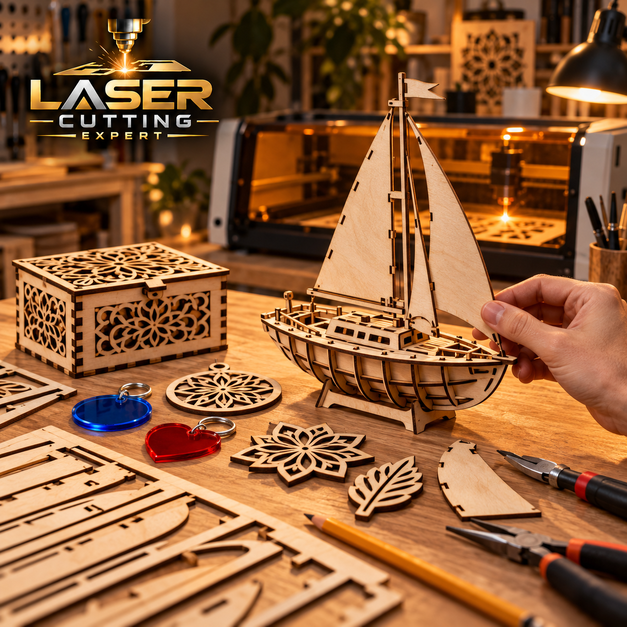
You do not need to be an engineering company or order hundreds of parts to use professional laser cutting. Laser Cutting Expert provides a laser cutting service for hobbyists who need one custom piece, a set of model parts, a craft project, a prototype or components for something they are building at home. Our London workshop works with makers, students, model builders, artists, electronics enthusiasts, crafters and people simply trying an idea for the first time. There is no minimum order. We also provide prototype laser cutting for designs that need testing before the final version is made, with same-day London service and UK-wide delivery available for suitable projects.
CALL OR EMAIL US FOR PRICES
“Order any time of the day or night and receive your order on the same day in London. You are welcome to visit our laser cutting shop for an instant laser cutting service. On-site collection or free delivery can be arranged. Email us at laser@makergroup.uk for a quick quote or call us on 02036339857 for an instant price”.
Same Day Laser Cutting & Delivery
We can arrange a same day courier delivery with customer live tracking. Or customers can collect from our Laser Cutting Expert shop.

OPEN 24 HOUR
We are open 7 days a week, and you can order at any time. There is no last ordering time and no deadline. We also offer an overnight laser cutting service.

100% Satisfaction
High Quality Laser Cutting & 100% Customer Satisfaction Guarantee. Top-Rated Laser Cutting Company on Google.

Free File Check
We offer a free file check and proof before sending your artwork for laser cutting.
You Can Start with One Small Idea
Many hobby projects begin without a formal manufacturing drawing. You might have a sketch for a model railway building, measurements for a small electronics box or an idea for a wooden sign. Our laser cutting service for hobbyists can help turn suitable ideas into physical components without requiring a commercial production quantity. The first step is understanding what you are trying to make, its approximate size and the material you have in mind. From there, the design can be prepared for cutting. Starting small is often useful because one physical part quickly shows whether dimensions, joints and proportions work the way you expected.
Laser Cutting Service for Hobbyists
Our laser cutting service for hobbyists covers much more than simple circles and rectangles. Projects can include model parts, custom signs, craft shapes, stencils, boxes, puzzles, electronics panels, miniature buildings, decorative artwork, game pieces, organisers, templates and replacement components. Suitable materials can include acrylic, plywood, MDF, paper, card, genuine leather, selected fabrics and various metals depending on the project. You can provide production-ready artwork or ask for help preparing a usable file. Because we have no minimum quantity, you can order a single experimental component without needing to turn a weekend project into a large commercial manufacturing run.
Prototype Laser Cutting
Prototype laser cutting is particularly useful when you are not completely sure whether your design will work. Instead of producing the final project immediately, we can cut one version so you can assemble it, measure it and identify changes. Perhaps a slot is slightly too narrow, a model wall needs moving or an electronics connector sits a few millimetres from where you expected. Those changes are much easier to make before ten or fifty identical pieces have been produced. Prototyping also allows you to compare materials. A design might first be tested in inexpensive card or plywood before moving into acrylic, metal or another final material.
You Do Not Need a Factory-Ready Drawing
Hobbyists often worry that they need professional engineering software before contacting a laser cutting company. That is not always the case. Our laser cutting service for hobbyists can begin with different levels of information depending on the project. A clear dimensioned sketch may be enough to discuss a simple panel or bracket. Existing vector artwork may work for decorative projects. More complicated interlocking products need properly prepared CAD geometry. The important thing is to distinguish between an idea and an approved production file. If design preparation is needed, we can discuss it before material is cut rather than pretending an incomplete sketch is already manufacturing-ready.
Start with Card Before Using Expensive Material
A quick physical model can save material and money. During prototype laser cutting, some designs can first be tested using card or another inexpensive suitable sheet. This is useful for checking overall size, hole positions, layouts and basic assembly before moving to plywood, acrylic or metal. Card will not reproduce the strength or exact thickness behaviour of the final material, so it cannot validate structural performance. It can, however, reveal obvious dimensional mistakes. For hobby projects involving several interconnected pieces, a basic test version can make the design process much easier and give you something physical to mark, measure and modify.
Plywood for Hobby Projects
Plywood is popular with makers because it can be used for models, boxes, puzzles, signs, decorations, organisers and mechanical-style kits. Our laser cutting service for hobbyists can produce suitable plywood components with outside profiles, holes, slots and engraved details. Plywood is made from multiple veneer and adhesive layers, so actual thickness can vary and internal voids may affect cutting. This matters for press-fit projects. A slot designed as exactly 3 mm may not fit a sheet sold as 3 mm if the real material measures differently. Testing a small joint before cutting an entire kit is therefore a sensible approach.
MDF for Model Making
MDF provides a relatively consistent sheet material for models, scenery, signs, storage projects and decorative work. Prototype laser cutting can be used to test MDF structures before a complete model or product is manufactured. Unlike plywood, MDF does not have visible wood grain running through the board, which can make it useful for painted projects. The laser-cut edge is usually darker than the face and may require preparation if you want a fully painted finish. Different MDF grades use different binders, so specialist or treated boards should be identified before processing. Thick MDF may also require another manufacturing approach depending on the project.
Acrylic for Hobbyists
Acrylic can bring colour, transparency and a more finished appearance to hobby projects. Our laser cutting service for hobbyists can produce suitable clear, coloured, frosted or mirrored acrylic components for models, signs, display stands, game pieces, electronics projects and decorative objects. Acrylic can crack if a design contains extremely thin projections or if screws are overtightened near holes. Material thickness also affects how tabs and slots fit together. Acrylic should not be confused with PVC or unknown clear plastics. PVC and chlorine-containing materials must never be laser cut because heating them can release hazardous and corrosive gases.
Clear Acrylic Projects
Clear acrylic is useful when you want to see through part of the project. Prototype laser cutting can create windows for model buildings, electronics covers, display panels, templates and transparent structural pieces. Engraving can also create visible markings on the surface. If the acrylic is going into a box or enclosure, mounting holes should be positioned with enough surrounding material to reduce the risk of cracking. Protective film may remain during suitable manufacturing stages to reduce surface marking. Clear acrylic looks simple, but different acrylic types can behave differently during processing, so material should be correctly identified rather than assumed from appearance alone.
Model Railway Projects
Model railway builders can use our laser cutting service for hobbyists for station buildings, houses, sheds, bridges, platform details, fences, windows and scenic components. Plywood, MDF, card and acrylic can be combined within one model to create different effects. Laser engraving can represent brickwork, doors or panel lines without cutting every feature through. Scale needs practical adjustment. A railing that is technically correct at full scale may become too thin to survive at 1:76 or 1:148. Small details sometimes need to be enlarged slightly so the physical model remains usable while still looking convincing at normal viewing distance.
Architectural Models
Students, architects and hobby model makers can use prototype laser cutting for walls, floors, roofs, façade pieces, windows and landscape components. Cutting from digital drawings makes it easier to revise a model when the design changes. Card can be used for early massing models, while plywood, MDF and acrylic can create more developed presentation pieces. Scale should be considered before cutting because architectural CAD contains details that may become physically impossible when reduced. Engraving can represent small lines that would be too fragile as cut-outs. Part numbering can also help when a model contains many similar walls or structural pieces.
RC Model Projects
Radio-controlled cars, boats and aircraft can require custom plates, mounts, templates and body-related components. Our laser cutting service for hobbyists can manufacture suitable parts from approved materials and drawings. Prototype laser cutting is useful for checking whether electronics, batteries, motors or servos fit within the intended layout. Safety becomes important where a component is structural, exposed to significant heat or part of a high-speed vehicle. Material choice should follow the real load and environment. Laser cutting can create custom geometry, but it does not prove that a component is suitable for flight, high-speed use or another safety-critical application.
Model Boats
Model boats can use laser-cut plywood frames, bulkheads, decks, stands and decorative components. Our laser cutting service for hobbyists can produce repeatable shapes that are difficult to cut consistently by hand. Slot-and-tab construction can help position frames during assembly. Actual plywood thickness matters because a tight slot can make construction difficult. Water exposure also needs consideration. Ordinary plywood is not automatically suitable for marine use simply because it can be laser cut. The builder remains responsible for sealing, adhesives, coatings and material selection appropriate to the model’s intended use on or around water.
Model Cars
Scale vehicles and custom automotive models can contain chassis plates, body details, templates and display components. Prototype laser cutting allows makers to test these pieces before committing to the final material. Acrylic, plywood, MDF and selected metals may be used depending on the design. Moving models need enough clearance around wheels, steering parts and suspension components. A dimension taken from a digital model may need adjusting after physical assembly. Laser cutting provides repeatable geometry, which is useful when left and right components must match. It does not determine whether a moving or load-bearing model component is strong enough for the forces involved.
Electronics Enclosures
Hobby electronics projects often reach the stage where loose circuit boards and wires need a proper enclosure. Our laser cutting service for hobbyists can create suitable acrylic, plywood or metal panels with openings for switches, screens, USB connectors, fans and cables. A prototype is particularly useful because connector positions can differ slightly from dimensions found online. Prototype laser cutting allows the real electronics to be fitted before the enclosure design is finalised. Electrical safety remains the responsibility of the builder. Material flammability, ventilation, insulation, earthing and access to live parts need appropriate consideration, especially when working with mains electricity rather than low-voltage hobby circuits.
Raspberry Pi and Small Computer Projects
Small computers and development boards can be used in home automation, displays, robots and experimental electronics. A laser cutting service for hobbyists can create suitable enclosure panels, mounting plates and display stands around the actual hardware dimensions. Acrylic and plywood are commonly considered for low-voltage projects, while metal may suit more robust housings. Ventilation openings can be included where needed. The enclosure should leave access to ports and removable storage where required. Fans, heat sinks and cable bend space also need consideration. Laser cutting creates the physical parts, while the builder remains responsible for thermal management, electrical safety and final assembly.
Arduino Projects
Arduino-based hobby projects can involve sensors, motors, lights, displays and custom control panels. Prototype laser cutting can help create mounting plates, control faces, brackets and enclosures around these components. The first version is useful for discovering practical problems such as a cable connector colliding with a wall or a button sitting too deeply behind a panel. Once corrected, the revised design can be cut again. Engraved labels can also identify switches or controls. Low-voltage electronics are still real electrical systems, so appropriate wiring, insulation and component ratings should be followed. The enclosure itself does not make an unsafe circuit safe.
Robot Projects
Hobby robots can use custom chassis plates, sensor mounts, motor brackets and electronics platforms. Our laser cutting service for hobbyists can create suitable flat components from plywood, acrylic or metal depending on the project. A layered chassis can be particularly convenient for development because individual plates can be revised without redesigning the complete robot. Prototype laser cutting allows wheel positions, motor spacing and sensor locations to be checked physically. Material should suit the expected loads. A lightweight demonstration robot has different requirements from a fast or heavy machine. Batteries and moving mechanisms also require appropriate protection and safe design by the builder.
Drone Development Projects
Custom drone development may require mounting plates, templates or experimental frame components. Prototype laser cutting can help makers explore geometry, but flight components are safety-sensitive. A shape that can be cut accurately is not automatically strong enough for flight. Material strength, vibration, fatigue, motor loads, battery safety and fastener design all matter. Carbon-fibre composites also require careful material identification because dry cloth, prepreg and cured laminate behave differently under laser heat, and another cutting process may be more appropriate. Any component used in an operating aircraft should be validated by the responsible designer before flight rather than relying on appearance or dimensional fit alone.
Custom PC Projects
PC builders and modders sometimes need custom fan panels, side panels, brackets, cable plates and decorative inserts. Our laser cutting service for hobbyists can create suitable components from acrylic or metal according to the design. Openings can be made for fans, switches and cable management. Prototype laser cutting can help confirm alignment with real computer hardware before a final decorative panel is produced. Airflow should be considered when adding intricate patterns because a visually attractive grille can restrict cooling. Acrylic used near heat sources also needs appropriate clearance. The builder remains responsible for electrical safety, thermal performance and secure installation inside the computer.
Speaker Projects
DIY speaker builders can use laser-cut components for templates, grilles, control panels, decorative inserts and selected enclosure parts. Prototype laser cutting can help check driver openings, terminal positions and overall layout. MDF and plywood are commonly used in speaker construction, but acoustic performance depends on much more than the accuracy of the outside profile. Internal volume, bracing, driver specification and port design all affect the final sound. Laser Cutting Expert can manufacture the physical geometry supplied, while acoustic design remains with the builder. Decorative grilles should also provide sufficient open area and safe protection around moving speaker cones.
Custom Control Panels
Simulators, arcade machines, audio equipment and home-built devices often need control panels with precisely positioned switches and buttons. Our laser cutting service for hobbyists can create suitable panels from acrylic, plywood or metal. Holes can be positioned directly from digital geometry, reducing the difficulty of manually drilling a large number of controls. A test panel is useful before the final version because real buttons and switches may need more clearance than their nominal dimensions suggest. Labels can also be engraved where suitable. If the control panel operates mains equipment, the builder must ensure appropriate electrical safety, earthing and insulation.
Arcade Machine Projects
Arcade cabinets can combine plywood or MDF panels with acrylic screens, control panels and decorative pieces. Prototype laser cutting is useful for joystick layouts, button positions and smaller structural parts. Full cabinet panels may be more practical using CNC routing depending on size and thickness, so the process should match the component rather than forcing every piece onto a laser. Acrylic marquee pieces and detailed control overlays can be suitable laser applications. Builders should test ergonomics physically because button spacing that looks fine on screen may feel uncomfortable during play. A prototype panel can answer that question before the complete cabinet is built.
Board Game Components
Board game designers can use our laser cutting service for hobbyists to make tokens, boards, markers, trays and prototype pieces. Plywood, MDF, acrylic and card can create different styles and costs. Prototype laser cutting is especially useful during game development because rules and components often change repeatedly. Instead of producing polished final pieces immediately, simple test versions can be made first. Engraving can add numbers, symbols or simple artwork. Products intended for commercial sale or children need appropriate safety assessment. Small pieces may present choking hazards, and materials or coatings should be suitable for the intended age group and handling.
Jigsaw Puzzles
Custom jigsaw puzzles can be produced from suitable plywood, wood, acrylic or card. Our laser cutting service for hobbyists can create unusual piece shapes, personalised artwork or experimental puzzle layouts. Kerf influences how pieces fit together, so prototype laser cutting can help establish whether the puzzle feels too loose or too tight. Very thin connections can break, particularly in wooden designs. If the puzzle is intended for young children, piece size and material safety require additional consideration. Laser cutting provides the geometry, but the maker remains responsible for ensuring that a finished product sold as a toy meets applicable safety requirements.
Tabletop Gaming
Tabletop gamers can use laser-cut terrain, measuring tools, token trays, movement templates and scenery components. A laser cutting service for hobbyists makes it possible to create custom items for a particular game or gaming table without ordering large quantities. MDF and plywood are useful for buildings and terrain, while acrylic can work well for transparent templates and markers. Engraved measurements can be added where suitable. Copyrighted logos or artwork should only be used where the customer has the necessary rights. Designs also need to be physically practical; extremely thin decorative details may not survive repeated transport and gaming sessions.
Wargaming Terrain
Buildings, ruins, walls, bridges and industrial scenery can be created as interlocking kits. Prototype laser cutting lets hobbyists test one section before manufacturing enough terrain for an entire gaming table. MDF and plywood are common choices because they can be painted after assembly. Tabs and slots should be designed around actual sheet thickness. Engraved brickwork, panel lines and surface details can add visual interest without creating fragile cut-outs. Large terrain pieces should also be designed for storage. Removable floors or flat-pack sections can make transport easier. Laser cutting can therefore help not only with appearance but also with how a hobby project is assembled and stored.
Miniature Display Bases
Collectors can use our laser cutting service for hobbyists for miniature bases, display plinths and layered name plates. Acrylic, plywood and MDF can be cut into circles, rectangles or custom shapes. Engraved names and titles can identify models or collections. Layering several sheets can create additional height without machining a thick solid block. If transparent acrylic is used, protective film and final cleaning should be considered. Very small bases need enough area to remain stable. A heavy model may require a stronger base than a lightweight miniature. The maker should therefore choose dimensions and material according to the object being supported.
Doll’s Houses
Doll’s houses can contain repeated windows, doors, wall panels, stairs, roof components and miniature furniture. Prototype laser cutting is useful because a single room or wall section can be assembled before the entire structure is produced. Plywood, MDF and acrylic can be combined depending on the required appearance. Slots and tabs simplify alignment, while engraved lines can represent brickwork or decorative details. Scale affects material choice. A board that looks thin at full size may appear unrealistically thick in a miniature building. Makers can therefore test different thicknesses before deciding which gives the right balance between appearance and strength.
Mechanical Models
Moving models can use laser-cut gears, linkages, frames and structural plates where the selected material and geometry are appropriate. Our laser cutting service for hobbyists can help produce experimental parts for clocks, automata and demonstration mechanisms. Kerf and hole clearance become important when components need to rotate or slide. A laser-cut hole may not be suitable as a precision bearing surface, so bushes, bearings or later machining can be needed. Prototype laser cutting lets the mechanism be assembled and adjusted before decorative finishing. Makers should also consider pinch points and moving parts if the model will be used around children or displayed publicly.
Clock Projects
Laser-cut clocks can range from simple decorative faces to more complicated mechanical builds. Plywood, acrylic and metal can be used for suitable components. Our laser cutting service for hobbyists can create numeral cut-outs, hands, faces, gears and mounting plates according to the design. A commercially purchased clock movement often dictates the centre-hole dimensions and maximum face thickness. Prototype laser cutting can confirm that the movement shaft reaches correctly through the material. Mechanical wooden clocks need much more careful gear and bearing design. Cutting accurate gear shapes does not automatically guarantee smooth operation, so physical testing and adjustment remain part of the hobby project.
Custom Boxes
Hobbyists frequently build boxes for electronics, tools, collections, games and gifts. Prototype laser cutting can create tabbed plywood, MDF or acrylic panels that slot together during assembly. The first box should be checked against the real item going inside. Internal dimensions can be reduced by material thickness, joints and padding. Acrylic boxes also need appropriate assembly methods, while plywood boxes may use glue or mechanical fixings. Engraving can add labels or decoration. Our laser cutting service for hobbyists allows one box to be tested before several matching units are produced, which is useful for storage systems or handmade product ranges.
Desk Organisers
Plywood and acrylic can be used to make pen holders, phone stands, cable organisers and small storage products. A laser cutting service for hobbyists allows these items to be designed around the objects you actually use rather than standard retail dimensions. Tabs and slots can create simple flat-pack construction. Prototype laser cutting is helpful when compartments need to fit particular devices or tools. Phone cases and laptop thicknesses vary, so measurements should come from the real product where possible. If an organiser supports expensive electronics, stability should be tested physically before relying on it for everyday use.
Tool Organisers
Workshop organisation projects can include spanner holders, drill templates, shadow boards, drawer inserts and equipment labels. Our laser cutting service for hobbyists can produce suitable plywood, acrylic, foam or metal components depending on the design and confirmed material. Foam chemistry must be known before laser processing because PVC and chlorine-containing foams are prohibited. Prototype laser cutting can help check tool spacing before a complete drawer insert is made. A well-planned organiser should allow enough finger clearance to remove tools easily. Designing every cavity as an exact outline can look neat but become inconvenient when the tool actually needs to be lifted out.
Custom Stencils
Stencils can be created for painting, model making, crafts and workshop marking. Laser cutting service for hobbyists projects can use suitable card, acrylic or confirmed polyester film depending on required durability. Stencil lettering needs bridges to retain the centres of letters such as A, B, O and P. Very narrow bridges may tear after repeated use. Plastic film must be correctly identified. PVC and chlorine-containing vinyl must never be laser cut, even when sold for craft use. If the material composition is uncertain, supplier information should be provided before production rather than relying only on its appearance or flexibility.
Painting Templates
Model builders and artists can use reusable templates for shapes, markings and repeated patterns. Prototype laser cutting allows one template to be tested with the actual painting method before a larger set is produced. Acrylic can provide a rigid template, while suitable thin film can follow slightly curved surfaces depending on the material. Overspray and paint thickness should be considered when choosing opening sizes. Very fine cut-outs may clog quickly during repeated painting. The laser can create the geometry accurately, but practical stencil performance depends on paint, surface shape and how the user holds the template during application.
Cosplay Components
Cosplay makers can use our laser cutting service for hobbyists for suitable armour templates, decorative shapes, prop components, badges and costume details. Acrylic, plywood, card, leather, felt and selected foams may be considered depending on material identification. Unknown foam and synthetic leather should not be laser processed until their chemistry is confirmed. PVC-containing materials are prohibited. Prototype laser cutting can be useful for testing size and fit before final pieces are decorated. Wearable products should have safe edges and appropriate attachment methods. Components near the face, skin, heat or electronics require additional care from the costume maker.
Leather Craft Projects
Suitable genuine leather can be laser cut for keyrings, bookmarks, patches, jewellery, wallet components and craft pieces. Our laser cutting service for hobbyists can also add engraved names or decorative patterns. Natural leather varies in thickness, colour and grain, so every piece may not mark identically. The laser-cut edge can darken and develop a characteristic appearance. Synthetic leather needs much greater caution. PVC-based faux leather must not be laser cut, and unknown synthetic materials need supplier information or an SDS before processing. Hobbyists supplying their own leather should therefore confirm whether it is genuine or identify the exact synthetic composition.
Paper Craft Projects
Paper cutting can produce intricate cards, layered artwork, silhouettes, decorations and model components. Prototype laser cutting is useful when delicate designs contain narrow bridges that may tear during handling. Paper colour and coating affect the visibility of heat marking around the edge. Laminated or synthetic paper should be identified before processing. Makers can combine several layers to build depth or use engraving and scoring-style techniques where suitable. A design intended for hand assembly should also include practical areas for adhesive. Extremely fine decorative patterns may look impressive on screen but become difficult to remove from the sheet without damage.
Personalised Gifts
Names, dates, messages and custom shapes can turn a hobby design into a personalised gift. Our laser cutting service for hobbyists can produce suitable wooden signs, acrylic decorations, keyrings, bookmarks, coasters, boxes and wall art. Engraving can add details without cutting completely through the material. There is no minimum order, so one personalised item is possible. The material should match how the gift will be used. A decorative wooden plaque has different requirements from a coaster exposed to hot drinks. Hobbyists planning to sell personalised products should also consider product safety, finishing and packaging rather than focusing only on the cut design.
Custom Signs
Home workshops, bedrooms, garages, gardens and hobby spaces can all use custom signs. Prototype laser cutting can help establish the right size before the final sign is produced. Materials can include suitable plywood, acrylic and metal depending on where the sign will be installed. Outdoor signs require weather-resistant material and suitable fixings. Fine lettering may need strengthening, particularly where individual letters are cut rather than engraved. Layered signs can combine different materials or colours. If the sign is large or installed above people, the mounting method becomes a safety consideration and should be designed accordingly.
Wall Art
Maps, silhouettes, quotes, layered patterns and geometric artwork can be produced through our laser cutting service for hobbyists. Plywood, MDF, acrylic and suitable metal can create very different results from the same basic artwork. Large wall pieces need enough material to remain stable. Fine bridges that work in a small sample may become weak when a design is scaled differently. Mounting should be considered before cutting so holes or hidden supports can be incorporated. Prototype laser cutting can produce a smaller sample to check style and detail, although a reduced prototype will not always behave exactly like a much larger final panel.
Maps and Street Patterns
Street maps and geographic artwork contain many closely spaced lines and small connections. Prototype laser cutting is useful for checking whether the chosen scale leaves enough material between roads, rivers and boundaries. A design taken directly from digital mapping data often contains far more detail than a physical sheet can support. Simplification is therefore part of good model preparation. Plywood, acrylic and metal can each create different styles. Our laser cutting service for hobbyists can manufacture approved map artwork, but customers should ensure they have appropriate rights to any third-party mapping or copyrighted graphic data used in the design.
Christmas Decorations
Hobbyists can create personalised baubles, stars, snowflakes, names, trees and hanging ornaments. Our laser cutting service for hobbyists can produce suitable plywood, acrylic, card or felt decorations. Engraving can add dates and messages. Hanging holes need enough material around them, especially in thin wooden designs. Intricate snowflakes also need practical connections between branches. Prototype laser cutting can test one design before an entire family set or craft-market batch is produced. Seasonal deadlines should be considered early because production and delivery demand increases as events approach, particularly when every decoration contains different personalised information.
Wedding DIY Projects
People preparing their own weddings can use laser cutting for table numbers, place names, signs, favour tags, menu details and decorative shapes. A laser cutting service for hobbyists makes small personalised quantities practical without requiring commercial-scale orders. Plywood, acrylic, card and suitable materials can be mixed across the event. Prototype laser cutting can create one table number or place setting first so the size and style can be checked against the actual table décor. Mirrored acrylic is popular for some wedding items but needs careful handling. Very thin script should be avoided where pieces will be transported and handled repeatedly.
Student Projects
Students studying design, architecture, engineering, art or product development can use our laser cutting service for hobbyists for models, presentation pieces and experimental components. A university project may begin with card prototypes before moving into plywood, acrylic or metal. Prototype laser cutting allows dimensions to change as the design develops. Students should allow enough time for file preparation and assembly rather than leaving every manufacturing stage until the submission deadline. Laser Cutting Expert operates 24/7 and can consider suitable urgent jobs, but complex projects still require usable artwork and appropriate materials before production can begin.
Art Projects
Artists can use laser cutting to create repeated shapes, layered work, stencils, silhouettes and installation components. Our laser cutting service for hobbyists does not require the project to be a conventional engineering part. Digital artwork can often be developed into suitable cut geometry, although extremely fine visual lines may need adjustment to become physical structures. Prototype laser cutting can help an artist explore how the material changes the work. Wood introduces grain and darker edges, acrylic adds transparency or colour, and metal creates another visual character. Material behaviour can therefore become part of the artwork rather than merely a manufacturing limitation.
Replacement Parts for Personal Projects
Sometimes a hobby project stops because one unusual plate, spacer, bracket or cover is missing. Our laser cutting service for hobbyists can help reproduce suitable flat components where reliable dimensions are available. An old part can sometimes be measured and redrawn, but reverse engineering has limits. Copying its shape does not reveal the original material grade, heat treatment or engineering intent. Safety-critical replacement parts should therefore not be reproduced from appearance alone. Prototype laser cutting is useful for non-critical components because one replacement can be checked physically before additional pieces are produced.
Restoration Projects
Restoration enthusiasts may need decorative plates, labels, brackets, templates or other components that are no longer commercially available. Laser cutting can reproduce suitable geometry from drawings or measured parts. Our laser cutting service for hobbyists can support one-off restoration work without requiring large quantities. Historic objects can contain unusual materials and dimensions, so measurement should be handled carefully. Prototype laser cutting may use a cheaper material first to verify shape before the final component is produced. Where an original part is structural or safety-related, specialist engineering should determine the replacement specification rather than copying only its visible dimensions.
Using Your Own Material
Hobbyists can provide suitable materials for cutting, but we need to know what they actually are. Our laser cutting service for hobbyists can assess customer-supplied plywood, acrylic, metal, genuine leather and other known materials. Unknown plastics, foams, synthetic leather and coated products require particular caution. PVC and chlorine-containing materials must never be laser cut because they can release hazardous and corrosive gases. A material purchased online simply as “plastic sheet” is not enough information. Where composition is uncertain, provide the supplier specification or SDS. Using a known alternative is safer than experimenting with unidentified material under laser heat.
Materials We Cannot Safely Guess
Material identification is one of the most important parts of hobby laser work. Prototype laser cutting should never mean placing an unknown material in the machine just to see what happens. PVC, chlorine-containing vinyl and PVC-based faux leather are prohibited. Some foams, composites and coated fabrics also require proper identification. Carbon-fibre materials differ according to whether they are dry cloth, prepreg or cured composite, and another process may be more suitable. If you are unsure what a material is, send its product information before the job. Safe process selection matters more than proving that a laser can physically burn through something.
Understanding Kerf
The laser removes a narrow path of material as it cuts. This width is called kerf, and it matters when parts need to fit together. Our laser cutting service for hobbyists can produce tabs, slots and interlocking pieces, but the design should account for both kerf and actual material thickness. A slot copied directly from the nominal board thickness may be too tight or loose. Prototype laser cutting can produce a small test comb or joint before the complete project is made. This is especially useful for plywood, MDF and acrylic boxes, models and kits where dozens of joints depend on the same fit.
Designing Tabs and Slots
Tabs and slots make flat sheets useful for three-dimensional hobby projects. Boxes, model buildings, organisers and display stands can all use interlocking construction. Prototype laser cutting allows the joint design to be tested before a large set of panels is produced. Slot width, tab length and assembly sequence all matter. A joint that is extremely tight may crack acrylic or damage plywood edges during assembly. A loose joint may need adhesive. Coatings and paint can also change the fit slightly. Designing around the actual finishing method gives better results than expecting one universal slot size to work for every material.
Small Holes and Fine Features
Computer screens make tiny details look much larger than they really are. A laser cutting service for hobbyists needs to consider the actual finished dimensions. Small holes, thin bridges and narrow lettering can become fragile or difficult to produce depending on material thickness. If a hole needs to hold a precision shaft or bearing, laser cutting may not be the final process. Drilling or reaming can provide the required fit. Fine visual detail can sometimes be engraved rather than cut through. This keeps the appearance while leaving more material in the component, which can be particularly useful for miniature models and decorative projects.
Engraving Alongside Hobby Cutting
Many hobby projects need surface information as well as physical shapes. Names, scales, numbers, assembly marks and decorative artwork can be engraved onto suitable materials. This can simplify model construction because parts can be numbered or labelled directly. It can also personalise gifts, signs and gaming accessories. Engraving behaves differently on acrylic, wood, leather and coated materials, so the expected appearance should match the chosen stock. If your project needs both cutting and surface detail, our related Laser Cut Blanks & Craft Shapes work can also provide a useful route for custom maker components and shapes prepared for later decorating or assembly.
Making Parts Easier to Assemble
A good hobby design considers the person who will actually put it together. Prototype laser cutting can help identify whether screws are accessible, tabs line up and parts can be assembled in the intended order. It is easy to design a connection in CAD that becomes impossible to reach once another panel has been installed. Numbering components can help with larger kits. Small alignment holes or locating tabs can also make assembly easier. The goal is not simply to create shapes that look correct when laid flat; the pieces need to work together physically once they leave the sheet.
One-Off Laser Cutting
There is no minimum order for our laser cutting service for hobbyists. You can order one sign, one electronics panel, one model component or one experimental bracket. This is particularly useful for projects where buying a commercial part would mean accepting the wrong size or where the required component simply does not exist. One-off work still needs suitable dimensions and material information. If the first component works, the same digital design can be used again later. If it does not, the file can be revised without leaving you with a large quantity of unwanted parts.
Small Hobby Batches
Some hobby projects need more than one piece but still nowhere near commercial production quantities. You might need twenty gaming tokens, six model-building walls or a set of matching storage labels. Our laser cutting service for hobbyists can support these small batches without a minimum order. Once one piece has been checked, repeated components can be arranged efficiently on suitable sheet material. Personalised information can also vary where the artwork is prepared correctly. This is useful for clubs, hobby groups, school projects and small craft-market ranges. Quantity can grow gradually as you learn whether the design works and whether people actually want more.
Turning a Hobby into a Small Product
Some commercial products begin as personal projects. Prototype laser cutting lets a maker test an idea before investing in stock. You can begin with one organiser, game accessory, sign or decorative product, use it yourself and then improve the design. If friends or customers want the same item, a small batch can follow. This gradual approach reduces the risk of manufacturing large quantities too early. Anyone selling products should also consider safety, intellectual-property rights, packaging, labelling and applicable product regulations. Laser Cutting Expert can manufacture the components, but the person placing the finished product on the market remains responsible for its compliance.
Hobby Clubs and Maker Groups
Model clubs, gaming groups, robotics teams and community workshops may need shared components or kits. Our laser cutting service for hobbyists can produce matching parts without requiring each member to cut them manually. A model railway club might order building kits, while a robotics group may need chassis plates. Gaming clubs can create terrain or organisers. Prototype laser cutting is useful before the club commits funds to a larger shared order. One sample can be reviewed by members and adjusted. Group orders should use an agreed final design so different versions are not accidentally mixed during production.
Hobbyist Laser Cutting Near Me
People searching for a laser cutting service for hobbyists near me often want somewhere willing to accept a small, unusual or one-off project. Our London workshop has no minimum order and operates 24/7, including weekends and bank holidays. You can send your design or project information electronically rather than visiting simply to explain the idea. Suitable finished projects can be collected or delivered across London. We can also consider same-day production for straightforward jobs where artwork and material are ready. More involved projects requiring design development, testing or unusual material sourcing may need additional time before the final components are ready.
Same Day Hobby Laser Cutting London
A forgotten model part or last-minute student project can create a very real deadline. Suitable production-ready jobs from our laser cutting service for hobbyists can be considered for same-day cutting in London. This depends on material availability, file readiness, quantity and current workshop capacity. A simple acrylic panel from a clean vector file can be assessed much faster than a complicated project that exists only as an idea. Same-day courier delivery is available across London for suitable completed work. Sending dimensions, artwork, material preference and deadline together helps us understand quickly whether the project can realistically be completed within the required time.
Laser Cutting for Hobbyists Across the UK
You do not need to live in London to use our laser cutting service for hobbyists. Production takes place in our London workshop, but suitable finished projects can be delivered throughout the UK. Hobbyists can send CAD files, vector artwork, sketches and specifications electronically for assessment. We work on model parts, craft shapes, acrylic components, plywood kits, electronics panels, signs, gaming accessories and many other custom projects. Prototype laser cutting also makes it practical to order one test version before requesting more. Next-day UK delivery is available for suitable completed orders where production timing and parcel requirements allow.
FAQs About Laser Cutting for Hobbyists
1. Can hobbyists use your laser cutting service?
Yes. Our laser cutting service for hobbyists is available for individuals, makers, students, crafters, model builders and hobby groups. There is no minimum order.
2. What is prototype laser cutting?
Prototype laser cutting means producing an early physical version of a design so you can check dimensions, fit, assembly or appearance before making the final version or a larger quantity.
3. Do I need professional CAD software?
Not always. Simple projects may begin from a dimensioned sketch or suitable vector artwork. More complicated components may require CAD preparation before cutting.
4. What can hobbyists make with laser cutting?
Projects can include model buildings, electronics panels, boxes, puzzles, gaming accessories, signs, wall art, stencils, craft shapes, organisers and custom components.
5. Can I order only one piece?
Yes. We have no minimum order, so one prototype or one custom hobby component is welcome.
6. Can I supply my own material?
Yes, if the material is suitable and properly identified. Unknown plastics, foams and synthetic materials may require supplier specifications or an SDS before processing.
7. Are there materials you will not laser cut?
Yes. PVC and chlorine-containing vinyl must not be laser cut. Unknown materials may also be refused until their composition is confirmed.
8. Can you help me test tabs and slots?
Yes. Prototype laser cutting is useful for making a small joint test before producing a complete interlocking box, model or kit.
9. Do you offer a laser cutting service for hobbyists near me in London?
Yes. Customers searching for a laser cutting service for hobbyists near me in London can use our 24/7 workshop, with suitable same-day cutting and courier delivery available.
10. Can hobby projects be delivered elsewhere in the UK?
Yes. Suitable completed hobby and prototype projects can be dispatched throughout the UK, including next-day delivery options where available.