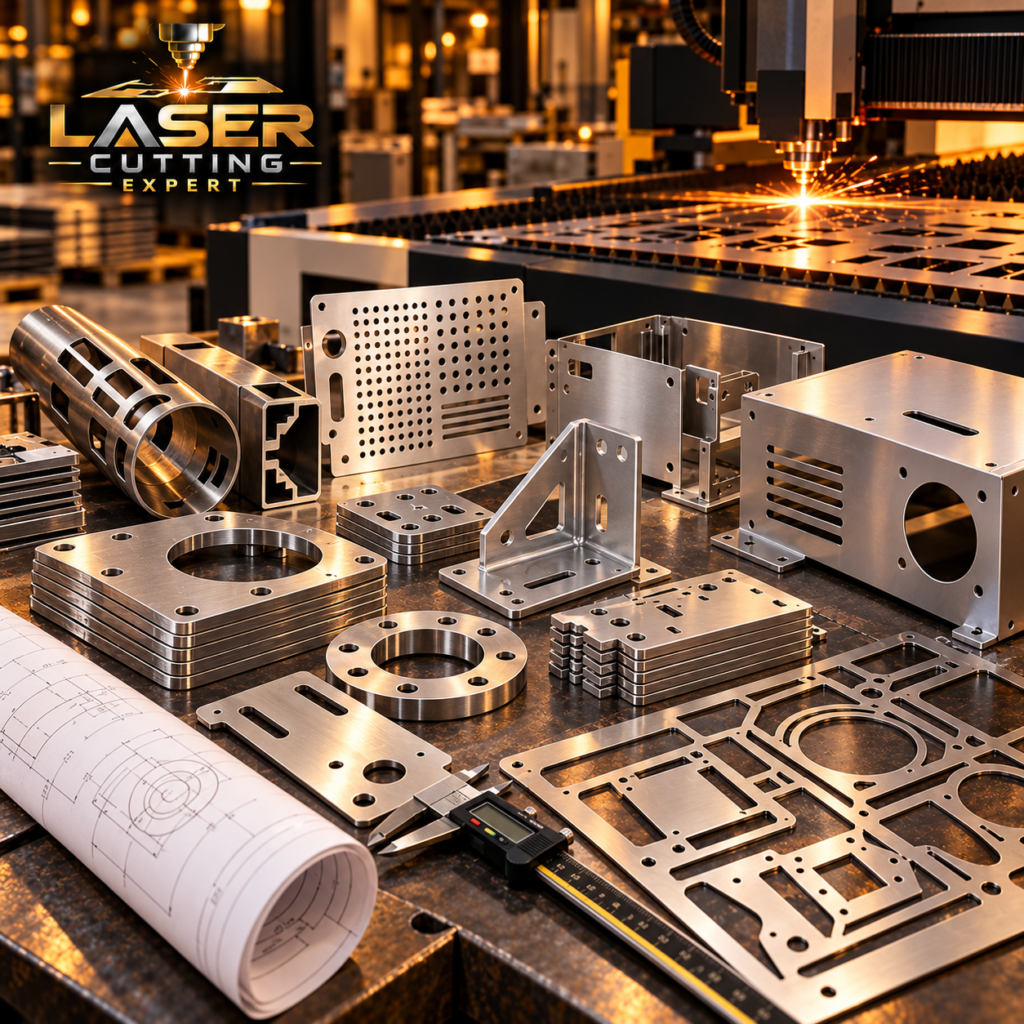
Engineering and manufacturing rarely depend on one process. A finished machine, production system or fabricated assembly can move through CAD, material preparation, laser cutting, machining, bending, welding, coating and final assembly before it reaches service. Laser Cutting Expert provides engineering laser cutting services from our London production facility for engineering companies, OEMs, machinery manufacturers, fabricators, equipment builders and industrial production teams across the UK. Our work covers development components through to repeat manufacturing, including brackets, machine panels, guards, enclosure blanks, base plates, shims, washers, fabrication profiles and structural components.
CALL OR EMAIL US FOR PRICES
“Order any time of the day or night and receive your order on the same day in London. You are welcome to visit our laser cutting shop for an instant laser cutting service. On-site collection or free delivery can be arranged. Email us at laser@makergroup.uk for a quick quote or call us on 02036339857 for an instant price”.
Same Day Laser Cutting & Delivery
We can arrange a same day courier delivery with customer live tracking. Or customers can collect from our Laser Cutting Expert shop.

OPEN 24 HOUR
We are open 7 days a week, and you can order at any time. There is no last ordering time and no deadline. We also offer an overnight laser cutting service.

100% Satisfaction
High Quality Laser Cutting & 100% Customer Satisfaction Guarantee. Top-Rated Laser Cutting Company on Google.

Free File Check
We offer a free file check and proof before sending your artwork for laser cutting.
Laser Cutting Within Engineering Production
Laser cutting normally sits within a wider engineering process rather than operating as an isolated manufacturing step. Flat profiles can become folded brackets, welded frames, machine guards, equipment panels or precision machined components. Engineering laser cutting services therefore need to consider what happens both before and after the laser stage. Material grade, thickness, hole geometry, bend locations, weld access and machining allowances can all affect how useful the cut component becomes later. Engineering firms may use laser profiling for development parts, maintenance components, fabrication kits and established machine assemblies. The objective is to create geometry that moves efficiently into the next manufacturing operation without unnecessary manual modification.
Laser Cutting for Engineering Firms
Laser cutting for engineering firms can support mechanical engineering, manufacturing engineering, automation, process equipment, maintenance engineering and general industrial fabrication. Typical components include machine brackets, mounting plates, equipment covers, access panels, gussets, shims, washers, guards and enclosure parts. Engineering drawings normally define material, thickness and important dimensions, while downstream requirements determine whether additional bending, welding or machining follows. Components can be developed from DXF files, controlled CAD drawings or suitable 3D models. Where tolerances are functionally critical, machining may follow laser profiling. The cutting stage should support the engineering drawing rather than attempting to replace every manufacturing operation with a laser.
Engineering Laser Cutting Services
Our engineering laser cutting services cover suitable mild steel, stainless steel, aluminium, galvanised steel, Corten, brass, copper, titanium and other assessed engineering materials. Different applications require different processes. Fibre laser cutting is commonly relevant to metal components, while flatbed processing suits sheet and plate profiles. Tube cutting can prepare structural sections and machine frames, and 3D or multi axis processing can support certain formed components. Precision work may involve fine profiles, small engineering parts or detailed development components. Material and geometry determine the process. Engineering manufacturing benefits most when the laser method is selected around the component rather than forcing every part through the same machine route.
OEM Laser Cutting Supplier
Working as an oem laser cutting supplier means understanding that laser cut parts eventually become part of another manufacturer’s product. Components may disappear inside machinery, form visible exterior panels or become part of a fabricated structural assembly. OEM production can involve machine guards, control panels, mounting brackets, equipment plates, frames, enclosure blanks and product specific profiles. Drawing numbers, material specifications and design revisions become particularly important because apparently similar components can belong to different machine versions. The laser cut component must fit the wider manufacturing system. Cutting consistency therefore needs to work alongside engineering control, fabrication requirements and the OEM’s own product validation procedures.
Supporting Original Equipment Manufacturers
Original equipment manufacturers often manage many related components across one machine or product family. Engineering laser cutting services can support these programmes through digitally controlled profiles for frames, covers, guards, brackets and mounting systems. Some components remain flat while others move into bending, welding or machining. OEM engineers may also revise products throughout their working life. A mounting hole can move, a control panel can change or a bracket can be strengthened. Production information should therefore identify the correct component revision. Manufacturing an old drawing accurately is still manufacturing the wrong component if the engineering design has already moved to a newer approved version.
Laser Cutting for Custom Machinery
Laser cutting for custom machinery supports equipment where standard off the shelf components cannot provide every required shape. Bespoke machines may need custom side panels, base plates, brackets, sensor mounts, motor plates, guarding, covers, cable management components and structural fabrication pieces. Laser cutting allows these geometries to be developed directly from engineering CAD without dedicated profile tooling. This is particularly useful during machine development because components can change as mechanical layouts evolve. Once the machinery design stabilises, the same digital component information can support later builds. Safety related machine parts still require appropriate engineering and risk assessment within the complete equipment design.
Machine Frames and Fabricated Structures
Machine structures often combine tube, open sections and laser cut plate. Base plates, gussets, joining plates and brackets can be manufactured through engineering laser cutting services, while Tube & Pipe Laser Cutting can prepare suitable frame sections. Locating tabs and slots may help position components during fabrication. The structural design should account for machine weight, dynamic loads, vibration and operating conditions. Welding can introduce distortion, meaning accurately cut parts still need controlled fabrication. Where a machine frame supports safety critical equipment, the responsible engineering team should define material grades, weld requirements and structural criteria. Laser cutting provides manufacturing geometry rather than structural certification.
Machine Base Plates
Base plates provide the foundation for motors, pumps, machines, frames and process equipment. Laser cutting for custom machinery can produce plates containing anchor holes, mounting patterns, access openings and custom outside profiles. Thick plates may subsequently require machining where precise flatness or alignment is needed. Laser profiling can remove unnecessary stock before this machining stage. Baseplate thickness and fixing design should reflect the actual equipment loads and supporting structure. Slots can provide adjustment during installation, but they should be engineered around the fastening system. For rotating equipment, alignment requirements can be significantly tighter than ordinary fabrication tolerances and may require secondary precision operations.
Machine Brackets and Mounts
Engineering machinery can contain dozens of different brackets for sensors, motors, actuators, cable systems and auxiliary equipment. Laser cutting for engineering firms provides a practical method for producing these varied geometries from digital drawings. Brackets can incorporate mounting slots, locating tabs and bend reliefs before forming. Material thickness and bend direction need consideration where the bracket will be folded. Components carrying significant loads require suitable engineering analysis. Sensor brackets may prioritise position and adjustment, while motor mounts may need greater stiffness and accurate alignment. Treating every bracket as the same type of component can overlook these very different functional requirements.
Machine Guards and Safety Panels
Laser cut guards can contain ventilation, access points and fixing features while protecting operators from machinery. Engineering laser cutting services can manufacture approved flat guard profiles and developed blanks before bending and assembly. Guard geometry is safety related. Opening sizes, reach distances, strength and attachment need to be assessed by the machinery designer according to the actual hazard. Laser Cutting Expert manufactures the specified geometry but does not determine whether a guard is safe for unknown machinery. Where visibility is required, perforation patterns can be incorporated while retaining suitable structural material. Guarding should be considered as part of the machine risk assessment rather than decorative sheet metal.
Equipment Enclosures
Industrial machines use enclosures to protect electrical systems, drives, controls and mechanical components. Laser cutting for custom machinery can prepare flat enclosure developments with switch openings, ventilation, cable entries, door features and fixing holes. Components may then move into bending, welding and finishing. Material can range from mild steel to stainless or aluminium depending on environment and equipment requirements. Electrical enclosure performance depends on the complete assembled product, including seals, joints, doors and hardware. Laser cutting does not establish IP rating, EMC performance or electrical safety. These remain part of the equipment manufacturer’s engineering and compliance responsibilities.
Control Panels
Control panels bring together mechanical manufacture and electrical integration. Laser cutting for engineering firms can create openings for displays, push buttons, switches, emergency stops, meters and connectors. Panel layouts should ideally be developed around confirmed component dimensions rather than generic catalogue illustrations. A prototype can help verify the physical arrangement before a complete machine range is manufactured. Stainless steel, mild steel and aluminium may all be used depending on application. Labelling or engraving can also support identification. The equipment manufacturer remains responsible for electrical safety, operator ergonomics and regulatory requirements associated with the completed control system.
Industrial Brackets and Plates
Brackets, connection plates and mounting plates are fundamental components across engineering manufacturing. An oem laser cutting supplier may manufacture many variations using the same material family. Profiles can contain bolt patterns, slots, clearance openings and locating features. Laser cutting allows those variations to remain digital rather than requiring separate physical tooling for every component. Precision requirements should be assigned according to function. Ordinary clearance holes can often be laser cut, while bearing locations or dowel holes may require machining. This combination of processes allows laser cutting to handle the broad geometry while specialist operations establish dimensions that genuinely require higher precision.
Fabrication Kits for Engineering Assembly
Engineering assemblies can be prepared as related sets of laser cut profiles rather than isolated components. Engineering laser cutting services can produce side plates, brackets, gussets, bases and covers that belong to the same fabricated structure. Tabs and slots can help locate pieces before welding. Component identification may also help fabricators distinguish similar parts. A fabrication kit should reflect the real assembly sequence. Weld access, clamping and distortion need consideration during design. Structural assemblies require appropriate engineering and fabrication procedures. The value of a prepared kit is that manufacturing information is coordinated before components reach the welding bench.
Laser Cutting Agricultural Equipment
Laser cutting agricultural components involves equipment expected to work in demanding outdoor environments where dirt, moisture, vibration and impact may be normal operating conditions. Agricultural machinery can contain mounting plates, guards, brackets, covers, wear related components, equipment panels, frame plates and fabrication profiles. Mild steel, galvanised steel and wear resistant grades may be considered depending on application. Components used around moving machinery require suitable guarding and engineering. Corrosion protection also matters because machinery may remain outdoors for long periods. Laser cutting produces the specified component geometry, while the agricultural equipment manufacturer determines material strength, load requirements and safe integration into the finished machine.
Agricultural Machine Guards
Agricultural machinery can expose operators to belts, shafts, chains, cutting mechanisms and other moving equipment. Laser cutting agricultural guard components can create custom covers, perforated panels and mounting plates according to approved engineering drawings. Guard openings and access arrangements must follow appropriate safety requirements. A decorative or highly ventilated pattern should never compromise protection against machinery hazards. Components may be folded for stiffness or attached to fabricated frames. Outdoor exposure means corrosion protection should also be considered. The laser cut guard is only one element of the complete safeguarding system, which remains the responsibility of the machinery manufacturer.
Agricultural Brackets and Mounting Plates
Tractors, processing machines, trailers and agricultural attachments use numerous brackets and plates to support equipment. Engineering laser cutting services can create custom mounting profiles with holes, slots and adjustment features. Material thickness should reflect operating loads, shock and vibration. Components exposed to mud, fertilisers or moisture may require suitable coatings or corrosion resistant materials. Replacement profiles can also be produced where reliable drawings exist. Safety critical hitch, lifting or loadbearing components require proper engineering and should not be copied from a worn sample without confirming original material and specification. Laser cutting accurately reproduces geometry but does not establish load capacity.
Agricultural Fabrication Components
Fabricated agricultural equipment can combine sheet, plate, tube and open structural sections. Laser cutting agricultural manufacturing can support gussets, reinforcement plates, frame brackets, equipment covers and general fabrication profiles. Tube & Pipe Laser Cutting may complement flat components where frames or structural supports need custom holes and notches. Welding requirements should reflect material grade and operating loads. Equipment exposed to repeated vibration can place significant stress on joints. Agricultural manufacturers therefore need to consider the complete fabricated structure rather than evaluating each laser cut plate separately. Component consistency supports fabrication, while engineering and welding quality determine final equipment performance.
Laser Cutting for Yellow Goods
Laser cutting for yellow goods supports industries producing construction, earthmoving, material handling and heavy mobile machinery. These machines can operate under substantial loads, vibration, abrasion and outdoor exposure. Laser cut components may include guards, equipment panels, brackets, reinforcement plates, mounting plates, covers and fabrication profiles. Material can include mild steel, high strength structural grades and wear resistant plate depending on application. Exact material specifications matter because different high strength and abrasion resistant steels are not interchangeable. Laser cutting should form part of a controlled manufacturing route that accounts for forming, welding, machining, coating and the mechanical requirements of the finished machine.
Heavy Equipment Panels
Construction and earthmoving machines use exterior and internal panels for access, protection and ventilation. Laser cutting for yellow goods can manufacture suitable profiles with louvre openings, fixing holes, handles and equipment access features. Large panels may require folds or reinforcement to provide stiffness. Outdoor service demands appropriate corrosion protection. Panels near engines or hydraulic systems can also encounter heat, oil and vibration. Machine manufacturers should therefore define material and finish around the actual operating environment. Laser cutting provides repeatable geometry, while the complete panel design needs to consider hinges, fasteners, seals and the conditions experienced during machine operation.
Yellow Goods Guards
Heavy machinery contains moving, hot and pressurised systems that may require protective guarding. Laser cutting for yellow goods can create guard profiles, perforated covers and access panels from approved designs. Safety remains central. Openings should not permit unsafe access to hazards, and guards need adequate strength for their environment. Construction machinery can experience impact and vibration beyond ordinary workshop equipment. Fixings and supporting frames therefore need suitable engineering. Laser Cutting Expert can manufacture the component according to the specified drawing, but the machinery manufacturer remains responsible for risk assessment and validation of the complete guarding arrangement.
HighStrength Steel Components
Some heavy machinery uses high strength structural steels to reduce weight while maintaining performance. Engineering laser cutting services can assess suitable specified grades for custom profiles. Material identity is particularly important because high strength steels can have grade specific requirements for bending, welding and heat input. A profile cannot be treated simply as strong steel. The engineering drawing should define the material required. Bend direction and minimum radius may also matter. Downstream welding needs to follow appropriate procedures. Where mechanical properties are safety critical, manufacturers should maintain the material documentation and fabrication controls required by their own engineering and quality system.
Wear Resistant Plate
Wear resistant steels can be used in machinery exposed to abrasion from soil, stone or bulk materials. Laser cutting for yellow goods may involve suitable wear plates, liners, guards and equipment components manufactured from specified grades such as Hardox or comparable materials where appropriate. Exact grade and thickness should be confirmed before processing. Wear resistance does not automatically make a material suitable for every structural application. Forming and welding requirements can also differ from ordinary mild steel. Component design should therefore follow the material manufacturer’s technical guidance and the machinery engineer’s requirements rather than substituting wear resistant plate solely because it appears more durable.
Laser Cutting for Robotics
Laser cutting for robotics supports machine builders, automation engineers, research teams and robotics developers creating frames, chassis plates, sensor mounts, motor brackets, covers and equipment panels. Robotic systems often contain many compact components that need accurate relative positioning. Laser cutting can establish mounting geometry before parts move into bending or assembly. Materials may include aluminium, stainless steel and mild steel depending on weight and stiffness requirements. A prototype chassis can be assembled with actual motors, sensors and controllers before the design is fixed. The cutting process provides geometry; robotics engineering determines movement, loads, electrical safety and machine interaction.
Robot Chassis Plates
Robot chassis components provide mounting points for motors, batteries, electronics, sensors and structural members. Laser cutting for robotics can produce custom plates containing repeated hole patterns, cable openings and weight reduction features. Removing material can reduce weight but also reduce stiffness, so lightweighting needs to be engineered rather than treated purely as a visual pattern. Aluminium may be useful where mass matters, while steel can provide greater stiffness for certain structures. Mobile robots also experience vibration and dynamic loads. The responsible robotics team should validate the chassis under real operating conditions before relying on the design for continuous or safety related service.
Motor and Gearbox Mounts
Motor alignment can strongly influence the performance of a robotic or automated mechanism. Laser cutting for robotics can produce motor plates and mounting brackets according to controlled geometry. Slots can allow belt or chain tension adjustment, while bolt patterns can match standard motor frames. Where shaft alignment is critical, laser cut holes may be followed by machining or precision locating features. Brackets also need sufficient stiffness to prevent movement under torque. The correct solution depends on motor size, gearbox, drive system and operating load. Accurate profiling provides a useful starting point, but mechanical design determines whether the complete drive arrangement remains aligned during operation.
Sensor Mounting Components
Robots depend on sensors for position, distance, vision, force and process monitoring. Laser cutting for robotics can create adjustable sensor brackets, mounting plates and protective housings. Slots may allow final positioning during commissioning. Sensor line of sight, cable routing and vibration should be considered during design. A camera bracket, for example, may require more rigidity than its small size suggests because vibration can affect image quality. Protective covers should not obstruct the sensing area. Laser cutting can produce consistent mounting geometry across multiple machines, while the automation engineer remains responsible for calibration and functional performance of the sensor system.
Robot Guards and Covers
Robotic equipment may require covers around drives, electronics and moving mechanisms. Engineering laser cutting services can manufacture suitable guard panels, covers and enclosure components for integration into robotic machinery. Industrial robots can also create significant safety hazards through movement and stored energy. Guarding, interlocks, safety scanners and other protective systems need proper risk assessment. A laser cut panel is not itself a complete robotic safety system. The machinery integrator must determine appropriate safety architecture. Components can nevertheless be designed with ventilation, cable access and maintenance openings where these do not compromise the approved safety arrangement.
Automation Equipment
Production automation systems can contain conveyors, actuators, sensors, inspection equipment and robotic handling. Laser cutting for custom machinery can support these systems through custom plates, frames, guards, control panels and equipment mounts. Every automated cell has its own layout, making configurable laser cut components useful during development. Designs often evolve during commissioning as sensor positions and product handling are refined. Digital profiles can be updated as the engineering design changes. Once the system stabilises, controlled files can support duplicate machines or replacement components. Safety systems and functional performance remain the responsibility of the machine builder and integrator.
Conveyor Systems
Conveyors use side plates, brackets, sensor mounts, motor plates, guards and support components that can be produced through engineering laser cutting services. Hole patterns and adjustment slots can help align rollers, guides and sensors. Stainless steel may be selected for food or wet environments, while mild steel can suit general industrial equipment. The finished conveyor needs appropriate guarding around pinch points and drive systems. Load, belt tension and structural requirements should be engineered according to the product being transported. Laser cut profiles help establish repeatable component geometry, but they form only part of the mechanical system.
Jigs and Fixtures
Manufacturing engineers use jigs and fixtures to position components during welding, assembly, inspection and drilling. Laser cutting for engineering firms can produce plates, locators, templates and fixture components that support repeatable production. Tabs and slots can create self locating fixture structures. Precision dowel positions or wear surfaces may require machining after profiling. Fixtures should be designed around operator access and safe clamping. A fixture used for welding also needs to tolerate heat and distortion. Laser cutting provides a fast route for developing and modifying fixture geometry as the manufacturing process evolves.
Production Tooling Components
Not every piece of production tooling requires machining from solid material. Engineering laser cutting services can create templates, gauge blanks, support plates, alignment components and fabrication tooling from suitable sheet or plate. Some parts can be used directly after cutting, while others become blanks for machining. Material selection depends on expected wear, temperature and load. A prototype tool may use a different material from the final production version, but that substitution should not be mistaken for proof of final durability. Engineering teams can use laser cutting to develop tooling geometry quickly while reserving specialist machining for surfaces that genuinely require it.
Shims for Engineering Assembly
Shims compensate for manufacturing variation, alignment or spacing within machinery. Laser cutting for engineering firms can produce custom shim profiles where standard washers or rectangular stock do not fit the assembly. Material thickness becomes a functional dimension and should be selected accordingly. Stacked shims may be used to achieve adjustment, but sheet thickness tolerance should be considered where alignment is critical. Stainless steel and other suitable metals can be used depending on environment. Very thin or extremely precise shims may require specialist processes. The engineering drawing should identify whether the shim is a general spacer or a controlled precision component.
Custom Washers and Spacers
Industrial assemblies sometimes need nonstandard washers, rings and flat spacers. Engineering laser cutting services can produce custom outside profiles, internal openings and locating features. Components may support machinery, fabricated frames, hydraulic equipment or general engineering assemblies. Precision internal diameters may require machining if they locate shafts or bearings. Material grade also matters where the washer participates in a structural bolted connection. A custom laser cut ring should not automatically replace a specified structural washer. Engineering teams should define the mechanical requirement first, then select the manufacturing method appropriate to that function.
Covers and Access Panels
Machines require removable panels for maintenance and inspection. Laser cutting for custom machinery can produce covers containing handles, fastener holes, ventilation and equipment access features. Folded edges can increase stiffness and provide safer handling. Maintenance access should be considered during design so technicians can reach service items without unnecessarily dismantling the machine. Panels may also need labels or engraved identification. Where covers protect hazardous moving or electrical equipment, removal and interlocking arrangements form part of the machine safety design. Laser cutting manufactures the panel geometry but does not establish safe maintenance procedures.
Industrial Labels and Name Plates
Machinery may use metal labels, asset plates, equipment identifiers and component references. Engineering laser cutting services can produce suitable label blanks in custom shapes before engraving or printing. Mounting holes can be incorporated directly. Stainless steel and aluminium are common choices depending on environment. The equipment manufacturer remains responsible for deciding what regulatory, safety or technical information must appear on a machine. Laser Cutting Expert can reproduce approved information but does not determine statutory marking requirements. Labels exposed to chemicals, weather or heat should use a material and marking method appropriate to those conditions.
Prototypes for Engineering Development
Engineering development benefits from physical testing before a design becomes established production. Laser cutting for engineering firms can provide brackets, panels, frame plates and assembly components for prototype machines. Engineers can test fit, service access, stiffness and assembly sequence using real hardware. CAD changes can then be incorporated before later builds. Prototype parts should not automatically be considered production approved simply because they fit. Strength, fatigue, safety and operating performance may still require formal testing. Laser cutting shortens the path between digital design and physical evaluation, but engineering validation remains a separate responsibility.
Pilot Manufacturing
Between a prototype and established manufacturing there is often a pilot stage. Engineering laser cutting services can support limited machine builds or preproduction assemblies where the engineering team wants to observe real manufacturing behaviour. This stage can reveal issues that a single prototype does not show, such as difficult welding access, slow assembly or inconsistent component orientation. Part identification and drawing control become increasingly useful as more components enter production. Changes made during pilot manufacture should be captured formally rather than corrected informally on the workshop floor. The goal is to stabilise both the product and its manufacturing route before production expands.
Production Machinery Components
Once equipment enters regular manufacture, component consistency becomes more important. An oem laser cutting supplier can support approved machine panels, brackets, guards and fabrication parts using controlled digital geometry. Production parts should reference the correct material and engineering revision. Repeat cutting also provides opportunities to improve sheet nesting without changing the actual component. If an engineering change is introduced, the new revision needs to be distinguished clearly from existing stock. A controlled supply relationship therefore depends as much on accurate information as it does on cutting capability. Repeatable machinery requires repeatable component definitions.
Replacement Machinery Components
Industrial machines may remain in service for many years. Laser cutting for custom machinery can support suitable replacement plates, covers, guards and brackets where approved drawings or reliable specifications exist. If the original CAD is unavailable, some simple flat components can be redrawn from measurements. Worn parts need care because their current shape may no longer represent the original design. Safety critical replacements should not be reverse engineered solely from appearance. Material grade and function need confirmation. Once a replacement profile has been properly established, digital geometry can simplify future maintenance requirements for the same equipment.
Maintenance Engineering
Maintenance departments often need components that are no longer readily available. Laser cutting for engineering firms can assist with suitable machine plates, access panels, brackets, covers and nonstandard spacers. The maintenance engineer should identify whether a component is merely protective or whether it carries load, contains pressure or performs another safetycritical function. This distinction affects how it should be reproduced. Laser cutting can help shorten the route to a custom flat replacement, but engineering judgement remains necessary. Where an original part has failed, simply copying it without understanding why it failed can reproduce the same problem.
Process Equipment
Process industries can use custom sheet and plate components in frames, skids, guards, housings and equipment supports. Engineering laser cutting services can manufacture suitable profiles from stainless steel, mild steel, aluminium and other specified materials. The operating environment determines material requirements. Chemical exposure, temperature, washdown and corrosion can all affect selection. Pressure containing components require specialist engineering and appropriate manufacturing standards; general laser cutting does not certify pressure equipment. No pressure support and enclosure components can still benefit from accurate digital profiling as part of the wider equipment fabrication process.
Stainless Engineering Components
Stainless steel is used in manufacturing where corrosion resistance, cleaning or appearance matters. Laser cutting for engineering firms can support equipment panels, brackets, machine guards, process components and enclosure blanks in specified stainless grades. Surface direction may matter for visible brushed sheet. Nitrogen assisted cutting can be considered where low oxidation at the edge is desirable. Grade should follow environment: one stainless specification does not suit every chemical, marine or hygiene application. Fabrication methods also influence corrosion performance. The responsible manufacturer should therefore define material and finishing requirements around the complete equipment rather than relying solely on the stainless designation.
Aluminium Engineering Components
Aluminium can reduce component mass in machinery, robotics, automation and equipment enclosures. Engineering laser cutting services can produce suitable aluminium plates, panels, brackets and covers. Alloy and temper influence strength, bending and welding behaviour. Lightweight does not automatically mean weak, but the component needs to be designed appropriately. Thin aluminium panels may require folds or ribs for stiffness. Anodising or powder coating may follow fabrication. Where dimensional accuracy is critical around bearings or precision mechanisms, machining can follow laser profiling. Combining processes allows aluminium components to balance weight, manufacturability and functional requirements.
Mild Steel Engineering Components
Mild steel remains widely used in machinery and industrial fabrication because it is available in many thicknesses and works well with common fabrication methods. Laser cutting for custom machinery can produce mildsteel frames, brackets, base plates, guards and equipment panels before bending or welding. Corrosion protection should be selected according to environment. Powder coating, painting or galvanising may be considered depending on the complete product. Structural components require suitable engineering, particularly where machinery produces dynamic loads. Mild steel is familiar, but familiarity should not lead to unspecified grades or arbitrary thickness selection in engineered assemblies.
Copper and Brass Engineering Components
Copper and brass appear in electrical equipment, thermal applications, instrumentation and specialist machinery. Engineering laser cutting services can assess suitable plates, contact profiles, shields, decorative engineering parts and equipment components. Copper’s electrical and thermal properties make it useful beyond appearance, while brass can provide machinability and decorative qualities. Laser cutting alone does not establish electrical current capacity, contact performance or thermal behaviour. Critical surfaces may require machining or finishing. Alloy information should be provided where technical performance matters. These materials also have different laser processing behaviour from steel, so the manufacturing route should be selected specifically for the component.
Tube Components in Engineering
Engineering equipment often combines laser cut sheet with tubular frames and supports. Tube & Pipe Laser Cutting can prepare suitable round, square and rectangular sections with holes, notches, mitres and connection features. Combined with engineering laser cutting services for plates and brackets, this can support machine frames, furniture style industrial structures, guards and equipment bases. Tube dimensions, wall thickness and weld seam position may affect processing. Structural and pressure containing tubes require appropriate engineering and validation. Cutting the profile accurately does not establish the load capacity or pressure rating of the finished assembly.
Open Sections in Manufacturing
Channels, angles and other open profiles are used throughout machinery and structural fabrication. Suitable open section processing can complement laser cutting for custom machinery where standard structural profiles need holes, slots or connection details. Depending on geometry, laser processing, drilling, sawing or another method may be more appropriate. Features cut into loadbearing sections can change their structural capacity. Engineering approval is therefore important where significant material is removed. Open sections can also be combined with laser cut plates and gussets to form machine bases, supports and fabricated frames.
Sheet and Plate Profiling
Sheet and plate remain central to engineering laser cutting services because so many industrial components begin as flat profiles. Brackets, covers, machine sides, base plates, guards and enclosure developments can all be produced from digital geometry. Thickness may range from light sheet used for covers to heavier plate used for structural or machinery components, subject to material and equipment capability. Large panels need handling and stiffness consideration. Small parts need practical feature sizes. Sheet nesting can improve material utilisation, but engineering requirements such as grain direction and bend orientation should take priority over simply fitting the maximum number of parts onto a sheet.
Fibre Laser Cutting for Engineering
Fibre laser technology is commonly used for suitable metal manufacturing. It can support steel, stainless steel, aluminium, brass and copper applications depending on material and thickness. Within engineering laser cutting services, fibre processing can be useful for machine parts, panels, brackets and fabrication profiles. Assist gas choice affects cutting behaviour and edge condition. Nitrogen, oxygen or compressed air may be considered according to material and downstream requirements. The technology itself does not determine whether a component is properly engineered. Fibre laser cutting is a manufacturing method used to produce the geometry defined by the engineering design.
CNC Laser Cutting
CNC control allows digital engineering geometry to guide the laser cutting process. Laser cutting for engineering firms can therefore move directly from suitable CAD data into physical profiles without manual marking of every component. Hole patterns, outside shapes and internal openings can be repeated consistently. CNC does not mean every feature receives machining level tolerance. Functional precision requirements should still be assigned appropriately. Bearings, dowels and sealing surfaces may require secondary machining. CNC laser cutting is particularly useful where components contain complex profiles that would otherwise require substantial manual preparation or dedicated tooling.
Precision and FineDetail Engineering Components
Small engineering parts can contain narrow slots, compact hole patterns or intricate geometry. Engineering laser cutting services can assess suitable precision components according to material and thickness. Fine detail should always be considered at actual physical scale. A feature that appears large on a CAD monitor may be only a fraction of a millimetre in reality. Very small functional holes may need drilling or specialist micromachining. For projects where detailed geometry is central, our Precision & Fine Detail Laser Cutting capability can provide a useful related route. Precision should be specified according to function rather than applied unnecessarily to every dimension.
3D and Multi Axis Engineering Cutting
Some engineered components are already formed before their final holes or trimming features are produced. 3D and multi axis laser cutting can be assessed for suitable formed parts, tubes and specialist components. This can complement laser cutting for custom machinery where flat processing cannot reach the required surface. Fixturing becomes important because the component must be located consistently. Forming variation can also affect final feature position. Not every three dimensional part requires a 5 axis or robotic solution; sometimes it is simpler to cut the flat blank before bending. Manufacturing sequence should determine the technology rather than using advanced equipment without a clear engineering reason.
Laser Cutting and Bending
Cutting and forming are closely connected in machinery manufacture. Engineering laser cutting services can produce developed blanks containing bend reliefs, holes and slots before press brake forming. Material thickness, bend radius and tooling influence the final dimensions. Engineers should therefore design the flat development around the intended forming process. Brackets, covers, trays and enclosures commonly follow this route. A prototype can verify the relationship between cut geometry and folded dimensions. Changing material thickness after the design is complete may also change bend behaviour, so substitutions should be reviewed rather than made solely according to what sheet happens to be available.
Laser Cutting and Welding
Laser cut components often become welded assemblies. Laser cutting for engineering firms can incorporate tabs, slots and locating features that help position parts before welding. Joint design should still provide access for the welding process. Heat input can cause distortion, particularly in thin sheet or long assemblies. Structural and safety critical welds require appropriate procedures and inspection. Galvanised material requires suitable controls because welding zinc produces hazardous fumes. High strength and wear resistant steels can also have specific welding requirements. Accurate cut parts support fabrication, but welding quality ultimately determines the integrity of the completed joint.
Laser Cutting and Machining
Combining laser cutting with machining can provide an efficient manufacturing route for engineering components. Engineering laser cutting services can remove the majority of excess material before CNC machining establishes critical bores, faces, threads or datums. This is useful for mounting plates, tooling parts, machine components and heavy profiles. Enough machining allowance should remain where necessary. The engineering drawing should distinguish laser finished dimensions from machined dimensions. Trying to achieve every requirement with one process can make production unnecessarily difficult. Using each process where it performs best can provide a more practical route from raw sheet to finished engineering component.
Laser Cutting and Finishing
Engineering components can require deburring, painting, powder coating, anodising, plating or other finishing after fabrication. Laser cutting for engineering firms should therefore consider edge and surface requirements from the beginning. A component that will be hidden inside a machine does not necessarily need the same cosmetic preparation as an exposed control panel. Material and assist gas choice can also affect later edge preparation. Finishing should normally follow bending and welding where those operations could damage the final surface. Manufacturing planning is more effective when cutting, fabrication and finishing are treated as connected stages rather than separate jobs with no shared information.
CAD Integration with Engineering Teams
Modern engineering manufacturing is strongly connected to digital design. Engineering laser cutting services can work from suitable 2D CAD, DXF and other production information, while 3D models can help communicate assemblies and folded components. Clean geometry is important. Duplicate lines, open contours and incorrect units can create manufacturing problems. Drawings should identify material, thickness and critical requirements. Where several engineers work on the same project, controlled revision practices reduce confusion. CAD makes design changes easier, but it also makes it easy to create multiple almost identical files. Manufacturing therefore benefits from clear component naming and approval processes.
Design for Manufacture
A component can be perfectly valid in CAD while being unnecessarily difficult to manufacture. Laser cutting for engineering firms benefits from design for manufacture thinking: realistic holes, practical slots, suitable bend reliefs and enough material around important features. Weld access and assembly sequence should also be considered. Simplifying a profile does not necessarily mean compromising its function. Removing unnecessary complexity can reduce cutting time and make fabrication easier. Engineering teams should therefore evaluate how a part will be cut, formed, welded and assembled rather than designing each operation independently. Good manufacturing design connects the entire route.
Material Utilisation
Engineering production can generate significant material waste if profiles are poorly arranged. Engineering laser cutting services use nesting to position suitable components across sheet or plate. Different part numbers can sometimes share material where grade and thickness match. Grain direction, cosmetic surfaces and later bending can restrict orientation. Expensive materials such as stainless steel, copper or titanium make sensible nesting particularly important. Material efficiency should not override engineering requirements, however. Rotating a component simply to save sheet can be inappropriate if rolling direction or visible grain matters to the final product.
Manufacturing Efficiency
Efficient manufacturing is not simply about running a laser faster. Laser cutting for engineering firms can reduce manual marking, sawing and drilling by placing several suitable features into the original digital profile. Fabrication teams then receive parts closer to the condition needed for assembly. Tabs can assist location, identification can reduce confusion and near net blanks can shorten machining time. These improvements come from considering the full process rather than one machine cycle. An engineering component that cuts quickly but creates hours of avoidable work during assembly is not necessarily an efficient design.
Quality Control in Engineering Components
Quality requirements should follow component function. An oem laser cutting supplier may produce ordinary covers alongside brackets with critical mounting positions. These parts should not automatically receive identical inspection requirements. Engineering drawings can identify critical dimensions and material specifications. For controlled industries, additional inspection or documentation may be necessary. Laser Cutting Expert can work according to agreed production information, but specialist aerospace, medical, pressure, automotive safety or other regulated applications may require quality systems beyond general laser cutting. These requirements need to be established before manufacturing begins.
Engineering Materials and Traceability
Material identification becomes increasingly important as components move into safety related or controlled applications. Engineering laser cutting services can work with specified material grades, but formal traceability requirements should be stated at the enquiry and manufacturing planning stage. A component described only as stainless steel may not contain enough information for an engineering application. Grade, thickness and certification can matter. The same applies to high strength steel, aluminium alloys and titanium. Material documentation is part of the broader engineering quality system; it should not be assumed simply because the profile itself has been cut accurately.
Engineering Changes
Machines and products evolve. A bracket may gain another hole, a panel may accommodate a new display or a guard may change because the equipment layout has been revised. Laser cutting for engineering firms allows these changes to be incorporated digitally without creating a completely new physical cutting tool. Revision control remains important because both old and new versions may look almost identical. Approved engineering changes should flow clearly into production. Informal workshop modifications can solve an immediate problem but become difficult to reproduce later unless the updated geometry is captured in the controlled design.
Manufacturing Scalability
A component can begin as one development piece and later become part of regular machinery production. Engineering laser cutting services support this progression because the same underlying digital geometry can move from prototype work into repeat manufacturing once approved. Production planning, nesting and material purchasing may change as quantities increase, but the engineering definition should remain controlled. Scaling production should not mean bypassing validation. A component proven in one prototype may still need broader testing within the complete machine before a manufacturer relies on it across a full product range.
Engineering Support for One Off Machinery
Custom engineering businesses frequently manufacture machines that will never be produced in large quantities. Laser cutting for custom machinery remains useful because digital profiling does not require large production volume to justify dedicated cutting tooling. One machine can contain dozens of unique plates and brackets, each produced directly from CAD. This allows designers to develop equipment around its specific function. One off does not mean informal. Material, safety, guarding and structural requirements remain just as important as they would for repeated machinery. Digital manufacture simply makes bespoke geometry more practical.
Engineering Support for Repeat Machinery
Machine builders producing the same equipment repeatedly need component consistency. Laser cutting for custom machinery can move from one off development into established profiles for brackets, covers, guards and panels. If several machine options exist, individual component variants can be maintained digitally. The manufacturing team should know which version belongs to each machine configuration. Standardisation can also reduce unnecessary part numbers where the same component can serve several models. Laser cutting supports this modular approach because one digital component can be reproduced when needed without dedicated profile tooling.
Engineering Supply Across the UK
Laser Cutting Expert provides engineering laser cutting services from our London production facility for engineering and manufacturing businesses throughout the UK. Our capabilities can support machinery builders, OEMs, agricultural equipment manufacturers, yellow goods production, robotics developers, fabricators and industrial engineering teams. Related processes include Fibre Laser Cutting, CNC Laser Cutting, Tube & Pipe Laser Cutting, 3D & Multi Axis Laser Cutting, Laser Cutting & Bending, Laser Cutting & Finishing. Production can support development, maintenance and established manufacturing requirements, with UK wide delivery available for suitable completed components.
FAQs About Engineering & Manufacturing Laser Cutting
1. What engineering industries can use your laser cutting capabilities?
Our engineering laser cutting services can support machinery manufacture, general engineering, automation, robotics, agricultural equipment, yellow goods, fabrication, OEM production and industrial equipment development.
2. Do you provide laser cutting for engineering firms?
Yes. Laser cutting for engineering firms can cover machine panels, brackets, guards, enclosure blanks, fabrication components, shims, plates and other suitable engineering profiles.
3. Can you work as an OEM laser cutting supplier?
Yes. We can support suitable OEM component programmes where drawings, material requirements and production information are clearly defined. An oem laser cutting supplier should work around the manufacturer’s controlled component specifications and revisions.
4. What does laser cutting for custom machinery include?
Laser cutting for custom machinery can include machine frames, brackets, base plates, control panels, guards, covers, sensor mounts, motor plates and other fabricated components.
5. Do you provide laser cutting for agricultural machinery?
Yes. Laser cutting agricultural applications can include equipment guards, brackets, plates, covers, reinforcement components and fabrication profiles in suitable specified materials.
6. What is laser cutting for yellow goods used for?
Laser cutting for yellow goods can support construction and heavy equipment components such as guards, panels, reinforcement plates, mounting brackets and wear related profiles.
7. Can you provide laser cutting for robotics?
Yes. Laser cutting for robotics can support chassis plates, motor mounts, sensor brackets, covers, equipment panels and components for automation systems.
8. Can engineering laser cut components also be bent or fabricated?
Yes. Laser cut profiles can move into suitable bending, welding, machining and finishing processes depending on the engineering requirement.
9. Can you manufacture prototype engineering components?
Yes. Laser cutting can support development and prototype components before engineering designs move into established manufacturing.
10. Does laser cutting certify an engineering component for structural or safety use?
No. Laser cutting manufactures geometry according to the specified design. Structural, machine safety, pressure, electrical and other regulated performance remains subject to the appropriate engineering, testing and compliance requirements.